
15 Weight Loss Tips Nobody Tells You About
But Backed by Science ( Not Hype)

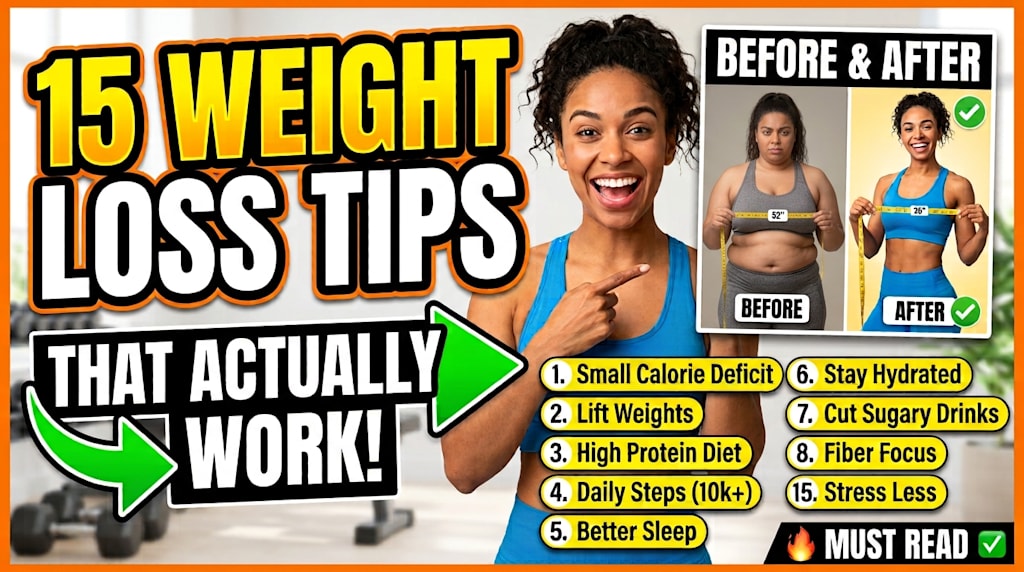
1. Protein Timing Matters More Than Protein Totals
Most people know protein helps with satiety and muscle retention, but few realize when you eat it matters. Spreading protein evenly across three to four meals — rather than loading it all at dinner — helps regulate appetite hormones like ghrelin throughout the day, reducing the urge to snack.
2. Your Sleep Debt Is Sabotaging Your Willpower
Poor sleep doesn’t just make you tired — it directly disrupts leptin and ghrelin, the hormones that control hunger and fullness. Chronic sleep deprivation has been linked to increased cravings for high-calorie, high-carb foods. Prioritizing consistent, quality sleep is one of the most underrated weight loss tools available.
3. NEAT (Non-Exercise Activity Thermogenesis) Beats the Gym for Most People
The calories you burn from fidgeting, walking, standing, and daily movement — collectively called NEAT — often outweigh the calories burned during a structured workout. Small changes like taking stairs, pacing during phone calls, or parking farther away can add up to a meaningful daily calorie difference.
4. Eating Too Slowly Is a Skill You Can Train
Your brain takes roughly 20 minutes to register fullness. Eating quickly overrides this signal, leading to overeating before your body even realizes it’s satisfied. Practicing slower eating — chewing more, putting your fork down between bites — is a genuinely effective, zero-cost intervention.
>>VERY IMPORTANT<< For sustainable weight loss results, I highly recommend the top-rated weight loss pill that has helped thousands of people lose weight. get it here
5. Fiber, Not Just Calories, Controls Hunger
Two meals with identical calories can leave you feeling completely different if one has significantly more fiber. Fiber slows digestion, stabilizes blood sugar, and promotes fullness. Most people fall well short of daily fiber recommendations — fixing this alone can transform hunger management.
6. Stress Hormones Store Fat Differently
Chronic stress elevates cortisol, which is linked to increased abdominal fat storage and heightened cravings for comfort foods. Weight loss plans that ignore stress management are often working against a hidden hormonal headwind.
7. Liquid Calories Don’t Trigger Fullness the Same Way
Calories from beverages — juices, sodas, specialty coffees, alcohol — are processed differently than solid food and don’t trigger the same satiety response. This is why it’s easy to drink hundreds of extra calories without feeling any fuller.
8. Muscle Mass Is Your Metabolic Insurance Policy
Losing weight without preserving muscle often lowers your resting metabolic rate, making it easier to regain fat later. Resistance training during a weight loss phase helps protect lean mass, which keeps your metabolism from tanking.
9. Meal Consistency Reduces Decision Fatigue
Constantly deciding what to eat depletes willpower. People who eat similar, planned meals on a rotating basis tend to make fewer impulsive food choices simply because they’ve removed the decision-making burden.
10. Environment Design Beats Willpower
Willpower is a limited resource. Instead of relying on discipline alone, successful weight loss often comes from redesigning your environment — keeping trigger foods out of the house, using smaller plates, or storing snacks out of sight. Structure often outperforms motivation.
11. Weight Fluctuates Daily — And That’s Normal
Water retention, sodium intake, hormonal cycles, and even the time you weigh yourself can shift the scale by several pounds in a single day. Judging progress by daily weight alone leads to unnecessary discouragement. Weekly averages tell a much more accurate story.
12. Highly Processed Food Overrides Natural Fullness Cues
Ultra-processed foods are engineered to be hyper-palatable, often bypassing the body’s natural satiety signals. This is a major reason whole-food-based diets tend to result in effortless calorie reduction compared to processed-food-heavy diets, even without formal restriction.
13. Social Circles Influence Outcomes More Than People Admit
Research on social contagion suggests that the eating and activity habits of people around you meaningfully influence your own behavior. Surrounding yourself with people who support (rather than sabotage) your goals isn’t just a nice-to-have — it’s a measurable factor in long-term success.
14. All-or-Nothing Thinking Is the Real Enemy
One “bad” meal doesn’t ruin progress, but the guilt-driven spiral that often follows does. People who lose weight sustainably tend to treat setbacks as data, not failure, and get back on track at the very next meal rather than waiting for “next Monday.”
15. The Goal Isn’t a Number — It’s a Sustainable System
Fixating on a specific target number often leads to short-term extreme behaviors that aren’t sustainable. The people who keep weight off long-term tend to focus on building repeatable habits — consistent movement, better food environments, adequate sleep — rather than chasing a finish line.
📢 NOTE
None of these tips involve starvation nor extreme restriction, They work because they address the overlooked psychological, hormonal, and environmental factors that mainstream advice tends to skip. Real, sustainable weight loss is rarely about trying harder — it’s about understanding the system you’re working with and adjusting the details most people never talk about.
About the Creator
Edward Smith
I write on ANYTHING & EVERYTHING from fictional stories,Health,Relationship etc.Need Me or my service?Email [email protected].Please Buy me a coffee here Ko-fi.com/dralex & Get ONLY The Best Health Supplement here https://lnk.bio/dralexx
Enjoyed the story? Support the Creator.
Subscribe for free to receive all their stories in your feed.
Comments
There are no comments for this story
Be the first to respond and start the conversation.