
10 Good Reasons to Have a Human Virtual Assistant When You Are Very Old
A simple, reassuring, and very real kind of help that can make everyday life easier

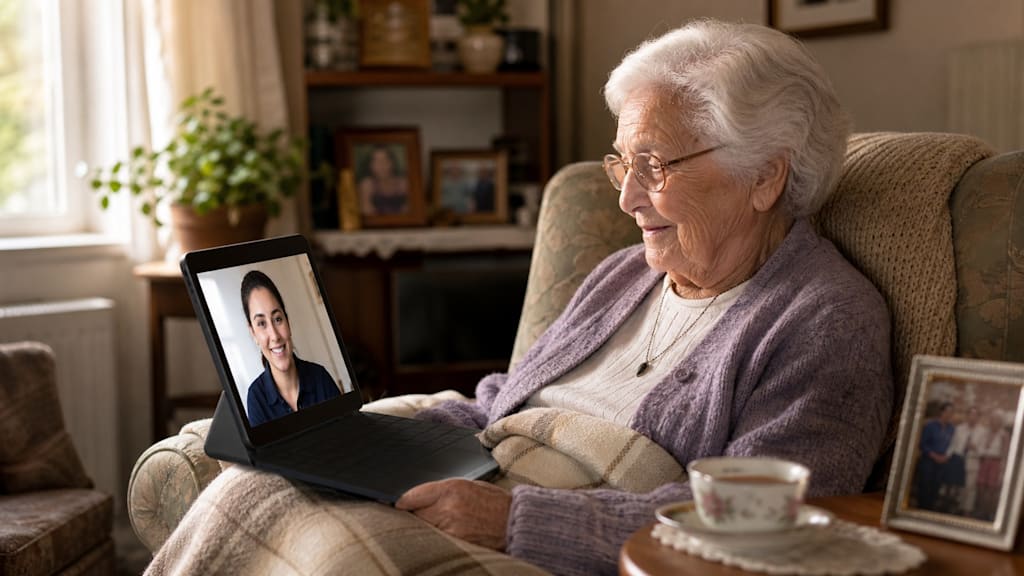
There comes a point in life when things do not always become more serious, but they do become heavier.
Not huge. Not dramatic. Just heavier.
An appointment you do not want to forget. A paper you need to find. A message you do not fully understand. A phone call you keep putting off. A task that looks simple on paper, but already feels tiring before you even begin.
When people grow very old, it is not always the big hardships that wear them down the most. Very often, it is the small things repeated over and over. The things that quietly take energy. The things that fill the mind. The things that slowly eat part of the day.
And yet, at that age, most people still want one thing very deeply: to keep their freedom. To keep making their own choices. Not to trouble everyone for every small detail. To remain themselves, with their own habits, their own pace, and their own dignity.
That is where a human virtual assistant can make sense.
The phrase may sound modern, a little cold, maybe even impersonal. But the idea itself is very simple. It means a real person, available from a distance, who can help with certain everyday tasks, answer questions, remind you of what needs attention, help you see things more clearly, and sometimes simply take some weight off your shoulders.
Not to take your place.
Not to live your life for you.
Just to help where help becomes useful.
And at a very advanced age, that kind of support can do more good than people often expect.
1. Because no one can keep everything in mind, and that is nothing to be ashamed of
It is worth saying plainly: memory changes with age. Not always in a dramatic way. But everyday details can become more slippery. A time. A date. A phone call to make. A document to prepare. A small commitment made three days ago that quietly faded.
That happens. And it does not take away from a person’s value.
Someone can still have their judgment, their personality, their good sense, and still forget small things. The trouble is that those small things can create tension. A person starts checking, doubting, worrying that something important may have been missed.
A human virtual assistant can help right there. They can write things down, remind, clarify, organize, and make the day feel less scattered.
And sometimes, that simple kind of support changes the whole feeling of a day. A person feels less crowded in the mind. Less anxious. Less alone with the fear of forgetting.
2. Because it removes a kind of tiredness people do not always see
There is physical tiredness, of course. But there is also another kind of tiredness, the invisible kind. The kind that comes from buildup.
Too many small things to think about. Too many details to manage. Too many tasks waiting. Too many questions without a clear answer.
That kind of tiredness does not make much noise. It does not always show on the face. But it wears a person down.
And when someone is very old, it weighs more than it used to. Not because they are weak in any simple sense, but because energy becomes more precious. People become more aware of it. They know it is not endless. They learn not to waste it.
Having someone at a distance who can help sort things out, answer, guide, or simplify can take away a very real burden. A person feels less overwhelmed. They know they do not have to carry everything alone.
And sometimes, it is not even the help itself that matters most. It is the relief.
3. Because appointments and tasks can start to take over daily life
As people grow older, there is often more to keep track of. Medical appointments. Tests. Phone calls. Papers to send. Dates to remember. Administrative details that all begin to look the same and that nobody wants to study like a school lesson.
Very quickly, it can all start to feel like a small maze.
Not impossible. Just scattered. And scattered things are tiring. A person looks for a paper. Hesitates about a date. Wonders if something was written down correctly. Delays one thing, then another.
A human virtual assistant can help put those pieces back in line. Make a clear list. Reset priorities. Prepare what is needed for the week. Check that nothing important has slipped away.
It sounds simple, but it is not a small thing. When life becomes easier to read again, breathing becomes easier too.
4. Because technology can be discouraging, even for people who are not foolish at all
This is something many older people feel without always saying it: the digital world can feel like it is always one step too far away.
Everything changes all the time. Buttons move. Messages seem written in another language. Devices ask for gestures that look obvious to other people, but not always to you.
And often the worst part is not the difficulty itself. It is the feeling of being left behind.
That should be said clearly: not liking technology, or not understanding it quickly, does not mean a person lacks intelligence. Very often it only means they were never given the right explanation, at the right pace, with the right patience.
That is where human help makes all the difference. A real person can go over things calmly. Explain in another way. Repeat without irritation. Move one step at a time. They can remove that unpleasant feeling of being lost in a world that moves too fast.
And sometimes, that alone is enough to bring back a little confidence.
5. Because staying connected with family sometimes takes a little help
At a very advanced age, family connection often becomes even more precious. Not only for news. But for the feeling of still being part of the movement of life. Still being included. Still having a place.
A phone call with a son or daughter. A photo from a grandchild. A message to send. A birthday not to forget. These are simple things, but they matter deeply.
The difficulty is that connection can become harder because of distance, tiredness, or the tools themselves. A person wants to answer, but is not sure how. Wants to call, but struggles with the device. Wants to keep up, but feels overwhelmed.
A human virtual assistant can become a small bridge in moments like these. They can help write a message, organize a call, find information, and keep an important moment from slipping away.
And that preserved connection feeds more than communication. It feeds the feeling of still being fully present in the hearts of others.
6. Because a real voice changes everything
People talk a lot now about fast services, automatic systems, and simplified tools. In truth, they are not always simple at all. Very often they are impersonal, hurried, and standardized. They give the feeling that everyone must follow the same pace, understand the same codes, and accept the same way of doing things.
When someone is very old, that can be deeply tiring.
What is often missing is not more information. It is human presence. Someone who truly listens. Someone who understands that a person may need more time. Someone who does not sound like a manual. Someone who answers like a person.
That difference is enormous.
A real voice reassures. A real voice adjusts its tone. A real voice hears the hesitation inside a question. A real voice can repeat something without making the other person feel like a burden.
And in many situations, that is what people need most. Not only a solution, but a human way of reaching it.
7. Because energy should be saved for what still truly matters
At a very advanced age, people understand the value of energy better than before. They do not spend it carelessly. They know that one overfilled morning can weigh on the rest of the day. They also know that some ordinary tasks suddenly cost far more than they should.
That is why it becomes wise to choose where effort goes.
If help can spare a person an hour of circling around a simple problem, why insist on doing it the hard way? If someone can help clarify a request, organize a task, or find needed information, why spend precious strength there?
The energy that is saved is not wasted. It goes back to what truly matters. Reading a little. Walking, if possible. Listening to music. Talking with someone loved. Resting without feeling chased by a list of things left undone.
At an old age, managing energy well is not laziness. It is wisdom.
8. Because accepting help can actually help a person stay independent
This is one of the great misunderstandings of old age. Many people think that asking for help means losing a piece of their freedom.
In reality, the opposite is often true.
When support is well chosen, respectful, and properly balanced, it allows a person to keep doing many things for themselves. It does not erase them. It supports them. It does not decide in their place. It helps them stay in charge.
And that changes everything.
Because independence does not always mean doing absolutely everything alone from morning to night. Independence also means being able to choose, organize, understand, and decide with the support that suits you.
A very old person does not need someone to remove all responsibility from their life. They need help that allows them to remain an active part of their own life for as long as possible.
And in that sense, a human virtual assistant can be a discreet but very valuable ally.
9. Because loneliness is not always dramatic, but it still wears people down
Loneliness does not always arrive like a major tragedy. Sometimes it takes the shape of very quiet days. Questions kept to oneself. Small moments when a person would simply like to hear a voice. A need to speak that goes unanswered.
Even strong people know this feeling. Even people with character. Even those who have spent a lifetime learning how to endure.
A human virtual assistant does not replace friendship, family, love, or real presence. But they can bring a form of contact. A sense of regularity. Attention. An exchange that genuinely helps.
Sometimes it takes very little for a day to shift in a better direction. A few minutes of clear conversation. A calm tone. A kind answer. The feeling that someone is there.
People often underestimate the power of these small forms of presence. But they can matter a great deal.
10. Because in the end, what many people want is a little more peace
At a very advanced age, many people are not trying to go faster, farther, or harder. They are not necessarily looking for more. Very often, they are looking for better.
Less confusion.
Less tension.
Less complication.
More clarity. More calm. A smoother day.
That is exactly where a human virtual assistant can make real sense. Not as some extraordinary invention. Not as a grand revolution. But as a practical form of help that removes some of the noise from life.
And that quieter life can change many things. A person may sleep better. Breathe more easily. Feel less pushed around. Recover a little more inner space.
Sometimes true comfort does not come from one great change. It comes from several small forms of relief, placed in the right spots.
Modern help, yes, but above all human help
This kind of support should not be seen as a luxury or as some complicated idea meant for other people. For a very old person, it can be a concrete way of living the day with less weight on the shoulders.
Of course, everything depends on the quality of the help. It must be simple. Clear. Respectful. Adapted to the person’s pace. Without pressure. Without unnecessary jargon. Without making the person feel talked down to.
But when those conditions are present, the effect can be real. Life feels less tangled. Days become easier to breathe through. Help appears where it is useful, without taking over everything.
And honestly, there is nothing superficial about that.
Real strength is not carrying everything alone
As people grow older, they sometimes come to understand that strength does not always look the way they once imagined.
Strength is not always saying yes to everything, managing everything, carrying everything, and never asking for support.
Strength is also knowing what can truly make life better.
It is accepting help when that help makes life lighter.
It is refusing to make each day harder than it needs to be.
It is choosing clarity over exhaustion.
And perhaps that is one of the deepest forms of wisdom in old age: no longer confusing courage with isolation, pride with fatigue, or independence with being left alone.
If a human virtual assistant allows a very old person to live with a little more peace, a little more simplicity, and a little more dignity, then yes, it is an idea worth taking seriously.
About the Creator
Bubble Chill Media
Bubble Chill Media for all things digital, reading, board games, gaming, travel, art, and culture. Our articles share all our ideas, reflections, and creative experiences. Stay Chill in a connected world. We wish you all a good read.
Enjoyed the story? Support the Creator.
Subscribe for free to receive all their stories in your feed. You could also become a paid subscriber, letting them know you appreciate their work.
Comments
There are no comments for this story
Be the first to respond and start the conversation.