
Menopause, Music, and the Long Road Back
Dust, Rust, and the Sifting Sand Blues

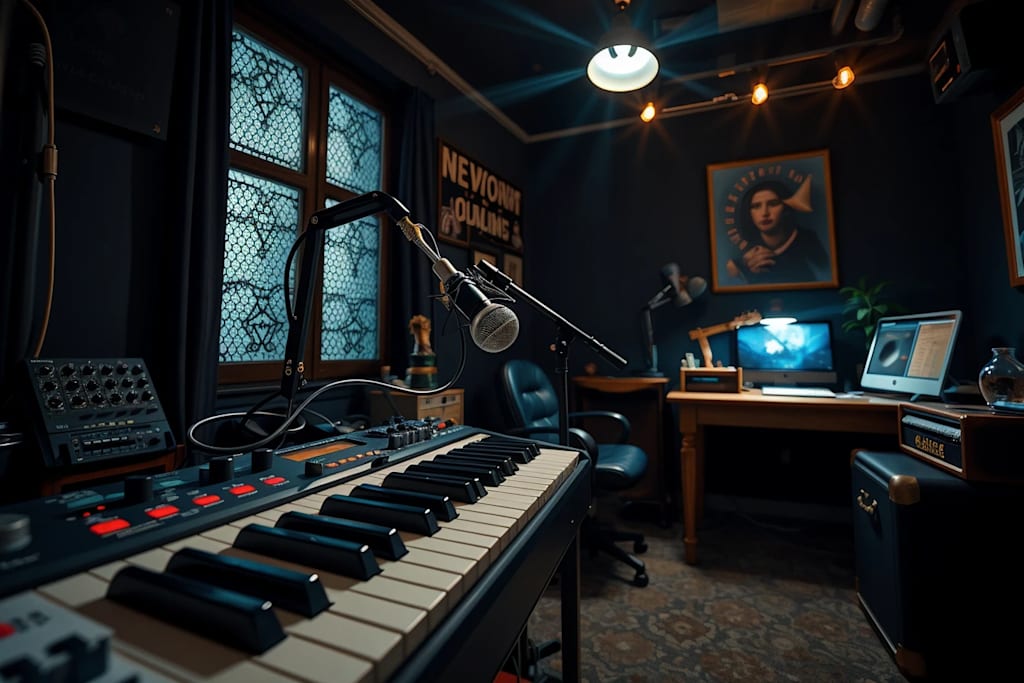
This is a written manuscript about parts of my life that many people don’t know my real connection to the music and film industry. It’s a grounding story, a reminder that I truly worked and lived inside that world, and that this is where my videos, music, and art come from. It is mine, copyrighted. It isn’t just about me, but about everyone who has lived through the ups and downs of their own industry. Now, at 76, I’ve decided to write my memoirs not to show off, but to tell the stories of adventures, mistakes, choices, and Menopause, Music, and the Long Road Back.
Menopause, Music, and the Long Road Back
Dust, Rust, and the Sifting Sand Blues
In the early 2000s, I was a woman in menopause, living inside the music world, and trying to find my way back from a life that had spun out of control.
The year I drove my Chevy wagon to Delaney Bramlett’s ranch and “My Sweet Lord” came on at the exact moment I turned into his driveway was the same year my life split into the years before and the long road back.
Looking back now, I can see that menopause, music, and trauma shaped those years more than any choice I thought I was making.
The Valley Years
I did not understand it at the time, but the early 2000s were the last years before everything in my life broke open. I was living in the San Fernando Valley, driving a Chevy wagon that rattled on cold mornings, moving through the music world like someone who belonged there and someone who was barely holding on at the same time.
What I did not have language for then was that I was already recovering from domestic violence with a Native American film producer I had been deeply in love with. The aftermath of that relationship left me in shock, numb in ways I could not identify, and moving through my days with instincts that no longer worked. I was in menopause, too, which only intensified the confusion. I was not choosing anything in those years I was surviving.
I did not know the word “empath” back then. I only knew that I felt everything too strongly and too quickly, especially other people’s moods. In the music world, that sensitivity looked like intuition. In my private life, it made me vulnerable. I absorbed tension before anyone spoke it, and I mistook emotional intensity for connection. Without the language for what I was, I moved through those years unprotected, reacting to currents I could not name.
Delaney Bramlett was part of that world, orbiting close enough to feel like a possibility I could not reach. He was older, seasoned, a man with history in his voice and in his hands. People like him did not just appear in most lives, but in mine they did, as if the universe kept placing alternate timelines in front of me to see which one I would choose. I never chose the right one. Not then.
The day I drove to his ranch is the moment that still plays like a scene in a film. I turned off the main road, the gravel shifting under the tires, and just as the driveway curved toward his house, “My Sweet Lord” came on the radio. George Harrison’s voice filled the car at the exact second I arrived at the home of the man who had worked on that very song.
It was not subtle. It was not coincidence. It was one of those universe timed cues that hits the body before the mind can catch up. Chills rise along my arms, the kind that tell you are standing in the middle of something bigger than you understand. But I did not have the clarity to interpret signs back then. My nervous system was still in recovery, still wired for danger, still unable to recognize safety even when it stood right in front of me.
Delaney asked me once why I chose the drummer instead of him. I did not have an answer. I still do not, not one that fits into a single sentence. The truth is that trauma makes familiar things feel safe and safe things feel unfamiliar. And I was already carrying the early shock of what would become the defining rupture of that era.
But in that moment the driveway, the song, the timing I was still a woman who believed she had choices. I did not know yet that my life was about to split into the years before and the long road back.
With Barberine
Before any of the men who would shape that era, I was already carrying a history that set the stage for everything that came after. I had grown up around music, around intensity, around people whose emotions filled rooms before their words did. I learned early to read moods, to anticipate shifts, to absorb tension before it surfaced. I did not know the word “empath” then, but the wiring was already there. It made me perceptive in creative spaces and unprotected in personal ones.
By the time I reached my early forties, I had lived through enough instability to normalize it. I had worked in journalism, in music circles, in environments where strong personalities were the norm. I had also survived earlier relationships that blurred the line between passion and volatility. None of it felt unusual to me at the time. It was simply the world I knew.
The domestic violence with the Native American film producer came first. I was deeply in love with him, and I did not recognize the early signs of danger. When the rupture finally came sudden, violent, and stopped only because a tall German producer stepped between us, I went into shock. Not fear. Shock. The kind that makes everything feel far away. I moved through the aftermath numb, without language for what had happened.
But I did not leave California immediately. I stayed. I stabilized. I kept working. And in that period after the violence, when I was still trying to understand myself, Barberine appeared.
He was a retired country music writer who had worked with George Jones. It sounds like a joke now, but at the time it made perfect sense. He was older, steady, and carried the kind of Nashville history that felt familiar to me. I was not looking for romance. I was looking for grounding. Barberine offered that not with intensity, but with presence.
He is the one who mentioned Austin. He talked about it like a place where people reinvented themselves, where music lived in the walls, where a woman could start over without explaining her past. I did not have a plan, but he did. And when he said, “Let’s go,” I said yes.
I drove my rattling Chevy wagon. Barberine drove his car pulling a U Haul. The two of us heading east looked like a mismatched caravan, two people from different chapters of the same book, trying to write a new one.
Austin was not an escape from the violence. It was a decision made after the dust settled, influenced by a man who believed a fresh start might help. I did not know it then, but the survival years were waiting for me on the other side of that drive.
Austin: The Survival Era
Austin did not begin with Greene. It began with Barberine.
After the domestic violence, I did not collapse. I stayed in California, worked, stabilized, and kept moving through my life. I was not broken. I was recovering. And in that period, Barberine became part of my world older, steady, retired country music writer who had worked with George Jones. I joked that I had men lining up, but the truth was simpler: Barberine was the one who showed up with presence, not intensity.
He is the one who mentioned Austin. He talked about it like a place where people reinvented themselves, where music lived in the walls, where a woman could start over without explaining her past. I did not have a plan, but he did. And when he said, “Let’s go,” I said yes.
I drove my rattling Chevy wagon. Barberine drove his car pulling a U Haul. We looked like a mismatched caravan heading East, two people from different chapters of the same book, trying to write a new one. He stayed with me in Austin for two years.
And Austin was not quiet for me. I did not sit on the sidelines. I stepped straight into the music scene.
I worked with Associated Content, covering the Austin City Limits Music Festival. I filmed concerts. I created videos. I collaborated with my musician neighbor and his band, documenting their shows, capturing their sound, and building small projects that felt like real work. I was not drifting I was participating. I was in the rooms, in the crowds, in the late night rehearsals, in the creative pulse of the city.
Austin was a music town, and I was part of it.
It was only when my cousins and I forced Barberine out that Greene became a part of my life. I met him at HEB, of all places. A grocery store aisle, a casual conversation, the kind of meeting that does not feel important until it becomes part of the story. Greene was not a soulmate or a destiny. He was simply the next character in the survival era, someone who filled space during a time when I was still finding my footing.
Menopause was still shaping everything my body, my moods, my sleep, my sense of self. I did not have healthcare, and I did not have language for what was happening inside me. I was not falling apart, but I was not thriving either. I was maintaining.
There was a drummer who lived nearby not a partner, not a lover, just a presence. Someone who existed in the same orbit during a time when I did not have the energy for anything complicated. He was safe in the way background characters are safe: close enough to be familiar, distant enough to require nothing.
Austin was a middle chapter creative, chaotic, functional, and unfinished. A place where I worked, filmed, collaborated, and survived. A place where I was in the music scene even when I did not feel fully in myself.
It was not the end of the story. It was the long stretch where life kept moving, even when I was not sure where it was taking me.
The Escape to the Beach
The decision to leave Austin did not come from chaos. It came from a quiet knowing the sense that the chapter with Greene had reached its limit inside the city. Austin had been the place where I rebuilt myself after Barberine, where I worked in the music scene, where I filmed concerts and covered festivals, where I lived through menopause without a map. But by the time Greene and I were sharing space, the city felt smaller, tighter, like a room I had already outgrown.
I am the one who suggested the beach.
It was not dramatic. It was not a plea. It was a simple idea spoken aloud:
“Let’s go to the coast.”
Greene did not resist. He was restless in his own way, drifting through Austin without direction. The beach sounded like a reset, a softer place, a place where the noise of the city would not press so hard against our lives. Rockport had that kind of reputation, quiet, slow, a town where people went when they wanted to believe life could be simple again.
So, we packed up our things.
No big plan.
No ceremony.
Just two people decide to leave one chapter for another.
The drive to Rockport felt like stepping sideways out of the life I had been living. The landscape of Texas opened, the air changed, and the closer we got to the coast, the more it felt like we were entering a different version of the story, not better, not worse, different.
Rockport was not a dream.
It was not a destiny.
It was an escape to a beach town chosen because it was far enough from Austin to feel like a new beginning.
I did not know then that it would become the last detour before everything shifted again.
I only knew that I needed the ocean, the quiet, the space.
At that time, d Greene accompanied me since our timelines remained connected.
Act V was not about love.
It was not about hope.
It was about movement, the instinct to keep going, to keep trying, to keep finding the next place where life might make sense.
Rockport was waiting.
And so was the truth that would end the Greene chapter for good.
The Long Road Back
Leaving Rockport was not dramatic. It was not a collapse or a crisis. It was a quiet, steady decision the kind you make when you finally understand that a chapter has finished writing itself. Greene had moved another woman into the house, but the truth is, I had already left long before that. The moment he told me he saw demons on his side of the bed and angels on mine, something in me stepped out of the story.
I did not leave because of betrayal.
I left because of clarity.
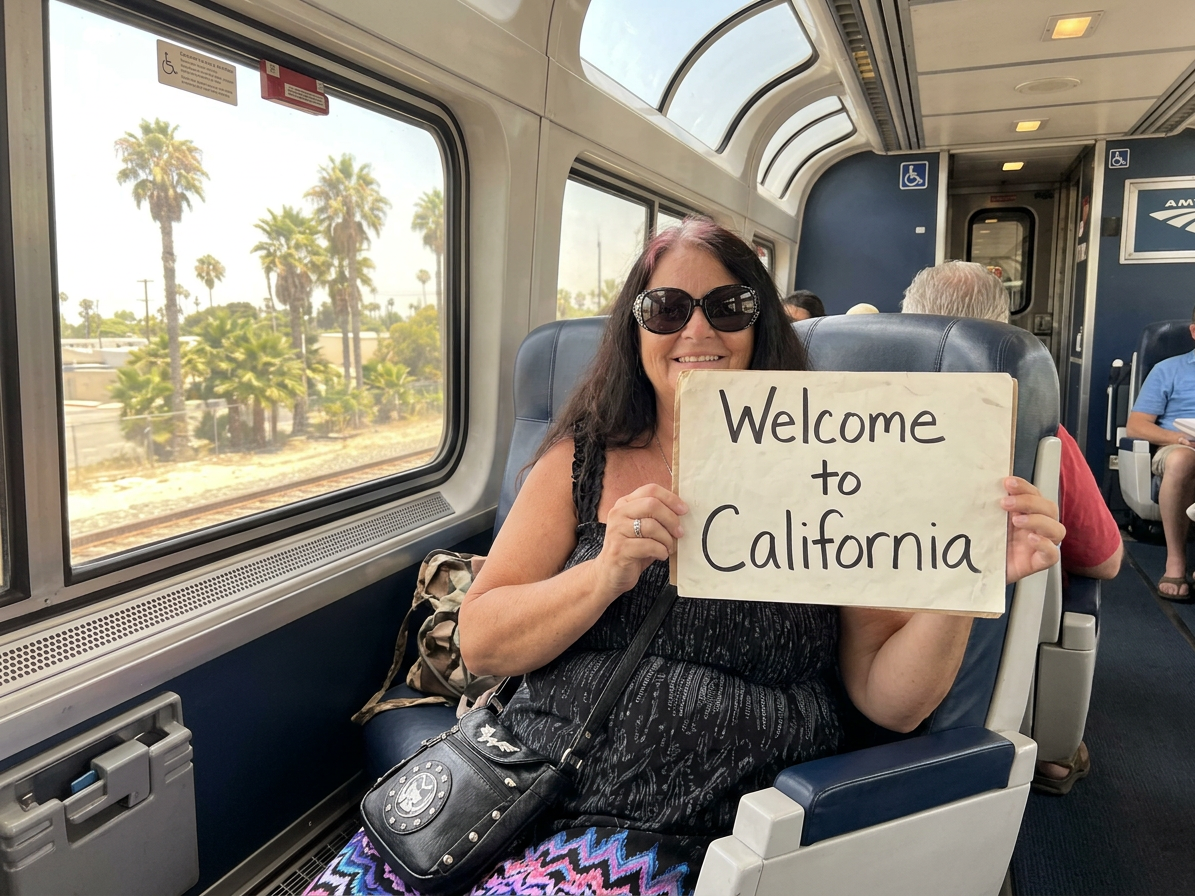
The road back to California was not a return to the past. It was a return to myself the self I had been losing and finding in pieces through every act of the story. The Valley looked different when I came back, but so did I. I was not the woman who had left. I was not the woman who had survived Austin, or the woman who had lived through Rockport. I was someone who had walked through every version of herself and come out on the other side with a kind of quiet authority.
The long road back was not about healing.
It was about understanding.
Understanding that I had survived more than I ever named.
Understanding that menopause had shaped entire chapters without my consent.
Understanding that my empath wiring had pulled me into storms I didn’t know how to read.
Understanding that trauma had influenced my choices, but it had never defined my worth.
Understanding that every man Delaney, Berberine, the film producer, Greene was a character in a story I was still learning how to narrate.
California did not give me answers.
It gave me perspective.
I could finally see the timelines clearly the Valley years, the rupture, the Austin survival era, the Greene chapter, and the Rockport detour. I could see how each version of me had been doing the best she could with the information she had. I could see how none of it was failure. It was simply life, lived in real time, without the luxury of hindsight.
The long road back was not a destination.
It was a recognition.
An understanding dawned that I had never genuinely found myself lost.
I had been walking toward myself the entire time.
The Weather of Now
I walked through the apartment the way I always do in the late afternoon, checking the corners, the windows, the outside light. It was cloudy and cool, the kind of California weather that feels like a pause, like the sky is giving you room to breathe. Nothing dramatic. Nothing symbolic. Just a moment of stillness that did not require anything from me.
For years, my life had been shaped by motion the Valley, the rupture, Austin, Barberine, the music scene, Greene, Rockport, the escape, the return. Every chapter had its own weather, its own temperature, its own pressure system. But this moment this simple walk through my apartment felt like the first time the weather matched my internal landscape.
Quiet.
Steady.
Uncomplicated.
I was not scanning for danger.
I was not bracing for someone else’s mood.
I was not adjusting myself to fit a man, a city, or a crisis.
I was just here.
The long road back had brought me to a place where the ordinary felt like a gift. The cloudy sky, the cool air, the familiar walls were not symbols of anything. They were simply mine. A life I did not have to escape from. A life that did not require survival mode. A life that did not demand I shrink, translate, or absorb.
This chapter was not about a man.
It was not about a city.
It was not about a rupture or a recovery.
It was about presence.
The woman who walked through this apartment was not the woman who left California, or the woman who survived Austin, or the woman who stood on the beach in Rockport trying to understand her reflection in someone else’s chaos.
This woman was grounded.
Clear.
Sovereign.
The weather outside was cloudy and cool.
The weather inside was calm.
For the first time in a long time, both matched.
The Threshold of Independence
The apartment I live in now is a two bedroom temporary, practical, and exactly what I needed after the long road back. My roommate and I share the same space but not the same frequency. She does not understand my music, my writing, or the way I create. It is not conflicting; it is simply that we live in different worlds. She prefers quiet routines. I live in cycles of sound, story, and expression.
The rent is going up in November.
We will have to move.
But for the first time in my life, which does not feel like a crisis. It feels like a doorway.
I will stay in Riverside, or I will go where the universe places me.
Either way, I am not afraid.
I am writing again.
I am creating art and music again.
I am making videos again.
The creative pulse that carried me through Austin, through the concerts I filmed, through the stories I told it is alive in me again.
And sometimes, in the middle of all this creating, a song from the past slips in.
The other day I played Delaney’s “What’d Do You Do About Me,” and for a moment I was back in that alternate timeline the ranch, the Valley, the version of my life that almost was. Not with longing. Not with regret. Just recognition.
That song used to break me open.
Now it just reminds me that I survived every version of myself.
I am not running anymore.
I am walking toward independence steady, grounded, and awake.
The next place I live won’t be an accident.
It will be chosen.
It will be aligned.
It will be mine.
Dust, Rust, and the Sifting Sand Blues
I played Dust, Rust, and the Sifting Sand Blues late one night, letting the room go quiet before the first note hit. The moment it started, the air shifted. Not because it was loud, but because it was my voice, my rhythm, my story, my blues.
This was not the music of the Valley years.
This was not Austin’s music scene.
This was not Delaney’s soundtrack or Greene’s chaos.
This was the blues I wrote myself the blues that carried the truth of every chapter I lived through.
The song held the grit of the road, the rust of old memories, the dust of places I left behind, and the sifting sand of every identity I had to shed to get here. It was not a lament. It was not a cry. It was a declaration.
I was not singing about the past.
I was singing from the present.
The blues in that track came from sovereignty, not survival.
From clarity, not confusion.
From the woman who walked through fire and came out with a voice that did not need permission anymore.
As the song played, I realized something simple and profound:
I had become the narrator of my own story.
Not the girl in the Valley.
Not the woman in Austin.
Not the survivor in Rockport.
Not the wanderer on the long road back.
I was the artist.
My roommate next door could not relate to my music; she was not suited for a world where blues is spoken, and creativity is as natural as breathing. And that was fine. This two bedroom was never meant to be the destination. It was a bridge.
But this song, this blues, was the marker of the next chapter.
It was the sound of me stepping forward.
It was the sound of me choosing myself.
It was the sound of the life I am building, not the life I escaped.
When the last note faded, I did not feel nostalgia.
I felt direction.
The next place I live will be mine, a single apartment, a creative sanctuary, a room where my blues can echo without apology. A place where my art, my writing, my videos, and my voice can breathe.
This chapter is not about the past.
It is about the blues I wrote myself
and the woman who finally knows what to do with them.
The Single Room, The Open Door Soon to be
When the time finally came to leave the two bedroom, it did not feel like an ending. It felt like a quiet, steady shift into the life I had been walking toward for years. The rent went up, the frequencies clashed, the walls felt too tight for the woman I had become. I did not leave in a rush. I did not leave in fear. I left because the next version of me needed space.
The single apartment was not big. It was not fancy. It was not a dream loft or a curated sanctuary. It was something better: mine.
One room.
One door.
One frequency.
One life.
I set my things down and felt the air settle around me not heavy, not haunted, not borrowed. Just mine. The kind of quiet that does not demand silence. The kind of space that does not require shrinking. The kind of room where creativity does not have to negotiate for oxygen.
This was the first place in a long time where my blues could echo without apology.
Where Dust, Rust, and the Sifting Sand Blues could fill the walls and feel like home.
Where my writing could stretch out.
Where my art could breathe.
Where my videos could take shape without someone asking why.
This was not survival.
This was not an escape.
This was not a reset.
This was arrival.
I had walked through the Valley years, the rupture, Austin, Barberine, the music scene, Greene, Rockport, the long road back, the two bedroom transition. Every chapter had carved something out of me and given something back. But this room, this single apartment, was the first chapter I chose entirely for myself.
No man.
No chaos.
No compromise.
No translation.
Just me the artist, the storyteller, the woman who lived through every version of herself and came out with a voice strong enough to carry her forward.
I set up my desk.
I hung my art.
I played my blues.
I opened my laptop.
And I began again.
Not from scratch.
From sovereignty.
This is the room where I am creating now.
This is the room where my stories live.
This is the room where my music grows.
This is the room where my art breathes.
This is the room where I stand in my own life without flinching.
And if you want to step into that world the one I built from dust, rust, sifting sand, and survival the doorway is open.
This is not an ending.
It is the beginning of the life I finally get to choose.
THE FUTURE PLACE A Closing Note
My future place is coming soon.
I can feel the way you feel weather shifting before the sky changes quiet, certain, already forming. I do not know the exact address yet, but I know the shape of it. I know the feeling of it. I know the frequency.
It will be a single apartment
a room that matches my rhythm,
a space where my blues can echo,
a place where my art, my writing, my music, and my videos can breathe without negotiation.
It might be in Riverside.
It might be somewhere the universe nudges me toward.
But it will be mine chosen, not survived.
This time, I am not moving because life pushed me.
I am moving because I am ready.
My future place is not a dream.
It is a destination already unfolding,
a chapter already opening,
a door already unlocking.
And when I step into it,
I will bring everything I have created,
everything I have reclaimed,
and everything I have become.
The story does not end here.
It expands.
written created edited by
Vicki Lawana Trusselli
Trusselli Art
Outstages Cafe Art Studio
copyright 2026
About the Creator
Vicki Lawana Trusselli
I am 76 year old California mythic storyteller blending lived truth, technology, and sovereign survival into multimedia art.
Enjoyed the story? Support the Creator.
Subscribe for free to receive all their stories in your feed. You could also become a paid subscriber, letting them know you appreciate their work.
Comments
There are no comments for this story
Be the first to respond and start the conversation.