World History
The Gold Standard Illusion: Why It Never Solved Money
In the town of Ashford, people believed gold could solve every problem. The old men in the tea houses said gold was honest. The bankers said gold was safe. Politicians stood on wooden stages and promised that if every paper note was tied to gold, no country would ever become poor again. Daniel Mercer heard these promises all his life. He owned a small shop near the train station where he sold flour, tea, soap, and candles. He was not rich, but he worked hard and earned enough to care for his wife and son. One winter morning, a government officer came to town with a box of new notes. “Every note is backed by gold,” he announced proudly. “Our money is now stronger than ever.” The crowd clapped. Daniel clapped too. At first, everything seemed fine. Prices stayed steady. People trusted the new notes because they believed gold was sitting safely in vaults somewhere far away. But a year later, the rains failed. Farmers harvested less wheat. Fewer goods reached the market. Families started spending less because they were afraid. Daniel noticed it first in his shop. Customers who used to buy full bags of flour began asking for half. Some bought one candle instead of three. Others promised to pay later. Daniel went to the bank for a small loan so he could keep his shelves full. The bank manager shook his head. “We cannot lend more money,” he said. “Why not?” Daniel asked. “Because we do not have enough gold reserves.” Daniel stared at him. “But people need money now more than ever.” The manager folded his hands. “That may be true. But rules are rules.” Soon, factories reduced workers. Shops closed early. Men stood outside train stations hoping for jobs that never came. Still, politicians repeated the same line. “We must protect the gold.” It became the answer to everything. When wages fell, they said the gold must be protected. When families lost homes, they said the gold must be protected. When farmers could not buy seeds, they said the gold must be protected. Daniel began to wonder who the money system was really helping. One evening, he visited his old schoolteacher, Mr. Whitmore, who lived alone near the river. The old man listened quietly while Daniel explained everything. Then Mr. Whitmore picked up three objects from his table: a loaf of bread, a silver coin, and a small gold ring. “Which of these has the most value?” he asked. Daniel pointed to the gold ring. “It is worth the most money.” Mr. Whitmore smiled. “And if you are starving?” Daniel looked at the bread. “And if you need to travel?” Daniel looked at the coin. Mr. Whitmore leaned back in his chair. “Gold is useful,” he said. “But people make the mistake of believing it is magical. Real wealth is not gold sitting in a vault. Real wealth is food, work, farms, factories, roads, and people with skills.” Daniel stayed silent. “The country is suffering,” Mr. Whitmore continued, “because leaders care more about protecting metal than helping people trade, work, and live.” A few years later, the government finally abandoned the gold system. Many people feared disaster. They expected chaos. But something surprising happened. Banks started lending again. Factories reopened. Farmers bought tools. Shops filled with customers. Daniel repaired his old store sign and hired two young boys to help him. Life was not perfect. There were still arguments about money, prices, and taxes. But Daniel learned something he never forgot. Money only works when it serves people. The problem with gold was never the metal itself. The problem was the belief that gold alone could fix an economy. Years later, when Daniel’s son grew old enough to run the shop, he asked his father why so many people once trusted gold so much. Daniel looked at the busy market outside, full of carts, workers, farmers, and customers. Then he smiled. “Because people like simple answers,” he said. “But money has never been simple.”
By JAMES NECK 6 months ago in History
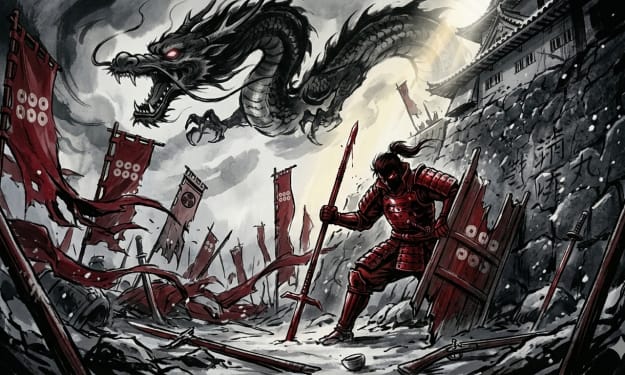
The Last Crimson Blaze: Sanada Yukimura and the Beauty of a Lost Cause
1. The Undisputed Underdog In the pantheon of Japanese history, success often equates to power, like Oda Nobunaga’s brutal unification (image_20.png) or Miyamoto Musashi’s sixty-one undefeated duels (image_18.png). But the most beloved hero in Japan is a man who technically lost. His name was Sanada Yukimura, and his legend is built on the profound, heartbreaking beauty of a doomed cause.
By Takashi Nagaya6 months ago in History
The Vietnam War
On March 16, 1968, soldiers of Charlie Company entered the Vietnamese village of My Lai expecting to find Viet Cong fighters but instead found only unarmed civilians, mostly women, children, and elderly men, and over the next four hours they systematically murdered between 347 and 504 people, raping women before killing them, bayoneting children, and burning homes with families inside, and when their commander Lieutenant William Calley ordered them to stop shooting because there was no one left to shoot, the U.S. military covered up the massacre for over a year until investigative journalist Seymour Hersh broke the story, and even then only one person was convicted despite dozens of soldiers participating in the killing.
By The Curious Writer6 months ago in History
The Crusades
On July 15, 1099, after five weeks of siege, Christian Crusaders breached the walls of Jerusalem and embarked on a massacre so extreme that eyewitnesses reported riding horses through streets where blood reached the stirrups, slaughtering every Muslim and Jewish resident they could find regardless of age or gender, and one chronicler recorded that the killers then washed the blood from their hands and walked barefoot to the Church of the Holy Sepulchre to pray and give thanks to God for their victory, seeing no contradiction between worship and genocide.
By The Curious Writer6 months ago in History
Napoleon's Frozen Army
Napoleon Bonaparte invaded Russia in June 1812 with the largest army Europe had ever assembled, over 600,000 soldiers from across his empire, and six months later fewer than 100,000 staggered back across the border as broken remnants of the greatest military force in history, destroyed not primarily by Russian armies but by the Russian winter, starvation, disease, and the deliberate strategy of scorched earth that left the invaders with nothing to eat in a landscape stripped bare by the retreating Russians who burned their own cities and farms rather than allow Napoleon to use them.
By The Curious Writer6 months ago in History
The Boy Soldiers of Shiloh
When the Battle of Shiloh erupted on April 6, 1862, over ten thousand soldiers on both sides were under the age of eighteen, with the youngest confirmed combatant being nine-year-old Johnny Clem who picked up a musket taller than himself and charged Confederate positions, and by the time the two-day battle ended with 23,746 casualties, hundreds of these child soldiers lay dead or dying in the Tennessee mud, calling for their mothers while surgeons too overwhelmed to treat adults stepped over their broken bodies to reach soldiers they deemed more likely to survive.
By The Curious Writer6 months ago in History
Iran’s Mosaic Doctrine Rising
The Mosaic Doctrine: Is Iran Following Israel’s Strategic Playbook? From Defense to Pre-Emptive Intelligence Power In modern geopolitical warfare, few strategic doctrines have shaped intelligence operations like the Mosaic Doctrine, more widely known as the Begin Doctrine. Originally developed by Israeli leadership, this doctrine focuses on preventing enemies from becoming powerful enough to threaten national security — even if that requires covert operations, sabotage, or pre-emptive strikes.
By Wings of Time 6 months ago in History
The Man Who Vanished in front of 134 People in Sahara part 2
The sun of the fifth day was about to set when suddenly a sound hit his ears—the sound of a helicopter. He felt his prayers had been answered. Without wasting time, Prosperi took out his flare gun and fired a signal to get the pilot's attention. But perhaps nature had other plans. The light of the setting sun was so bright that the flash of the flare was drowned out. The pilot didn't see him, and the helicopter vanished from sight.
By Imran Ali Shah6 months ago in History
The Man Who Vanished in front of 134 People in Sahara part 1
The Sahara Desert—another name for death—where in 1994, a man suddenly vanishes from among 134 people while running a marathon. Neither his body nor any trace of him is found. Then, 9 days later, he emerges from an unknown place across the border. This is the story of Italian police officer Mauro Prosperi, whom even death refused to accept.
By Imran Ali Shah6 months ago in History
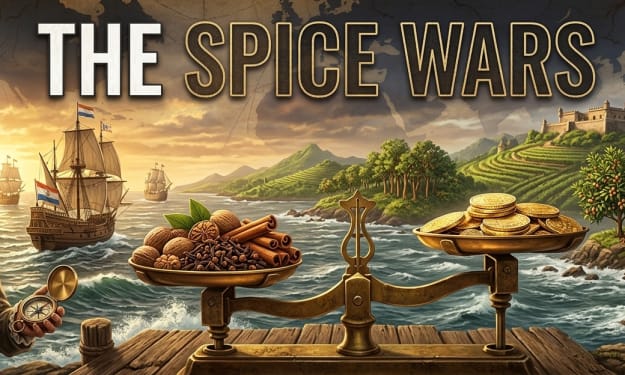
The Spice Wars: When Europe Fought Over Flavor and Fortune
When Flavor Was Worth Fighting For Back in the late 1400s and early 1500s, Europe had a serious obsession with spices. Pepper, nutmeg, cloves, and cinnamon weren’t just kitchen ingredients—they were status symbols. A pinch of pepper could cost as much as a day’s wages. Most of these spices came from a tiny cluster of islands in Southeast Asia known as the Maluku Islands. Getting them to Europe was complicated and expensive, mostly controlled by middlemen through the Ottoman Empire and trading hubs like Venice. European powers didn’t like that arrangement. They wanted direct access—and bigger profits. The Race to Find a Shortcut This is where things start to feel like a real-world adventure story. Explorers began searching for sea routes to Asia, kicking off what we now call the Age of Discovery. One of the most important breakthroughs came when Vasco da Gama successfully sailed around Africa to reach India in 1498. That single journey changed everything. Portugal suddenly had a direct line to the spice trade. And they didn’t waste time—they built forts, controlled ports, and used military force to dominate the routes. From Trade to War Here’s where things got messy. Other European powers—especially the Dutch and the British—weren’t going to sit back and watch Portugal cash in. They formed powerful trading corporations like the Dutch East India Company and the British East India Company. These weren’t regular businesses. They had armies, navies, and the authority to wage war. Think about that for a second: private companies fighting battles over spices. The Dutch, in particular, became ruthless in securing control over nutmeg and cloves. They even went as far as destroying spice trees in areas they didn’t control—just to keep supply low and prices high. A Practical Example (That Still Applies Today) When I first learned about this, it reminded me of something very modern: supply chains. If you’ve ever tried to buy a popular gadget during a shortage—or even struggled to find a specific ingredient—you’ve experienced a tiny version of what was happening back then. The spice trade worked on three simple principles: Control the source Limit supply Maximize profit It’s not that different from how certain tech products or luxury brands operate today. Mistakes That Cost Lives and Empires One thing that stands out when you look deeper into the spice wars is how often greed led to poor decisions. Portugal, for example, expanded too quickly. They controlled key routes but couldn’t maintain dominance everywhere. The Dutch learned from that and focused more strategically, locking down the most valuable islands instead of spreading thin. The British took a different route. Instead of fighting only for spices, they gradually shifted toward broader control in India, which turned out to be a much more sustainable long-term strategy. It’s a lesson I’ve seen play out even in small-scale projects: trying to control everything at once usually backfires. What This Means for Everyday Life You might be thinking, “Okay, interesting history—but how does this matter now?” Here’s the thing: the spice wars shaped the modern world in ways we still live with. Global trade routes? Built on those early spice journeys Colonial borders? Influenced by these power struggles Cultural food exchange? A direct result of spice movement Even your local grocery store—with spices from all over the world—is part of that legacy. If You Want to Experience It Yourself This might sound unusual, but one of the best ways to understand the spice wars is through cooking. Here’s a simple way to do it: Step 1: Buy whole spices instead of pre-ground Try cloves, cardamom, black pepper, and cinnamon sticks Step 2: Toast them lightly in a pan This releases oils and gives a deeper flavor Step 3: Grind them fresh A simple mortar and pestle works great Step 4: Use them in a basic dish Even plain rice or chicken becomes something special The difference is dramatic—and it helps you understand why people once risked everything for these ingredients. A Story That Still Feels Alive The spice wars weren’t just about food. They were about ambition, risk, and control. Empires rose and fell chasing something as simple as flavor. And honestly, once you’ve cooked with real, fresh spices, it stops feeling strange. You start to get it. There’s something powerful about taste. It connects people, drives demand, and—at least once in history—reshaped the entire world. That’s not something you notice from a textbook. But once you experience it firsthand, even in a small way, the story sticks with you.
By JAMES NECK 6 months ago in History
The Prophet's (PBUH) Hajj: A Detailed Account
The Prophet's (PBUH) Hajj: A Detailed Account The Prophet (PBUH) performed Umrah four times and Hajj once. A complete and meticulous account of his Hajj has reached us through his companions, with every minor detail captured in the following Hadith.
By Amir Husen6 months ago in History