Research
Finally! US & Iran Deal Reached – Is the War Really Over?
Finally! US & Iran Deal Reached – Is the War Really Over? After months of military confrontation, diplomatic pressure, and growing fears of a wider regional conflict, the United States and Iran have announced a framework peace agreement that could mark a turning point in one of the most dangerous crises of recent years. The announcement has generated hope across the world, but many analysts caution that the path to lasting peace remains uncertain.
By Wings of Time 4 months ago in History
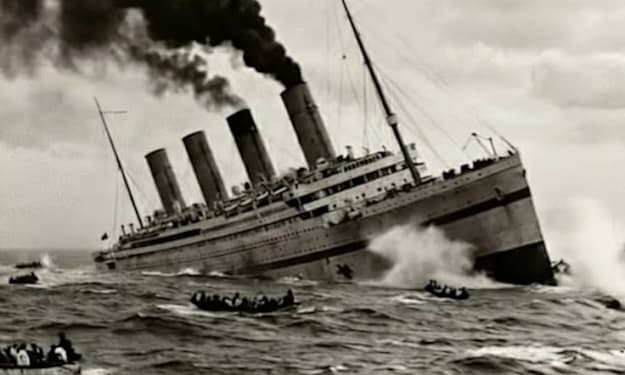
The Boy Who Survived the Titanic A True Story of Courage, Disaster, and Survival. AI-Generated.
The Boy Who Survived the Titanic The Largest Ship in the World Begins Its Journey On April 10, 1912, the Titanic left Southampton, England, on its first voyage to New York City. At that time, it was the largest and most luxurious passenger ship ever built. People called it the "unsinkable ship" because they believed its design made it impossible to sink. More than 2,200 passengers and crew members were on board. Among them was a young boy traveling with his family. Like many children on the ship, he was excited about the journey and looked forward to arriving in America. For the first few days, everything seemed perfect. Passengers enjoyed delicious meals, music, games, and beautiful views of the Atlantic Ocean. Nobody imagined that a terrible disaster was waiting ahead. Warnings About Icebergs As the Titanic continued across the ocean, other ships sent messages warning about icebergs in the area. Icebergs are huge pieces of ice that float in the sea. Some are large enough to damage even the strongest ships. The warnings reached the Titanic, but the ship continued moving at high speed. The weather was calm, and the ocean looked peaceful. Many passengers slept comfortably that night, unaware of the danger ahead. The Titanic Hits an Iceberg At about 11:40 p.m. on April 14, 1912, lookouts spotted a giant iceberg directly in front of the ship. The crew immediately tried to turn the Titanic away, but there was not enough time. The side of the ship scraped against the iceberg. Several compartments below the waterline were damaged, and seawater began rushing inside. At first, many passengers did not realize how serious the collision was. The impact felt small, and some people even returned to their cabins. However, the ship's engineers soon discovered the truth. The Titanic was sinking. Passengers Are Ordered to the Deck Crew members quickly began waking passengers and telling them to put on life jackets. People came out onto the cold night deck, confused and worried. Many asked questions, but few knew exactly what was happening. The young boy stayed close to his family as they moved through the crowded ship. Soon, lifeboats were prepared. A Serious Problem: Not Enough Lifeboats One of the biggest problems was that the Titanic did not carry enough lifeboats for everyone on board. Women and children were given priority. Families faced heartbreaking decisions as they realized there was not enough room for all passengers. The boy's family knew he had a better chance of survival if he entered a lifeboat. The Boy Leaves the Titanic The young boy was placed into a lifeboat with other women and children. As the lifeboat was lowered into the dark ocean, he looked back at the enormous ship. The Titanic was brightly lit against the night sky. From a distance, it still looked powerful and beautiful. But beneath the surface, water continued flooding the ship. The Titanic Begins to Sink As the hours passed, the front of the Titanic slowly sank deeper into the freezing Atlantic Ocean. Passengers in the lifeboats watched in fear. Then the ship tilted sharply. The back of the ship rose high into the air. Many people screamed as they realized the end was near. In the early hours of April 15, 1912, the Titanic broke apart and disappeared beneath the ocean. A Night of Fear and Survival The survivors in the lifeboats drifted through the darkness for hours. The air was freezing cold. Many people were frightened, exhausted, and uncertain if help would arrive. The young boy sat quietly among the survivors. He had just witnessed one of the greatest disasters in history. The night seemed endless. Rescue Finally Arrives As morning approached, hope appeared on the horizon. A ship called the Carpathia had received the Titanic's distress signals and rushed to help. The rescue ship began picking up survivors from the lifeboats. One by one, people climbed aboard. The young boy was finally safe. The World Learns About the Disaster When the survivors arrived in New York, newspapers around the world reported the shocking news. The Titanic, believed to be unsinkable, had sunk on its very first voyage. More than 1,500 people lost their lives. The tragedy shocked millions of people and became one of the most famous disasters in history. How the Titanic Changed Safety Forever After the disaster, governments introduced new safety rules. Ships were required to carry enough lifeboats for everyone on board. Better communication systems were installed, and special ice patrols began monitoring dangerous areas of the Atlantic Ocean. These changes have helped save many lives over the years. The Legacy of the Boy Who Survived The young boy survived one of the deadliest maritime disasters ever recorded. His experience became part of history and helped future generations understand what happened on that tragic night. More than one hundred years later, people still remember the Titanic and the survivors who lived to tell their stories. The boy's survival reminds us that courage, hope, and determination can help people endure even the darkest moments. The Titanic may be gone, but the lessons and stories from that night continue to inspire the world today.
By Hafiz afridi4 months ago in History
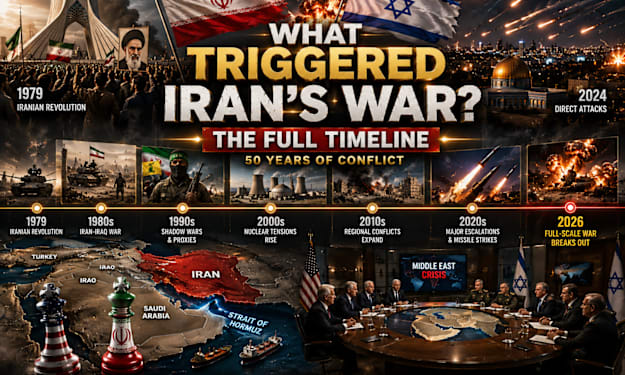
The Point That Triggered Iran's War – The Timeline & History of Middle Eastern Conflict
The Point That Triggered Iran's War – The Timeline & History of Middle Eastern Conflict The current conflict involving Iran did not begin overnight. It is the result of decades of political, religious, military, and geopolitical tensions that have shaped the Middle East for generations. To understand why the region remains unstable today, it is important to examine the timeline of events that gradually transformed rivals into enemies and turned regional disputes into a major international crisis.
By Wings of Time 4 months ago in History
The Fascinating History of Radio: From Invisible Waves to a Global Revolution
For many of us, radio is something we associate with music, news, and entertainment. Even today, stations like Radio Mirchi, Radio City, and FM Tadka continue to entertain millions of listeners. But have you ever wondered how radio was invented and how it became one of the most powerful communication tools in human history?
By parwinder singh4 months ago in History
The Man Who Could Control Minds: The Mysterious Story of Wolf Messing
In books, films, and legends, we often come across stories of people who can read minds, influence thoughts, or control human behavior. Most call it magic, illusion, or myth. But there was one man whose abilities left the world divided—some called him a genius, others called him a mystery.
By parwinder singh4 months ago in History
Black Death: The Pandemic That Changed the World Forever
In the history of humanity, countless wars, disasters, and revolutions have changed the course of civilization. Yet few events have left a mark as devastating as the Black Death. This deadly pandemic swept across continents in the 14th century, killing millions and transforming society in ways that are still felt today.
By parwinder singh4 months ago in History
Iran Destroyed a "$100 Million Toy"?
Iran Destroyed a "$100 Million Toy"? US Attacks Iranian Radars – Bahrain & Pakistan in Focus Tensions in the Gulf region have once again captured global attention as the United States and Iran continue to exchange military actions and political warnings. Recent reports indicate that U.S. forces conducted strikes against Iranian radar and surveillance facilities, while Iran responded with missile and drone attacks targeting locations associated with U.S. military operations in the Gulf. These developments have raised concerns about regional stability and the possibility of further escalation.
By Wings of Time 4 months ago in History
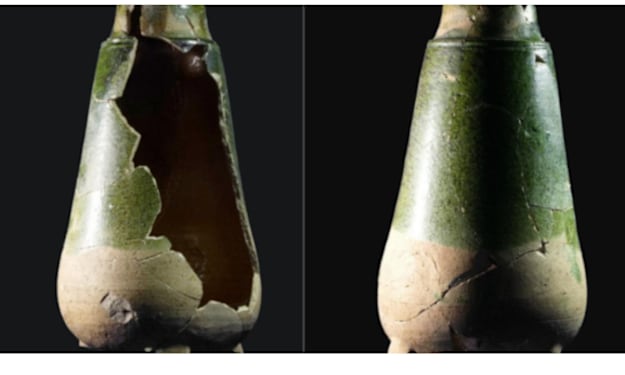
The discovery of a mediaeval distillation vessel at Gnandstein Castle suggests alchemy.
During recent construction-related studies, archaeologists at the historic Gnandstein Castle in Saxony, Germany, discovered a unique and uncommon distillation jar. This amazing discovery implies that, in the fifteenth or sixteenth century, alchemical or proto-chemical work was occurring at the mediaeval stronghold. The finding offers an intriguing window into the useful scientific investigations carried out inside one of Germany's best-preserved mediaeval strongholds.
By Francis Dami4 months ago in History
Iran Destroyed a "$100 Million Toy"?
Iran Destroyed a "$100 Million Toy"? US Attacks Iranian Radars – Bahrain & Pakistan in Focus Tensions in the Gulf region have once again captured global attention as the United States and Iran continue to exchange military actions and political warnings. Recent reports indicate that U.S. forces conducted strikes against Iranian radar and surveillance facilities, while Iran responded with missile and drone attacks targeting locations associated with U.S. military operations in the Gulf. These developments have raised concerns about regional stability and the possibility of further escalation.
By Wings of Time 4 months ago in History
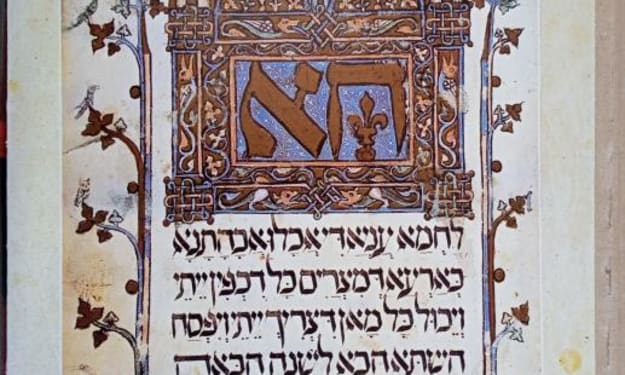
Portrayals of Exodus
The story of Moses is one of the most renowned stories in the Abrahamic religions. The parable of the adopted son of a Pharaoh’s daughter returning to his people, the Hebrews, and acting as a messenger for both the wrath and salvation of God is of an epic quality that to this day has a hold on the creative minds of people of these faiths. Many pieces of art have been created depicting the Ten Plagues of Egypt, which feature prominently in this story. Today, we will be looking at the depictions of these events, in particular the 4th, 7th, and 10th plagues, as they are illustrated in the religious text, the Sarajevo Haggadah.
By Alex Brown4 months ago in History