
The discovery of a mediaeval distillation vessel at Gnandstein Castle suggests alchemy.
Alchemy: Beyond the Pursuit of Gold

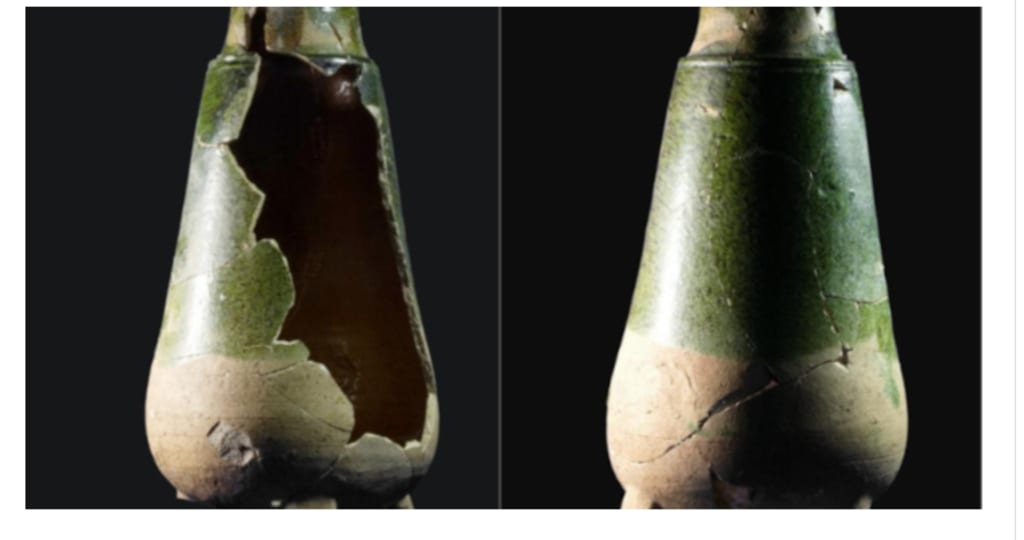
During recent construction-related studies, archaeologists at the historic Gnandstein Castle in Saxony, Germany, discovered a unique and uncommon distillation jar. This amazing discovery implies that, in the fifteenth or sixteenth century, alchemical or proto-chemical work was occurring at the mediaeval stronghold. The finding offers an intriguing window into the useful scientific investigations carried out inside one of Germany's best-preserved mediaeval strongholds.
The State Office for Heritage Management (LfA) was in charge of the excavation, which happened near the castle's destroyed westwork where a new technical chamber was being built. Despite earlier site disruptions, archaeologists were able to find a 30-square-meter portion of early modern brick pavement and partially green-glazed floor tiles from the
An Expert Instrument for Change
Researchers were quickly drawn to one item among the several ceramic artefacts that were found at the site. It was a tall, bulbous clay jug with a straight, steep neck and three little feet. The vessel has yellow glazing on the inside and green glazing on the outside. Experts rapidly determined that the item was a specialised distillation flask used in alchemy and early chemical operations rather than a typical cooking container.
This lower vessel would have contained the material to be heated in a full distillation process. The thin neck would be covered with a helm, or dome-shaped head. As the contents were heated, the ensuing vapors would rise into the upper part, condense on the cooler surface, and be collected as a newly distilled liquid.
Alchemy: Beyond the Pursuit of Gold
The actuality of mediaeval and early modern alchemy was much more rooted in actual experimentation, despite the fact that contemporary popular culture frequently reduces alchemy to the ethereal search for the philosopher's stone and the transformation of base metals into gold. Early chemistry, metallurgy, and medicine all benefited from the work of alchemists.
Mineral acids like sulphuric and nitric acid were frequently produced by distillation in the Saxony region, which had close ties to mining and metallurgy during this time. These acids were essential for assaying and metallurgy. In order to produce medical tinctures, the distillation technique was also frequently used to extract active compounds and essential oils from herbs, seeds, and resins.
The Life-Giving Water
Aqua vitae, or the "water of life," which was created by distilling wine into a strong alcoholic spirit, was one of the most important results of mediaeval distillation. This transparent liquid was frequently used as a potent medicinal agent since it burnt like fire.
When diluted with a carrier oil like almond or olive oil, some essential oils—which contain the "essence" or scent of a plant—are used topically. Lotions, creams, salves, and balms are also well-liked. In order to extract specific phytochemicals into the oil, medicinal herbs are frequently steeped in food-grade oil for weeks or months. After this procedure is finished, the oil can be made into a lotion, cream, or salve.
Many massage oils, antimicrobial salves, and wound-healing substances are produced in this manner. To make tinctures that were thought to strengthen and heal the body, doctors and herbalists would combine different spices, roots, and botanical extracts with distilled alcohol.
It's interesting to note that for these sensitive distillation operations, glass and ceramic containers—like the one at Gnandstein Castle—were chosen over metal ones. Early practitioners demonstrated their profound understanding of how materials reacted under heat by realising that metal may react with acidic preparations or contaminate the substances being distilled.
Unfortunately, archaeologists were unable to identify the precise compounds that were distilled within the Gnandstein flask because no chemical traces were found inside. Nonetheless, the existence of this specialised equipment attests to the fact that scientific and experimental research was being conducted at the castle, offering an intriguing new perspective on day-to-day life in this mediaeval bastion.
About the Creator
Enjoyed the story? Support the Creator.
Subscribe for free to receive all their stories in your feed.
Comments
There are no comments for this story
Be the first to respond and start the conversation.