
Portrayals of Exodus
Sarajevo Haggadah Illustrations of the Ten Plagues

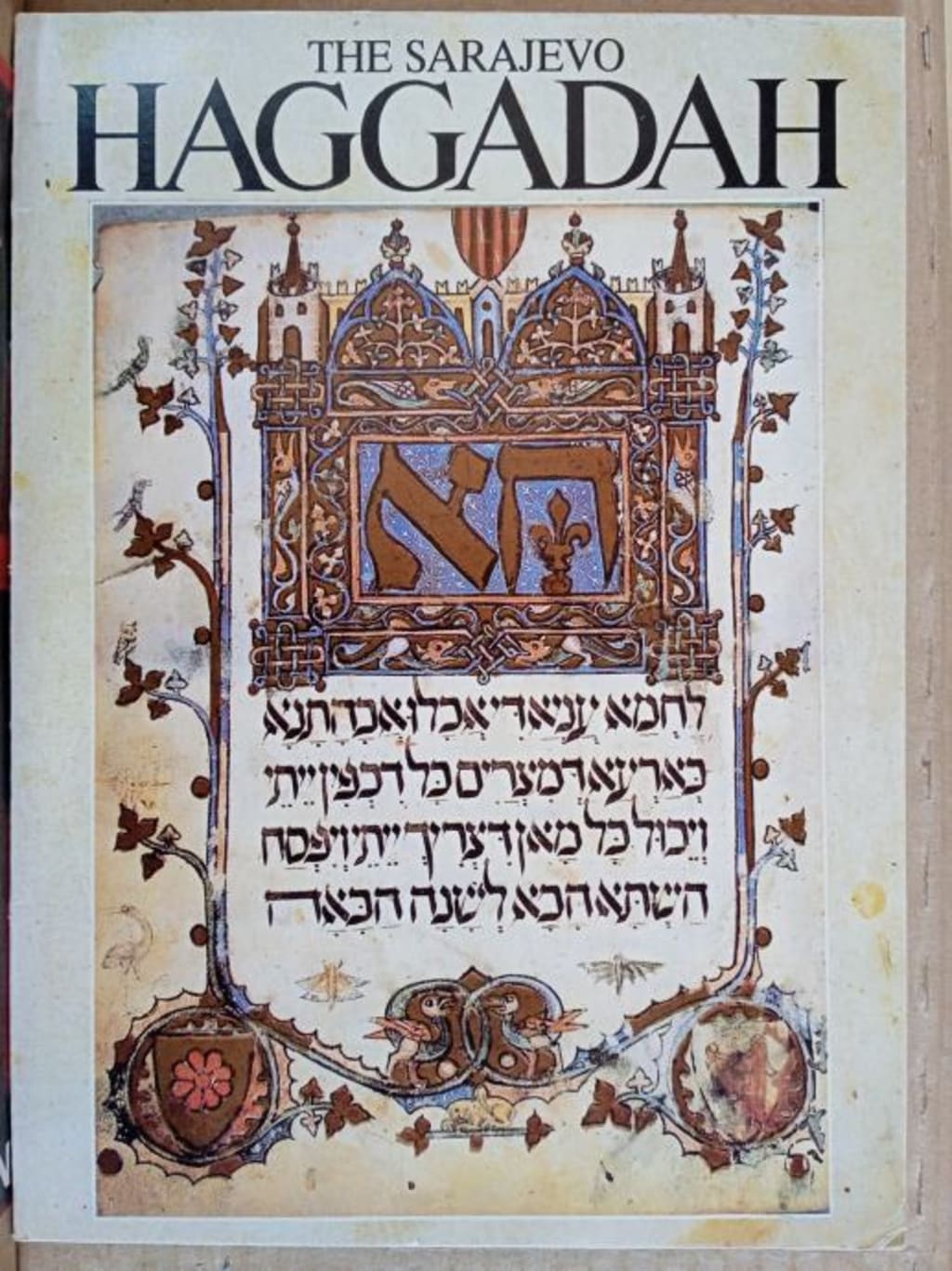
The story of Moses is one of the most renowned stories in the Abrahamic religions. The parable of the adopted son of a Pharaoh’s daughter returning to his people, the Hebrews, and acting as a messenger for both the wrath and salvation of God is of an epic quality that to this day has a hold on the creative minds of people of these faiths. Many pieces of art have been created depicting the Ten Plagues of Egypt, which feature prominently in this story. Today, we will be looking at the depictions of these events, in particular the 4th, 7th, and 10th plagues, as they are illustrated in the religious text, the Sarajevo Haggadah.
The Haggadah’s imagery for the 4th Plague, of wild animals attacking the Egyptians as depicted in Exodus 8:20-32, sees the Pharaoh looking away as his people are besieged by strange and unknown creatures. The text of Exodus 8:26 and 8:21 respectively, describes them as “abominations” and “animals of divers kind.” The illustration of the 4th plague (Figure 1) shows these animals, similar to their theological descriptions, as literal monsters, they resemble large scorpions and dragons more than they do any actual animals that the people the work was meant for would be used to seeing I their daily life. One creature flies and is an unnatural green color. Two others lack back legs and seem to float around the scene. The portion of Exodus that describes this plague is also the only one in which Moses pleads with the Pharaoh to no longer attempt deception against him, God, Aaron, and the Hebrews. The Pharaoh initially agrees before going back on his word, which is perhaps the reason for he faces away from the others in the scene. Having literally turned his back on his promise to them.
The 7th plague of Egypt was one of hail and fire. Failing to heed Moses’ warning that any livestock, servants, and anything else left out in the field is doomed to die, the Pharaoh leaves everything in the fields rather than bringing them into the houses. Exodus 9:26 states that the land of Gessen, where the Hebrews were, was left untouched. In the Haggadah illustration (Figure 2), this is conveyed through the hail only falling over the servants, livestock, and crops in the field. The human figures duck low or hide behind trees in an attempt to shield themselves from the onslaught. However, even the trees are bent over from the heavy rain and ice. Moses and Aaron stand on the left side of the illustration. The hail, shown as white shapes descending upon the aforementioned servants and crops that sit small in the center of the image, does not touch these two men. Although the Pharaoh on the right side is also unaffected by the hail, this can be seen as a result of him being inside the palace during this time. Inadvertently following Moses’s orders.
The final of the ten plagues is also the one from which the Jewish holiday of Passover takes its name. Haggadahs were made to spread information about how to properly perform the rituals of the day, and thus were given leniency regarding the Jewish prohibition against images. Thus, without the tale of this final plague, there would be no holiday or need for the Haggadah. The firstborn of all, from the Pharaoh himself to even the livestock, would fall dead at midnight by God’s own hand, according to Exodus 11:4. Exodus 12:5 tells that the children of Israel were commanded to find an unblemished lamb, and upon its slaughter, smear its blood on the door frames of their homes as a sacrifice to God. This image (Figure 3) is the only one of the Sarajevo’s ten plagues that does not show the Pharaoh enthroned. Rather, he is standing and facing a house. The Pharaoh on the outside can be seen as being outside God’s protection, having not marked his door. Another difference from the other scenes is how it is organized. The rest of the images for the plagues had the Pharaoh on the right, Moses on the left, and the action of the plague playing out between them. This final one has the Pharaoh in the middle, the direct consequences of the wrath of God finally affecting him on a personal level, and behind him on the left lie the bodies of the firstborn children. Placing them behind him in this way demonstrates that he is responsible for their deaths. His refusal to release the Hebrew people despite evidence of their God and his power is a direct cause of why the people of Egypt now mourn their children.
Figure 1. Sarajevo Haggadah, Plague of Wild Animals (Fourth Plague), illumination of Exodus
8:20-32
Figure 1. Sarajevo Haggadah, Plague of Hail and Fire (Seventh Plague), illumination of Exodus
9:13-35.
Figure 2. Sarajevo Haggadah, Plague of Death of the Firstborn (Tenth Plague), illumination of Exodus
11:1-12:32.
Bibliography:
Exodus 8:20-32
Exodus 9:13-35
Exodus 11:1-12:32
About the Creator
Alex Brown
Freelance essayist with a specialization in art as a communicative tool. Much of my work has been as a ghostwriter and for GameRant.
Enjoyed the story? Support the Creator.
Subscribe for free to receive all their stories in your feed.
Comments
There are no comments for this story
Be the first to respond and start the conversation.