Ancient
Lugh: The Master of all Skills and the Hero of Mag Turied
Lugh is one of the most impressive and memorable figures in Irish mythology. Among the Tuatha Dé Danann, he stands out not only for his strength, but for his intelligence, versatility, and mastery of many different arts. He is often remembered as a warrior hero, but that description only captures part of who he is. In Irish tradition, Lugh is a figure of skill, kingship, craftsmanship, victory, and sacred excellence.
By The Celtic Spirit- A modern Guide to Celtic Belief and Practice6 months ago in History
Are Aliens Coming to Earth
Three weeks before NASA went completely silent on the subject, a classified radio signal — non-random, perfectly structured, and repeating every night at exactly 3:17 AM — was picked up from a point in deep space that should have been completely empty. My father was the one who found it. And then he disappeared.
By imtiazalam6 months ago in History
The Great Wall Of China;The Wall Having No Boundries
The Great Wall of China – The Wall Having No Boundaries There are structures built to be seen and then there are structures built to be felt. The Great Wall of China is not just a wall but a story written in stone, a whisper carried by the wind, and a testament to ambition so vast that it refused to recognize limits. It stretches across mountains, deserts, and plains as if the earth itself once decided to draw a line between fear and survival, yet the truth is far more complex. This wall was never just about protection; it was about power, identity, sacrifice, and a dream of permanence in a world that never stops changing. More than two thousand years ago, before it became a symbol of wonder, it was an idea born out of fear. China was not yet unified but divided into rival states constantly at war, and from the north came nomadic tribes who moved swiftly and struck without warning. To those early rulers, danger felt endless, so they began to build not one wall but many. These early fortifications were simple, made of packed earth and wood, imperfect yet necessary, each kingdom hoping to defend itself against the unknown. But scattered walls could not unify a divided land. In 221 BCE, Qin Shi Huang changed everything by conquering the rival states and declaring himself the first emperor of a unified China. With unity came the challenge of defending a vast empire, and the northern threat remained constant. Qin Shi Huang envisioned something greater than isolated defenses, ordering the existing walls to be connected, expanded, and strengthened into a single continuous barrier that would stretch beyond imagination. This ambition came at a tremendous cost, as hundreds of thousands of workers including soldiers, farmers, and prisoners were forced into labor under brutal conditions, hauling materials across mountains and deserts where many lost their lives. It is often said the wall is the longest cemetery on earth, a haunting reminder that beneath its stones lie countless untold stories of sacrifice. Despite this, the wall continued to rise, not as a straight line but as a structure that adapted to the land, twisting over mountains and valleys like a living thing. Watchtowers stood as silent guardians, where signals of smoke by day and fire by night could travel great distances, making the wall not just a barrier but a system of communication and defense. Over centuries, dynasties rose and fell, and the wall evolved with them, sometimes neglected and sometimes rebuilt stronger than before. The most iconic sections seen today were shaped during the Ming Dynasty when the threat from the north intensified once again. This time the wall was reinforced with bricks and stone, with massive gates and stronger towers, transforming it into an architectural masterpiece admired across the world. Yet for all its strength, the wall was never completely impenetrable, as history shows that no barrier can fully stop human determination. Invaders found ways around it, through it, and sometimes even within it, proving that while the wall could delay and warn, it could not eliminate conflict. This is the paradox of the Great Wall, built to divide yet now a symbol that unites. Today, people from across the globe walk along its ancient stones, not out of fear but out of admiration, witnessing what humanity can achieve through vision and persistence. Standing on the wall feels surreal, as it stretches endlessly in both directions, with no clear beginning or end, only a sense of continuity. A traveler once stood on the wall at sunrise as mist rolled over the mountains and golden light touched the stones, bringing them to life. Walking slowly, he felt the weight of history beneath his feet and realized something profound. This wall, built to create boundaries, had none. It transcended time as much as distance, connecting generations across centuries and carrying the echoes of those who built it. It stood not only as a defense against enemies but as a monument to human endurance, ambition, and resilience. In the end, the Great Wall is not just about what it kept out but about what it represents, a reminder that even the grandest boundaries can transform into bridges, and even the strongest walls can tell stories that bring the world together.
By Hamza Habib6 months ago in History
What If China Had Industrialized Before Europe?
The largest wooden ship ever built was Chinese. It was called a treasure ship. Measuring approximately 400 feet in length, it was five times the size of Columbus's Santa María. It carried silk, porcelain and ambassadors. It sailed as far as East Africa. It flew the flag of the Ming dynasty.
By Chronicle and Void6 months ago in History
Brigid: Goddess of Fire, Healing, and Poetry
Brigid is one of the most well-known and enduring figures in Irish mythology. Even among people who know very little about Celtic tradition, her name often survives. She appears as a goddess of fire, healing, poetry, fertility, and sacred inspiration, and over time she became one of the clearest examples of how myth, religion, and cultural memory can overlap in Irish tradition.
By The Celtic Spirit- A modern Guide to Celtic Belief and Practice6 months ago in History
3,300-Year-Old Cartouche of Ramses II Discovered at Ramesseum Pylon
A 3,300-year-old cartouche containing the name of Pharaoh Ramses II has been discovered at Luxor, Egypt, by a group of South Korean scholars, making a significant historical discovery. The hieroglyphic writing, which was the first of its kind to be unearthed in this particular section of the ancient ruins, was discovered at the base of the first pylon of the Ramesseum Temple.
By Francis Dami6 months ago in History
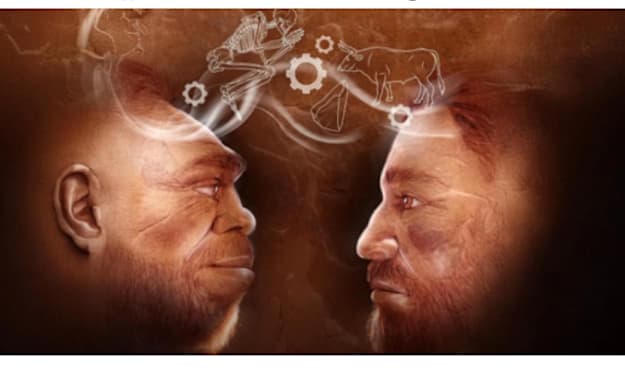
Findings Indicate Collaboration Between Neanderthals and Modern Humans
The history of human collaboration is being rewritten by a recent discovery made deep in the hills of central Israel. The nature of the relationship between Neanderthals and early modern humans has been a topic of discussion among scientists for decades.
By Francis Dami6 months ago in History
Broken Weapons in a Chinese Tomb Show an Enduring Peace Philosophy
A 3,000-year-old burial site with purposefully shattered bronze weaponry was discovered during a recent archaeological dig in northwest China, providing an amazing window into prehistoric perspectives on war and peace. The finding at the Jiangliu site in Shaanxi Province indicates that the Western Zhou people had a strong philosophical devotion to the notion that putting an end to war was the ultimate act of bravery, even at a period of political unrest and struggle.
By Francis Dami6 months ago in History
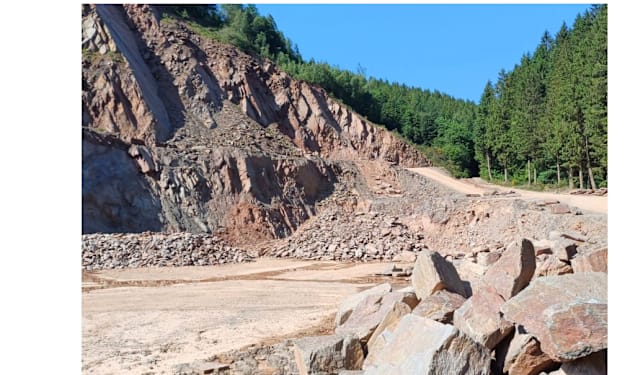
220,000 years ago, early people were already engaged in stone quarrying.
Humans were already making wise decisions to live long before cities, machinery, or even written language. According to a recent study from the University of Tübingen, individuals did not just pick up stones at random as early as 220,000 years ago.
By Francis Dami6 months ago in History
Ten thousand years of human history are preserved in the Sinai rock shelter.
Nearly 10,000 years of human drawings, inscriptions, and everyday trash have been preserved in a single rock shelter in Egypt's Sinai Peninsula, according to research. That continuous record reveals how various tribes frequently returned to the same desert spot across millennia, compressing far-off eras into a common surface.
By Francis Dami6 months ago in History