
220,000 years ago, early people were already engaged in stone quarrying.
Thousands of years of repeated visits

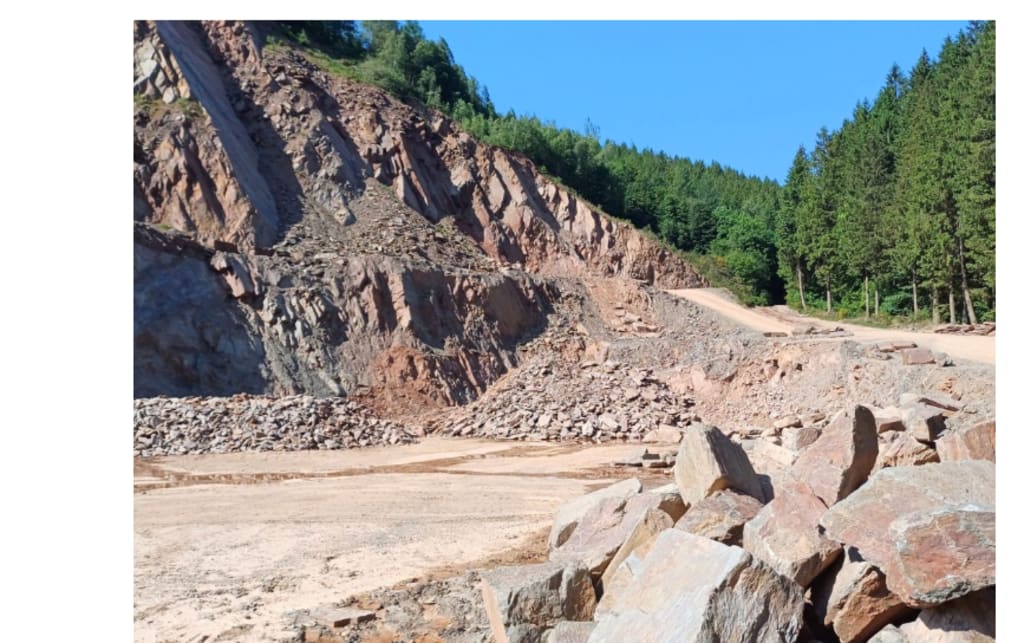
Humans were already making wise decisions to live long before cities, machinery, or even written language. According to a recent study from the University of Tübingen, individuals did not just pick up stones at random as early as 220,000 years ago.
Humans were already making wise decisions to live long before cities, machinery, or even written language. According to a recent study from the University of Tübingen, individuals did not just pick up stones at random as early as 220,000 years ago.
The Jojosi site differs greatly from residential areas. Nearly no completed tools, food remnants, or indications of shelter were discovered by researchers. Waste from shaping and shattering stones made up the majority of what they discovered.
This tells us something crucial. The main reason anyone came here was to prepare raw resources. They moved the stones away to be used somewhere else after shaping them into useful pieces.
Dr. Will observed that individuals moulded the stones to achieve the desired shape. This demonstrates careful planning. Early people were aware of their needs and how to get ready for the future.
Thousands of years of repeated visits
The length of time this behaviour persisted is among the most unexpected discoveries. According to scientific dating, this site was inhabited between 220,000 and 110,000 years ago. That equates to over 100,000 years of frequent visits.
Humans conducted "specific, repeated visits to a raw-material source over tens of thousands of years for the exclusive purpose of obtaining hornfels," according to the research paper.
This implies that information is passed down through the generations. Every group understood what to do and where to go. This is compelling proof of cooperative learning and long-term thinking.
Comprehending the Jojosi terrain
Jojosi is located 140 kilometres from the Indian Ocean in wide plains. Layers of hornfels were uncovered over time by natural processes, making them more accessible. Although there was water, vegetation, and wildlife in the area, no one lived there. Rather, it was converted into a dedicated stone preparation workshop.
Millions of stone fragments are strewn all over the place, indicating that the area has been heavily used. "We found about a dozen sites where perfectly preserved, unweathered hornfels flakes were visible in eroded sediment on our very first visits, both on foot and using drones—an absolute rarity for an open-air site," Dr. Will stated.
How tools were produced by humans
To comprehend what transpired at Jojosi, researchers worked diligently. Numerous pieces of stone were discovered crammed within earth layers. Up to two million fragments could be found in a single cubic metre in some places.
The majority of these items were little parts made during the tool-making process. Even shattered bits were put back together like a puzzle by scientists. They were able to comprehend the gradual shaping of stones because of these "refits."
Gunther Möller, a co-author of the study, said, "We were able to see precisely where and how material was chipped off and in what order with these 3D puzzles." This meticulous labour demonstrates that when humans shaped tools, they followed a precise procedure.
Choosing the appropriate stone for tools
This discovery is strengthened by an intriguing detail. There were other kinds of rock around, such as dolerite and quartz. Nevertheless, only hornfels were selected. The results show that hornfels provided better quality for toolmaking, with characteristics that made it possible to form them into big, sharp tools. Its consistent selection demonstrates thoughtful decision-making and a thorough comprehension of material performance.
Early humans made plans ahead of time.
For a long time, experts thought that early humans collected resources while engaging in other activities, such as hunting. We refer to this as "embedded procurement." Jojosi, however, presents an alternative narrative.
According to the study, people travelled specifically to gather stones. Specialised procurement is a type of focused behaviour that suggests more sophisticated planning than previously thought.
"The discoveries from Jojosi offer a unique, unambiguous perspective on the earliest origins of humanity's capacity for planning. They demonstrate that the capacity to plan activities and choose resources carefully transcends generations, according to Dr. Karla Pollmann, a co-author of the study.
The roots of human behaviour
Our understanding of early humans is altered by the Jojosi discovery. These individuals weren't merely getting by on a daily basis. They shared information, planned ahead, and made wise choices.
By demonstrating that planning, adaptability, and problem-solving emerged considerably earlier than scientists previously thought, the work rewrites the history of human intellect.
This puts the beginnings of contemporary human behaviour far back. Humans were already actively considering the future long before cities and technology. Jojosi is more than just a historic location. It is evidence that people understood and shaped their surroundings even 200,000 years ago.
About the Creator
Enjoyed the story? Support the Creator.
Subscribe for free to receive all their stories in your feed.
Comments
There are no comments for this story
Be the first to respond and start the conversation.