
What If China Had Industrialized Before Europe?
In 1405, China had the largest fleet in history. Then one emperor issued an order. The ships were burned. The rest is the world we live in.
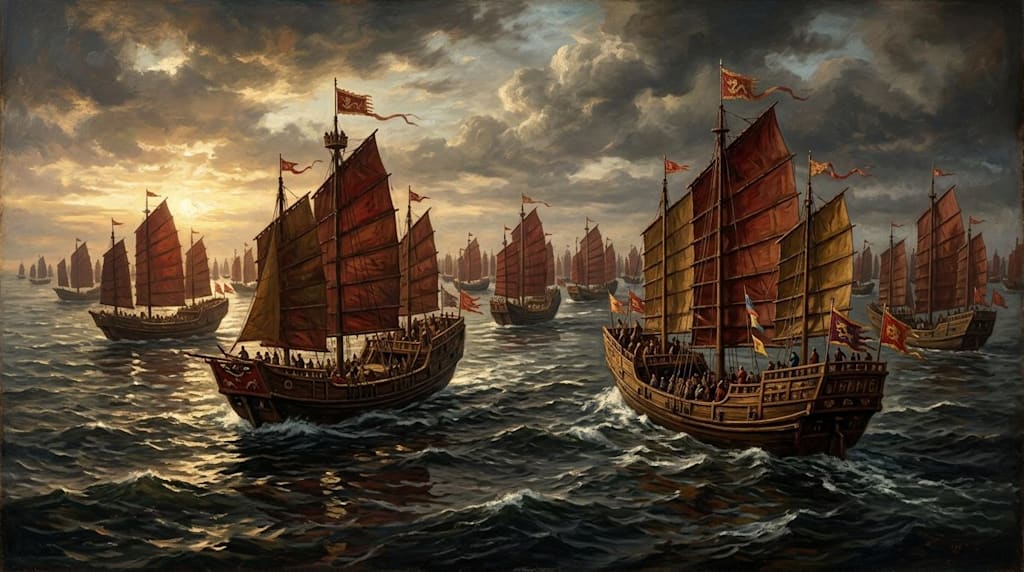
The largest wooden ship ever built was Chinese.
It was called a treasure ship. Measuring approximately 400 feet in length, it was five times the size of Columbus's Santa María. It carried silk, porcelain and ambassadors. It sailed as far as East Africa. It flew the flag of the Ming dynasty.
In 1405, Admiral Zheng He led a fleet of over 300 ships and 28,000 sailors on an expedition that far surpassed anything Europe would undertake for another century.
Then it stopped.
Not because the technology failed. Nor because the voyages were unprofitable. It was because a new emperor had decided that the outside world was not worth paying attention to, that merchants were beneath the dignity of a civilised state and that China's greatness required no external validation.
The ships were burned. The records were destroyed. The shipyards were left to rot.
In 1492, Columbus sailed with three ships and ninety men.
What China Actually Had
This is not a story about what might have been possible with a little more ambition.
In the early 15th century, China had gunpowder, the compass, paper money, cast iron and the most sophisticated bureaucratic state on Earth. Its population was larger than all of Europe's combined. Its trade networks stretched from Japan to the Persian Gulf.
China also had something that Europe would not develop for another four centuries: a genuine industrial prototype.
At its peak, the iron industry in Song Dynasty China — the period just before the Ming — produced approximately 125,000 tons of iron per year. By contrast, England produced around 76,000 tons annually at the start of its Industrial Revolution in the 1780s.
China was there. Centuries ahead of schedule.
Then it went backwards.
The Decision
Zheng He's voyages were funded by the Yongle Emperor, who died in 1424. His successors viewed the fleet as extravagant. They saw the merchants who benefited from trade as a class that threatened the Confucian order — wealth derived from commerce rather than land and scholarship was considered immoral, socially destabilising and politically dangerous.
This was not ignorance. It was ideology.
The Confucian state ranked its citizens in a precise hierarchy: scholars at the top, farmers second, artisans third and merchants at the bottom. A civilisation that treated its most economically productive class as its least respectable had erected a structural barrier against capitalism long before the term existed.
Sound familiar?
The same logic strangled Rome. This same logic would eventually strangle every pre-modern empire that came close to industrialisation but then retreated.
Now remove that decision.
The Yongle Emperor lives longer. Alternatively, his successor shares his vision. Alternatively, the Confucian bureaucracy loses its argument against the merchant class.
The ships don't burn.
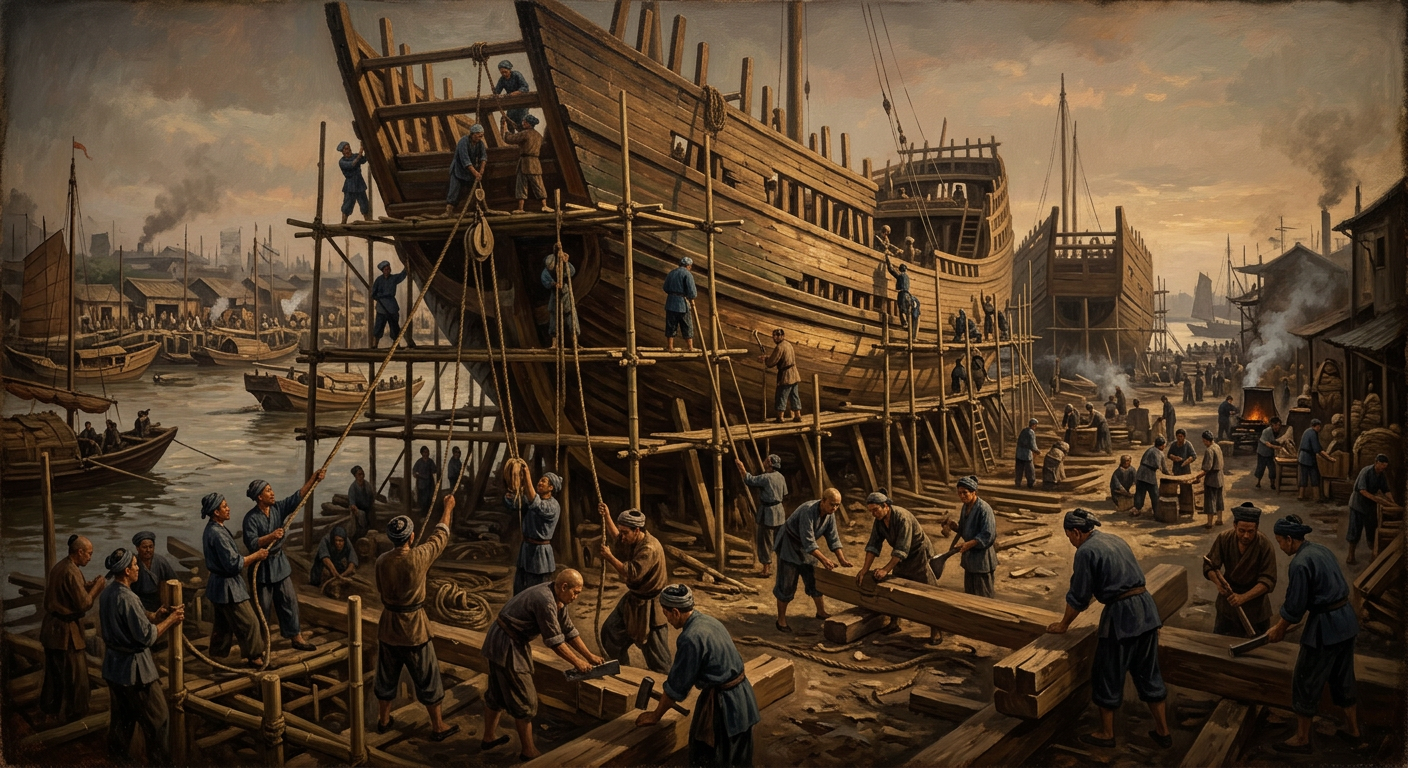
A Chinese industrial revolution in the late 15th or early 16th century would not resemble Manchester in 1790. It would look like something the world had never seen before, for which it has no vocabulary.
A state with China's population, resources and existing technological base applying industrial production methods two centuries before Europe would have generated an economic output that would make the British Empire look like a regional project.
The trade routes are already in place. The ships have already been built. The bureaucratic infrastructure to administer a global system already existed.
What would happen to Europe?
Fifteenth-century Europe was a collection of small, fractious states perpetually at war with each other and located on the western edge of the Eurasian landmass. The continent had ambition and desperation in roughly equal measure. However, it lacks the scale, population and resources to compete with a rising China.
The Age of Discovery becomes the Age of Chinese Expansion.
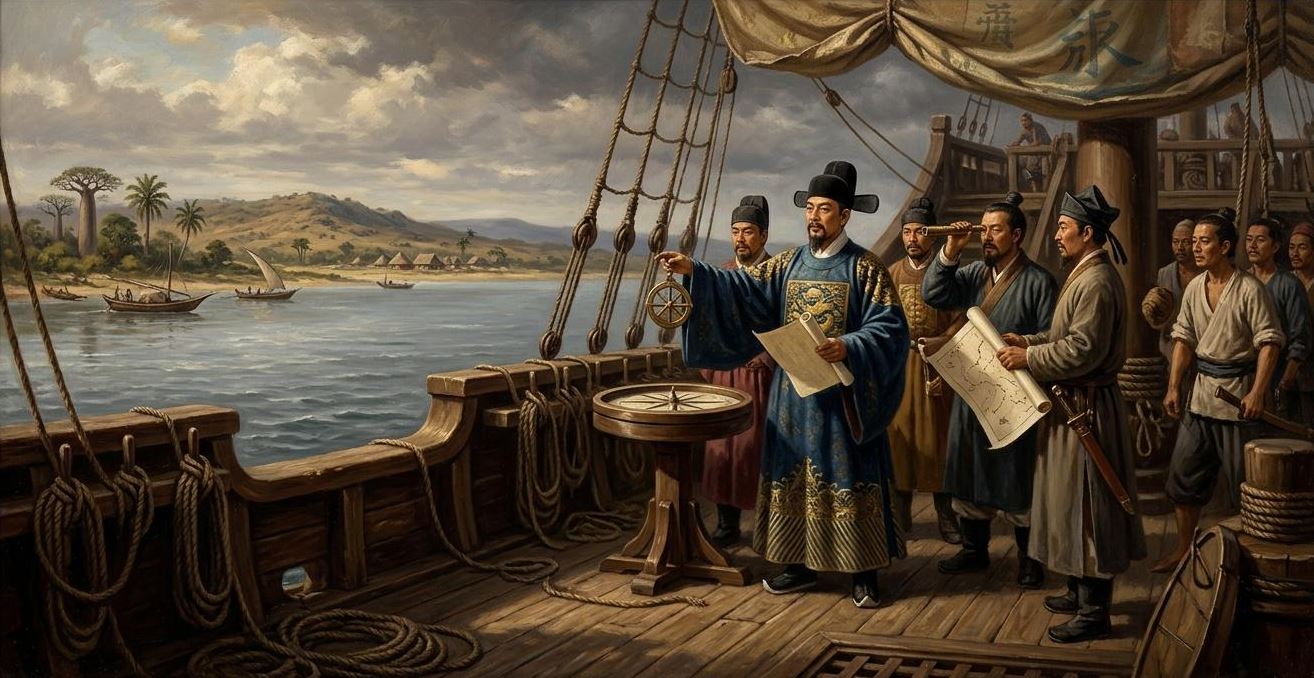
When Vasco da Gama rounded the Cape of Good Hope, he found that Chinese trading posts were already established on the East African coast. They had been there since 1418. In this version, they never left.
Columbus sails west and finds... what exactly? A continent that Chinese explorers may have reached decades earlier, depending on which historians you ask.
The Uncomfortable Arithmetic
It is here that the alternative history stops being a celebration.
European colonialism was catastrophic for the people it encountered. Tens of millions died. Civilisations were destroyed. Continents were reorganised around the economic needs of distant empires.
An industrial Chinese empire expanding across Asia and Africa, and potentially the Americas, would not have been any more gentle. Empires are not gentle. The Ming dynasty was not kind to its own population, let alone outsiders.
The question is not whether this version of history would have been kinder. It probably would not have been.
The question is which values, languages and systems of law and governance would have organised the modern world.
Instead of English being the global language of commerce, science and diplomacy, it would have been Mandarin.
Instead of Roman law forming the basis of most legal systems, it would have been Confucian administrative tradition.
Instead of Christianity being the world's largest religion, it could have been Buddhism, or something that emerged from the collision of Chinese expansion with the cultures it encountered.
The world is organised around the accidents of history as much as its logic. Remove one such accident — one emperor's decision to burn a fleet — and the entire architecture shifts.
The Part That Should Bother You
China had everything.
It had the technology, the population, the ships, the trade networks and the industrial capacity. It was on the verge of a transformation that would have reshaped human civilisation.
But then it turned around.
Not because it failed. It was because the people in power decided that the merchants who would have driven industrialisation were the wrong kind of people to have power. They decided that the outside world was not worth the effort. Greatness meant refinement and order, not expansion and disruption.
Europe industrialised partly out of desperation. Small and fragmented, perpetually at war and running out of land, it had no choice but to find new systems, territories and sources of wealth.
At its peak, China had every reason to feel that it had already arrived.
This mindset is the most dangerous thing a civilisation can have.
It is also not a problem unique to China.
Every empire that has ever stood at the top of the global order has eventually faced the same choice: either disrupt itself or wait to be disrupted by a hungrier rival.
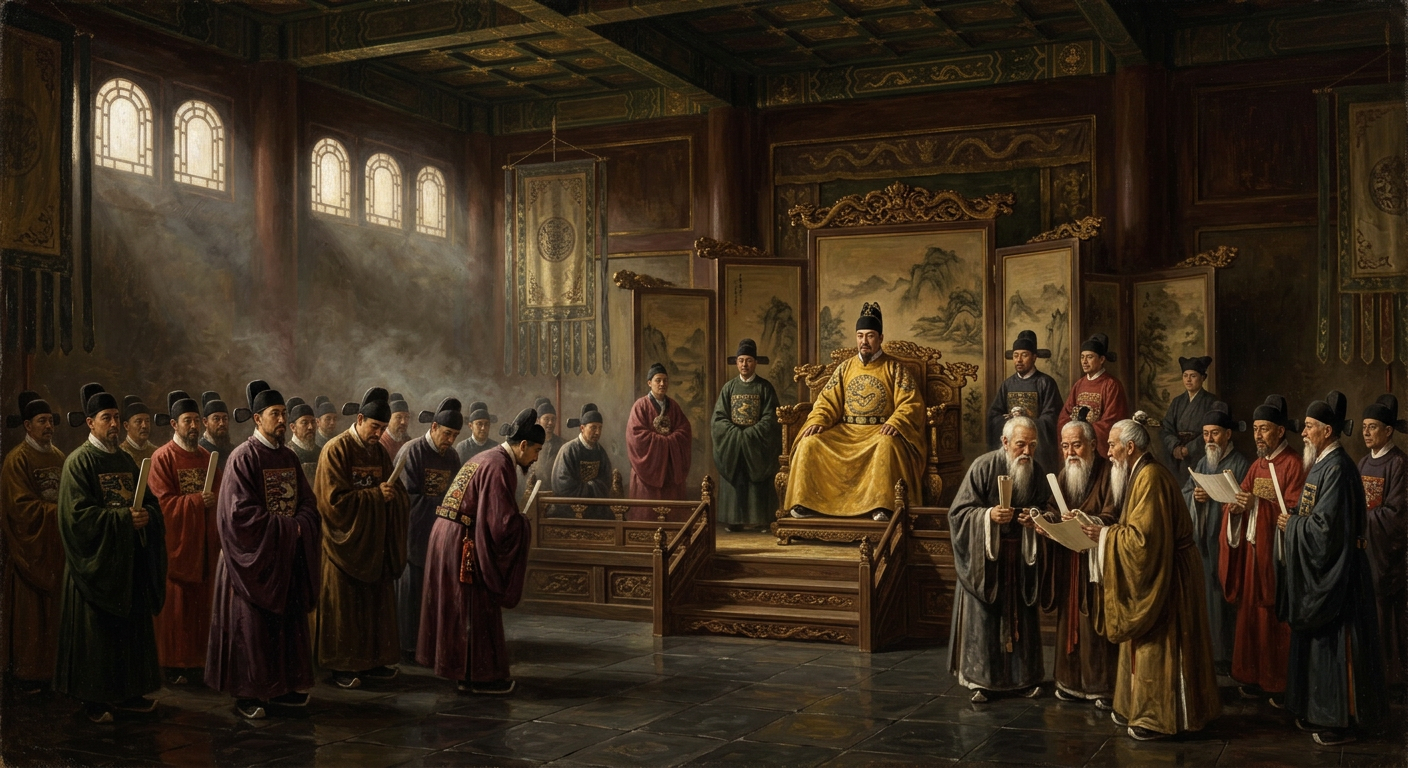
China chose to wait.
It waited for four hundred years.
Then Europe arrived.
About the Creator
Chronicle and Void
Every collapse has a cover story. Every war has a cause that didn't make it into the history books. History is not an accurate record of what happened. It's a record of what they allowed to survive.
Enjoyed the story? Support the Creator.
Subscribe for free to receive all their stories in your feed.
Comments
There are no comments for this story
Be the first to respond and start the conversation.