
Findings Indicate Collaboration Between Neanderthals and Modern Humans
An Evolutionary Melting Pot of Humans

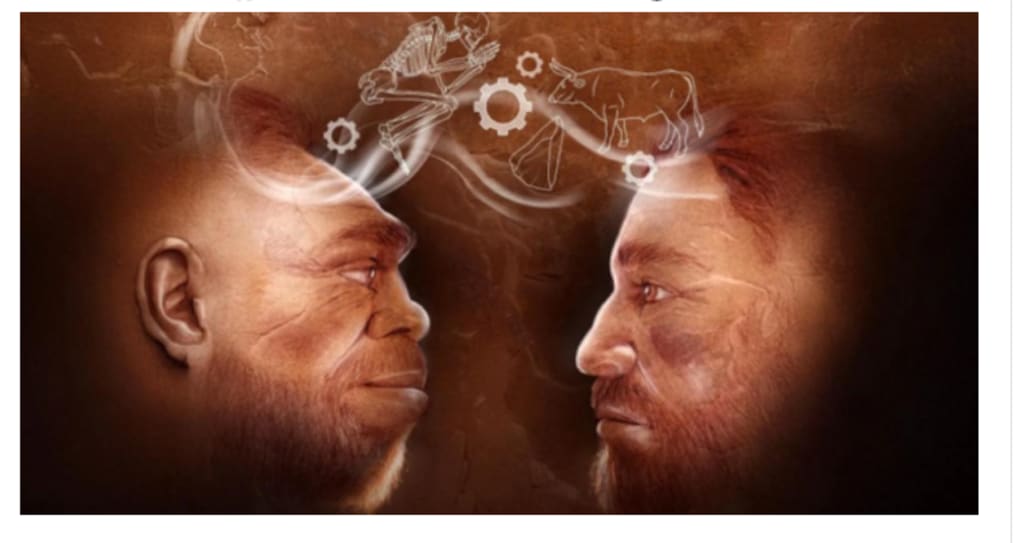
The history of human collaboration is being rewritten by a recent discovery made deep in the hills of central Israel. The nature of the relationship between Neanderthals and early modern humans has been a topic of discussion among scientists for decades.
Neanderthal and Homo sapiens populations not only coexisted in the Levant, but they also actively interacted, exchanged technology, and even evolved similar cultural and funeral customs, according to findings from Tinshemet Cave. This 110,000-year-old finding offers strong evidence that early human development may have been significantly influenced by cooperation rather than war.
The results of excavations that started in 2017 under the direction of Professor Yossi Zaidner of the Hebrew University of Jerusalem, Professor Israel Hershkovitz of Tel Aviv University, and Dr. Marion Prévost were just published in the journal Nature Human Behaviour.
Five human burials—the first mid-Middle Palaeolithic burials found in more than 50 years—are among the remarkable assemblage of archaeological remains found at the site. The long-held belief that various human species remained isolated or purely competitive is called into question by these astounding discoveries.
An Evolutionary Melting Pot of Humans
It has long been known that the Levant region serves as a critical intersection for human migration from Africa. Dr. Prévost claims that changes in climate during the Middle Palaeolithic enhanced the area's capacity to sustain life, resulting in more contact between various human groups and population growth.
Here, communities of Neanderthals and modern humans came into contact, resulting in what Professor Zaidner refers to as a "melting pot" of human evolution. The creation of stone tools, hunting tactics, symbolic behaviour, and social complexity were the four primary areas of evidence that researchers examined.
They discovered that both cultures used the advanced Levallois technique to make stone tools and that they had comparable tactics for pursuing big animals including deer, horses, and aurochs. This information transfer points to a significant degree of cross-cultural interaction that eventually homogenised the people.
According to our statistics, population interactions and human ties have played a crucial role in propelling cultural and scientific advancements throughout history.
Symbolic Behaviour and Common Rituals
The burial customs discovered at Tinshemet Cave may provide the most convincing proof of Neanderthal and Homo sapiens connection. Formal graves initially appeared in Israel over 110,000 years ago, more than anywhere else in the globe.
The intriguing notion that the cave served as a specialised burial place or early cemetery, reflecting structured rituals and strong community ties, is raised by the grouping of five human graves at the site.
The dead were positioned in a foetal posture, frequently accompanied by important artefacts like animal bones and stone tools. Additionally, the widespread use of natural paints, especially red ochre, points to early symbolic expression and beliefs in an afterlife.
In order to designate social identities among the interacting groups, ochre may have been utilised for body ornamentation. This degree of symbolic behaviour, which is shared by several human lineages, reveals a sophisticated social structure that was previously unknown in this historical period.
Rewriting Early Human History
The findings in Tinshemet Cave provide an intriguing window into the social structures and day-to-day activities of our prehistoric predecessors. Scientists are creating a new picture of dynamic interactions affected by both collaboration and rivalry by demonstrating that Neanderthal and Homo sapiens groups engaged in important cultural exchange.
In order to shed further light on the intricate network of ties that produced the modern human lineage, researchers seek to learn more about the genetic linkages between these groups and whether they interbred at this site as digs continue.
These results not only cast doubt on the premise that humans are a solitary species, but they also highlight the fact that human advancement has always depended on the exchange of concepts, innovations, and cultural practices.
The interaction between Neanderthals and modern humans at Tinshemet Cave is a potent reminder of our common, entwined past. The persistence of Neanderthal DNA in the genomes of contemporary non-African groups can also be explained by the Levant's function as a center of interaction.
About the Creator
Enjoyed the story? Support the Creator.
Subscribe for free to receive all their stories in your feed.
Comments
There are no comments for this story
Be the first to respond and start the conversation.