Analysis
The Professor Who Changed the World with a Messy Desk: How a Stray Mold Defeated Deadly Bacteria
A simple scratch from a rose thorn in a garden, a minor cut while shaving, or a basic dental infection was routinely a literal death sentence. Hospitals were filled with patients dying of blood poisoning, and doctors could do nothing but watch, offer comfort, and wait for the end. Entire families were wiped out by diseases that we treat today with a simple, inexpensive prescription from a local pharmacy. The battlefield was even worse; during the First World War, far more soldiers died from secondary wound infections and sepsis than from the actual bullets and shrapnel. Human civilization was desperately fighting a losing war against bacteria.
By Lenka Čihařová2 months ago in History
Why Does a Zebra Crossing Have Longitudinal White Stripes?
The massive boom in automobile traffic following the end of the Second World War presented European and American urban planners with an unprecedented and critical crisis. As factories shifted back to consumer production, cheap cars flooded the roads, and the number of tragic collisions between vehicles and pedestrians on bustling city streets began rising at a terrifying, alarming rate. Up until that point in history, modern traffic engineering was in its absolute infancy, meaning there was no universal or uniform method to designate a safe, protected space for ordinary citizens to cross a busy road. The earliest experimental attempts at regulation in the 1930s, primarily introduced by Great Britain, relied on primitive and largely ineffective physical measures. Cities installed large, polished metal studs directly into the asphalt and placed flashing amber globes, famously known as Belisha beacons, on the sidewalks to warn oncoming traffic.
By Lenka Čihařová2 months ago in History
Dolly Parton Has Passed Away: The Woman Who Turned a One-Room Cabin into an Empire and Her Life into the Ultimate Show
Dolly wasn’t just a singer; she possessed an immense, unique gift. It was the ability to seamlessly connect the world of country music, everyday people, Hollywood glamour, and charity. Absolutely everything she touched and every venture she started was calculated down to the smallest detail. Her life was her brand. Selling over 100 million records and penning more than 3,000 songs, she lived an authentic American dream that started as far away from the Hollywood elite as one could possibly imagine.
By Lenka Čihařová2 months ago in History
The Dinosaurs Beneath Our Feet
Drive across America and the landscape seems familiar. Cattle graze beneath the enormous skies of Montana. Highways cut through the red-rock country of Utah. Rivers wind through Texas. Forests cover parts of Connecticut and New Jersey. Towns, farms, parking lots, shopping centers, and neighborhoods occupy almost every landscape in between.
By The Iron Lighthouse2 months ago in History
She Was 12 When the Plane Crashed Into the Sea. She Was the Only Survivor to Spend the Night in the Ocean. AI-Generated.
There were 153 people on board. Bahia was twelve years old and could barely swim. Yet she was the only person to survive the crash. She found herself alone in the darkness of the ocean, clinging to a piece of wreckage and waiting to see whether anyone would find her. At that moment, no one knew that a little girl was still alive among the wreckage and bodies.
By Lenka Čihařová2 months ago in History
The Forgotten Knights and Daughters of Tabor
Imagine walking down the main street of an American town at the turn of the twentieth century and encountering a procession unlike anything you had seen before. Men march together in elaborate uniforms, some wearing helmets and gauntlets, ceremonial swords hanging at their sides, scarlet-and-gold decorations catching the afternoon sun. The procession moves with military precision while townspeople gather along the street to watch. Perhaps someone nearby explains that the men are Knights. Not soldiers. Not actors. Knights.
By The Iron Lighthouse2 months ago in History
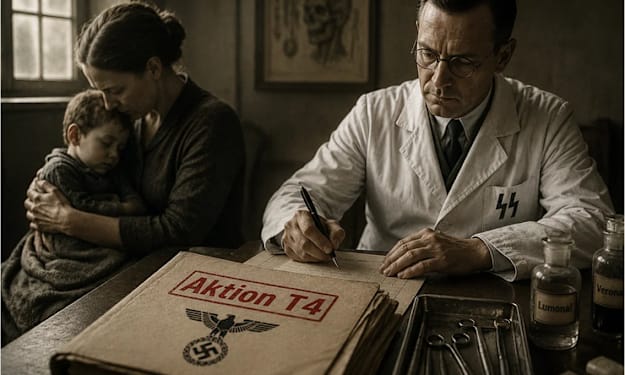
Anatomy of Evil: How the Tragedy of Child K. Helped Hitler Legitimize Mass Murder. AI-Generated.
In the summer of 1939, a request reached Hitler that might, at first glance, have appeared to be a desperate attempt by parents to end the suffering of a severely disabled child.
By Lenka Čihařová2 months ago in History
The Strange Rise of America’s G-Men
For a few remarkable years during the Great Depression, some of the most famous men in America were bank robbers. Their names appeared across newspaper front pages: John Dillinger, “Pretty Boy” Floyd, “Baby Face” Nelson, “Machine Gun” Kelly, Bonnie Parker, and Clyde Barrow. Their photographs were recognizable, their exploits became national news, and newspapers followed their movements as if they were sporting events, while rumors and exaggerations transformed violent criminals into something approaching folk heroes.
By The Iron Lighthouse2 months ago in History
The Lawless Islands of the Rio Grande
Somewhere along the Texas-Mexico border in the late nineteenth century, imagine a cattle rustler riding hard toward the Rio Grande. Behind him are angry ranchers and perhaps a lawman or two. Ahead lies Mexico and, with it, the possibility of escape. If he can get himself and the stolen cattle across the international boundary, an ordinary pursuit suddenly becomes considerably more complicated. He reaches the river, only to face one problem: exactly where is the border?
By The Iron Lighthouse2 months ago in History
The other Pankhurst girl
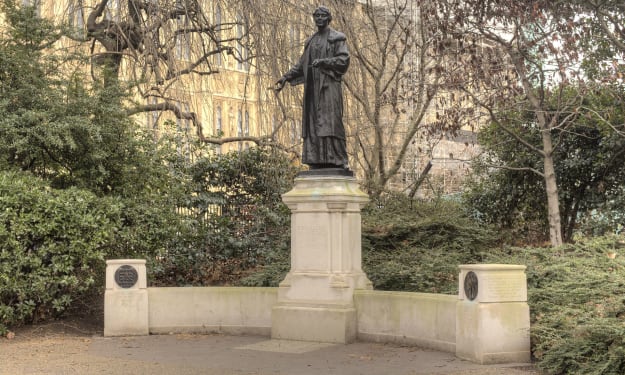
If you know the name Pankhurst, you will probably know about Emmeline Pankhurst, founder of the Women's Social and Political Union (WSPU), an all-women organisation that campaigned for the right to vote in the United Kingdom. You may even know of her daughter, Christabel, both being honored by the Pankhurst memorial in Victoria Palace Gardens, London, right next to the UK Parliament buildings, shown in the above featured image.
By Raymond G Taylor2 months ago in History