
The Empty Drawer
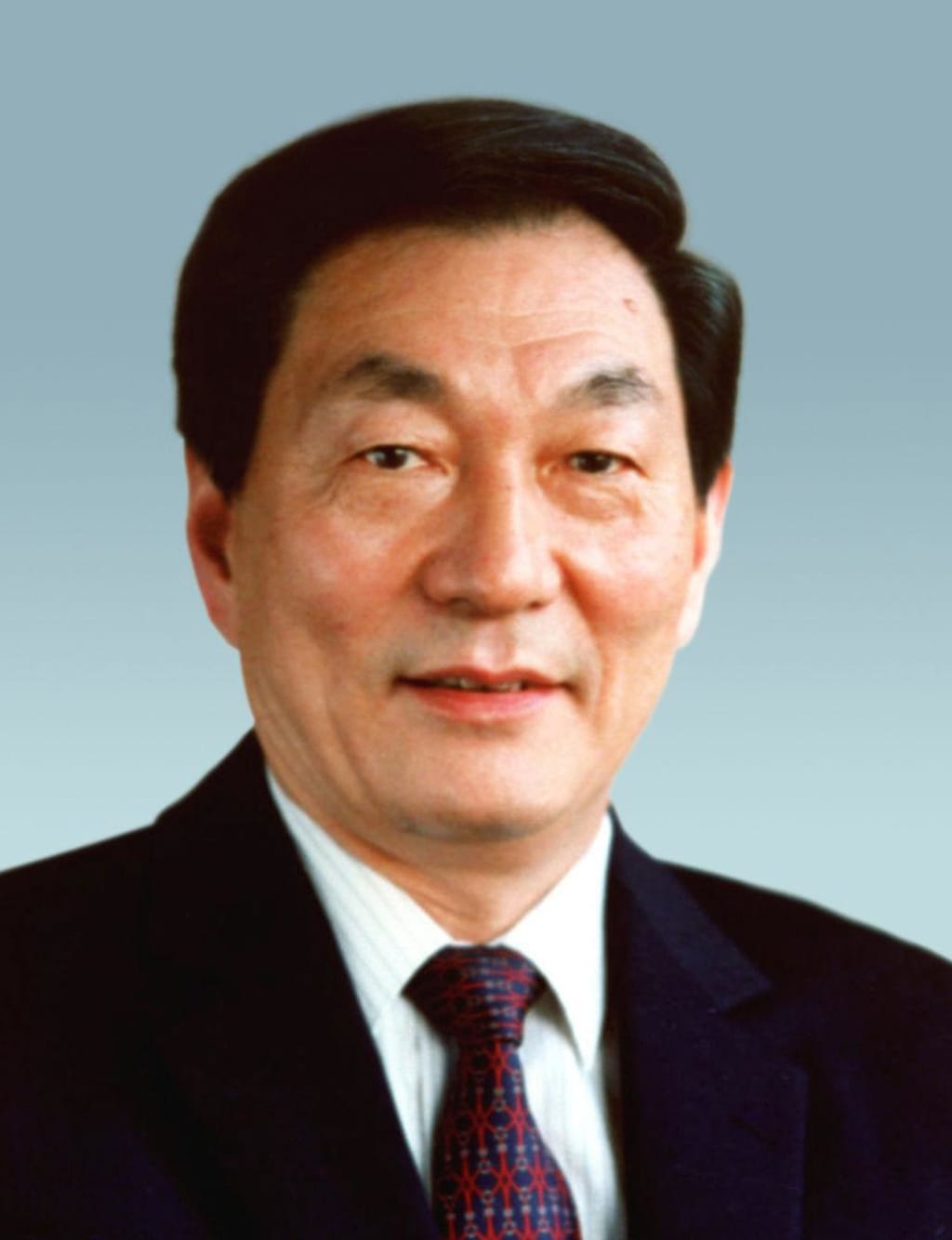
Zhu Rongji reshaped China's economy with a red pencil and an iron will. In the end, all he left behind was a blank sheet of paper.
In 1951, the electrical engineering department of Tsinghua University took its graduation group photo. Most of the students in the picture looked toward the left side of the frame—that was the direction of Beijing. Zhu Rongji stood in the back row, slightly to the right. He had already filled out his job assignment form: Northeast Ministry of Industry.
The Northeast was not a random choice. The planned economy system of the 1950s had just begun to operate, and the gap between the production figures on paper and the actual output on the shop floor was enormous—sometimes a full month's worth of discrepancy. In the workshops of Shenyang's Tiexi District, he clipped reports to a metal board and checked each motor's rotation speed against the planned quotas, item by item. That manual cross-checking method—he would later use the same gesture at the State Planning Commission's General Bureau, scratching out falsified data with a red-and-blue pencil.
In 1952, he joined the State Planning Commission. Over the next twenty‑odd years, he worked in the Fuel and Power Bureau, the General Bureau, and also spent time carrying soil at a Cadre School. When he returned to the Petroleum Pipeline Bureau's Power and Telecommunications Engineering Company in 1975, he was forty‑seven years old. He hung a map of China on his office wall and used thumbtacks to mark every substation along the oil pipeline routes. No one paid much attention to why this "man sent back from the countryside" was doing that—but he knew: if the power supply wavered, the oil inside the pipes would congeal, and the entire Northeast industrial zone would grind to a halt.
In 1987, he was transferred to Shanghai. At that time, the average living space per person in the city's downtown was less than four square meters, and the Suzhou Creek ran black. The first public act Zhu took after arriving was not a ribbon‑cutting; it was reviewing the relocation compensation standard for Metro Line 1—down to the jiao per square meter. He circled the phrase "appropriate compensation" in the proposal and wrote in the margin: "Even the jiao must be counted clearly, because behind each jiao is someone's wall."
When the Pudong development project was launched, foreign media called it "grass on the east bank of the Huangpu." He said to Shanghai's municipal cadres: "Under the grass is earth; under the earth are the piles." He disliked empty talk—down to the point that, in 1990, he reviewed every single road name on the Pudong New Area planning blueprints. One detail: the right‑of‑way width for the initial section of the Lujiazui financial district—he measured it three times with a ruler along the edge of the drawing and changed it to 32 meters. He had calculated: six lanes in both directions plus sidewalks—one meter less, and traffic would jam.
In 1991, he returned to Beijing as Vice Premier. The Chinese economy at the time was snarled by inter‑corporate payment defaults, forming a "debt triangle" that nationwide was estimated at over one hundred billion yuan. Zhu's approach was: inject starter capital, but every injection had to be tied to a "clearance‑for‑loan" condition—you settle an old debt, then I release new credit. At a national work conference on clearing the debt triangle, he did not read from a prepared speech. Instead, he recited the rankings of overdue amounts for seven provinces, accurate to the hundred million yuan. When the province at the bottom of the list was named, someone in the meeting room scraped a chair leg against the floor. He did not look up; he continued to the next set of numbers.
In 1992, the economy overheated and inflation hit double digits. He concurrently served as governor of the People's Bank of China and tightened the credit valve. In the summer of 1993, he reviewed each province's loan quota one by one. One province submitted a request for "an urgent 5 billion yuan"; he approved 1.2 billion. The approval document gave no reason, but he later said to a staff member in private: "Their reported steel inventory is fake—I checked their warehouse electricity consumption." That sentence, never entered into any formal file, revealed his only trusted data source: the utility meter at the power plant.
In 1994, the tax‑sharing reform was the cut that changed the fiscal complexion of China. Previously, the central government's share of national fiscal revenue had dropped to 22%, and Beijing had to borrow from the provinces just to fund its own operations. Zhu took the reform plan on the road. In every province, he laid three tables on the desk: the province's revenue for the previous three years, its expenditure, and the central transfer‑payment projection. He did not say, "The centre wants to take back power." He said: "Under this plan, work out for yourselves how much more your province will get this year than last." The meeting in Guangdong lasted an entire day. In the end, he wrote a small line in pencil beneath the projection table: "If this plan loses money for Guangdong, the central budget will fully compensate." That pencil line was later transcribed into the official minutes and became the hardest hinge for the tax‑sharing reform to lock into place.
The Asian financial crisis broke out in 1997. In 1998, he became Premier. On his inauguration day, he said: "Whether it is a minefield or a bottomless abyss ahead, I will forge ahead, without hesitation, without turning back, giving my all until my last breath." Three days after those words were broadcast nationwide, the Yangtze River dike broke at Jiujiang. He stood in water up to his knees. Someone handed him rain boots; he did not put them on. In his rubber shoes, he watched for forty minutes as sandbags were stacked, checking the angles. He asked the site engineer: "How tightly are the bag openings tied?" The engineer answered. He crouched down, squeezed the closure of one sandbag with his hand, stood up, and said: "Half a turn tighter—send that standard down to every site."
That same year, he launched the three‑year "turnaround" program for state‑owned enterprises. The numbers were stark: 28 million workers were laid off. At the same time, Zhu pushed for the "three social safety nets"—basic living allowances for laid‑off SOE workers, unemployment insurance, and urban subsistence allowances. He crossed out "disburse as appropriate" on the draft documents and wrote "pay in full and on time." At an internal meeting, he said: "Better to have one fewer person sitting in an office than to miss a single cent in the safety net." The day after that remark, the list of housing units returned by one ministry had thirty‑seven new names on it—the knife of institutional streamlining first fell on the system he himself oversaw.
In 1999, he pushed forward grain procurement liberalisation. The major producing regions kept their floor prices; the major consuming regions opened their markets. He stood for ten minutes at a grain depot near Xiaogang Village in Anhui, watching farmers weigh their surplus grain on the scale. The scale needle swung twice before settling. He stared at that mark and asked: "At this price, how much money does a farmer actually have left?" Someone next to him quoted the production costs. He said nothing and walked away. One month later, the floor price for the producing regions was raised by two fen per jin—the smallest numerical adjustment of his entire tenure, but it was precisely those two fen that kept that season's early rice from rotting in the fields.
In 2001, China joined the WTO. In the final stage of negotiations, the US side balked at provisions on telecommunications and insurance liberalisation. Zhu said over the phone to the Chinese negotiator: "Telecom can be opened gradually; insurance can have a five‑year transition period. On everything else, no further concessions." That message reached Washington; the US signed within forty‑eight hours. On the day of the signing, Zhu was in his office reviewing another document about rural power‑grid upgrades. He did not watch the live broadcast from the negotiation hall.
He stepped down in 2003. He set a firm rule for himself: never discuss political affairs after retirement. One day after stepping down, a secretary (now a regular liaison officer in the general office) brought him a stack of newly published advance copies of Selected Speeches of Zhu Rongji. He flipped to a page and saw the facsimile of the original draft of his 1994 tax‑sharing speech, still marked with his own red‑and‑blue revision strokes from years earlier. He closed the book and placed it on the second shelf of his bookcase. On the first shelf was a volume of Selected Peking Opera Arias.
He donated all his royalties to scholarship foundations for impoverished students in Hunan, Gansu, and other provinces. The donation agreement did not bear his signature stamp—only a private seal, imprinted in the "remitter" field of the bank transfer slip. When the foundation staff received the transfer and called his office to confirm, the person who answered said: "Mr. Zhu said, no confirmation needed—once the money arrives, that's it." The call ended.
One afternoon in his later years, someone visited his home to deliver documents (not political—the foundation's annual briefing). Upon entering, they saw him sitting at his desk. On the desk lay a sheet of blank paper, and a brush with no ink on it rested across the holder. He had written nothing—just sat there. Outside the window, the Beijing plane trees had shed half their leaves. Sunlight fell across the blank page, and it remained empty. The visitor set down the briefing and left without asking why he had not written anything.
That blank sheet was later put away into a drawer. When the drawer closed, it made no sound.
About the Creator
Jin
Writer of reamstories
https://reamstories.com/jin
Enjoyed the story? Support the Creator.
Subscribe for free to receive all their stories in your feed. You could also become a paid subscriber, letting them know you appreciate their work.
Comments
There are no comments for this story
Be the first to respond and start the conversation.