
The other Pankhurst girl
Forgotten suffragette ~ republished from 2025

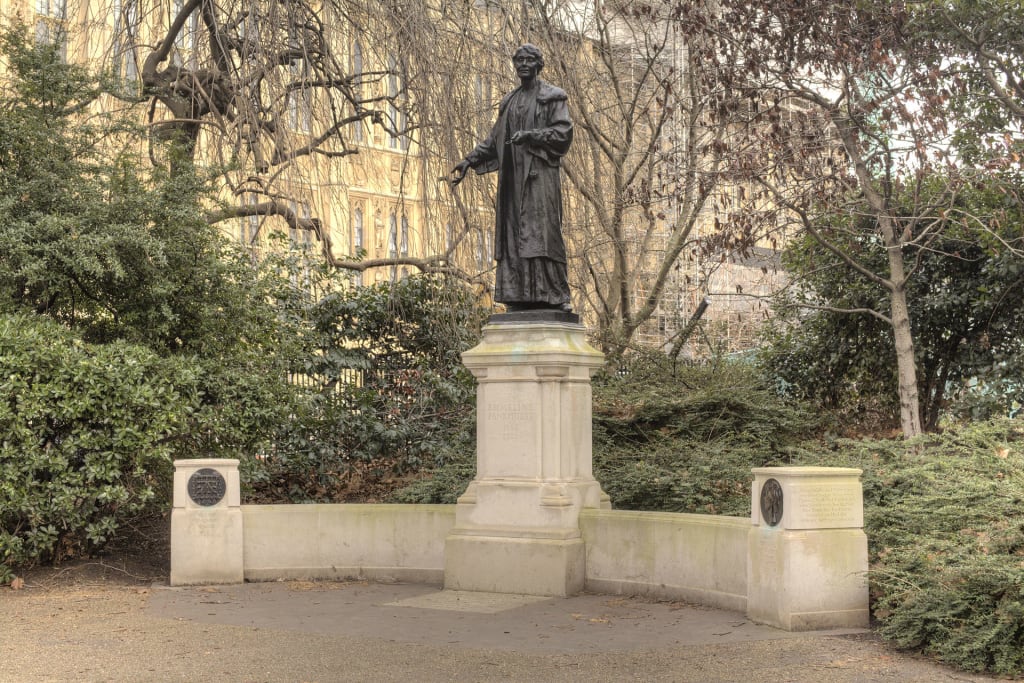
If you know the name Pankhurst, you will probably know about Emmeline Pankhurst, founder of the Women's Social and Political Union (WSPU), an all-women organisation that campaigned for the right to vote in the United Kingdom. You may even know of her daughter, Christabel, both being honored by the Pankhurst memorial in Victoria Palace Gardens, London, right next to the UK Parliament buildings, shown in the above featured image.
This memorial credits Christabel and Emmeline with successfully campaigning for the vote for women. There is no mention of one Estelle Sylvia Pankhurst, who was also instrumental in winning votes for women. Why? Because she split with the WSPU over her demands for working women's rights and because she was opposed to Britain's part in the First World War.
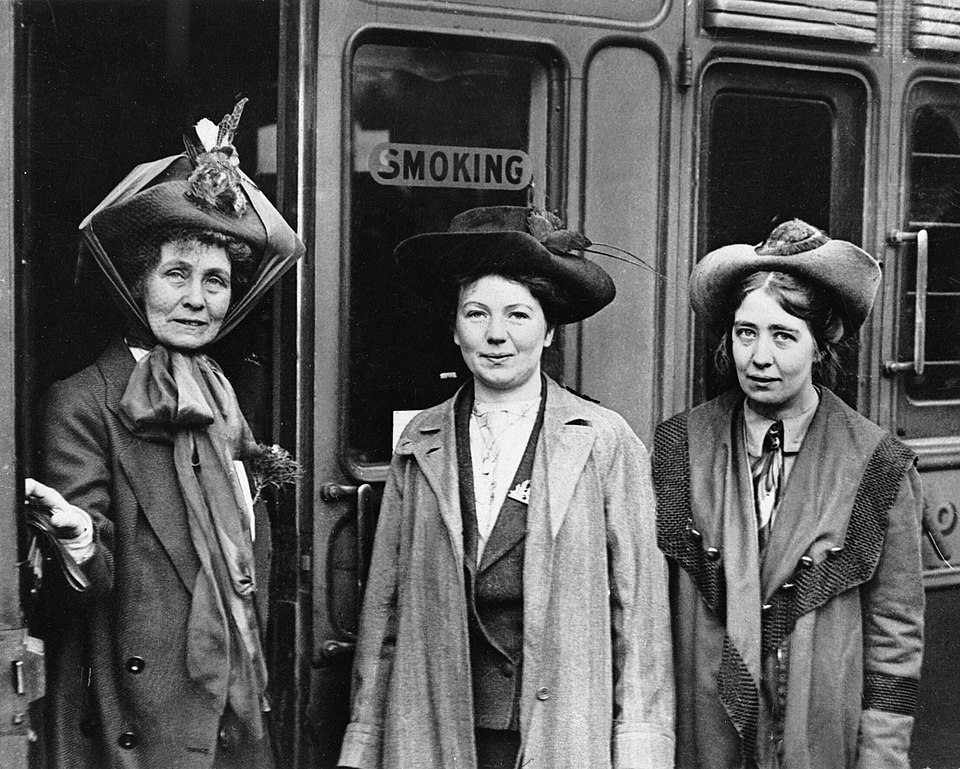
At the outset of war in Europe in 1914 the WSPU suspended its campaigning, instead throwing its lot in with the war effort, encouraging women to take on war work. This was done in the hope of winning votes for women at the end of the war. Sylvia Pankhurst, on the other hand, continued the struggle and continued to campaign against the war, while organising employment for working class women and food banks and soup kitchens for those thrown into poverty by the conflict.
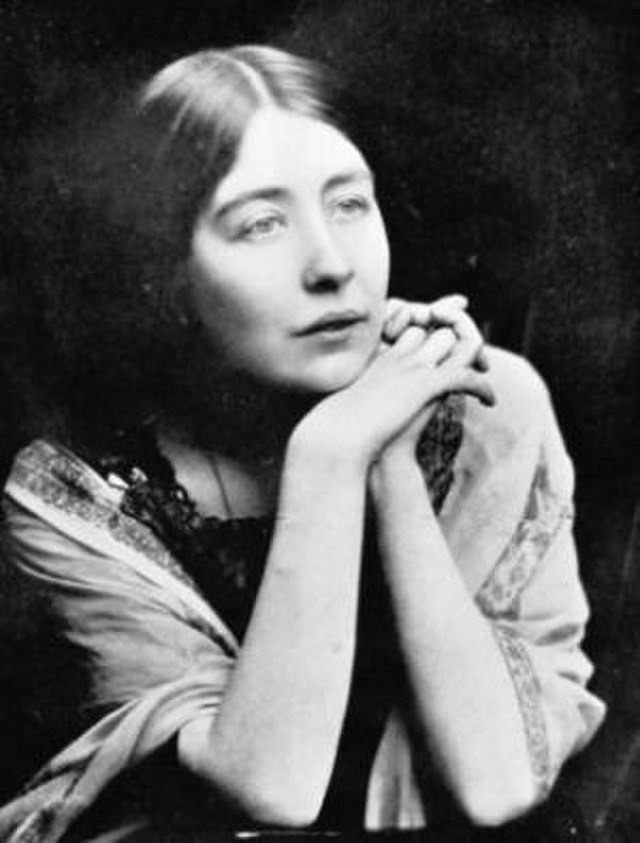
Estelle Sylvia Pankhurst (1882-1960) was an artists, a feminist, socialist, and writer. Born in Manchester, in the north of England, she was heavily influenced by the political activities of her parents, Emmeline and Richard Marsden Pankhurst. Emmeline and Richard were involved with the Fabian Society, the Independent Labour Party, and helped establish the Women's Franchise League. A graduate of the Manchester School of Art and the Royal College of Art, Sylvia was a painter and graphic designer, and was responsible for the design of the Women's Social and Political Union (WSPU) logo and various suffrage campaign materials.
The logo can be seen on this tea set, also designed by Sylvia and which was on display in Tate Britain art museum in London until June 2025.
Sylvia Pankhurst became a leading figure in the women's suffrage movement from a young age, working full-time for the WSPU from 1906. She was repeatedly imprisoned for her campaigning activities, enduring hunger strikes and force-feeding. This process involved the forcible insertion of a rubber tube into the mouth and down the throat of the victim, so that food could be forced into the stomach. Today, such treatment would be considered inhuman and degrading, amounting to torture. In those days, it was how many women suffrage campaigners were dealt with.
At the outset of war in 1914, Sylvia was expelled from the WSPU for her opposition to the war, and her support for working women and a universal right to vote for women. She had established the East London Federation of Suffragettes in 1913, concentrating her efforts on supporting and organizing working-class women campaigners in London's poorer East End.
Throughout World War I, she opposed the war and dedicated herself to social welfare work in the East End, setting up initiatives like the East London Toy Factory to provide work for women, and opening a mother-and-baby drop-in center and cost-price restaurants
After the suffrage movement had effectively disbanded, Sylvia Pankhurst continued her wide-ranging campaign activities. Like many optimistic intellectuals, along with a multitude of labor organisations, she became a strong supporter of the 1917 Russian Revolution. She even travelled to Moscow in 1920 to meet revolutionary leader V.I. Lenin. Although she became a founding member of the Communist Party of Great Britain, she was later expelled in a major breach with the party, particularly in respect of her newspaper, The Woman's Dreadnought (later The Workers' Dreadnought).
For the rest of her life, Sylvia campaigned against Nazism, fascism, and poverty, and was a constant champion of human rights. She spent considerable time in the USA, supporting the campaign for women's votes and women's rights, later moving to Ethiopia (then known as Abyssinia), where she was honored by Emperor Haile Selassie for her work to achieve Ethiopian independence from Italy.
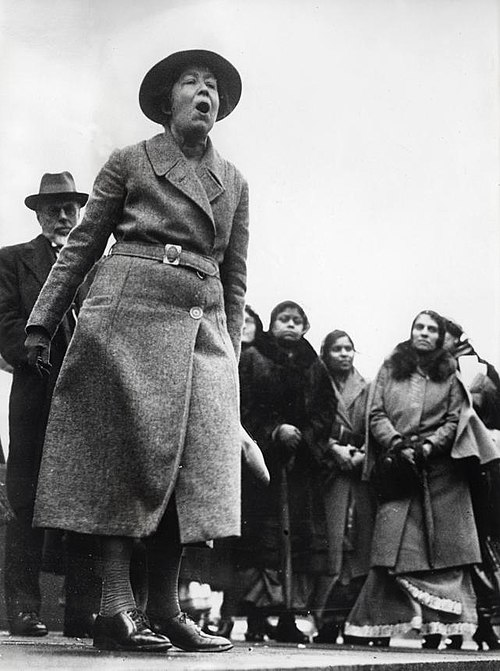
None of this should take away from her role in fighting for womens' right to vote. At the end of hostilities in 1918, the Representation of the People Act made historic changes to the right to vote in the UK, not just for women, but for many working men and others who did not own property. It could be considered ironic that, having campaigned for women's suffrage, the 1918 Act gave the vote to more men that it did women. This is another fact that is lost to most histories of that era.
Men returning from the trenches expected to find a better world after their suffering and their heroic sacrifices during the 'Great War'. Arguably, the right to vote was one clear commitment that could be made to combatants returning to Britain. The Representation of the People Act abolished almost all property qualifications for men, granting the vote to all men aged 21 and over. Before the war, the right to vote was mostly reserved for those who owned real estate.
Women's suffrage was more limited. Women aged 30 and over who met minimum property qualifications (occupying land or premises with a rateable value above £5, or whose husbands did), or who were university graduates, were allowed to vote for the first time in 1918. The history books tell us that this was a recognition of women's contributions during World War I. The credit for this achievement is always given to the WSPU and its decision to cease campaigning in favour of supporting the war.
More importantly, the work of women like Sylvia Pankhurst was all but forgotten. Another historic irony exists to the extent that much of the campaign material for the ultimately successful campaign to enfranchise women was designed by Sylvia, given her artistic talent.
Although young women and those who did not own property (or their husbands were not property-owners) did not win the vote in 2018, later Acts of Parliament placed them on equal terms to men. Before 1918, only around 7.7 million (men) could vote in UK parliamentary elections. After the end of the war in 1918, the number of voters tripled to some 21.4 million. The number of male voters increased by 5.2 million to 12.9 million.
As such, the 1918 Act represented a huge increase in the number of UK voters. It effectively established universal male suffrage and recognized women's right to vote, paving the way (so the established history leads us to believe) for a further parliamentary reform Act of 1928. This extended the right of women to vote on the same terms as men, adding some 5 million women voters to the electoral register. The 1928 Act lowered the voting age for women from 30 to 21, giving them the vote on the same terms as men, regardless of property ownership. This resulted in women constituting a majority of the electorate, making up about 52.7% of potential voters. The main reason for this difference was the reduction in the adult male population as a consequence of the number of war dead. The proportion of men had still not, by this time, recovered.
Sylvia campaigned continually against European colonial ambitions in Africa, particularly in Italian-occupied Ethiopia. She visited the country in 1944 after it had been liberated by Allied forces from Italian occupation, and criticised British ambitions to take over the region. In another visit which lasted from 1950 to 1951, she visited Eritrea (then under a British military administration) where she observed the administration's dismantlement of Italian-built port installations, which were sent to India and Kenya as war reparations. She condemned the policy asking why Britain was destroying the Eritrean ports.
In 1947, a Foreign Office official said, of Sylvia: "... this horrible old harridan should be choked to death with her own pamphlets."
Source: Wikipedia
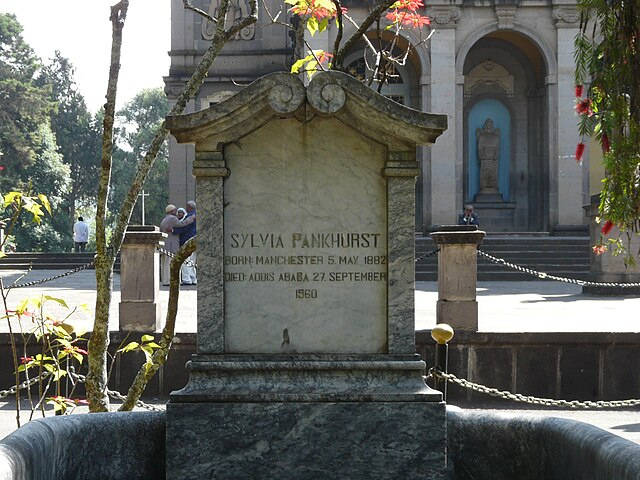
In 1956, encouraged by Haile Selassie to aid with women's development, Sylvia and her son Richard moved into an imperial guest house in the Ethiopian capital Addis Ababa. She raised funds for Ethiopia's first teaching hospital, and wrote extensively on Ethiopian art and culture. Pankhurst died in Addis Ababa in 1960, aged 78, and received a full state funeral at which Haile Selassie named her "an honorary Ethiopian."
That official and popular histories of the twentieth century should take it as given truth that Emmeline Pankhurst, Christabel, and the other women of the WSPU won the right to vote, is no surprise. The civil disobedience campaign and acts of vandalism saw many campaigners, including each of the Pankhurst women, imprisoned and maltreated. For Emmeline and Christabel, this has long been recognised, along with their support for Britain's war effort. For E. Sylvia Pankhurst, and countless and nameless working class women campaigners, British history has all but forgotten them.
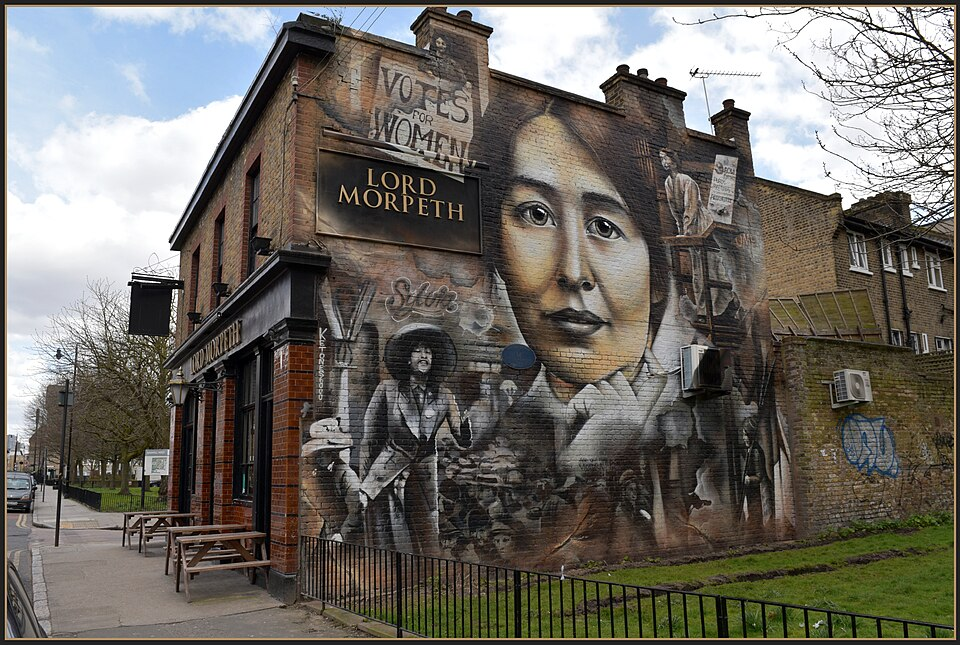
Sylvia is, however, honoured by monuments in London’s once-poor East End, in Manchester, and Ethiopia.
About the Creator
Raymond G Taylor
Author based in Margate on the English Kent coast, having moved from London. Known for his short stories and flash fiction, as well as poetry and non-fiction writing on subjects such as art, science, technology and the human condition
Enjoyed the story? Support the Creator.
Subscribe for free to receive all their stories in your feed. You could also become a paid subscriber, letting them know you appreciate their work.
Comments
There are no comments for this story
Be the first to respond and start the conversation.