
Dolly Parton Has Passed Away: The Woman Who Turned a One-Room Cabin into an Empire and Her Life into the Ultimate Show
Dolly Parton was one of those rare people who felt like they would live forever. Just days ago, she was openly discussing her life while actively mapping out her next projects. Then came the news that caught the entire world off guard. She passed away on Tuesday, August 25, 2026, in Nashville at the age of 80, surrounded by her family and closest friends.
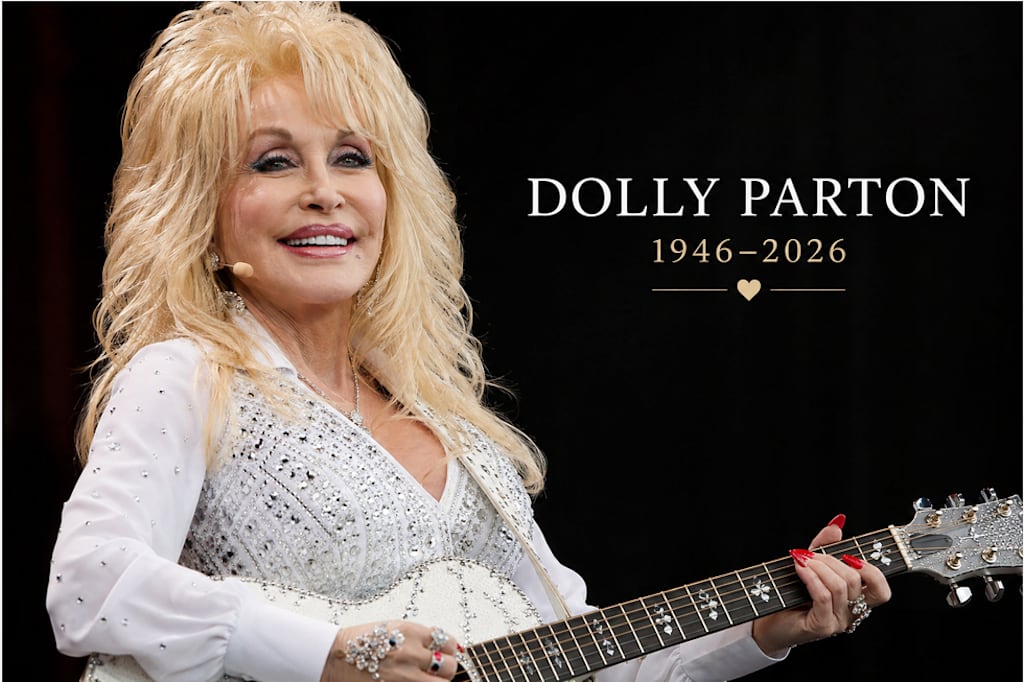
Dolly wasn’t just a singer; she possessed an immense, unique gift. It was the ability to seamlessly connect the world of country music, everyday people, Hollywood glamour, and charity. Absolutely everything she touched and every venture she started was calculated down to the smallest detail. Her life was her brand. Selling over 100 million records and penning more than 3,000 songs, she lived an authentic American dream that started as far away from the Hollywood elite as one could possibly imagine.
Born with Music in Her Heart
She grew up with eleven siblings, sharing a tiny, one-room rustic cabin that had neither electricity nor running water. Born in Tennessee as the fourth of twelve children, her upbringing was marked by severe poverty. Her father was completely illiterate, and this personal family hardship later became the main inspiration behind her famous charity project, the Imagination Library. The mission was simple: mail free books to children. Over the decades, this initiative grew into a global phenomenon, distributing hundreds of millions of books worldwide.
She was born with music in her DNA. She wrote her very first song at just six years old. It was a melody dedicated to a doll her mother had crafted for her out of a simple corn husk, and her mother kept the lyrics safe in an old shoebox. Dolly went on to write thousands of massive hits throughout her career, but that childhood song about the corn-husk doll held a special place—it belonged entirely to her.
Arriving in Nashville with a Bag of Dirty Laundry
In 1964, the day after her high school graduation, an eighteen-year-old Dolly boarded a bus to Nashville. She wasn't prepared for a grand love story or a quick marriage; she arrived with nothing but a suitcase filled with dirty laundry. Ironically, it was at a local laundromat where she met the man who would become her lifelong husband.
Carl Dean struck up a conversation with her outside the Wishy Washy Laundromat. Dolly later recalled that he looked her directly in the face during their chat, which was a rare experience for her at the time. Carl was the absolute opposite of Dolly. While she craved the stage lights, cameras, and massive audiences, he spent his entire life actively avoiding them. They married in 1966, and Carl became the husband that almost nobody ever saw.
A Global Superstar and Her Invisible Husband
As Dolly’s fame rose to a global scale, Carl Dean chose to remain completely invisible. He flatly refused interviews, turned away photographers, and never accompanied her to red-carpet events. When reporters snooped around their home, Carl would humorously tell them that he wasn't Carl Dean at all, but merely the hired gardener and that the man of the house was out of town. He simply wanted to visit auto repair shops, go to baseball games, and pick up the morning paper without being hounded as the spouse of the world’s most famous country star. They had a tiny, private ceremony, and fifty years later, they renewed those marriage vows.
Their unconventional relationship was a constant source of media speculation and tabloid gossip, with rumors linking her to co-stars like Burt Reynolds, with whom she starred in The Best Little Whorehouse in Texas. Yet, their marriage endured primarily because they each maintained their own separate worlds. Dolly often joked that this was the ultimate secret to their longevity: they never had the time to get on each other's nerves, and having their own space meant they always looked forward to seeing each other again.
Carl passed away in March 2025, leaving Dolly alone. She later confessed that the loss broke her heart far deeper than she let on publicly, admitting she had severely neglected her own health while focusing entirely on caring for him during his final days.
The Real Story of Jolene
One of the most recognizable tracks in music history was inspired by a real-life threat, though it wasn't a glamorous Hollywood affair. The real Jolene was a local bank teller. Dolly noticed that the woman was paying a bit too much attention to her husband Carl at the local branch, and Carl was flattered by the extra care. Dolly felt a spark of jealousy, sat down with her guitar, and turned that domestic annoyance into the legendary track Jolene. While the real situation was completely innocent, it highlighted Dolly's unique genius: taking a minor personal grievance and transforming it into a global masterpiece that the entire world would sing along to.
Dolly also wrote the timeless ballad I Will Always Love You. Long before Whitney Houston turned it into a cinematic phenomenon, Elvis Presley wanted to record his own version. However, Elvis’s management team strictly demanded half of the publishing rights before allowing him into the studio. Dolly made the terrifying decision to tell the King of Rock 'n' Roll "no." She understood a fundamental rule that many young artists ignored: retaining your publishing rights is infinitely more valuable than a one-time massive paycheck. That business savvy paid off exponentially decades later when Whitney Houston recorded the song for The Bodyguard, generating a fortune for Dolly simply because she owned every single word she had written.
An Empire Built on Big Hair and Big Business
The sky-high blonde wigs, the dramatic eyelashes, the layers of rhinestones, and the towering high heels were never an accident. Dolly knew exactly what she was doing. Her hyper-feminine look was a highly calculated brand symbol. She was always the first to crack a joke about her appearance, turning her image into a highly profitable corporate asset. She relied heavily on custom wigs, owning a collection that exceeded hundreds of designs over the decades. This look led to one of the most hilarious stories in pop culture: Dolly once secretly entered a celebrity Dolly Parton look-alike contest at a local theater and actually lost the competition to a drag queen. Dolly, naturally, turned the loss into another classic joke for her public appearances.
Her signature tattoos followed a similar practical logic. Fans noticed she always wore long sleeves to hide small, colorful tattoos. They weren't a sign of rebellion, but a clever way to cover up surgical scars from various medical procedures over her life, proving once again her ability to turn a physical limitation into a branding asset.
In 1986, she opened her own theme park, Dollywood, in the mountains of Tennessee. It wasn't just a corporate investment; it was an act of devotion to her hometown. The region she had left as a teenager with a sack of dirty laundry was transformed into a massive economic engine, providing employment for thousands of families in the Appalachian community. She possessed a mesmerizing quality: she could be fabulously wealthy, yet her audience always felt she was the same down-to-earth girl from Tennessee. She was widely known for her immense kindness and generosity, always laughing at her own "dumb blonde" persona while managing a massive business empire, understanding contract law, marketing, and human nature better than most executives.
Books Instead of Rhinestones
Even toward the very end, she was still discussing new work and planning for the future. She was a woman who knew she was aging, knew she had health struggles, and knew she had lost her lifelong partner, yet she kept looking forward with a smile.
Following her passing, a sea of flowers blanketed her star on the Hollywood Walk of Fame, flags across the United States were lowered to half-staff, and the Empire State Building was illuminated in a soft pink hue. Figures across the cultural landscape—from Taylor Swift and Beyoncé to Paul McCartney, Celine Dion, and Jane Fonda—shared heartfelt tributes to a woman who bridged generations and genres.
Dolly possessed one massive advantage throughout her remarkable life—she never pretended to be anyone else. She was always authentically herself. She was incredibly sharp and understood early on that fame holds no real value unless you use it to make a difference.
Instead of chasing empty tabloids and extravagant luxuries, she chose to ensure that children growing up in poverty, just like she did, would receive books for free. And so, her ultimate legacy isn't just gold records, movies, or photographs. It is the books resting on children's shelves across the globe—books that will continue to spread love and knowledge.
Her music might eventually play less often on the radio. Her films will age. Her glittering outfits will one day look like fashion from another planet. But there will always be children with her books in their rooms. They might not even know who Dolly Parton truly was, but they will hold something she chose to give them. Dolly gave them the chance to realize that the world can be much larger than a one-room cabin in Tennessee.
Do you enjoy uncovering forgotten stories and little-known facts about the world around us? You can find more exclusive articles and support my work on my Herohero profile, where I publish under my real name, Lenka Čihařová.
About the Creator
Enjoyed the story? Support the Creator.
Subscribe for free to receive all their stories in your feed.
Comments
There are no comments for this story
Be the first to respond and start the conversation.