
Global Tensions Rising: Turkey, Israel, Pakistan, USA, and India
How Strategic Alliances, Military Power, and Regional Rivalries Could Shape the Next Global Conflict

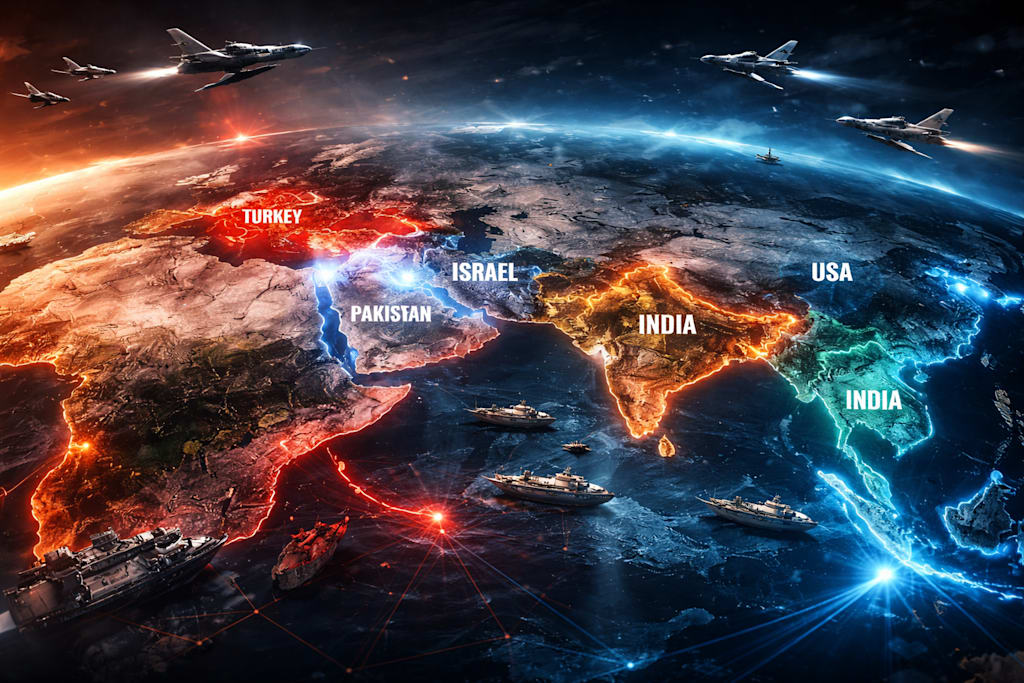
Global Tensions Rising: Turkey, Israel, Pakistan, USA, and India — A New Geopolitical Flashpoint
In recent years, geopolitical tensions across the world have intensified, creating speculation about a potential large-scale conflict involving major regional and global powers. Among the countries often discussed in strategic and political analysis are Turkey, Israel, Pakistan, the United States, and India. While no direct war currently exists between all these nations, shifting alliances, regional disputes, and military modernization have increased global uncertainty and concern.
The modern world is no longer defined by simple two-sided wars. Instead, conflicts now emerge through alliances, proxy battles, economic sanctions, cyber warfare, and diplomatic pressure. These five nations hold significant strategic influence across different regions, and any escalation involving them could impact global peace, trade, and security.
Turkey's Strategic Position Between East and West
Turkey occupies one of the most strategically important locations in the world, acting as a bridge between Europe, Asia, and the Middle East. Its growing defense industry, modern drone technology, and expanding military presence have strengthened its role in regional politics. Turkey has been involved in various geopolitical situations in the Middle East, Eastern Mediterranean, and South Asia through diplomatic support and defense cooperation.
Turkey's relationship with Pakistan has strengthened over the past decade, particularly in defense collaboration and political alignment on global issues. Both nations often emphasize cooperation in technology, military training, and diplomatic support. Turkey's influence within NATO also makes its position complex, as it balances relationships between Western allies and Muslim-majority countries.
Israel's Military Strength and Regional Security Concerns
Israel is widely recognized for its advanced military technology, intelligence capabilities, and strong defense systems. Its focus on national security and regional threats has led to the development of sophisticated missile defense systems, cyber warfare capabilities, and modern air force technology.
Israel's close alliance with the United States strengthens its position in global geopolitics. However, tensions between Israel and several countries in the Middle East often create diplomatic friction. Any escalation involving Israel can quickly draw international attention, particularly when global powers become involved.
Pakistan's Strategic Role and Defense Capabilities
Pakistan plays a crucial role in South Asian geopolitics. With a strong military, nuclear capability, and strategic partnerships, Pakistan remains an important regional power. The country's geographical location near China, Afghanistan, India, and the Middle East further increases its geopolitical importance.
Pakistan's long-standing rivalry with India remains one of the most sensitive and potentially dangerous conflicts in the world. Both countries possess nuclear weapons, which makes any direct confrontation a matter of global concern. Pakistan has also strengthened defense cooperation with Turkey and other allied nations, creating a broader strategic framework.
India's Rising Military and Economic Influence
India has emerged as a major global power with a rapidly growing economy and expanding military capabilities. The country has invested heavily in defense modernization, including advanced fighter jets, missile systems, and naval expansion. India's growing partnership with the United States has further increased its strategic influence in the Indo-Pacific region.
India's tensions with Pakistan over territorial disputes and regional dominance remain a key concern. Additionally, India's expanding global partnerships have positioned it as an important player in future global alliances.
The United States: Global Superpower and Strategic Balance
The United States remains the most influential military and economic power in the world. Its alliances across Europe, Asia, and the Middle East allow it to influence global conflicts and diplomatic negotiations. The United States maintains strong ties with Israel and India while also engaging in complex diplomacy with Turkey and Pakistan.
The U.S. role in any potential conflict involving these nations would likely shape the overall outcome. Whether through diplomacy, military presence, or economic sanctions, the United States would play a central role in maintaining or disrupting global stability.
Possible Global Impact of a Multi-Nation Conflict
If tensions between these countries escalated into a broader conflict, the consequences would be significant:
- Global economic instability
- Oil and energy supply disruptions
- Cyber warfare and technological conflicts
- Increased military alliances and arms race
- Impact on global trade routes
- Humanitarian crises and refugee movements
Modern warfare is no longer limited to battlefields. Cyber attacks, economic sanctions, drone warfare, and intelligence operations would likely dominate any future conflict.
The Importance of Diplomacy and Peace
Despite rising tensions, diplomacy remains the most effective solution. International organizations, peace talks, and strategic dialogue continue to play a crucial role in preventing large-scale conflicts. Cooperation in trade, technology, and regional development can reduce tensions and promote stability.
The world today is deeply interconnected. A conflict involving major nations would not only affect governments but also ordinary citizens, economies, and global progress. Therefore, peaceful negotiation and diplomatic engagement remain essential for maintaining global security.
About the Creator
Wings of Time
I'm Wings of Time—a storyteller from Swat, Pakistan. I write immersive, researched tales of war, aviation, and history that bring the past roaring back to life
Enjoyed the story? Support the Creator.
Subscribe for free to receive all their stories in your feed.
Comments
There are no comments for this story
Be the first to respond and start the conversation.