
I Make 50,000 Yuan a Month. I Still Eat 20-Yuan Fast Food.
Money changed my choices. It did not change my taste.
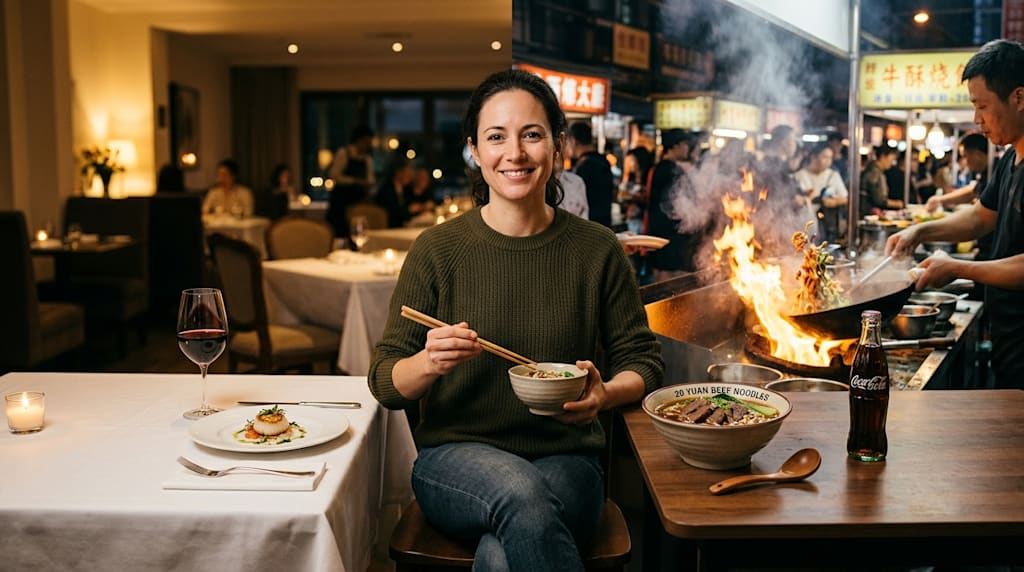
Yes. If I made 50,000 yuan a month, I would still eat 20-yuan fast food.
Not to look humble. Not to save money. Not because I dislike expensive restaurants. I would probably spend the first few months eating everything I used to skip: Japanese food, French food, steak, private kitchens, tasting menus, Michelin stars. Whatever I could reach, I would try. People who lacked something tend to overcorrect. Appetite, held down too long, wants a season of excess.
After that season, many people come back to a plain fact: expensive food is not always that much better than everyday food.
Fine dining can be good. The belief that high-end food must beat low-end food comes from scarcity. In the past, families could not spare extra oil. Meat was not something you ate freely. A normal meal was greens, pickles, and congee. Braised pork, fish, or chicken appeared at festivals and the New Year. Back then, delicious food was rare. It felt like a holiday. It was a treat that came a few times a year. So people assumed rare and expensive meant better.
That world is gone. Pork, chicken, fish, and eggs are normal now. An ordinary family meal today would look like a New Year feast decades ago. When basic ingredients are common, it is hard for high-end cooking to create a huge gap in taste. It can be more refined, rarer, and more ceremonial. It does not automatically leave a hot bowl of beef noodles or a fresh plate of beef chow fun far behind.
Fast food understands most people’s tastes. It is not fancy, but it knows what people want. It knows salty, spicy, crispy, soft, oily, and carby. It knows how to satisfy someone fast. A street cook with ten years at the wok can make beef chow fun, sesame noodles, or fried rice that holds its own against wagyu in a fine restaurant. A cheap bottle of cola or sour plum drink can taste better than many expensive, bland drinks. In some ways, the most popular fast food is the best food. That is why it wins so many people. It costs 20 yuan, but if you go too long without it, you miss it.
Of course I would still eat it.
I would be pickier, though. One 20-yuan meal can be very different from another. If it is a reheated packet, heavy with oil and salt, made from tired ingredients in a dirty kitchen, I would eat it less. If it is fresh from the wok, clean, and generous, with crisp vegetables, tender meat, and a broth that took time, I would go out of my way for it. A low price does not mean a low experience. Often it just means rent, service, plating, and marketing are not on the bill. For 20 yuan, you buy the taste, not the atmosphere.
At 50,000 yuan a month, what changes is not my stomach. It is my options. I eat 20-yuan fast food because I want it, not because it is all I can afford. I can also eat at a place that costs 1,000 yuan per person without feeling it for weeks. Money gives you choices. It does not require you to choose the expensive one. You can line up for noodles with coworkers at noon. You can also dress up on a weekend and sit in a quiet restaurant for a chef’s menu. Both can be true.
High-end dining does not sell only better taste. It sells room, service, company, rare ingredients, ritual, and safety. Fast food and fine dining are different products. Fast food handles the everyday: speed, consistency, flavor, low price, and a decent meal right now. Fine dining handles occasions: anniversaries, business dinners, and the wish to make one meal feel special. The popularity of fast food does not prove it is the peak of cuisine. It proves it found the largest common ground: direct seasoning, quick service, low cost, and wide appeal. Cola tastes good, but it is not judged like specialty coffee, tea, or wine.
Good food has diminishing returns. A 20-yuan meal might already be an 80 out of 100. A fine restaurant might be a 92. For those last 12 points, the price can be dozens of times higher. Even with a 50,000-yuan salary, I would not pay for 12 points every day. In daily eating, reliability, convenience, flavor, and low cost are huge advantages. You cannot live in ritual every day. You cannot celebrate the New Year every day. Most days, you need hot soup, a plate of stir-fry, and a meal that gets you back on your feet.
So if I made 50,000 yuan a month, I would eat 20-yuan fast food. I would also eat at expensive restaurants sometimes. On a weekday, I might still have a bowl of noodles. On a weekend or anniversary, I might go somewhere nice. After late overtime, I might buy fried noodles from a street stall. On an important day, I might book a place I have wanted to try for months. Money gives you choices. It does not make you betray your taste.
Taste has no class. It has memory and habit. The food you loved as a child may not be your daily meal as an adult, but it returns at certain moments. That 20-yuan bowl of noodles, that cheap bottle of cola, that street-side fast food. They are not noble. They are real. They are not a mark of poverty. They are part of ordinary life.
I make 50,000 yuan a month. I still eat 20-yuan fast food.
I would. If I go too long without it, I miss it.
About the Creator
Jin
Writer of reamstories
https://reamstories.com/jin
Enjoyed the story? Support the Creator.
Subscribe for free to receive all their stories in your feed. You could also become a paid subscriber, letting them know you appreciate their work.
Comments
There are no comments for this story
Be the first to respond and start the conversation.