Latest Stories
Most recently published stories in Criminal.
The Man Who Robbed the Same Bank Twice
M Mehran The first time was for the money. The second time was personal. Detective Miriam Cole had interviewed over three hundred criminals in her nineteen-year career. Liars. Manipulators. Men who cried on cue and women who smiled through polygraphs. She thought she'd catalogued every variation of human deception the profession had to offer. Then Marcus Hale sat down across from her in Interview Room 3, folded his hands on the metal table like he was settling in for a business meeting, and said: "I robbed First Continental twice. I'd like to explain why the second time was your fault." Miriam set down her pen. "My fault." "The department's fault. Semantics." He shrugged. "You have about forty minutes before my lawyer arrives, so I'd start listening." She listened. The First Job: Clean, Fast, Invisible Eight months earlier, First Continental Bank on Ashford Avenue had been robbed in broad daylight. No weapons discharged. No hostages. No dramatic standoff. The robber — identified only as a white male, average height, wearing a gray jacket and a baseball cap — had walked to the commercial teller window at 11:14 AM, slid a note across the counter, and walked out with $68,000 in non-sequential bills eleven minutes later. The dye pack never triggered. The GPS tracker in the cash bundle stopped transmitting four blocks away — someone had known exactly where it was and removed it with surgical precision. Witnesses described a man so aggressively average in appearance that the composite sketch looked like every third person on the street. The case landed on Miriam's desk with a sticky note from her lieutenant that said: Good luck. She ran it hard for six weeks. Nothing. The money never surfaced. The man never surfaced. The case went into the cold pile, where it sat beside forty-three others she hadn't forgotten and never would. Marcus Hale had been invisible. He'd planned it that way. What Happens Between Crimes "You want to know why I did it?" Marcus said, leaning back in his chair. "Not the answer you're expecting." Miriam waited. "My daughter needed a bone marrow transplant. Private specialist, experimental protocol, not covered by insurance because it was still in trial phase. $71,000. I had $3,000 in savings and a mechanic's salary." He paused. "I'm not asking for sympathy. I'm giving you context." "There are other options," Miriam said. "Fundraising. Medical loans—" "She had eleven weeks." His voice didn't waver. "I didn't have time for a GoFundMe to go viral. I needed the money in thirty days. So I took it." Miriam kept her face neutral — a skill she'd spent years perfecting. Inside, something shifted uncomfortably. "The treatment worked," he continued. "Ellie turned seven in March. She's healthy. She's fine." A beat. "And then your department arrested the wrong man." The Arrest That Broke Everything Four months after the First Continental robbery, a local man named Dennis Grady had been picked up on an unrelated fraud charge. During processing, an overeager junior detective named Paulson had matched Grady's physical description to the bank composite and flagged it as a possible hit. The match was thin. Miriam had said so, twice, in writing. Paulson pushed it anyway. Grady was charged. The DA, under pressure to close cold cases, ran with it. And Dennis Grady — a man who happened to be average height, own a gray jacket, and have a prior record that made juries nervous — was convicted on circumstantial evidence and sentenced to six years. Miriam had voted against the charge internally. She'd been overruled. She'd gone home that night and sat in her car in the driveway for twenty minutes, doing the math on how wrong it felt. Dennis Grady was innocent. She knew it in the specific, bone-deep way that experienced detectives know things they can't yet prove. Marcus Hale had read about the conviction in the newspaper over breakfast. And something in him — the part that had convinced itself the robbery was a one-time emergency, a sealed chapter — cracked open. The Second Job: Loud, Deliberate, and Designed to Be Caught The second robbery of First Continental happened on a Wednesday at 2:30 PM. Same bank. Same teller window. But this time, Marcus wore no hat. He looked directly at every camera. He handed the teller a note that said: I am the same person who robbed this bank eight months ago. I need you to call Detective Miriam Cole specifically. The man in prison is innocent. He took no money. He sat on the bench outside the bank and waited for the police to arrive, hands visible, posture relaxed, watching the pigeons fight over a pretzel on the sidewalk. When Miriam pulled up — specifically requested by name, as per his instructions — he stood, put his wrists together, and said: "I'll confess to everything. Both jobs, full detail, evidence locations, all of it. In exchange, you fix what your department did to Dennis Grady." The Negotiation The lawyer arrived thirty-eight minutes into their conversation, as promised, and immediately tried to shut it down. Marcus waved him quiet. "I'm not negotiating a lighter sentence," Marcus said clearly, for the record. "I'm guilty. I'll take whatever I'm given. I'm negotiating Dennis Grady's release. That's the only deal on the table." Miriam looked at him for a long moment. Nineteen years. Three hundred criminals. Every variation of deception she'd ever catalogued. This wasn't deception. She excused herself, stepped into the hallway, and called the DA's office. The conversation was short and unpleasant. She made three more calls after that — her lieutenant, the innocence review board coordinator, and a lawyer she trusted who worked wrongful conviction cases pro bono. When she walked back into Interview Room 3, she sat down, opened her notebook, and said: "Start from the beginning. Every detail. Don't leave anything out." Marcus nodded. And for the next two hours, he talked. Aftermath Dennis Grady walked out of Hartwell Correctional fourteen weeks later, exonerated by a combination of Marcus's full confession, physical evidence that had been mishandled during the original investigation, and a review that quietly ended Detective Paulson's career. Marcus Hale was sentenced to four years, reduced to two and a half with credit for cooperation and the non-violent nature of both incidents. He served his time at a minimum-security facility forty miles from the city. Ellie Hale visited every month with her mother, pressing crayon drawings against the visitation glass — purple houses, yellow suns, and in every single one, a tall figure standing in the center that she always labeled, in careful seven-year-old handwriting: Dad. Miriam Cole closed the case file, added it to her solved stack, and sat with it quietly for a moment longer than she usually did. Some crimes, she had learned, were shaped like desperation. Some confessions were shaped like sacrifice. Her job was to know the difference. She was getting better at it.
By Muhammad Mehran4 months ago in Criminal
The Seventy-Second Heist
M Mehran They said it was impossible to rob the Calloway Diamond Exchange. They were almost right. Detective Sasha Verne had a rule: never fall in love with a case. She'd broken that rule exactly once — four years ago, chasing a ghost named Dominic Reale across three cities and two federal jurisdictions, only to watch him walk out of a courthouse on a technicality while she stood in the hallway holding a coffee that had gone cold an hour earlier. She'd promised herself. Never again. Then the Calloway job landed on her desk at 6:47 on a Tuesday morning, and every promise she'd ever made to herself quietly packed its bags and left. The Crime That Shouldn't Have Happened The Calloway Diamond Exchange sat on the fourteenth floor of a building with biometric elevators, pressure-sensitive flooring, a private security firm on retainer, and a vault system that had never — not once in thirty-one years — been successfully breached. Emphasis on had. Sometime between 11:58 PM and 12:04 AM on a Thursday night, someone walked through the front door, bypassed a security system worth more than most people's homes, cracked a vault with a six-digit rotating code that changed every seventy-two hours, and left with $4.3 million in uncut diamonds. Six minutes. Start to finish. The cameras showed nothing — not a glitch, not static, not a masked face. Just six minutes of perfectly normal, empty corridor footage that forensics confirmed had been digitally stitched from recordings taken forty-eight hours earlier. Whoever did this hadn't just robbed Calloway. They'd rehearsed it down to the second, planted a digital alibi in the system beforehand, and executed it like a military operation. Sasha stood in the empty vault room and felt something she hadn't felt in four years. Admiration. Dangerous, inconvenient admiration. Reading the Fingerprints That Weren't There The first rule of organized crime, Sasha had learned, was that professionals don't leave prints. The second rule was that they always leave something — not because they're careless, but because perfection is a myth and even the best criminal in the world is still just a person. She walked every inch of the exchange floor for three hours while her partner, Detective Cal Odom, interviewed the building's overnight security guard — a man named Pete who had, conveniently, called in sick that night for the first time in four years. Pete would crack. They always cracked. But Pete wasn't the story. The story was a single scuff mark on the window ledge of the fourteenth-floor emergency exit. Barely visible. A rubber sole, partial print, consistent with a climbing shoe. Someone had rappelled. Not up — down. They'd come from above, from the roof, which meant the elevator footage was misdirection. A magician's trick. Look here so you don't look there. Sasha photographed it, bagged it, and felt the case tighten around her like a current. The Network Behind the Heist Organized crime doesn't operate in single jobs. That's how amateurs think — one score, walk away, disappear. The professionals run operations. Layered, interconnected, protected by distance and deniability. She ran the climbing shoe sole against a database of known burglary signatures and came up with nothing — which told her everything. This wasn't a crew with a history. It was a crew assembled specifically for this job, with people who'd never worked together on record before. That took money. That took coordination. That took a fixer. In organized crime circles, fixers are the invisible architecture — the people who connect talent with opportunity, who negotiate cuts and timelines and escape routes. They don't touch the job themselves. They touch everything around it. Sasha had a list of seven known fixers operating in the city. She crossed off five immediately — too old, too retired, too dead. The remaining two were a woman named Clara Voss, who ran a legitimate art consultancy as cover, and a man she hadn't expected to see on any list connected to this case. Dominic Reale. She stared at his name on her screen for a long time. Her coffee went cold. She didn't notice. The Cat Knows the Mouse She found him the next morning at a café three blocks from the exchange — sitting openly, drinking espresso, reading a physical newspaper like it was 1987. Either he was completely innocent or completely arrogant. With Dominic Reale, the answer was always both. "Detective Verne." He didn't look up from the paper. "You look like you haven't slept." "Walk me through Thursday night." He finally looked up. His eyes were calm in that particular way that only came from either a clean conscience or years of practice. "I was at a gallery opening. Verifiable. About two hundred witnesses and a photographer from the City Arts Review." "Until what time?" "Midnight." Six minutes past midnight, the vault had been cracked. She did the math. The exchange was seven minutes from the gallery — by car. "Cutting it close," she said. He smiled and folded his newspaper. "I always do." The Seventy-Second Hour The vault code rotated every seventy-two hours. Someone had accessed the exchange's internal scheduling system — a breach traced through three proxy servers that eventually dissolved into a dead end in Eastern Europe. But one IP address, just one, had pinged the system from a device registered to Clara Voss's consultancy. Clara was arrested Thursday afternoon. She gave up four names within an hour — the climber, the tech specialist, the inside man at Calloway's security firm, and the driver. All four picked up by end of day. The diamonds were recovered in a storage facility, still uncut, wrapped in velvet inside a climate-controlled case. Whoever had planned this had expected them to sit there — wanted them untouched for a cooling-off period. Patient. Disciplined. Dominic Reale's gallery alibi held. Two hundred witnesses. Photographer. Timestamp on every image. He was untouchable. Again. But as Sasha signed off on the case — five arrests, full recovery, closed in seventy-two hours — she found something in the evidence inventory that nobody else had flagged. The velvet wrapping around the diamonds was monogrammed. Small, discreet, almost invisible. D.R. She photographed it. Filed it quietly. Said nothing. Because this time, she wasn't chasing a ghost. She was building a cage — and she had all the time in the world to finish it.
By Muhammad Mehran4 months ago in Criminal
I Couldn't Stop Stabbing Him: She Stabbed Her Husband 193 Times. Content Warning.
“I couldn’t stop stabbing him; I couldn’t stop,” Susan Wright testified as she stood trial for the brutal murder of her husband, Jeff. Susan had brutally stabbed her husband 193 times before burying his body in the backyard.
By Criminal Matters4 months ago in Criminal
Monster Mansion
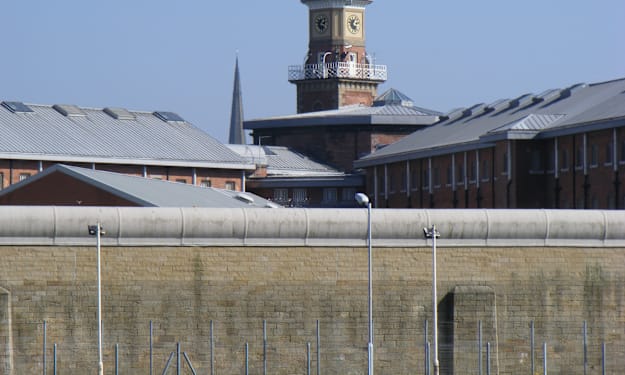
There was a prison established in Wakefield in 1595 as the West Yorkshire House of Correction however nothing of the original prison remains as it was replaced in the 1760s and again in 1847, more recently the walls were rebuilt and the oldest part which was the officers club was replaced with a section of this new wall.
By Phill Ross4 months ago in Criminal
The Night My Brother Called Me From Jail
M Mehran I was watching a rerun of some cooking competition I'd already seen twice when my phone lit up with a number I didn't recognize. It was 11:18 on a Thursday. I almost didn't pick up. "It's Marcus." I sat up so fast I knocked my water glass off the armrest. My brother Marcus had been out of my life for almost four years by then. Not because I wanted it that way — I want to say that clearly — but because loving someone who is addicted to something is its own kind of slow emergency, and I had finally, after years of trying, run out of ways to help him that didn't destroy me in the process. My therapist called it "setting a boundary." I called it the worst thing I'd ever done. "Where are you?" I said. "Detention center. Off Route 12." A pause. "I need you to come." I won't tell you I didn't hesitate. I did. I sat on my couch for probably three full minutes just holding the phone after he hung up, staring at the paused cooking show, some chef's face frozen mid-expression. I thought about every time before. The bail money in 2018. The time I drove four hours to pick him up from a gas station in the middle of nowhere because he'd called me crying and I couldn't not go. The time he stole my grandmother's ring — and I still, even now, have trouble writing that sentence. I thought about all of it. Then I got my keys. The detention center on Route 12 is a low concrete building that looks from the outside like it could be anything — a warehouse, a municipal records office. There's a parking lot with bad lighting and a small waiting area inside with plastic chairs in a color I can only describe as "institutional beige." I'd been there before, two years earlier, different circumstances. The woman at the front desk looked at me the way people look at you in those places — not unkind, just practiced. She had seen a thousand people walk in looking exactly like I looked. Marcus came out looking smaller than I remembered. He'd lost weight, not in a healthy way. There was a cut above his eyebrow that had been cleaned up but not stitched. He was wearing a gray t-shirt that wasn't his and he smelled like the inside of a car that had been closed up too long. We didn't hug. We've never been huggers, me and Marcus. We just looked at each other for a second in the fluorescent light and then I said, "You hungry?" and he said, "Yeah," and we walked out. He told me everything at a diner off the highway at about 1 in the morning. Decaf for me, regular for him even at that hour, which told me a lot about what his nights had been like lately. He'd been picked up with two other men in a car that, it turned out, contained things Marcus swore he hadn't known were there. I believe him. I also know that's exactly what someone would say whether it was true or not, and I've learned, painfully, that those two things can coexist. I believed him and I couldn't fully trust my belief. One of the men in the car, a guy named Terrell, Marcus had met six weeks earlier. The other one he barely knew. He described the night in fragments — a phone call, a favor, a ride that was supposed to take twenty minutes. These are always the words that show up in these stories. A favor. It was supposed to be quick. He kept turning his coffee cup around in his hands while he talked. What happened next took about seven months to resolve. I won't drag you through all of it because honestly some of it I still don't fully understand — the legal part, I mean. I am not someone who knows how plea agreements work or what "adjudication withheld" means in practical terms. I had to look things up constantly. I sat in a courtroom twice and both times felt like I was watching something happen in a language I almost spoke but not quite. What I can tell you is that Marcus was not the worst person in that car, and the law, to its occasional credit, seemed to understand that. He got probation. Mandatory treatment program. Community service hours that he complained about exactly once and then never again. He's been clean for fourteen months now. I know that because he tells me, and I know that because I can see it — in his face, in the way he shows up when he says he will, in small things that are hard to name but easy to feel when you've known someone their whole life. Last month he fixed my kitchen faucet that had been dripping for a year. He just showed up on a Saturday with tools and fixed it without making it a thing. I made lunch. We watched part of a game. Before he left he said, "I'm sorry. For all of it." I said, "I know." We're not all the way back to wherever we were before. I don't know if that place still exists. But we're somewhere, and somewhere is not nowhere, and some days that feels like enough. I'm still not sure I did the right thing, going that night. I'm not sure the right thing was even available to me. Some situations don't offer you a clean choice — just a set of imperfect options and a phone lighting up at 11:18, and whatever you decide to do next. I picked up the phone. That part, at least, I don't regret.
By Muhammad Mehran4 months ago in Criminal
The Woman in Seat 14B: She Sat Next to a Killer and Didn't Know It
M Mehran She almost missed the flight. Nadia Chen had sprinted through Gate C-22 with forty seconds to spare, boarding pass crumpled in her fist, carry-on banging against every seat as she made her way down the aisle. She was sweating, annoyed, and desperately in need of a window seat so she could sleep the whole way to Portland. What she got was 14B. Middle seat. The man already sitting in 14A gave her a polite nod as she shoved her bag into the overhead bin. He was ordinary-looking in every way that mattered — mid-forties, neat haircut, grey button-down shirt. The kind of man you'd forget the moment you looked away. He had a paperback open on his lap and a cup of black coffee balanced on the tray table. "Long day?" he said. "The longest," Nadia replied, clicking her seatbelt. She had no idea it was about to get longer. The flight from Chicago to Portland was scheduled for three hours and forty minutes. Nadia had planned to sleep through most of it. But somewhere over Wisconsin, the man in 14A — who had introduced himself simply as "Paul" — started talking, and something about the rhythm of the conversation pulled her in before she realized she was already deep inside it. He was a good talker. That was the first thing she noticed. Not flashy, not loud, but precise. He chose his words carefully, like a man who had spent years thinking before speaking. He asked about her work (graphic designer), her city (she'd just moved to Portland), her family (complicated, she said, and he nodded like he understood exactly what that meant). He talked about himself sparingly. He was in logistics, he said. Traveling for business. He had a daughter he missed. "How old?" Nadia asked. "She'd be twenty-three now," he said. Would be. Past tense. She caught it, and a small sadness moved across her chest. "I'm sorry," she said. He looked out the window. "These things happen." It was near the end of the flight, somewhere over the dark of the Cascades, that the conversation shifted. She had mentioned, offhandedly, that she'd been binge-watching a true crime documentary series — the one everyone was talking about, about the Whitmore murders in Ohio in 2009. She'd expected the usual response: Oh, I've seen that. Isn't it crazy? Instead, Paul was quiet for a long moment. Then he said: "The documentary gets a few things wrong." Nadia turned to look at him. "The wife," he continued, "wasn't home when it happened. She was at her sister's in Cleveland. They got that wrong." Nadia's mouth was suddenly dry. "How do you know that?" Paul picked up his coffee cup. Set it down. Looked at the seat-back in front of him with an expression she couldn't quite read — not guilt exactly, not pride. Something between remembering and deciding. "I was there," he said. The plane hummed. Somewhere behind them, a child laughed. "You were — " Nadia stopped. "You were there? Like, at the house?" "I worked next door," he said, his voice completely level. "I saw the cars that night. Three of them. Police report only mentioned two. Nobody ever followed up on that third car." Nadia exhaled slowly. Her hands were flat on her thighs. She was calculating, without quite meaning to, how far she was from the flight attendant call button. But then Paul opened his paperback again, calm as a man discussing the weather. "You should email the documentary team," he said. "They have a tip line. Someone should tell them." And that was it. He went back to reading. She stared at the seat-back for the remaining forty minutes of the flight, replaying every word. She did email the documentary team. Three weeks later, she received a reply from the lead producer. The tip about the third vehicle had been independently corroborated by a neighbor who had never been properly interviewed. The information reopened a conversation with investigators that had gone cold for years. Nadia never found out who Paul really was. She had no last name, no seat record she could access, no photo. Just the memory of an ordinary-looking man with a paperback and a cup of black coffee who had known something he shouldn't have — and had chosen, for reasons she would never understand, to let it slip to a stranger at 30,000 feet. This is the thing about criminal cases that television gets wrong: they are not clean. They do not resolve neatly in sixty minutes. They live in the spaces between people — in conversations on planes, in details that go unrecorded, in the things witnesses almost said but didn't. The Whitmore case is still technically open. Somewhere, a man named Paul is sitting on an airplane, or at a dinner table, or in a quiet room — ordinary-looking in every way that matters. He knows something. He is deciding whether to say it. He might be sitting next to you right now.
By Muhammad Mehran4 months ago in Criminal
He Mowed My Lawn Every Saturday for Six Years. Then the FBI Knocked on My Door.
M Mehran I want to start by saying that I am not a naive person. I grew up in a rough part of Cleveland. I worked thirty-one years as a school principal in neighborhoods where crime was not a headline — it was a Tuesday. I have seen things that would make most people flinch, and I stopped flinching a long time ago. And yet. I did not see it. Six years, and I did not see a single thing. His name was Robert Tulley. He moved into the house at the end of Birchwood Lane in the spring of 2015, and within two weeks he had introduced himself to every neighbor on the block, helped the Garcias carry a new refrigerator up their porch steps, and fixed the broken fence post at the edge of my property without being asked. He was fifty-two years old, recently retired from what he described as "government contracting," and he lived alone. He had a gray beard kept always at the same length, a green John Deere cap he wore almost every day, and a laugh that started slow and built like a train gathering speed. He mowed my lawn every Saturday. I never asked him to. The first time, he simply appeared one morning with his mower running and waved when I came to the window. I opened the door and called out that he didn't have to do that. "I know," he said. And kept mowing. That was Robert. For six years, he was the kind of neighbor people write letters about. He organized the block's first snow-clearing rotation. He drove elderly Mrs. Patton to her chemotherapy appointments every third Thursday. He remembered every child's name on the street and kept a jar of butterscotch candies on his porch railing that the kids raided freely. My daughter called him "the mayor of Birchwood Lane." We all laughed. He came to my granddaughter's fifth birthday party. He sat at the picnic table and made a balloon animal giraffe that was, objectively, terrible — lopsided and drooping — and he held it up anyway with total confidence and said, "Behold. A giraffe." My granddaughter laughed so hard she fell off her chair. I think about that afternoon a lot now. The FBI agents came on a Wednesday morning in October 2021. Two of them. A man and a woman, both in plain clothes, both carrying the specific kind of stillness that federal agents carry — a practiced calm that tells you, before they've said a word, that something is very wrong. They showed me a badge and asked if I knew Robert Tulley. I said he was my neighbor and one of my closest friends. They asked if I would come inside and sit down. I will not share every detail of what they told me, because some of it is still part of an ongoing legal matter and some of it I simply cannot bring myself to write. What I can tell you is this: Robert Tulley was not who he said he was. He had not worked in government contracting. His real name was not Robert Tulley. For nearly two decades before moving to Birchwood Lane, he had been operating a financial fraud network that had stolen retirement savings from more than three hundred families across nine states. Some of those families had lost everything. Elderly couples who had worked their entire lives and found themselves, in their seventies, with nothing. People who had trusted a man with a warm laugh and a confident handshake — just like I had. He had served a short prison sentence under a plea deal in the early 2000s, been released, rebuilt under a different name, and done it again. When they arrested him that Wednesday, he was standing in his driveway polishing his car. The agents said he did not run. He did not argue. He simply set down his cloth, looked at his reflection in the car door for a long moment, and put his hands behind his back. I testified at his sentencing hearing eight months later. I did not testify about the fraud — I had no knowledge of it. I testified as a character witness, at his attorney's request, and then I stayed in my seat while the victims' families gave their statements. I listened to a seventy-four-year-old woman describe losing her husband's entire pension. I listened to a man my age explain that his daughter had to drop out of nursing school because the family could no longer afford tuition. I sat with their words the way you sit with something too heavy to put down. Robert received eleven years. I have not been back to Birchwood Lane since I sold the house in 2022. I don't know who mows the lawn at the end of the street now. People ask me, still, whether I feel angry. Whether I feel foolish. The truth is more complicated than either of those things. Criminal psychology tells us that the most effective con artists are not the ones who seem suspicious. They are the ones who seem like the person you always wanted as a neighbor — reliable, warm, quietly generous. The warmth is not fake, exactly. That is the hardest part to understand. The kindness Robert showed on Birchwood Lane was real. And it was also a tool. Both things were true at the same time. I think about the giraffe balloon. I think about my granddaughter on the grass, laughing. I think about three hundred families who trusted a man with a warm laugh. I have no tidy conclusion to offer you. Only this: the people we think we know most completely are sometimes the people we have never seen at all.
By Muhammad Mehran4 months ago in Criminal
The Last Confession: A Night That Changed Everything
M Mehran The call came at 2:47 in the morning. Detective Mara Voss had learned, after sixteen years on the force, that nothing good ever arrived at that hour. She sat up in the dark of her apartment, heart already moving faster than her thoughts, and pressed the phone to her ear. "We've got one at the Eastside Motel," said the dispatcher. "Room 9. Manager found the door open." She was in the car within four minutes. The Eastside Motel was the kind of place that didn't ask questions — the kind that rented rooms by the hour and kept the blinds permanently closed. When Mara pulled into the parking lot, she counted three police cruisers already on scene, their red and blue lights painting the wet asphalt like a crime painting come to life. She ducked under the yellow tape. Room 9 smelled like cigarettes and something older, something chemical underneath the carpet. On the bed, fully clothed, lay a man in his late fifties. No visible wounds. No signs of a struggle. His hands were folded across his chest with an almost theatrical neatness, and beside him on the nightstand sat a single sealed envelope with two words written on the front in careful block letters: FOR MARA. She stopped breathing for a moment. She had never met this man. She was certain of it. And yet her name — her first name — was written in that careful, deliberate hand, as if whoever had placed it there knew exactly who would find it. She pulled on her gloves. She opened the envelope. The letter inside was six pages long, handwritten on motel stationery. It began simply: My name is Gerald Fitch. I am sixty-one years old. And I have been carrying a crime for thirty-four years. What followed was a confession — detailed, exhausting, and devastating. In the summer of 1991, Gerald Fitch had been a twenty-seven-year-old mechanic living in the small town of Creel Falls. He was broke, angry, and in love with a woman who didn't love him back. On the night of July 14th, he had followed a man named Dennis Holt from a bar on Route 9 to a gas station on the edge of town. Dennis had money. Gerald had a wrench in his jacket pocket and a decision he hadn't fully made yet. The decision made itself. Dennis Holt died on the gravel behind the gas station. Gerald Fitch took his wallet, drove thirty miles away, and threw the wrench into a river. He had never been questioned. He had never been suspected. A drifter named Calvin Reyes had been arrested three months later based on circumstantial evidence and a single eyewitness who later admitted she hadn't been sure. Calvin Reyes spent twenty-two years in prison. He was released in 2013. He died in 2019, alone, in a rented room not unlike this one. Mara sat on the edge of the bed and kept reading. The letter explained that Gerald had found her name through a newspaper article — she had been quoted in a feature about cold cases and wrongful convictions. Something in the article, he wrote, had broken something loose inside him. He had lived long enough to see what his crime had truly cost: not just Dennis Holt's life, but Calvin Reyes's life, and his family's, and the ripple of damage that moved outward through decades like a stone dropped in still water. I cannot undo what I did, he wrote near the end. But I can stop pretending it didn't happen. I want the record to say the truth. Calvin was innocent. I did it. I am sorry. I am sorry. I am sorry. The words "I am sorry" appeared eleven times in the final page. Mara counted. The coroner's report came back three days later: cardiac arrest, natural causes. Gerald Fitch had checked into the motel knowing he was dying, and he had spent his final hours writing the truth. The case was officially reopened. Calvin Reyes's conviction was posthumously overturned. His sister, a woman named Dorothea, came to the police station on a Tuesday morning in October, and Mara handed her a certified copy of the exoneration document. Dorothea didn't cry. She simply pressed her hand flat against the paper, the way you might press your hand to a warm surface just to feel the heat. "He knew," she said quietly. "He always knew they had the wrong man." Mara didn't have the right words. She never did, in moments like this. "I know," she said instead. Criminal cases are built on evidence — fingerprints, timelines, witnesses, forensics. But they live and die on something less tangible: the human need to confess, to be known, to stop carrying the weight of a thing alone. Gerald Fitch had carried his crime for thirty-four years. It had not made him free. It had only made him smaller, year by year, until he was just an old man in a motel room with six pages of motel stationery and a name he had never spoken aloud. Some people spend their whole lives running from the truth. The truth, it turns out, is faster.
By Muhammad Mehran4 months ago in Criminal
Nancy Guthrie Update: New Discovery Ruled Out as Search for Savannah Guthrie’s Mother Continues
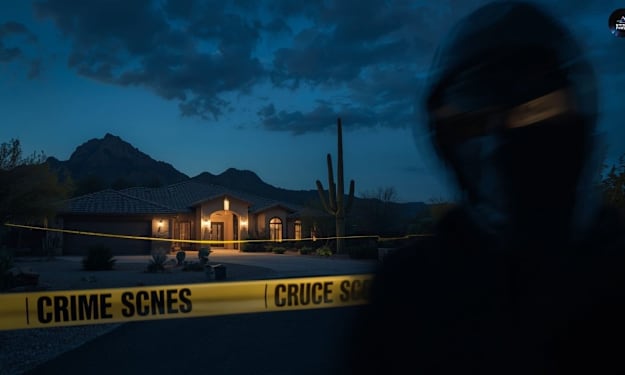
Nancy Guthrie’s disappearance remains one of the most talked-about missing persons cases of 2026, and a new update has once again placed the investigation in national headlines. Authorities recently confirmed that human remains discovered near Nancy Guthrie’s Arizona home are not connected to the case, bringing both relief and renewed frustration to investigators and the Guthrie family.
By Story Prism4 months ago in Criminal