Latest Stories
Most recently published stories in Criminal.
She Smiled at the Funeral — And That's When I Knew
M Mehran A chilling story of a perfect neighbor, a suspicious death, and the one detail that unraveled everything. Nobody cries at every funeral. But nobody smiles, either. Not like that. Not the slow, private kind of smile that doesn't know it's being watched — the kind that belongs to a person alone in a dark room, not standing six feet from a casket in front of forty mourners. I saw it. I wasn't supposed to. But I did. And that small curve of lips cost Diane Yeller the next thirty years of her life. The Perfect Street, The Perfect Lie Briar Hollow was the kind of neighborhood that made you feel slightly inadequate just driving through it. Manicured hedges. Freshly sealed driveways. Wind chimes that somehow never seemed annoying. The kind of place where people waved at each other from across the lawn and actually meant it. Diane Yeller had lived at number 14 for eleven years. She was 52, pretty in a careful, deliberate way, the sort of woman who always brought homemade food to every block party and remembered everyone's birthday. Her husband, Gerald, was a retired civil engineer — quiet, good-natured, the kind of man who fixed other people's fences without being asked. By every visible measure, they were happy. Visible measures, as any detective will tell you, are the last place you should look. Gerald Yeller died on a Thursday in late October. His doctor called it a stroke — sudden, swift, the kind that gives no warning and asks no permission. He was 61. People shook their heads and said it was too young. Diane accepted the casseroles and the condolence cards with the practiced grace of a woman who had been preparing for this moment far longer than anyone realized. I know that now. I didn't know it then. Then, I just saw the smile. The Detail That Changes Everything In true crime, investigators talk about the concept of leakage — the involuntary bleed of truth through the carefully constructed surface of a lie. A microexpression. A word chosen too precisely. A grief that performs itself instead of simply existing. Diane's smile was leakage. I was standing near the back of the funeral home, half-hidden behind a floral arrangement the size of a small car, when I caught it. The pastor had said something about Gerald being "finally at peace," and for just a fraction of a second — less than two heartbeats — Diane's mouth did something that no widow's mouth should do at those words. She looked relieved. I told myself I was imagining it. I told myself grief does strange things to people, makes them feel strange things, and that relief is sometimes just exhaustion wearing a different coat. I went home. I made tea. I did not sleep. Three weeks later, I called the non-emergency police line and told them what I saw. I want to be clear: I am not a detective. I am a retired schoolteacher named Carol Bines who reads too many crime novels and walks her dog past number 14 every morning at 7 a.m. I had no evidence. I had no motive theory. I had nothing except a smile that lived in my chest like a splinter. Sometimes, that is enough to pull a thread. What the Autopsy Found The detective assigned to the case — a young woman named Okafor with tired eyes and an unhurried manner — listened to me for twenty minutes without writing anything down. When I finished, she thanked me, handed me a card, and said she would "look into it." I assumed that was the end. It wasn't. Detective Okafor had Gerald's body quietly exhumed six weeks after burial. The second autopsy, performed by a forensic pathologist rather than the family physician, found something the first examination had missed entirely — elevated levels of potassium chloride in tissue samples. Injected, not natural. Introduced in a dosage carefully calculated to mimic the biological signature of a cardiac event. Someone with medical knowledge had done this. Or someone with a great deal of time and a reliable internet connection. Diane Yeller, it emerged, had spent four months the previous year completing an online nursing assistant course. She had also, investigators discovered, taken out a $900,000 life insurance policy on Gerald fourteen months before his death — just outside the standard contestability window that might have flagged it for review. She had been methodical. She had been patient. She had been almost perfect. Almost. Why Killers Smile The psychology of the calculated killer is not the psychology of rage. Rage is messy and impulsive and leaves fingerprints everywhere. What Diane had was something colder — a long, private grievance she had converted, over years, into a plan. Gerald, it came out during trial, had been quietly draining their savings for over a decade. Gambling. Loans repaid to people whose names didn't appear in any official documents. By the time Diane discovered the full extent of it, they were three months from losing the house on Briar Hollow. She didn't snap. She calculated. And when Gerald was finally, irrevocably gone — when the plan she had nursed through sleepless nights and careful internet searches had actually worked — her face forgot, for just a half second, to keep the mask in place. That half second was all it took. The Verdict Diane Yeller was convicted of first-degree murder after a trial that lasted twelve days. The insurance company recovered its payout. Number 14 Briar Hollow sold within a month — buyers who, I was told, had no idea what had happened inside its walls. Detective Okafor sent me a card after the verdict. Three sentences. The last one said: "Trust your instincts. You were right." I taped it to my refrigerator. I still walk past number 14 every morning at 7 a.m. The new family has a dog — a golden retriever who barks at squirrels with joyful, uncomplicated fury. I watch the windows sometimes, the way retired schoolteachers who've seen too much tend to do. I watch for smiles that don't belong.
By Muhammad Mehran4 months ago in Criminal
“Let’s Rid the World of Immigrants” . Content Warning.
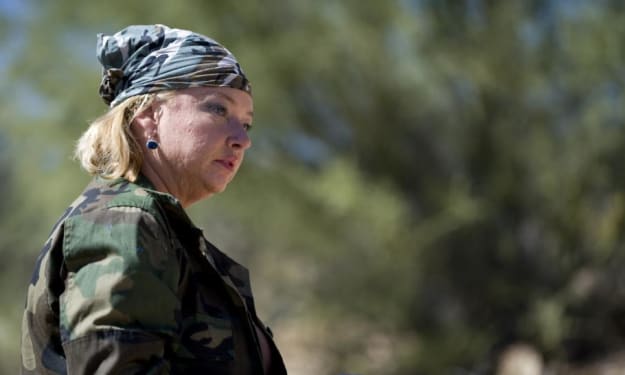
Shawna Forde will die at Arizona State Prison, by lethal injection if the state has its way. Described as a sociopathic woman without a soul, Shawna received a death sentence after she carried out the murders of a man and his 9-year-old daughter in her plot to rid the world of immigrants.
By Criminal Matters4 months ago in Criminal
Immunity and Practical Unaccountability
In theory, no one is above the law. This phrase is repeated often enough that it functions as a civic mantra, a reassurance that power is ultimately constrained and that authority remains accountable to the same moral and legal standards imposed on everyone else. On paper, police officers, prosecutors, and government agents are subject to the law just like any citizen. They can be investigated, disciplined, sued, or prosecuted when misconduct occurs.
By Peter Thwing - Host of the FST Podcast4 months ago in Criminal
Convicted Sex Offender Changes Gender In Bid To Serve Time In Women’s Prison
The story of this criminal could almost be considered funny, until you realize the extent of his crimes. A sexual predator with a "psychopathic profile" has been arrested in Spain after a manhunt, during which he changed his gender to female in an effort to avoid serving his sentence. It was thought that he did so to be able to serve time in a women’s prison.
By Anne Sewell4 months ago in Criminal
The Confession Booth Some Secrets Are Too Dangerous to Keep — And Too Deadly to Share
M Mehran The priest hadn't slept in six days. Every morning, Father Daniel Marsh unlocked the heavy oak doors of St. Augustine's Cathedral, lit the candles, and waited. Every evening, he locked those same doors, blew out the flames, and carried a weight that was slowly crushing him from the inside. Six days ago, someone had walked into his confession booth. And destroyed his entire world in four minutes. The Voice Behind the Screen It was a Tuesday afternoon when it happened. The cathedral was empty except for an elderly woman praying quietly in the third pew. Rain tapped gently against the stained glass windows, painting the marble floor in broken colors of red and gold. Father Daniel was half-asleep in the booth when the door clicked open on the other side of the partition. He straightened. Composed himself. This was sacred work. "Bless me, Father," the voice whispered. "For I have sinned." The voice was low, measured, almost mechanical — like someone who had rehearsed these words a thousand times but felt nothing saying them. "How long since your last confession?" Daniel asked. "Never," the voice replied. "I don't believe in God. But I believe in consequences. And I need someone who legally cannot repeat what I'm about to say." Daniel's hands tightened in his lap. The seal of confession. Absolute. Unconditional. Legally and spiritually unbreakable. Whatever this stranger said next, Daniel would be forced to carry it alone forever. "Then speak," Daniel whispered. "This is a safe place." The worst mistake he ever made. What the Criminal Confessed Over the next four minutes, the voice described three murders. Not with remorse. Not with guilt. With the calm, precise detail of someone filing a report. Names. Locations. Methods. Dates. Daniel recognized two of the names immediately — they had been all over the news. A businessman found in the river. A judge discovered in her locked office with no sign of forced entry. Both ruled accidents. Both, according to the voice behind the screen, were anything but. "Why are you telling me this?" Daniel finally managed. "Because the fourth person on my list," the voice said slowly, "is you." The elderly woman in the third pew shifted in her seat. Somewhere outside, a car horn sounded, distant and ordinary — a reminder that the normal world still existed just beyond these walls. Daniel couldn't feel it anymore. "Me," he repeated. "Why me?" "Because ten years ago, Father, you testified in a court case. Your testimony sent an innocent man to prison. That man was my brother. He died there, three years into his sentence, in circumstances the prison called a suicide." Silence swallowed the booth whole. "I've been working my way toward you," the voice continued. "The businessman funded the prosecution. The judge oversaw the trial. You provided the moral credibility that convinced the jury. You were all responsible." "I told the truth," Daniel whispered desperately. "I told exactly what I witnessed—" "You told your truth. And my brother paid with his life for the gap between your truth and the actual truth." Another pause. Then: "I came here to tell you that you have one week. Use it however you choose. Make peace with your God. Put your affairs in order. Or—" the voice shifted almost imperceptibly — "find a way to make this right." The booth door clicked open. Then closed. And Father Daniel Marsh sat completely still for forty-five minutes, unable to move, unable to breathe, unable to pray. The Impossible Prison He couldn't call the police. That was the diabolical genius of it — and Daniel recognized immediately that it was genius, calculated and cruel. The seal of confession was absolute. Canon law. Centuries of sacred tradition. A priest who violated it faced automatic excommunication. Beyond the spiritual consequences, Daniel personally believed in the seal with his entire soul. It existed to protect the vulnerable, to create a space where truth could exist without weaponization. But the criminal had weaponized the protection itself. He had turned the most sacred privacy in Daniel's world into a cage. Daniel began researching the case privately. Pulled old newspaper archives on his phone at 2 AM in the empty cathedral. Found the trial — State versus Marcus Webb, convicted of financial fraud and manslaughter, 2016. And then he found something that made his stomach collapse entirely. A witness statement, buried in a footnote of the appeal that had been rejected without proper review. A statement that directly contradicted the timeline Daniel had provided. A statement that nobody — not the defense attorney, not the judge, not the jury — had apparently ever properly examined. His testimony hadn't been a lie. But it had been wrong. The Detective Who Noticed Detective Sandra Okafor had been watching Father Daniel Marsh for four days. Not because he was a suspect. Because he was terrified, and terrified people in connection with two open murder cases made her professionally curious. She had been working the businessman and the judge cases for three weeks. Both ruled accidents by the initial teams. Sandra didn't believe in coincidence, and she especially didn't believe in two people connected to the same 2016 trial dying accidentally in the same month. She requested permission to surveil Daniel discreetly. Her captain told her she was overworked and needed vacation. She did it anyway, on her own time, in her own car, drinking terrible gas station coffee at midnight outside St. Augustine's Cathedral. On the fifth night, she saw him. A figure in a grey jacket, hood up, who walked into the cathedral at 11 PM and emerged seventeen minutes later. She ran the partial plate she managed to capture. The car was registered to a woman who had died four years ago. Professional. Calculated. Someone who planned everything three steps ahead. Sandra felt the particular chill she had learned to trust over twelve years of detective work. This was not ordinary crime. This was a mission. The Choice That Changed Everything On the sixth morning, Daniel made his decision. He couldn't break the seal. But nobody had ever said he couldn't act on his own guilt. He contacted the Innocence Project anonymously, directing them toward Marcus Webb's case with enough specific detail to trigger a formal review. He contacted the state attorney's office confessing that he had recently discovered a potential error in his 2016 testimony and was prepared to make a formal statement. He wrote letters. Made calls. Burned every professional relationship he had spent twenty years building. And then he sat in the front pew of his cathedral and waited. If the criminal was watching — and Daniel was certain he was — he would see a man destroying himself publicly to correct a private wrong. Whether that would be enough, Daniel had absolutely no idea. At 9 PM, an envelope appeared under the cathedral's side door. Inside was a single playing card. No — not a playing card. A photograph. Marcus Webb. Young, smiling, alive. And on the back, four words in sharp handwriting: "He would forgive you." Nothing else. No threat. No signature. Sandra Okafor, watching from her car across the street, photographed the figure who delivered it. This time, she got the full plate. What This Story Is Really About True crime fascinates us because it lives at the intersection of the two things we most want to understand — human darkness and human redemption. Every criminal has a story that began somewhere ordinary. Every crime has a wound buried somewhere underneath it, screaming for acknowledgment in the only language desperation knows. This doesn't excuse destruction. But it explains why justice that only punishes, without ever examining the original fracture, tends to simply manufacture the next criminal in an endless, bloody cycle. Father Daniel Marsh spent the next two years working to exonerate Marcus Webb posthumously. He succeeded. The criminal was eventually found — not through dramatic confrontation, but through the quiet, patient work of Detective Sandra Okafor, who didn't stop pulling threads simply because nobody told her she could. He didn't match any profile the department had constructed. He was a high school mathematics teacher. And when they arrested him, he was grading papers.
By Muhammad Mehran4 months ago in Criminal
The Last Case When Justice Wore a Criminal's Face
M Mehran The rain hadn't stopped for three days in Chicago. Detective Maya Reyes hadn't slept for two. She stood at the window of the 14th precinct, watching water cascade down the glass like tears that refused to stop. Behind her, spread across the conference table like a grotesque puzzle, were crime scene photographs, witness statements, and a single playing card — the Jack of Spades — left at every crime scene. Five murders. Five victims. Zero suspects. And a city that was beginning to panic. The Criminal Nobody Could Catch They called him "The Dealer." Nobody knew his real name. Nobody had seen his face. What they knew was this: he was brilliant, methodical, and completely invisible. Every forensic team that arrived at his crime scenes found the same thing — nothing. No fingerprints. No DNA. No witnesses. Just a playing card, placed precisely over the victim's heart. Maya had studied criminal psychology for fifteen years. She had helped catch serial offenders across four states. She had looked into the eyes of monsters and never once flinched. But The Dealer made her hands shake. Because she knew something nobody else did. Something she hadn't told her captain. Something that could destroy her career, her reputation, and possibly her freedom. She recognized the crime scenes. Not because she had studied them. Because she had designed them. Twenty Years Earlier Maya hadn't always been Detective Reyes. Once, she was Maya Cortez — a desperate nineteen-year-old girl with a drug-addicted mother, an absent father, and a talent for strategy that her circumstances had twisted into something dark. She had run with a crew. Done things she wasn't proud of. Planned operations that required precision, silence, and zero evidence left behind. Then her best friend, Carmen, was killed in a robbery gone wrong. Shot by the very people Maya had been working for. Something shattered inside her that night. She disappeared. Changed her name. Buried her past so deep she almost believed it herself. Worked her way through night school, then the police academy, then fifteen years of legitimate service. She had become the law because she had once been its enemy. And now someone was using her old methods. Her exact methods. The techniques she had invented at nineteen years old in a crumbling apartment on the South Side. Someone who knew who she really was. The Message in the Card On the sixth morning, a package arrived at the precinct. Addressed specifically to Detective Maya Reyes. Inside was a playing card — Jack of Spades — and a handwritten note that read: "I learned from the best. Remember Carmen? She sends her regards." Maya's blood turned to ice. Carmen was dead. She had watched her die. Unless— Unless someone had been watching her that night. Someone who had survived. Someone who blamed Maya for Carmen's death, because Maya had brought them all into that dangerous world in the first place. The criminal wasn't just committing murders. He was sending Maya a message: Confess what you are, or I keep killing. The Impossible Choice Maya sat alone in her car outside the precinct for two hours. If she confessed her past, her entire career collapsed. Every case she had ever worked would be re-examined. Criminals she had put behind bars would file appeals. Innocent people she had protected might lose justice retroactively. If she stayed silent, people kept dying. This was the psychology of the perfect criminal, she realized with cold admiration and colder horror. He hadn't just planned murders. He had planned her. He had turned her into a weapon pointed at herself. She thought about Carmen. Sweet, loyal Carmen who deserved better than the life Maya had pulled her into. She thought about the five victims — accountants, teachers, ordinary people — who had nothing to do with any of this, chosen simply to build pressure. She thought about who she was now versus who she had been. And she made her choice. The Sting Maya didn't confess. Instead, she used what she knew. If this person had studied her old methods, they had also inherited her old weaknesses. She had always been precise — too precise. She planned everything down to impossible detail, which meant she needed specific conditions to execute perfectly. She started manipulating those conditions. Subtly changed patrol routes. Quietly altered the lighting in the neighborhoods she calculated he would target next. Left just enough information leaked through department channels to guide him toward a location she controlled completely. A warehouse on the South Side. Her old territory. Three nights later, he walked into it. He was younger than she expected — maybe twenty-five. Sharp eyes. Steady hands. And when she had him cornered with four officers behind her, he smiled like he had already won. "You're going to have to explain how you knew," he said. "I'm a detective," Maya replied. "It's what I do." "Is that all you are?" The question hung in the cold warehouse air. Maya handcuffed him without answering. Some truths, she decided, could be carried quietly. Turned into fuel for doing better. For being better. The city never knew how close it had come to unraveling. What Crime Really Costs The criminal mind is fascinating precisely because it mirrors something in all of us — the capacity for strategy, obsession, and the desperate belief that we can outsmart consequence. But every criminal ultimately faces the same opponent. Not the police. Not the justice system. Time. Time exposes. Time unravels. Time has infinite patience and no mercy. Maya Reyes understood that better than anyone. After all, she was still paying her own debt to it — one honest day at a time.
By Muhammad Mehran4 months ago in Criminal
Family mourning after 17-year-old son stabbed to death outside home weeks before graduation
The sad case of Amari Clarke should cause one's spine to quake. The teen, prepared to graduate on June 1, succumbed to his injuries after a knife fight. The family wants a resolution.
By Skyler Saunders4 months ago in Criminal
Dead Signal
M Mehran Detective Noah Callum didn't believe in coincidences. He believed in laziness, in oversight, in the kind of sloppy human error that cracked cases open when you least expected it. But coincidence — the idea that two unconnected things just happened to collide at exactly the right moment — that he'd stopped believing in somewhere around year six of his career, when a parking ticket had put a serial arsonist at the scene of his seventh fire. Everything meant something. You just had to be stubborn enough to ask what. The text message from a dead woman's phone at 11:59 PM on a Saturday night was not a coincidence. It was a mistake. And whoever made it had no idea how expensive that mistake was about to become. The Woman in the Water Maya Sorrel was thirty-three years old, a marine biologist at the Coastal Research Institute, and — according to everyone who knew her — the last person on earth anyone would want dead. Her body had been recovered from the harbor at 6:15 AM Sunday morning by a fisherman who initially thought he'd snagged debris. The medical examiner placed time of death between 9:30 and 10:30 PM Saturday night. Cause of death: drowning, with bruising on both wrists consistent with restraint. This was not an accident. This was not a suicide. Noah stood at the harbor's edge in the gray early morning light and looked at the water and thought about the text message — three words sent from Maya's personal cell phone to her research assistant at 11:59 PM, a full hour after she was already dead. Don't come tomorrow. Simple. Casual. The kind of message you'd send without thinking. The kind of message someone else would send if they needed just a few more hours before anyone realized she was missing. The Research That Got Her Killed Maya Sorrel's work, on the surface, was about ocean temperature mapping and coral reef degradation. Peer-reviewed, grant-funded, entirely uncontroversial — the kind of research that generated polite applause at academic conferences and almost never made enemies. Except Maya had spent the last four months doing something else alongside her official research. Something she hadn't published, hadn't presented, and hadn't told her department head about. Noah found it on her secondary laptop — a personal machine, not institute-issued — locked behind a password her research assistant guessed in three tries. The password was the name of the reef system she'd been documenting since graduate school. The files inside told a story that had nothing to do with coral. Maya had been tracking illegal deep-water dumping in the protected marine zone twelve miles offshore. Chemical waste, specifically — industrial solvent compounds that degraded slowly and catastrophically, the kind that killed reef systems from the bottom up over years while looking perfectly normal on the surface. She had water samples, GPS coordinates of dump sites, and — most critically — vessel registration numbers cross-referenced with shipping manifests that traced the waste back to a single source. Harmon Industrial Solutions. One of the largest private chemical processing firms on the eastern seaboard. Annual revenue: $340 million. Political connections: considerable. Legal team: formidable. Maya had sent a formal complaint to the EPA three weeks before she died. It had been acknowledged, logged, and assigned to a review queue with an estimated response time of six to eight months. She had also, Noah discovered in the final folder on the laptop, sent a personal email to a journalist at the Coastal Herald five days before her death. The journalist's name was Peter Laine. Noah called him within the hour. Peter Laine had been about to publish. The Text That Came From Inside Tracing a sent text message seemed straightforward — cell tower data, carrier records, device location at time of transmission. In practice, with a warrant and a cooperative carrier, Noah had the data within eighteen hours. Maya's phone had sent the 11:59 PM message from a location four miles from the harbor. Specifically, from the parking structure adjacent to the Meridian Hotel — a downtown property that hosted, on Saturday evenings, a rotating roster of corporate events and private functions. That particular Saturday, the Meridian's private dining floor had been booked for a quarterly dinner hosted by Harmon Industrial Solutions for their senior leadership team and external partners. Forty-one attendees. Noah requested the guest list and worked through it methodically, cross-referencing with vehicle registration data to identify who had been in the parking structure during the relevant window. Thirty-eight of the forty-one had verifiable locations inside the event during the entire evening, corroborated by venue staff, card transactions, and photographs posted to social media in real time. Three had gaps. Two of the three were quickly accounted for — one had stepped out for a phone call, another had left early with a documented medical issue. Security footage confirmed both. The third was a man named Curtis Beal. Senior VP of Environmental Compliance at Harmon Industrial Solutions. The man whose department would have been directly implicated by Maya's EPA complaint. A man who had, according to his corporate biography, spent eight years before joining Harmon as a licensed maritime operations manager. He knew the harbor. He knew the water. He knew exactly how currents moved at night. And his car — a dark blue company sedan — had entered the parking structure at 11:47 PM and exited at 12:09 AM, a twenty-two minute window that perfectly bracketed the 11:59 PM text. The Arrest Noah brought Curtis Beal in for questioning on Tuesday morning, quietly, without a press presence. Beal arrived with a lawyer and the particular brand of corporate confidence that came from believing institutional protection was the same thing as personal immunity. It wasn't. The lawyer's composure lasted through the first thirty minutes of questioning — right up until Noah placed Maya's water sample data on the table, followed by the vessel registration records, followed by a photograph from the Meridian parking structure's internal camera showing Curtis Beal's face at 11:52 PM with a cell phone in his hand. Not his phone. A slimmer model. A woman's phone with a pale green case. "That's not—" the lawyer started. "We've already pulled the IMEI from the carrier records," Noah said quietly. "It matches Maya Sorrel's device." The room went very still. Curtis Beal looked at the photograph for a long time. Something moved behind his eyes — not remorse, exactly, but the specific look of a man watching a door close that he'd believed would stay open forever. His lawyer requested a recess. Noah granted it. When they came back, Beal took a plea — second degree murder, full cooperation on the environmental violations, testimony against three Harmon executives who had authorized the dumping program and subsequently authorized its concealment. What Maya Left Behind Peter Laine's article ran six weeks later, expanded now with the criminal case as its spine. It was picked up nationally within forty-eight hours. The EPA fast-tracked their investigation. Harmon Industrial Solutions faced $180 million in environmental penalties and a class action lawsuit from commercial fishermen whose livelihoods had been quietly destroyed over seven years of illegal dumping. The reef system Maya had spent her career documenting was placed under emergency federal protection. Curtis Beal was sentenced to twenty-two years. Noah stood at the harbor again on the morning after sentencing, coffee in hand, watching the water move. Somewhere out there, twelve miles offshore, a reef system was dying slowly and would take years to recover — if it recovered at all. Maya Sorrel had known that. Had cared enough about it to die for it, though she hadn't chosen to. He thought about the text message. Don't come tomorrow. Three words meant to buy silence, sent from a dead woman's phone by a man who thought he was erasing a problem. Instead, it had been the first thread Noah pulled. Everything unraveled from there.
By Muhammad Mehran4 months ago in Criminal
The Accountant Who Knew Too Much
M Mehran Numbers don't lie. But the people behind them always do. Detective Priya Anand had never been afraid of paperwork. Most detectives treated financial crime files like punishment — stacks of spreadsheets, ledgers, and wire transfer records that made eyes glaze over after the first twenty minutes. Her colleagues passed those cases around like a bad cold, eager to hand them off to someone else, anyone else. Priya volunteered for every single one. Because here was the truth nobody wanted to admit: money always talked. People rehearsed their lies, polished their alibis, coached their witnesses. But money moved the way it moved because someone told it to — and that someone always left a trail, no matter how many layers of shell companies and offshore accounts they buried it under. She just had to be patient enough to follow it all the way down. The Hargrove case would test that patience more than anything she had ever worked before. A Body in a Boardroom Vincent Hargrove was found dead on a Monday morning by his assistant, slumped in his chair at the head of the conference table on the twenty-second floor of Hargrove Capital Management. Coffee still warm. Laptop still open. Calendar blocked out for a 9 AM meeting that nobody had been invited to. Medical examiner ruled cardiac arrest within the first hour. The man was sixty-four, overweight, and had a documented heart condition. His personal physician confirmed it. His cardiologist confirmed it. Every visible indicator said natural causes, tragic but unsurprising, close the file. Priya was walking out of the building with the case essentially already closed when she stopped at the elevator and turned around. Something about the coffee bothered her. Vincent Hargrove's assistant had described him as a creature of rigid habit — same chair, same mug, same brand of single-origin Ethiopian blend he had shipped in from a boutique roaster in Portland. The mug on the table was a generic white ceramic with the firm's logo on it. A spare. The kind you grabbed when you had a guest. Hargrove hadn't been alone at that 9 AM meeting he'd scheduled for himself. Following the Money Backward The firm's internal records showed nothing unusual at first glance — a wealth management company with thirty-seven high-net-worth clients, clean audits, and a reputation built over two decades. But Priya didn't start with first glances. She started at the bottom, with the smallest transactions, the ones that looked like rounding errors and administrative fees and the kind of routine noise that everyone's eyes skipped over automatically. Three weeks of cross-referencing later, she found it. Over a period of six years, a series of micro-transfers — never more than $4,000 each, sometimes as little as $200 — had been siphoned from forty-one different client sub-accounts into a consolidation account labeled Administrative Reserve Fund — Operational. Boring name. Invisible name. The kind of name designed to be skipped over. The consolidation account fed into a holding entity registered in Delaware. The Delaware entity owned a stake in a real estate LLC in Nevada. The Nevada LLC had sold three commercial properties over four years at significantly above-market prices — to buyers who turned out to be further LLCs, layered and nested like Russian dolls, all of them eventually tracing back to a single beneficial owner. The total extracted across six years: $11.4 million. The beneficial owner: a man named Robert Cassel, CFO of Hargrove Capital Management for the past nine years. Hargrove's most trusted employee. His oldest friend. The best man at his second wedding. The Accountant in the Middle Every sophisticated financial crime needed an architect — someone who understood the system well enough to hide inside it. But it also needed a mechanic. Someone with access to the actual accounts, the actual transfer systems, the passwords and authorizations that made the money move. That person was a thirty-one-year-old senior accountant named Joel Marsh. Priya found him through the access logs — the only person besides Hargrove and Cassel who had touched the Administrative Reserve Fund account in six years. His access had been granted eighteen months after he joined the firm, quietly, without HR documentation, by Cassel directly. She interviewed him on a Thursday afternoon in a coffee shop two blocks from his apartment, deliberately away from the office, deliberately casual. No badge on the table. No recorder. Just two people talking. Joel Marsh lasted eleven minutes before he started crying. "I didn't know what it was at first," he said, keeping his voice low, eyes on his cup. "Rob told me it was a tax efficiency structure. That it was legal. I processed the transfers for eight months before I understood what I was actually doing." "And when you understood?" He looked up. His eyes were red and exhausted in the way that only came from months of not sleeping properly. "I went to Hargrove. I told him everything. I showed him the trail." A pause. "That was six weeks ago." Priya set down her coffee very carefully. "Six weeks ago." "Three weeks before he died." The Meeting That Never Happened The toxicology report came back eleven days into the investigation — initially cleared, but Priya had requested an extended panel that the original examiner hadn't run. Buried in the supplementary results was a compound called digoxin, a cardiac glycoside used in legitimate heart medications but lethal in elevated doses — and nearly impossible to distinguish from natural cardiac arrest without specifically testing for it. Hargrove's prescription did not include digoxin. The coffee mug — the generic spare one, not his usual — had already been through the dishwasher twice by the time she thought to pull it from evidence. But trace residue in the handle seam told enough of the story. Robert Cassel was arrested on a Friday morning at his home, still in his bathrobe, a cup of coffee in his hand. He said nothing. His lawyer said plenty — none of it helpful. Joel Marsh cooperated fully with the prosecution, surrendered his financial certifications voluntarily, and testified for eleven hours over two days. His sentencing, in recognition of his cooperation and the fact that he had attempted to report the fraud before the murder, resulted in three years of probation and a lifetime bar from financial services. He told Priya afterward that it felt like a light sentence for what he'd been part of. She told him the truth: it was. But truth had a price, and he'd paid something real to tell it. What Numbers Leave Behind Robert Cassel was convicted on one count of first-degree murder and six counts of financial fraud. He was sentenced to life without the possibility of parole. The $11.4 million was partially recovered — about $7 million, the remainder having been spent or hidden too deeply to fully trace. Hargrove's clients were partially reimbursed through a civil settlement with the firm's insurance carrier. Priya filed the case, added it to her solved stack, and went back to her desk where four new financial crime files were already waiting, each one a tower of spreadsheets and transfer records and the patient, invisible evidence of someone who thought money was the perfect crime. She opened the first one and started at the bottom. She always started at the bottom.
By Muhammad Mehran4 months ago in Criminal