
Unveiling the Femme Fatale
Decoding Cultural Narratives of Women Who Kill

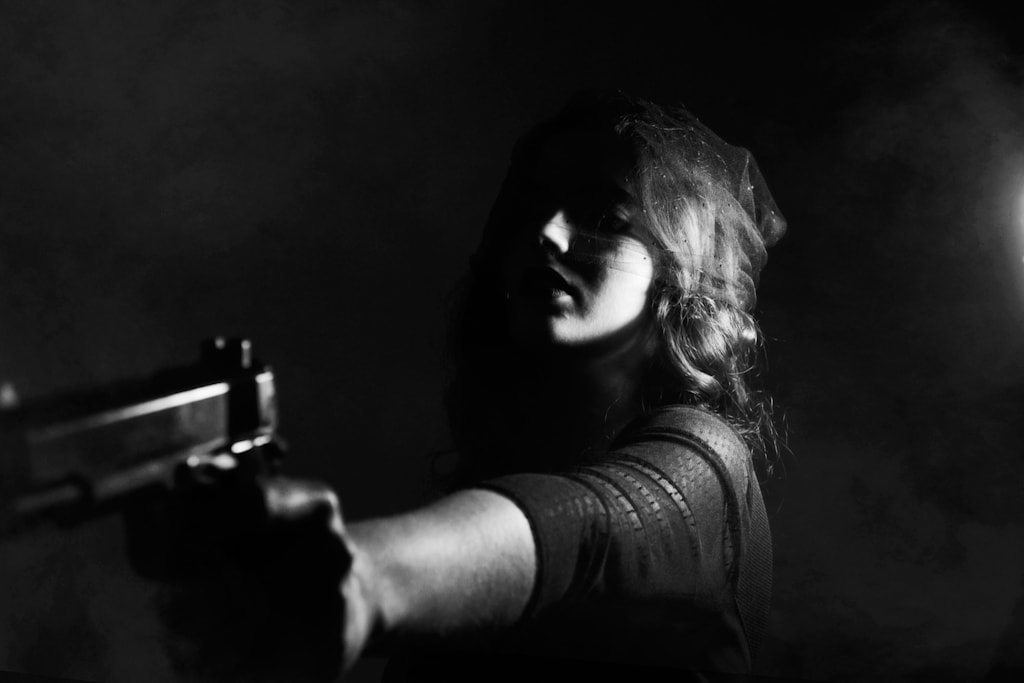
The concept of the femme fatale has long captivated audiences across literature, film, and true crime narratives. This archetype embodies the alluring, dangerous woman who entices and ultimately destroys the men who fall under her spell. Yet, while the femme fatale is often romanticized in popular culture, the reality of female criminals presents a more complex picture that invites critical examination.
By analysing how female criminals are depicted compared to their male counterparts, we can uncover the underlying societal gender norms that shape these narratives and reflect broader cultural attitudes toward women and violence.
The Femme Fatale Archetype: A Cultural Construct
The femme fatale archetype, often characterized by her sexual allure and cunning intelligence, is prominent in classical literature and film noir. Notable examples include the characters of Margot Channing in “All About Eve” and Phyllis Dietrichson in “Double Indemnity.” These portrayals signal deeper anxieties surrounding female empowerment and autonomy, compelling us to ponder how society reconciles its admiration for strong women with its fear of their potential to cause harm.
Dr. Rachel O’Connor, a cultural critic known for her work on gender and representation, asserts,
The femme fatale represents not only the fear of female power but also the societal struggle to contain women’s agency within traditional gender roles.
This struggle is evident in the way female criminals are often depicted as duplicitous, manipulating men to achieve their ends, echoing enduring stereotypes of women as deceptive and untrustworthy.
Gendered Narratives: Male Versus Female Criminals
The Male Criminal: Power and Violence
When examining depictions of male criminals, we find a narrative that often centers on power, aggression, and individualism. Male criminals are frequently portrayed as the protagonists of their own stories, driven by ambition or vengeance. Their violence is often narrated within the context of their circumstances; be it socio-economic factors, psychological disturbances, or personal vendettas.
This narrative framework allows for a degree of sympathy and understanding, fostering a connection between the audience and the male offender.
Take, for example, the portrayal of notorious serial killers like Ted Bundy or John Wayne Gacy. The media narratives surrounding these figures often emphasize their charisma and intelligence, leading to what Dr. J. Markosian, a criminal psychologist, refers to as a “morbid fascination.” He notes,
These criminals are glorified because they fit the narrative of the tragic hero. Their downfall is seen as a reflection of society’s failures rather than solely their own.
The Female Criminal: Deception and Manipulation
In stark contrast, female criminals are subject to narratives that emphasize cunning and betrayal. Female offenders are often depicted as lacking the physical strength associated with male violence, thus utilizing manipulation and seduction to achieve their goals.
Their crimes are narrated through a prism of emotionality and relational contexts, often stigmatizing them as unhinged or emotionally unstable.
For instance, when examining cases like that of Aileen Wuornos, a female serial killer who claimed to kill in self-defense against abusive men, the depiction shifted between sympathizing with her victimization and condemning her actions as inherently pathological. Dr. Lisa Smith, a sociologist specializing in gender and crime, poignantly states,
Women who kill are often stripped of their agency, portrayed instead as victims of their circumstances or motivations, and thus relegated to roles that reinforce harmful stereotypes.
Case Studies: Examining the Femme Fatale Archetype
Aileen Wuornos
Aileen Wuornos is perhaps the most emblematic figure of the female killer narrative. Wuornos, a sex worker, killed seven men in Florida between 1989 and 1990, claiming that her actions were in self-defense against men who sought to harm her. The media frenzy surrounding her case painted a complex portrait, oscillating between victim and villain.
In the documentary “Aileen: Life and Death of a Serial Killer,” Wuornos’s childhood trauma and history of victimization are juxtaposed against her violent acts. Critics argue that while her past gives context to her actions, it also risks obscuring her agency. Dr. O’Connor asserts,
Wuornos’s narrative became a paradox; she’s depicted as both a victim and a monster, reflecting the societal discomfort with female violence.
Furthermore, in the film adaptation “Monster,” directed by Patty Jenkins and starring Charlize Theron, Wuornos is humanized as a character, drawing attention to her psychological struggles. Theron’s portrayal won an Academy Award, underscoring society’s complex relationship with the narrative of the femme fatale. While she was admired for her performance, the character’s underlying trauma still elicited mixed feelings about her actions.
Leona Helmsley
Leona Helmsley, often dubbed “the Queen of Mean,” became a household name in the 1980s for her lavish lifestyle and ruthless persona as a hotel magnate. Convicted of tax evasion in 1989, Helmsley’s narrative was laden with media sensationalism. Headlines labeled her a “heartless” businesswoman who mistreated employees and leveraged her wealth to evade accountability.
Dr. Barbara Smith, a gender studies scholar, notes that Helmsley’s portrayal exemplified how successful women in traditionally male-dominated industries are often demonized. She explains,
Female power is often seen as threatening to the established order; thus, Helmsley’s narrative underscores the lengths society will go to portray women in power as villains.
Despite her legal troubles, Helmsley’s legacy in pop culture often trivializes her crimes in favor of highlighting her dramatic lifestyle, thus reinforcing the dichotomy of the femme fatale. Powerful yet profoundly maladjusted.
Lorena Bobbitt
In a notorious 1993 case, Lorena Bobbitt made headlines by severing her husband’s penis after enduring years of alleged abuse and sexual violence. This shocking act ignited a national conversation about domestic violence and female agency. The media portrayal of Bobbitt oscillated wildly, from sensationalism to victim advocacy—often depicting her as both a wronged wife and a cold-blooded perpetrator.
Critics argue that the complexity surrounding her story was oversimplified in the public eye, reducing her actions to sensational headlines rather than contextualizing them within the framework of domestic abuse. Ultimately, she was acquitted on grounds of temporary insanity, which raised questions about how female victims of domestic violence are often stripped of their agency and are portrayed as unstable or dangerous when seeking justice.
Dr. Julia Williams, an expert on domestic violence, comments,
Bobbit’s case illustrates the struggles women face when they resist patriarchal control; rather than being seen as self defence, her actions were transformed into a headline that sensationalized her trauma.
Societal Gender Norms and Their Implications
The divergent narratives surrounding male and female criminals reveal significant insights into societal gender norms. Gender constructs portray men as strong, independent agents of violence, while women are framed as agents of manipulation and coercion lacking full agency. This binary not only shapes public perception of crime but also influences systemic responses within law enforcement and the criminal justice system.
Media Representations and Public Perception
The media’s portrayal of female criminals often reinforces damaging stereotypes that can affect juror biases, law enforcement practices, and rehabilitation approaches. For example, verdicts in criminal cases involving female offenders may reflect societal discomfort with women who defy traditional gender roles, leading to harsher sentences for women portraying strength beyond normative femininity.
In her book The Construction of Gender in Crime Narratives, Dr. Ellen Masterson argues,
Media representations invariably create a narrative frame that influences public perception, shaping the real-world implications of how gender affects the justice system.
She highlights cases where female offenders are often perceived as being “more dangerous” due to societal fears surrounding women’s aggression.
The Need for Change
Recognizing and challenging these narratives is crucial in addressing the societal biases towards female offenders. Initiatives that promote gender-sensitive approaches within the criminal justice system can help dismantle the dichotomy between victim and perpetrator, acknowledging the complexities of women’s experiences in relation to crime.
Movement toward gender-neutral sentencing and victim advocacy can provide a more equitable system that acknowledges the realities faced by both male and female offenders. As Dr. Masterson aptly points out,
Affording women the same understanding of context and motive that is often provided to male offenders is crucial for a just legal response.
Conclusion: Rethinking the Femme Fatale Narrative
As societal attitudes evolve and conversations regarding gender equality gain momentum, it is imperative that we rethink and reshape how we narrate the stories of female offenders. Transitioning from sensationalized portrayals to nuanced depictions that acknowledge the complexities of women’s experiences in the criminal landscape can empower deeper understanding and change within both cultural narratives and the justice system itself.
Through this critical lens, we can begin to dismantle the fatalistic view of the femme fatale and foster a society that adequately acknowledges the multilayered realities of female criminality without reducing women to mere archetypes of destruction or victimization.
Ultimately, confronting the narratives that enshrine the femme fatale is essential not only for achieving a balanced understanding of female criminals but also for cultivating more equitable societal norms regarding women’s roles in crime and justice. By challenging these damaging stereotypes, we can pave the way for true reforms in how we perceive and engage with female offenders, recognizing them as complex individuals shaped by multifaceted social narratives rather than simplistic archetypes.
About the Creator
tj.tsele
I'm a curious mind with a passion for unearthing fascinating stories that lurk beneath the surface of everyday life. I'm a true crime enthusiast, history buff and find solace in writing poetry.
Enjoyed the story? Support the Creator.
Subscribe for free to receive all their stories in your feed.
Comments
There are no comments for this story
Be the first to respond and start the conversation.