
Prison Partner to Parole Partner
What happens after release

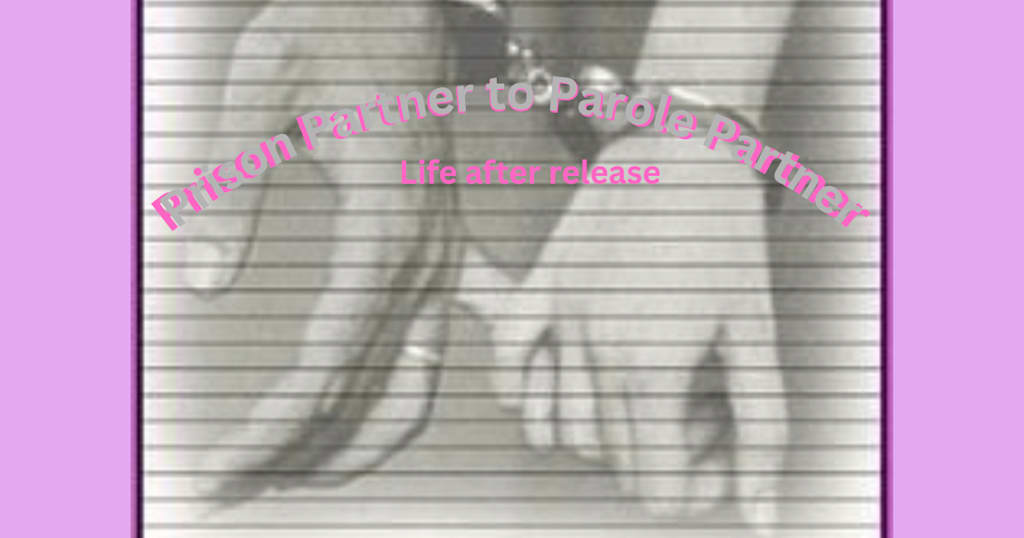
There is something nobody tells prison wives.
The day your loved one comes home is not always the end of the sentence.
In many ways, it is the beginning of an entirely different one.
For years, there have been communities built around incarceration. There are support groups, Facebook groups, prison wife circles, prison girlfriend pages, and organizations dedicated to helping families survive separation. We share visitation tips, commissary hacks, phone call schedules, and the heartbreak of cancelled visits.
We learn how to love someone through concrete walls.Then release day comes. Everyone celebrates. Everyone says, "You made it." But what nobody talks about is what happens next. The truth is, many of us suddenly find ourselves standing in a place with no map.
The prison wife community often disappears the moment our loved one walks out the gate.
Yet the challenges are far from over. I do not blame the Prison wife community, they are there for the purpose they serve. ( Insert link to how the prison wives community disappears).
Parole Is Not Freedom
One of the biggest misconceptions in America is that release equals freedom.
Yes, sometimes an inmate is released and they have served all their time.
But there are still systems at play against them.
Parole is still part of the sentence as well. It is not freedom, however, it is a step in that direction.
One step closer to freedom and family. However it is all curfews, travel restrictions, employment requirements/discriminations, housing limitations/discriminations, reporting requirements.
The constant possibility that one mistake, one misunderstanding, or one violation could send someone back to a facility.
The public sees a free man. The parole officer sees an offender. The family sees someone caught somewhere in between. That in between space is where thousands of families live every day.
Our family is one of those families caught in the in between.
The Pressure Nobody Sees
Imagine leaving prison after ten, twenty, or even thirty years.
Technology has changed. Culture has changed. The world has changed.
People expect gratitude, productivity, and success immediately.
Find a job. Get a license. Get housing. Pay bills. Reconnect with family.
Heal trauma. Become a functioning member of society. All at once.
The pressure is too often crushing.
Many returning citizens are carrying decades of institutionalization, unresolved trauma, grief, shame, and anxiety. These individuals are expected to immediately adjust to the world around them. Many people enter prison already carrying trauma. Childhood abuse. Neglect. Poverty. Addiction in the home. Exposure to violence. Unstable housing. Loss. Abandonment. Long before they ever stood before a judge, many were already surviving circumstances that would leave lasting scars on anyone. None of this excuses criminal behavior, but it helps explain the reality that many incarcerated people are not beginning their sentence as healthy, well-adjusted individuals. They are often entering prison with wounds that have never been treated.
Then prison adds another layer. Years spent in an environment where trust can be dangerous, vulnerability can be exploited, and every aspect of life is controlled by someone else changes a person. Prison teaches survival. It teaches hypervigilance. It teaches people to suppress emotions, avoid appearing weak, and constantly assess potential threats. Those skills may help someone survive incarceration, but they are often the exact opposite of what is needed to thrive in healthy relationships, workplaces, and communities after release.
The longer someone is incarcerated, the more deeply those adaptations can take root. Decisions that most people make without a second thought, what to wear, where to go, what to eat, how to spend free ya time, are often made by the institution. Over time, independence becomes something that is practiced less and less. Then one day, after years or even decades, society opens the gate and expects that person to immediately know how to navigate a world that has continued moving without them.
What makes it even more difficult is the underlying issues are never addressed. Trauma doesn't disappear because someone served time. Grief doesn't vanish because a sentence ended. Shame doesn't magically transform into confidence on release day. Yet many returning citizens are released with the expectation that they will instantly become productive employees, dependable partners, engaged parents, and model citizens.
Imagine breaking yo leg, never receiving treatment, then being told to run a marathon the moment you leave the hospital.
That’s what reentry can feel like for many people.
Society often celebrates the moment someone walks out of prison while ignoring everything they are carrying with them. The childhood trauma. The prison trauma. The years of institutionalization. The relationships that were lost. The opportunities that disappeared. The fear of failure. The fear of returning. The fear that no matter how hard they try, they will always be judged by the worst thing they have ever done. That no matter how good they do, they will always be seen as the outcast . . . the outlaw.
…when someone struggles under that weight, people ask, "Why can't they just get it together?"
A better question might be: How many people could carry all of that and still succeed without any support?
The reality is that successful reentry requires far more than opening a prison gate. It requires healing. It requires opportunity. It requires community. Most of all, it requires understanding that the end of a prison sentence is not the end of the story. For many, it is the first time they are asked to confront years of trauma while simultaneously rebuilding an entire life from the ground up. That is not a weakness. That is one of the hardest challenges a person can face. Yet society often expects them to perform a miracle simply because they were released. Then when people fail under that pressure, everyone asks, "Why did they go back?"
Few ever ask whether they were ever truly given a chance to succeed. Or to check if the system was rigged.
The Partner Serves a Sentence Too
This is the part that gets overlooked most often.The partner's life changes too.
Not only the partner, but the family, parents, grandparents, siblings, and children.
But… This is about Parole Partners.
When your man is getting ready to come home, everyone talks about the excitement. They talk about finally being able to touch, hug, and see each other without glass, phone calls, or visiting hours standing between you. What they don't talk about is the fact that release day is often the day a whole new set of challenges begins. Whether your relationship started before prison, during incarceration, or after release, you become part of the reentry journey. For some of us, we become parole partners. Suddenly, you find yourself learning a language you never expected to speak. You learn parole rules, curfews, travel restrictions, housing requirements, and conditions that can impact everyday decisions. You learn that a simple weekend trip may require approval. You learn that moving in together may not happen as quickly as either of you hoped. You learn that freedom isn't always as free as it appears from the outside.
What many people don't realize is that prison doesn't stay behind the walls when someone is released. The habits and survival skills that helped a person make it through incarceration don't disappear the moment they walk out the gate. Your partner may struggle with crowds, anxiety, overstimulation, or making decisions after years of having every aspect of life controlled by an institution. He may become frustrated by technology, uncomfortable in social situations, or overwhelmed by responsibilities that most people take for granted. As a partner, you learn to recognize these moments not as character flaws, but as part of the adjustment process. You learn patience in ways most people never have to. You learn when to encourage, when to listen, and when to simply sit beside someone who is trying to find his footing in a world that continued moving without him.
Perhaps the hardest lesson is realizing that love surviving prison and building a life together are two completely different things. During incarceration, relationships often survive on phone calls, letters, visits, and dreams of the future. You imagine what life will be like when the waiting is over. Then reality arrives. There are bills to pay, jobs to find, families to reconnect with, parole requirements to follow, and emotional wounds that neither of you can ignore forever. The fantasy gives way to real life, and real life is messy. Yet there is something beautiful about that reality too. You begin learning who each other truly are outside of prison walls. You celebrate victories that other couples might overlook, a steady job, a completed parole check-in, a family dinner, a month without setbacks, a future that feels a little more secure than it did before.
This is the conversation I wish happened more often within the prison wife community. We spend years learning how to survive incarceration, but very few people prepare us for reentry. The support groups get quieter. The resources become harder to find. Everyone assumes the struggle ended because our loved one came home. The truth is that many of us are still navigating uncertainty, restrictions, trauma, and growth long after release day. We are no longer prison wives in the traditional sense, but we are not living ordinary relationships either. We exist in the space between incarceration and complete freedom, learning as we go, loving as we go, and trying to build stable lives despite challenges most people never see.
We Don't Live Together
My partner, Matt, and I are an example of this reality. People assume that because he's out, everything is normal.
It isn't.
We see each other every day.
NOW… Cause we didn’t always.
We laugh. We build memories. We plan for our future.
But no, we don't live together.
Not yet.
Parole doesn't always allow life to unfold the way people think it should.
We've adapted. We've found our rhythm.
But there are still obstacles,approvals, waiting periods, and restrictions standing between us and the life we are trying to build.
This isn't uncommon. It's the reality for countless couples across America.
Some partners still have loved ones in the halfway house, across state.
Or with family members across state because that was the only way they could have an approved address and not go back to prison. Some Parole Partners do still only get phone calls or bi weekly visits.
Matt and I are very lucky.
The Hidden Risk Factors
When we discuss recidivism, we will often have to focus on personal responsibility.
Personal responsibility matters, every one knows that.
But there are other factors we don't discuss enough…
Isolation.
Housing instability.
Employment barriers.
Financial stress.
Relationship strain.
Mental health struggles.
The overwhelming feeling of never truly belonging anywhere.
These are not excuses. They are realities.
If we genuinely care about reducing recidivism, we must be willing to talk honestly about the conditions that increase the likelihood of failure.
People are far more likely to succeed when they have stability, support, connection, and hope.
We Need a Community After Release
Mass incarceration has touched millions of American families.
Millions.
Yet there are surprisingly few spaces dedicated to supporting couples and families after release. The prison wife community helped many of us survive incarceration.
But where do we go when incarceration ends and reentry begins?
Where do parole partners gather?
Where do spouses talk about navigating curfews, restrictions, anxiety, housing barriers, and rebuilding trust?
Where do we discuss the realities that exist after the celebration fades?
We deserve those spaces too. We deserve those conversations.
We deserve communities where people understand that release day is not the finish line.
It is the starting line.
I believe that with community in place we can help each other succeed and overcome.
If you really want change, you can have it. I believe that full hearted.
Why I'm Talking About This
I am talking about this because I know I am not alone.
Somewhere, another woman is trying to figure out why life still feels difficult even though her partner is finally home.
Somewhere, another parolee is wondering why freedom feels so complicated.
Somewhere, another family is doing everything right and still running into obstacle after obstacle about to give up hope.
Their stories matter.
Our stories matter.
The reality of reentry matters.
If we want people to succeed after incarceration, we cannot stop supporting them the moment they walk out the gate.
The sentence may be changing.
But for many families, it is not over. Not yet.
About the Creator
MadamMystic
I’m just a Geeky Gamer Mom, Pagan Proud Mystic Witch. I'm homeschooling my family, home in Ohio. I enjoy writing about low income mom life, making the mundane magick, life lessons, opinion pieces, and all the chaos in between.
Enjoyed the story? Support the Creator.
Subscribe for free to receive all their stories in your feed.
Comments
There are no comments for this story
Be the first to respond and start the conversation.