Exhibition
Not Art
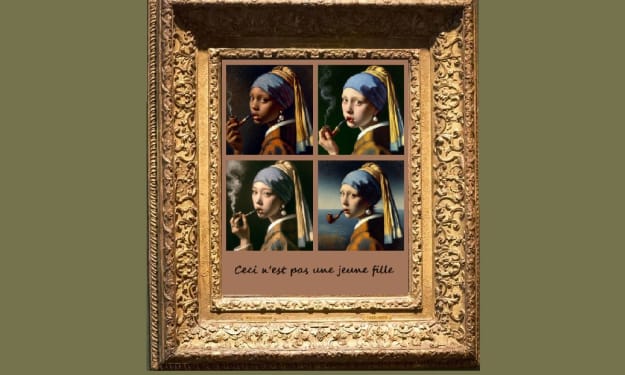
My father was an artist, I am not. This has long been my understanding. Though my father lived and died unknown to the wider world of art, he was a capable water colourist, as well as working with other media. He was skilled at painting and drawing. I never inherited any of this skill with the paintbrush or the pencil, although I was a keen amateur photographer many years ago and still like to take photographs. These days, however, I only use my ancient iPhone, which has its limitations.
By Raymond G Taylor2 months ago in Art
The Great Niko Pirosmani
I've been working on this story for several months, and it's going to be long but I just wanted to put a lot of things about Pirosmani in one place. You can read it in parts or come back to it, whatever is more convenient. But if you are into art, this is going to be a treat.
By Lana V Lynx2 months ago in Art
We Study Wars. But Do We Understand Conflict?
History remembers wars. Understanding begins long before the first battle. History is filled with conflict. Empires rise and fall through it. Borders are redrawn because of it. Governments collapse, religions divide, economies fracture, and entire civilizations are reshaped by it. From the earliest city-states to the modern world, conflict has remained one of the defining forces in human history.
By Daniel Varzari3 months ago in Art
An In-Depth Exploration of Journey to the Center of the Earth
Few adventure novels have captured the imagination of readers as powerfully as Journey to the Center of the Earth. Written by Jules Verne and first published in 1864, this groundbreaking work blends science, adventure, and fantasy into a thrilling tale of exploration beneath the Earth’s surface. As one of the earliest works of modern science fiction, the novel not only reflects the scientific curiosity of the 19th century but also demonstrates Verne’s extraordinary ability to transform speculative science into gripping storytelling.
By Ibrahim Shah 4 months ago in Art
The Architecture of Humanity: A New Framework for Understanding Civilization
What if humanity could be studied the way architects study a city? For generations, scholars, artists, historians, and philosophers have examined humanity through individual subjects: identity, religion, politics, economics, culture, technology, and conflict. Each field has contributed valuable insights into how societies function and how individuals understand themselves.
By Daniel Varzari4 months ago in Art
Why Museums and Cultural Institutions Are Turning Toward The Architecture of Conflict
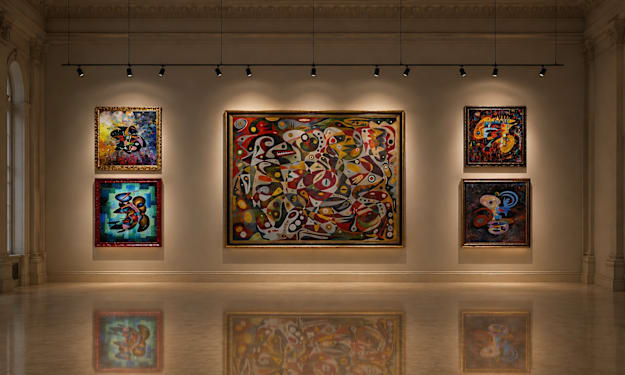
Developed by El Arte Monumental, The Architecture of Conflict is a major artistic and cultural research project examining conflict as one of the fundamental forces shaping human civilization.
By Daniel Varzari4 months ago in Art
War System VI: Convergence at Ukraine War Exhibition
War System VI: Convergence at Ukraine War represents the culmination of the 6 WARS project and the most structurally complex exhibition within the series. While the preceding exhibitions examined historical conflicts through systems of conquest, transformation, ideological confrontation, and global warfare, this exhibition addresses a conflict that remains unresolved. Rather than presenting war as a completed historical event, it investigates conflict as an active and evolving condition operating simultaneously across military, political, economic, technological, informational, and humanitarian domains.
By Daniel Varzari4 months ago in Art
War System V: Convergence at Hawai Sakusen
War System V: Convergence at Hawai Sakusen marks a significant shift within the War Systems series. Whereas previous exhibitions examined the formation of power, its transformation, fragmentation, and global reorganization, this exhibition investigates the cultural and ideological foundations through which military action becomes possible. The focus is not the event itself, but the structures of belief, authority, and identity that precede and sustain it.
By Daniel Varzari4 months ago in Art
War System IV: Convergence at World War II
If War System III: Convergence at World War I examined the fragmentation of established systems, War System IV: Convergence at World War II investigates what follows when those fractures evolve into a struggle for global reorganization. The exhibition is not primarily concerned with military operations or historical chronology. Instead, it explores how competing ideologies, political leadership, and structures of power converge within a single field of conflict whose consequences extend far beyond the battlefield.
By Daniel Varzari4 months ago in Art