
Japan’s Floating World
Hokusai and Hiroshige’s Ukiyo-e prints of the 19th Century

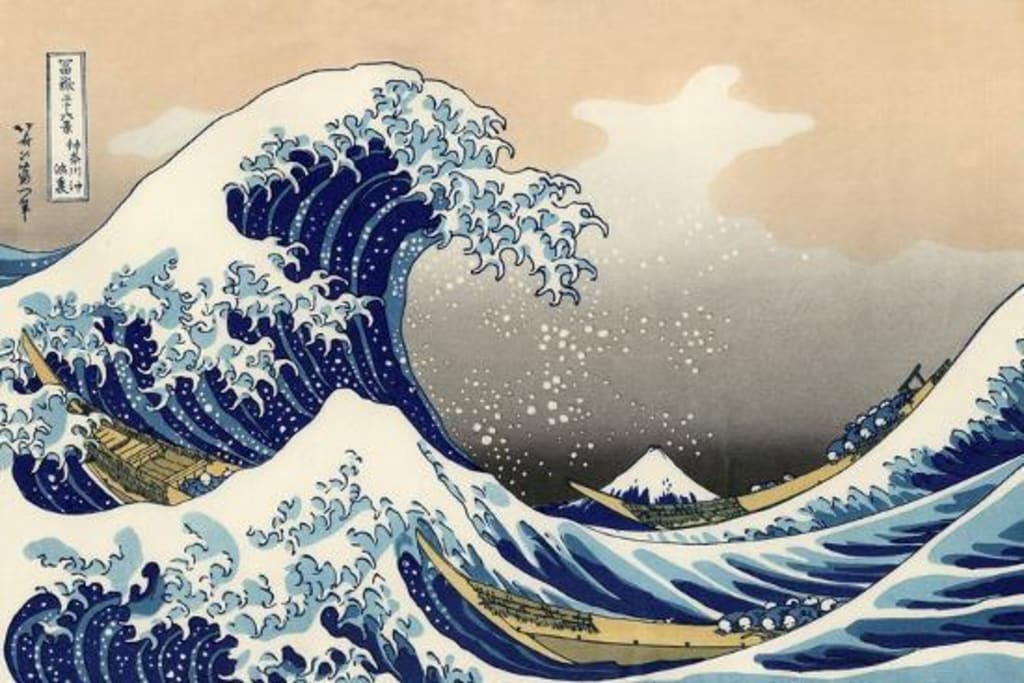
Beneath the Great Wave is an exhibition at Manchester’s Whitworth Art Galley of the colourful wood block prints of nature scenes popular in 19th century Japan.
At the heart of the exhibition is Hokusai’s Under the Wave at Kanagawa – widely known as The Great Wave – which has become an iconic influence on art, design and fashion across the world.
Katsushika Hokusai (1760 – 1849) and Utagawa Hiroshige (1797 – 1858) were both masters of the Ukiyo-e (translated as pictures of the floating world) print tradition, a wood-block printing technique practiced from the 17th to the 19th century in Japan. For Japan, this period was also a time of civil war, rigid class structures and political isolationism.
The exhibition is over two galleries, showing the evolution of the work from their early portraiture to the shift towards landscape and the grandeur of nature.
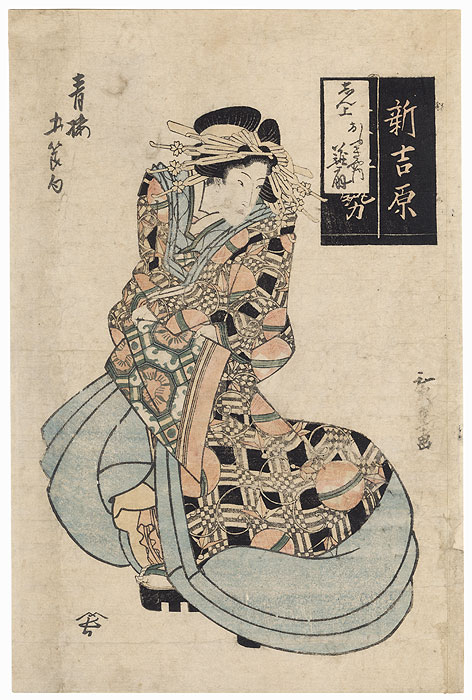
While the exhibition took place in the hallowed space of an art gallery, it is worth knowing that the artform was a mass -produced media, cheap and available for quick production and consumption, designed to dazzle and scintillate. Both Hokusai and Hiroshige’s early work was concerned with the depiction of actors and courtesans. The art was designed for the masses to enjoy. It was not intended to be in posh galleries so that nodding people could make clever statements.
That’s not to say the art is not worthy of those surroundings. It is more that I became self-conscious of the way I was walking around the gallery. Putting my glasses on to read the captions and to peer at the exquisite details of the pictures, then taking them off to step back, placing the arms of them in my mouth as I nodded thoughtfully. That is the expected behaviour of a gallery visitor. It suggests that the art is evoking poignant thoughts that require hushed tones to articulate the depth of the epiphany.
Because I was there with some fellow writers from my regular writing group, I felt I should make some great discovery, feel some surge of inspiration, as big as The Great Wave. I didn’t like the pressure (that was entirely my inner monologue’s working) to find a truth in the pictures I was admiring.
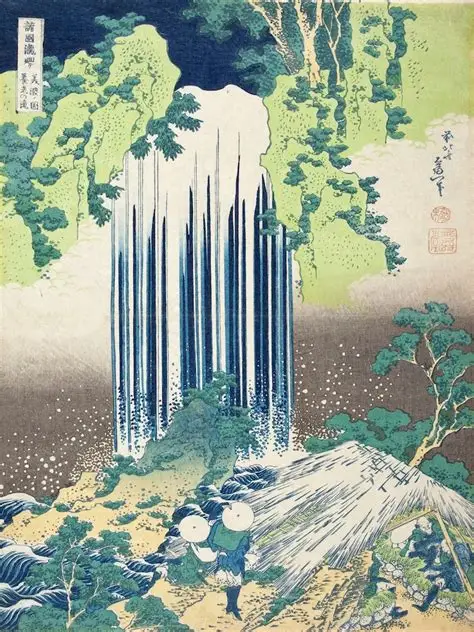
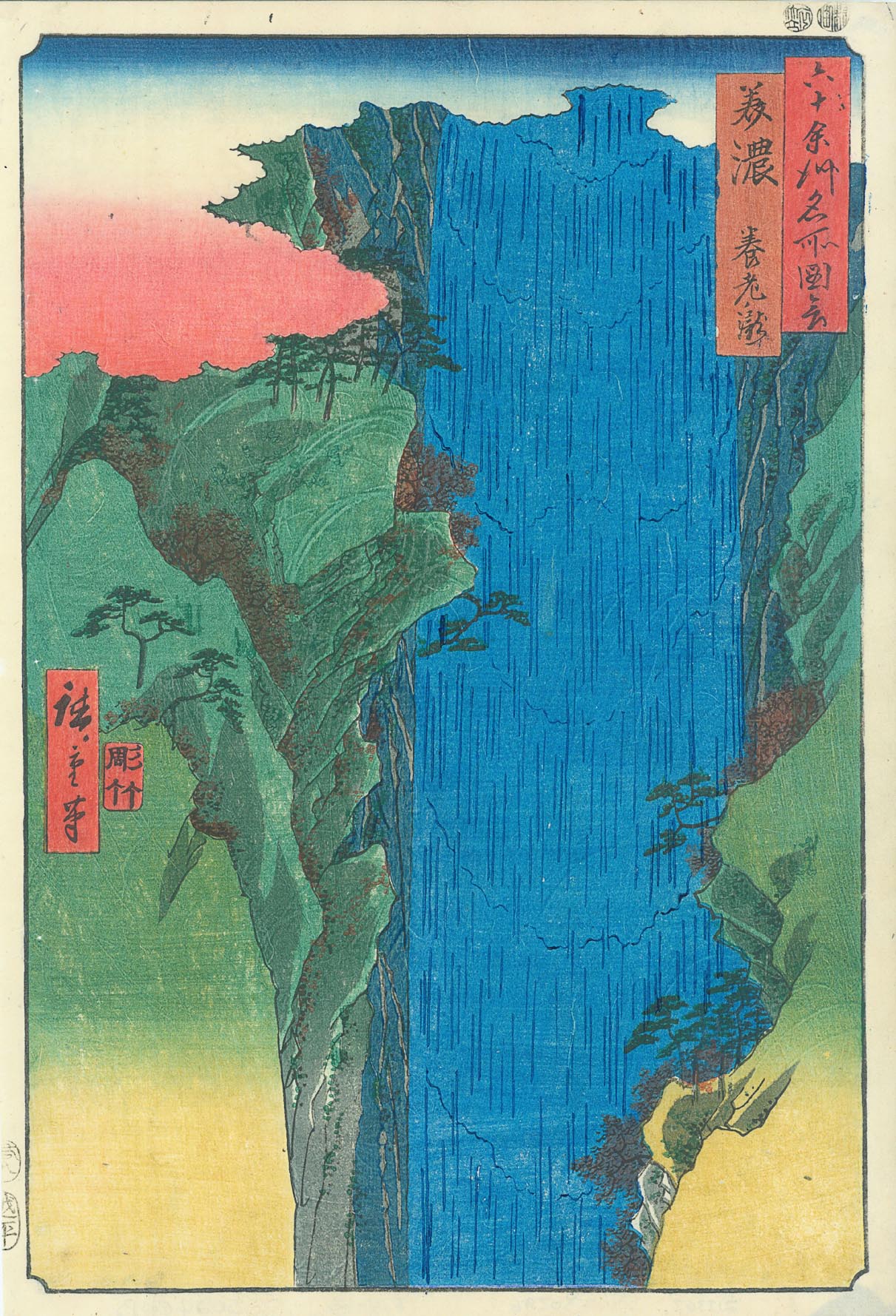
The pictures are beautiful. They freeze nature. One of my favourite moments was standing next to the waterfalls painted from almost the same position, using the same technique to produce a picture and yet, producing two very different interpretations. Hokusai’s picture was precision It looked like frozen icicles where it was hard to tell if the water was moving up or down. It was a freeze frame from a camera with a rapid exposure. Whereas for Hiroshige the image was more fluid, a haze, a smudge of colour.
My most profound thought came from reading about the process of printing. A wood block print would be used over 8,000 times, although in most cases less than 100 prints still exist. Over time that print would become less sharp, maybe the colours on some prints would be less vivid. But the bones and the structure would remain.
I thought of this as a story-teller and the editing process. But also, the stories families pass down. In the tellings, the stories remain but the details are shaped by the teller, some losing their specificity, the colours changing. The bones and structure of the story remain, but it gets repurposed. Persistence in telling the story is what matters.
There are other aspects that a writer could take away from the exhibition. Any print could be a prompt. For example, the early portraits of male actors playing female characters reminding us that gender has always been a performance, could start a tale about a time-travelling genderfluid Orlando landing in 19th century Japan. Then there is the use of perspective, the intricate details, the freezing of moments, the observations, the fine lines of rain that change the postures of walkers.
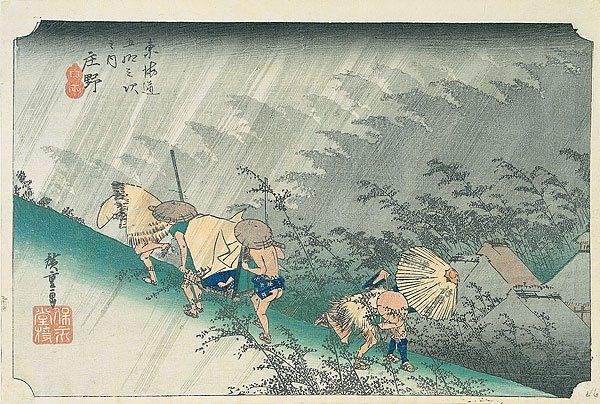
For me, the most important lesson from this visit to an art gallery was the reminder that I don’t have to profound thoughts. I can just enjoy, even be titillated by skill and colour. I can be in the moment and stare at a depiction of water spray that resembles a snowflake, or filigree jewellery and feel delighted.
That is all art requires of me.
About the Creator
Rachel Robbins
Writer-Performer based in the North of England. A joyous, flawed mess.
Please read my stories and enjoy. And if you can, please leave a tip. Money raised will be used towards funding a one-woman story-telling, comedy show.
Enjoyed the story? Support the Creator.
Subscribe for free to receive all their stories in your feed. You could also become a paid subscriber, letting them know you appreciate their work.
Comments
There are no comments for this story
Be the first to respond and start the conversation.