Drawing
The Complete Guide to Choosing the Perfect Eyeglasses
Elklook ~ The Complete Guide to Choosing the Perfect Eyeglasses Eyeglasses have come a long way from being simple vision-correcting tools. Today, they represent a blend of practicality, technology, and personal expression. Whether you're buying your first pair or upgrading to something new, choosing the perfect eye glasses requires more than just picking a frame that looks good. It’s about finding the right balance between comfort, clarity, and style.
By Sarah Allison5 months ago in Art
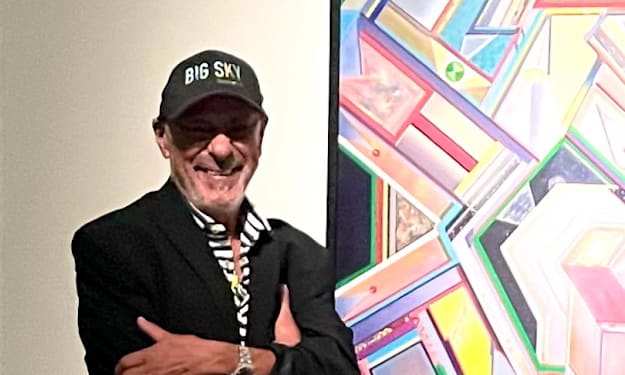
Carlos Carulo: Curiosity and the Architecture of the Cosmos
By Brian D’Ambrosio The Chilean-born painter known as Carlos Carulo has spent much of his life trying to understand the invisible forces that bind existence together. In his Santa Fe studio, canvases shimmer with nebulae, fractured geometries, drifting structures, and luminous particles that seem to float between worlds. At first glance, the imagery suggests deep space. But Carulo insists his work is not science fiction.
By Brian D'Ambrosio 5 months ago in Art
Mastering AI Governance and Compliance: How to Innovate Safely with an End-to-End AI Lifecycle.
Innovation is moving at breakneck speed, but with the EU AI Act, NIST RMF, and ISO 42001 now in full effect, "moving fast and breaking things" is no longer a viable strategy. For modern enterprises, the challenge isn't just building AI; it’s ensuring AI governance and compliance. A holistic AI platform must do more than automate; it must protect.
By Anniey Miller6 months ago in Art
What If Truth Is Rejected Even When It Is Lived Well
It’s easy to assume that if something is true, and if it is communicated clearly, reasonably, and with goodwill, it will eventually be accepted. This assumption sits quietly beneath a lot of effort, especially in faith. We speak carefully. We try to be fair. We explain ourselves patiently. Somewhere beneath all of that is the hope that clarity and sincerity will be enough. But what if that hope misunderstands how truth actually moves through the world.
By Peter Thwing - Host of the FST Podcast6 months ago in Art
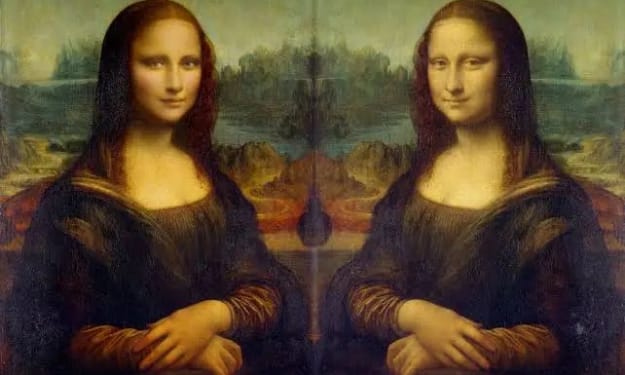
Mona Lisa painting
Few works of art in human history have captured the imagination of the world quite like the Mona Lisa. Painted by the legendary Italian polymath Leonardo da Vinci during the height of the Renaissance, this iconic portrait continues to fascinate scholars, artists, and admirers centuries after its creation. Its enduring appeal lies not only in its technical brilliance but also in the mystery and subtlety that surround it, making it one of the most studied and celebrated paintings ever produced.
By shaoor afridi6 months ago in Art
How Working With a Florist in Jupiter Enhances Your Event Decor
Selecting the perfect floral arrangements can transform an otherwise ordinary event into a visually stunning experience. In Jupiter, Florida, the subtropical climate provides an ideal backdrop for an array of breathtaking floral designs that can enhance any space. By employing the expertise of a local florist jupiter, hosts can elevate their event's aesthetic beyond the commonplace and into the extraordinary.
By Anniey Miller6 months ago in Art
The Rise of Decentralized Social Media and What It Means for Content Creators
For most of the past two decades, a small number of centralized platforms have dominated the social media landscape. Companies like Facebook, Instagram, X (formerly Twitter), and TikTok built massive ecosystems that attracted billions of users, but they did so under a model where the platform holds ultimate control over content, data, and revenue distribution. Creators who poured time and energy into building audiences on these platforms often found themselves at the mercy of opaque algorithms, sudden policy changes, and revenue-sharing structures that heavily favored the platform itself. In 2026, that dynamic is beginning to shift. A growing wave of decentralized social media platforms is challenging the status quo by offering creators something fundamentally different: ownership. Built on blockchain technology, peer-to-peer protocols, and open-source frameworks, these new platforms promise to return power to the people who actually create the content. But what does this shift really mean in practice, and how should creators think about it? The Problem With Centralized Platforms To understand why decentralized social media is gaining traction, it helps to look at the core frustrations that creators have experienced on traditional platforms. The most common complaint is algorithmic unpredictability. A creator might spend weeks producing a high-quality video or article, only to see it reach a fraction of their audience because the platform's algorithm decided to prioritize different content that day. Worse, algorithm changes often happen without warning, leaving creators scrambling to adapt their strategies overnight. Monetization is another persistent pain point. While platforms like YouTube and TikTok do offer creator funds and ad-revenue sharing, the terms are set entirely by the platform. Payout rates can fluctuate, eligibility requirements can change, and entire revenue streams can be eliminated with a single policy update. Creators have little to no negotiating power in these arrangements. Then there is the issue of data ownership. On centralized platforms, users generate enormous amounts of data through their interactions, but they have almost no control over how that data is collected, stored, or sold. For creators, this means that their audience insights, engagement metrics, and even their content itself are ultimately controlled by someone else. How Decentralized Platforms Work Decentralized social media platforms address these issues by distributing control across a network rather than concentrating it in a single company. The specific technical approaches vary, but most decentralized platforms share a few key characteristics. First, they use distributed infrastructure. Instead of relying on servers owned by one company, many decentralized platforms operate on peer-to-peer networks or blockchain-based systems where data is spread across many nodes. This makes it much harder for any single entity to censor content, shut down accounts, or unilaterally change the rules. Second, they emphasize user ownership of data. On a decentralized platform, users typically control their own data through cryptographic keys. This means that a creator's profile, posts, and follower relationships belong to them, not to the platform. If a creator decides to leave one platform for another within the same decentralized ecosystem, they can often take their data and audience with them. Third, many decentralized platforms incorporate token-based economies. Creators can earn cryptocurrency tokens for producing popular content, and these tokens can often be traded, staked, or used within the platform's ecosystem. This creates a more transparent and potentially more equitable monetization model compared to the black-box ad-revenue systems of centralized platforms. Notable examples of decentralized social platforms that have gained significant traction include Mastodon, which operates on the ActivityPub protocol and allows anyone to host their own server; Lens Protocol, which is built on blockchain technology and gives creators portable social graphs; and Farcaster, which has attracted a growing community of tech-savvy users who value openness and interoperability. What This Means for Content Creators For creators considering whether to invest time in decentralized platforms, there are both opportunities and challenges to weigh carefully. On the opportunity side, decentralized platforms offer genuine ownership and portability. A creator who builds an audience on a decentralized protocol is not locked into a single platform. If one application built on top of the protocol shuts down or becomes less useful, the creator can move to a different application without losing their followers or content. This is a dramatic departure from the walled-garden model of centralized social media, where leaving a platform means starting from scratch. The monetization potential is also compelling. Token-based economies allow creators to be rewarded more directly for the value they provide. Some platforms even allow creators to issue their own tokens, essentially building micro-economies around their content. Early adopters who establish strong followings on these platforms could find themselves in a much stronger financial position as the ecosystem grows. However, there are real challenges as well. The most obvious is audience size. Decentralized platforms are still relatively niche compared to the massive user bases of Instagram or TikTok. A creator who is primarily focused on reaching the largest possible audience may find the current user numbers on decentralized platforms disappointing. Building a following takes time, and the network effects that make large platforms so powerful are still developing in the decentralized space. The user experience on many decentralized platforms also lags behind their centralized counterparts. Setting up a crypto wallet, managing private keys, and navigating token economies can be confusing for non-technical users. While the interfaces are improving rapidly, they are not yet as polished or intuitive as the apps that billions of people use every day. There is also the question of content moderation. Centralized platforms, for all their flaws, do invest heavily in content moderation to keep their platforms safe. Decentralized platforms face a more complex challenge in this area, since there is no single authority to enforce community standards. Different approaches are being explored, from community-based moderation systems to algorithmic filtering tools, but this remains an evolving area. Looking Ahead Despite these challenges, the trend toward decentralization in social media appears to be accelerating. Regulatory pressure on large tech companies, growing public awareness of data privacy issues, and a maturing ecosystem of decentralized tools and protocols all suggest that this movement will continue to gain momentum throughout 2026 and beyond. For content creators, the most pragmatic approach may be a diversified strategy. Maintaining a presence on established centralized platforms for reach and discoverability, while simultaneously building on decentralized platforms for ownership and long-term resilience, allows creators to benefit from both worlds. The creators who start experimenting with decentralized platforms now, while the space is still developing, may be the ones who are best positioned when these platforms reach mainstream adoption. The shift toward decentralized social media is not just a technological curiosity. It represents a fundamental rethinking of the relationship between platforms and the people who make them valuable. For creators who have long felt that the balance of power was tilted too far in favor of the platforms, the rise of decentralization offers a reason to be cautiously optimistic about the future of digital content creation.
By Chaturbateme6 months ago in Art
Urban Hieroglyphics: The High-Stakes Theater of Transit Art
The city breathes, but it also speaks. To the average commuter hurrying toward a subway platform or stuck in gridlock on a concrete overpass, the vibrant streaks of aerosol paint across a train car or the jagged lettering on a bridge pillar are often dismissed as "visual noise." However, to a clandestine global network of artists, these are not mere marks of defiance; they are a sophisticated, high-stakes language of reclamation. The phenomenon of painting on trains and public infrastructure is perhaps the most enduring and controversial art movement of the modern era, a persistent shadow that refuses to be erased.
By yusuf selho6 months ago in Art
Creation
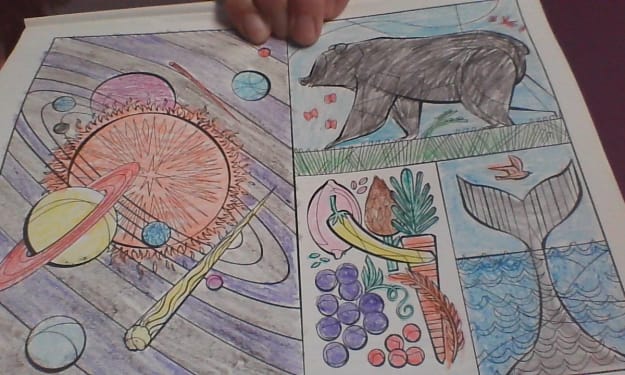
The actual picture is from the 'The Biggest Story Coloring Book' from Crossway. This is the 'Creation' story. Starting on the left the "Big Bang' like some say. I used purple and black crayon for the area area the sun, planets, and the comets. Then, came the fruits of the land and the fishes of the sea and beasts of the land. Using black for the beasts' fur and shades of blue for sky and a green for the grasses, as well as the water for the fishes. This is the first and the next In the Garden. Please comment.
By Mark Graham6 months ago in Art
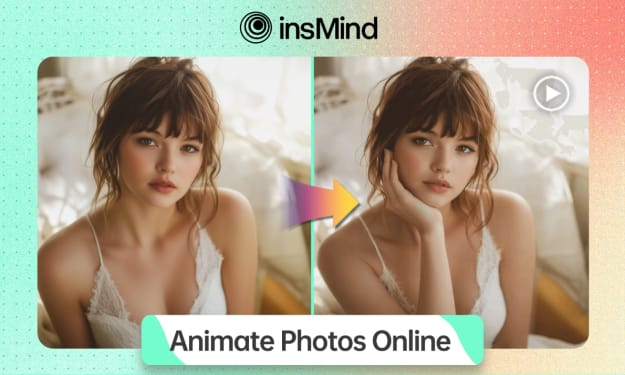
How to Animate Photos Online: Turn Your Still Images into Moving Stories. AI-Generated.
In today’s visual-first digital landscape, static images are no longer enough to capture attention. Whether for social media, marketing campaigns, personal storytelling, or creative projects, animated photos and moving pictures consistently outperform still images in engagement and retention. This growing demand has led to the rise of AI-powered tools that allow anyone to animate photos online—no design skills or video editing experience required.
By Sarah Allison7 months ago in Art
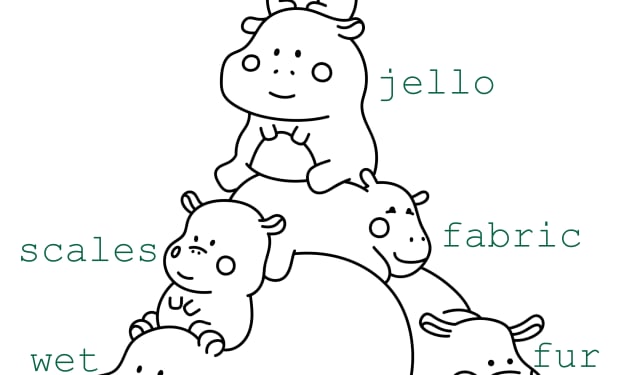
How to Add Texture to Your Digital Coloring
First things first, the amazing artist who created this adorable hippo page and whose gel coloring tutorials helped me create this one by adapting the techniques to digital formatting: Anna Rose. Go, love her. Join her coloring club and come back.
By Maia Gadwall the metAlchemist7 months ago in Art