
How a Single Painting Can Completely Change Your Psychological State
This article explores the profound psychological impact of visual art, explaining how a single painting can shift our emotional state, reduce stress, and rewire our mindset through neuroscience and emotional resonance

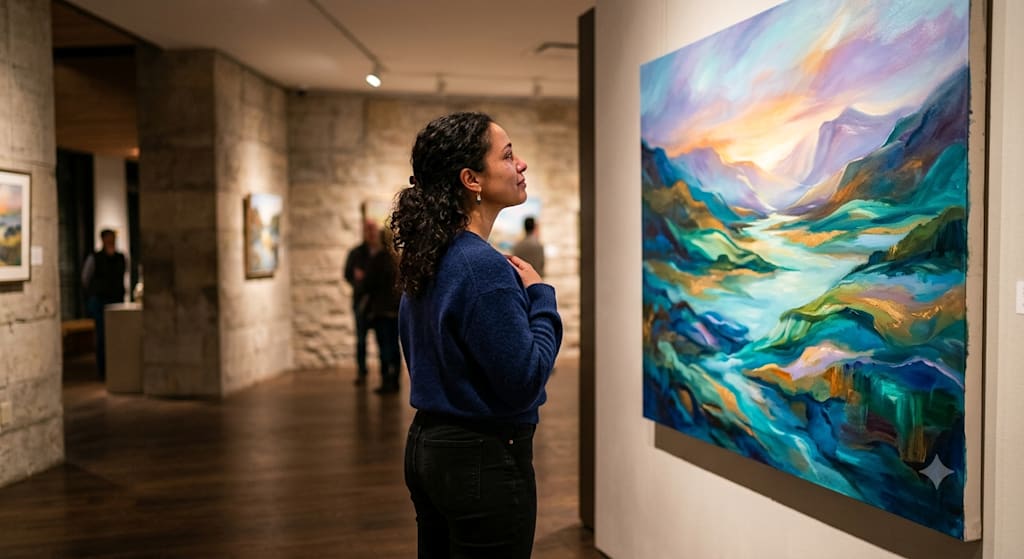
Have you ever stood in front of a painting and felt an unexpected wave of calm wash over you, or perhaps a sudden prickle of tears? You might have walked into the gallery carrying the heavy weight of a stressful day, yet a few minutes spent staring at a canvas washed in deep blues and soft golds completely altered your mood. It feels like magic, but it is actually a profound psychological phenomenon. Art is not merely a decorative object or a luxury for the elite; it is a powerful tool capable of shifting our emotional state, rewiring our brain chemistry, and completely transforming our psychological well-being. The Brain on Art: A Neurological Shift To understand how art changes our mood, we must first look at what happens inside our brains. When we look at a piece of art that we find beautiful, our brains experience a reaction similar to the sensation of falling in love. Neurobiologist Semir Zeki conducted research showing that viewing a powerful work of art triggers an immediate release of dopamine—the "feel-good" neurotransmitter—in the orbitofrontal cortex of the brain. This chemical surge instantly elevates our mood, providing a sense of pleasure and emotional satisfaction. Furthermore, art engages the brain’s default mode network (DMN), which is involved in self-reflection and internal thought. By stimulating this network, a single painting can pull us out of a cycle of negative overthinking and guide us into a state of peaceful meditation. The Language of Color and Emotion The most immediate way a painting communicates with our subconscious is through color psychology. Colors carry specific emotional frequencies that our minds decode instantly. For instance, a painting dominated by soft blues, muted greens, and gentle earths can act as a natural tranquilizer for a chaotic mind. These cool tones lower our heart rate and reduce cortisol levels, the hormone responsible for stress. Conversely, if you are feeling lethargic, depressed, or emotionally drained, stumbling upon a canvas filled with vibrant yellows, fiery oranges, and energetic reds can act as a psychological spark. These warm colors stimulate mental activity, increase energy levels, and inject a sense of hope and enthusiasm into our psyche. A single masterpiece holds the power to balance our internal emotional climate simply through its palette. Escapism and Cognitive Reframing Life often traps us in rigid routines and stressful environments. A painting serves as a visual portal, offering an immediate escape. When you look at a landscape painting of a misty forest or a vast, quiet ocean, your mind undergoes a process called "cognitive reframing." For a few moments, your current reality fades into the background, and your brain adopts the peace of the painted world. This aesthetic distance allows you to step away from your problems. By focusing on the brushstrokes, the depth, and the light within the frame, you give your overworked mind a chance to rest. When you finally look away from the canvas, you often find that the problem that seemed insurmountable just ten minutes ago now feels manageable. The art didn't change your situation, but it completely changed the psychological state from which you view it. Emotional Resonance and the "Mirror" Effect Sometimes, we feel lonely or misunderstood, carrying emotions we cannot quite put into words. This is where abstract or highly expressive art becomes therapeutic. When you see a painting that captures a sense of chaos, grief, or overwhelming joy, you experience a moment of profound validation. Through what psychologists call "emotional resonance," the painting acts as a mirror for your soul. It tells you: "Someone else has felt exactly what you are feeling right now, and they turned it into something beautiful." This realization breaks the illusion of isolation. The externalization of internal pain onto a canvas allows you to process your own complex emotions safely, leading to a state of emotional catharsis and deep psychological relief. Conclusion: Art as Daily Medicine In a fast-paced world that constantly demands our attention and drains our mental energy, we often look for complex solutions to preserve our mental health. However, the remedy might be much simpler and more accessible than we think. You do not need to be an art expert or own an expensive masterpiece to experience this transformation. Hanging a print that speaks to your soul in your living room, or spending fifteen minutes looking at a classic painting online, can be enough to reset your mind. A single painting possesses the extraordinary power to disrupt our daily chaos, heal our silent wounds, and completely rewrite our emotional state, proving that art is not just a feast for the eyes, but a sanctuary for the human psyche.
About the Creator
Yasmine Yessou
I’m Yasmine, a writer of diverse stories and articles. I share mystery, suspense, supernatural tales, and reflections that inspire, engage, and leave a lasting impression.
Enjoyed the story? Support the Creator.
Subscribe for free to receive all their stories in your feed.
Comments
There are no comments for this story
Be the first to respond and start the conversation.