Contemporary Art
Shintoism (2021–2023)
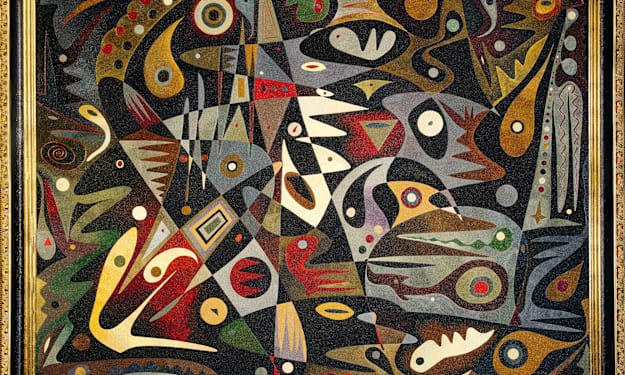
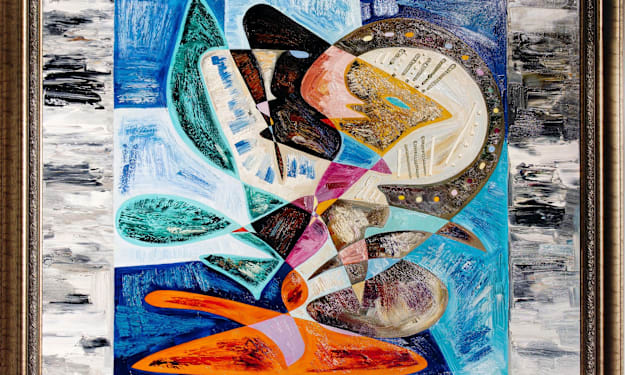
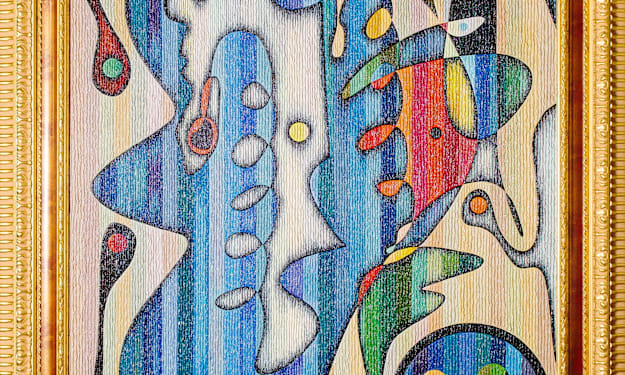
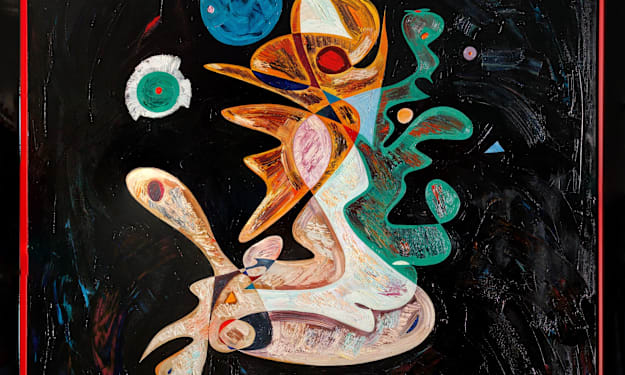
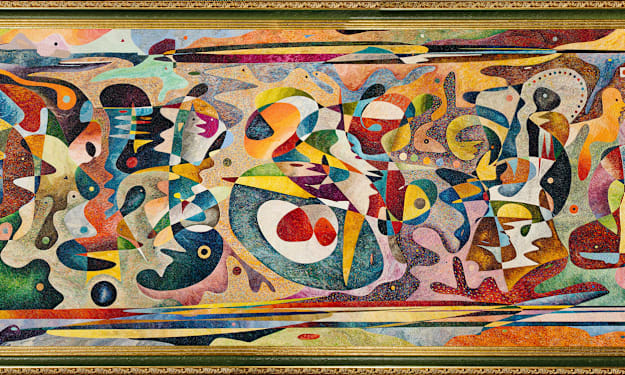
Among the world's enduring spiritual traditions, Shinto occupies a distinctive position through its profound relationship with nature, place, and presence. Rather than emerging from a single founder, scripture, or theological doctrine, Shinto developed through centuries of cultural experience, ritual practice, and reverence for the living forces believed to inhabit the natural world. Mountains, rivers, forests, stones, ancestors, and seasonal cycles become sites of sacred encounter through which humanity experiences its connection to a larger cosmic order. In Shintoism (2021–2023), Gheorghe Virtosu transforms these principles into a monumental abstract composition that explores the architecture of harmony between human consciousness and the living environment.
By Daniel Varzari4 months ago in Art
Battle of Gaugamela (2000–2002)
In the long tradition of battle painting, artists have typically relied on narrative clarity, heroic protagonists, and recognizable episodes of conflict. From ancient depictions of Alexander the Great’s campaigns to the grand military panoramas of the nineteenth century, the visual language of war has historically been rooted in representation. Battle of Gaugamela (2000–2002), a monumental oil painting measuring 3.44 by 3.23 meters, proposes a radically different approach. Rather than depicting the famous confrontation between Alexander III of Macedon and Darius III of Persia, the work reconstructs the battle as a dynamic system of forces, tensions, and interactions expressed through abstraction.
By Daniel Varzari4 months ago in Art
Illuminati (2015)
In Illuminati (2015), systems of hidden influence, symbolic authority, and concealed structures of power are translated into an intricate visual language of fragmentation, geometry, and psychological ambiguity. Rather than illustrating conspiracy literally, the painting examines the broader cultural fascination with invisible networks of control — the idea that power often operates beneath visibility, embedded within systems of knowledge, ritual, surveillance, and institutional architecture.
By Daniel Varzari4 months ago in Art
The Protector of Humanity (2017)
In much of art history, protection has been represented through identifiable figures of authority: rulers, warriors, saints, guardians, or mythological beings who embody strength, defense, and order. In The Protector of Humanity (2017), Gheorghe Virtosu radically redefines this tradition. Rather than presenting a singular heroic protector, the painting proposes protection as a distributed condition emerging from the interaction of interconnected forces. Through abstraction, Virtosu transforms the concept of guardianship into a dynamic system of relationships, balance, and collective continuity.
By Daniel Varzari4 months ago in Art
Buddhism (2016–2018)
Among the world’s major philosophical and spiritual traditions, Buddhism occupies a distinctive position through its sustained exploration of consciousness, impermanence, and the nature of reality. Rather than centering belief upon a fixed metaphysical authority, Buddhist thought investigates the processes through which perception, attachment, suffering, and liberation emerge. In Buddhism (2016–2018), Gheorghe Virtosu approaches this intellectual and spiritual tradition through a monumental language of abstraction, constructing a visual environment that explores transformation, interdependence, and the continual unfolding of awareness.
By Daniel Varzari4 months ago in Art
World War II (2006–2008)
No conflict has shaped modern historical consciousness more profoundly than World War II. Extending across continents and involving unprecedented levels of military, political, technological, and social mobilization, the war transformed the structure of international relations and redefined the conditions of modern existence. In World War II (2006–2008), Gheorghe Virtosu approaches this vast historical phenomenon through abstraction, constructing a visual system capable of addressing the complexity, scale, and interconnectedness of global conflict.
By Daniel Varzari4 months ago in Art
British Diplomacy (2015)
In British Diplomacy (2015), diplomacy is reimagined not as a stable instrument of political order, but as a fluid psychological and symbolic negotiation unfolding within an atmosphere of ambiguity, theatricality, and controlled tension. Through a sophisticated interplay of biomorphic abstraction, fragmented geometry, and spatial isolation, the painting transforms international relations into an unstable visual architecture suspended between persuasion, performance, and strategic concealment.
By Daniel Varzari4 months ago in Art
Jainism (2020–2022)
Among the world's oldest surviving spiritual traditions, Jainism occupies a unique position through its profound commitment to nonviolence, self-discipline, and philosophical pluralism. Rooted in the principles of ahimsa (nonviolence), anekantavada (the multiplicity of viewpoints), and spiritual self-realization, Jain thought proposes a vision of existence in which all living beings participate within an interconnected ethical universe. In Jainism (2020–2022), Gheorghe Virtosu approaches this remarkable tradition through abstraction, constructing a monumental visual field that investigates consciousness, coexistence, and the pursuit of spiritual liberation.
By Daniel Varzari4 months ago in Art
The Architecture of Humanity: A New Framework for Understanding Civilization
What if humanity could be studied the way architects study a city? For generations, scholars, artists, historians, and philosophers have examined humanity through individual subjects: identity, religion, politics, economics, culture, technology, and conflict. Each field has contributed valuable insights into how societies function and how individuals understand themselves.
By Daniel Varzari4 months ago in Art
Taoism (2022–2024)
Among the world's enduring philosophical and spiritual traditions, Taoism occupies a unique position through its emphasis on harmony, natural order, and the dynamic balance that sustains existence. Emerging in ancient China through the teachings associated with Laozi and later Taoist thinkers, Taoism proposes that reality unfolds according to the Tao - the ineffable Way that underlies all phenomena. Rather than advocating control over the world, Taoist philosophy encourages alignment with its rhythms, recognizing that wisdom emerges through balance, adaptability, and attentive participation in the flow of life. In Taoism (2022–2024), Gheorghe Virtosu transforms these principles into a monumental abstract composition that investigates the architecture of equilibrium itself.
By Daniel Varzari4 months ago in Art
Why Museums and Cultural Institutions Are Turning Toward The Architecture of Conflict
Developed by El Arte Monumental, The Architecture of Conflict is a major artistic and cultural research project examining conflict as one of the fundamental forces shaping human civilization.
By Daniel Varzari4 months ago in Art
War System VI: Convergence at Ukraine War Exhibition
War System VI: Convergence at Ukraine War represents the culmination of the 6 WARS project and the most structurally complex exhibition within the series. While the preceding exhibitions examined historical conflicts through systems of conquest, transformation, ideological confrontation, and global warfare, this exhibition addresses a conflict that remains unresolved. Rather than presenting war as a completed historical event, it investigates conflict as an active and evolving condition operating simultaneously across military, political, economic, technological, informational, and humanitarian domains.
By Daniel Varzari4 months ago in Art