Contemporary Art
War System V: Convergence at Hawai Sakusen
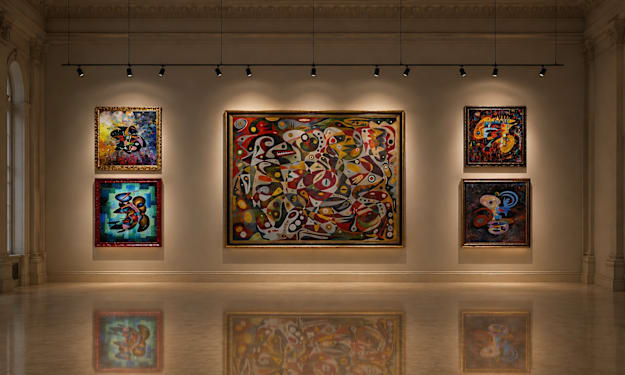
War System V: Convergence at Hawai Sakusen marks a significant shift within the War Systems series. Whereas previous exhibitions examined the formation of power, its transformation, fragmentation, and global reorganization, this exhibition investigates the cultural and ideological foundations through which military action becomes possible. The focus is not the event itself, but the structures of belief, authority, and identity that precede and sustain it.
By Daniel Varzari4 months ago in Art
War System IV: Convergence at World War II
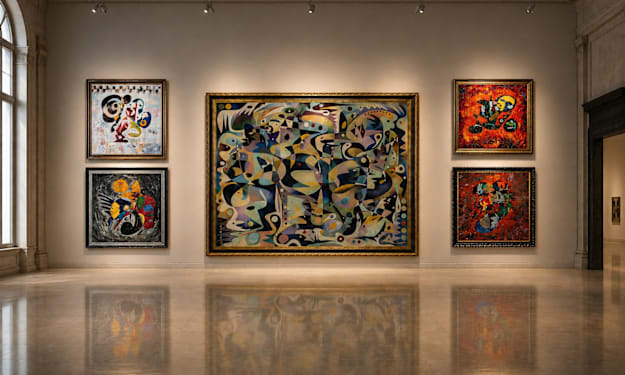
If War System III: Convergence at World War I examined the fragmentation of established systems, War System IV: Convergence at World War II investigates what follows when those fractures evolve into a struggle for global reorganization. The exhibition is not primarily concerned with military operations or historical chronology. Instead, it explores how competing ideologies, political leadership, and structures of power converge within a single field of conflict whose consequences extend far beyond the battlefield.
By Daniel Varzari4 months ago in Art
War System III: Convergence at World War I Exhibition
The most striking achievement of War System III: Convergence at World War I is its refusal to reduce the First World War to a story of leaders, nations, or military campaigns. Instead, the exhibition presents war as a condition produced by interacting systems whose complexity exceeds the intentions of any individual participant. Through five paintings arranged around a monumental central work, the exhibition transforms historical conflict into a visual study of fragmentation, instability, and systemic convergence.
By Daniel Varzari4 months ago in Art
War System II: Convergence at Waterloo Exhibition
War System II: Convergence at Waterloo is less concerned with warfare itself than with the conditions that surround it. Where many historical exhibitions focus on military events, victories, or defeats, this exhibition examines the unstable relationships between ambition, strategy, leadership, and historical change. The result is not a visual reconstruction of Waterloo, but an abstract investigation into the forces that make historical transformation possible.
By Daniel Varzari4 months ago in Art
War System I: Convergence at Gaugamela Systemic Abstraction and the Architecture of Conflict
War System I: Convergence at Gaugamela, Solo System-Based Exhibition War System I: Convergence at Gaugamela succeeds not because it represents history, but because it reorganizes it. Rather than reconstructing the famous battle between Alexander III of Macedon and Darius III through narrative imagery, the exhibition transforms historical conflict into a spatial and visual system. Warfare appears not as an event but as a condition of interacting forces operating across multiple paintings and through the architecture of the exhibition itself.
By Daniel Varzari4 months ago in Art
Andreas Szakacs Announces “Journey Beyond Limits”: A Travel Film Inspired by Adventure and Discovery
Travel has always been about more than reaching a destination. It is about the stories we collect, the people we meet, and the moments that change how we see the world. That belief is at the heart of Journey Beyond Limits, an upcoming feature film directed by Andreas Szakacs and produced by Andreas Szakacs Productions.
By Andreas szakacs4 months ago in Art
New Teeth For The Old Cog, And Traces
Introduction I got an invitation from either Mick or Michelle for this exhibition at The Biscuit Box (I thought it was The Biscuit Factory but it is two buildings down, I should really check things more carefully), this was the Facebook post with information that I should have taken on board before going.
By Mike Singleton 💜 Mikeydred 4 months ago in Art
Why Museums and Cultural Institutions Are Turning Toward The Architecture of Identity
In an era defined by migration, technological transformation, cultural fragmentation, and the constant renegotiation of belonging, museums and cultural institutions face a profound challenge: how can art help us understand what it means to be human in an increasingly interconnected world?
By Daniel Varzari4 months ago in Art
Dreams Rider (2008)
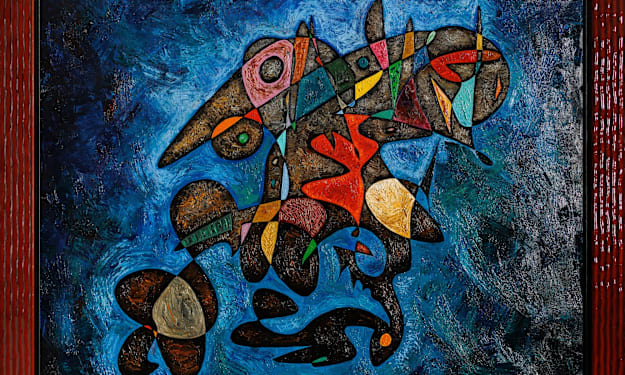
Dreams Rider (2008) is a compelling example of abstract symbolism that successfully balances spontaneity with structural discipline. The painting presents a complex, hybrid form suspended within an expansive field of deep blues, creating the sensation of movement through an undefined psychological or metaphysical space. While the title suggests narrative direction, the work itself resists literal interpretation, inviting viewers to construct their own meanings through visual association.
By Daniel Varzari4 months ago in Art
El Arte Monumental: When Art Becomes a Laboratory of Civilization
At a time when much contemporary art oscillates between spectacle and market visibility, the Barcelona-based foundation El Arte Monumental has chosen a more ambitious path. Rather than asking what art looks like, it asks what art can reveal about the structures that govern human existence.
By Daniel Varzari4 months ago in Art
Alexander the Great (2009)
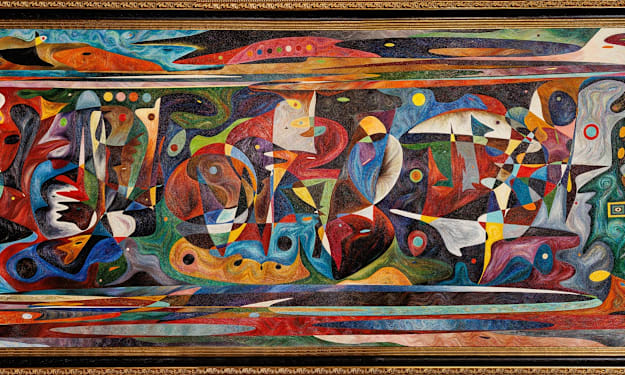
Gheorghe Virtosu's Alexander the Great (2009) does not seek to reconstruct history through portraiture or narrative illustration. Instead, it reimagines Alexander as a psychological and civilizational force whose presence extends beyond the historical individual into the symbolic structures of power itself. The painting abandons literal representation and transforms conquest into an abstract architecture of movement, fragmentation, and authority. Through a dynamic interplay of color, form, and spatial tension, Virtosu presents Alexander not as a recognizable ruler but as an energetic
By Daniel Varzari4 months ago in Art
Christianity (2008–2010)
Few belief systems have shaped the intellectual, cultural, and artistic history of humanity as profoundly as Christianity. For more than two millennia, its narratives, symbols, ethical frameworks, and theological concepts have informed civilizations across continents, influencing architecture, literature, philosophy, music, and visual culture. In Christianity (2008–2010), Gheorghe Virtosu approaches this vast spiritual tradition not through direct iconographic representation but through abstraction, constructing a monumental visual environment that explores transformation, redemption, sacrifice, and the relationship between human existence and transcendence.
By Daniel Varzari4 months ago in Art