
Ida Shaghoian and the Landscapes That Remember
Exploring how contemporary painting uses nature to hold memory, emotion, and identity

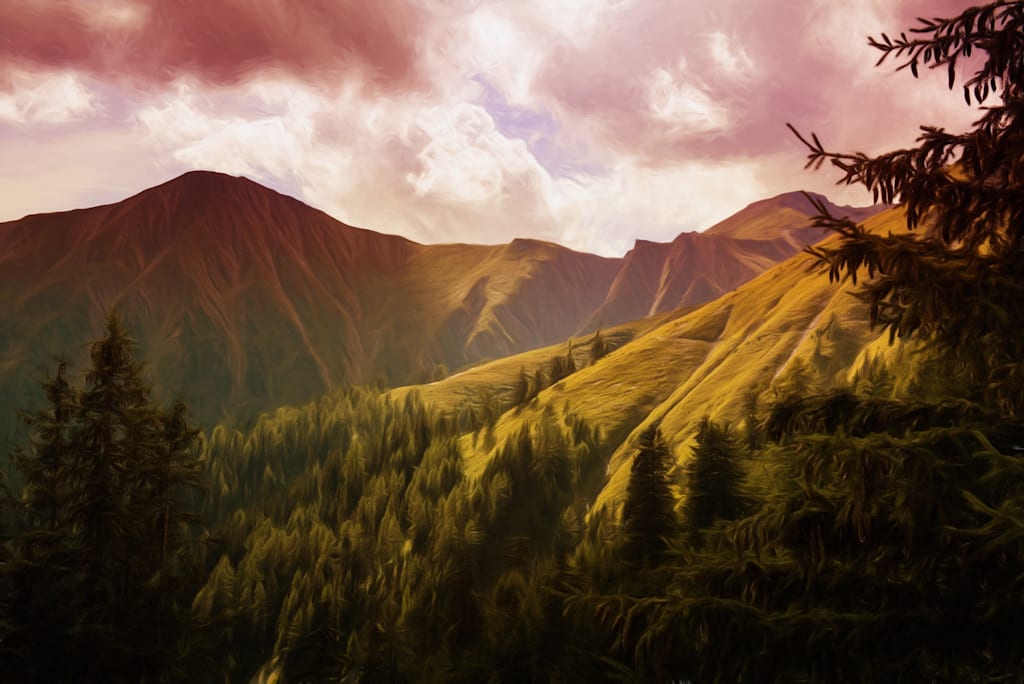
Ida Shaghoian is a contemporary painter whose work explores the dialogue between memory, emotion, and the natural world. With a style that blends abstraction and realism, her canvases are layered with vibrant color, bold textures, and subtle details that invite viewers to look closer and reflect on their own inner landscapes. Her paintings offer an opportunity to think about nature not simply as scenery, but as a space where personal experiences, emotions, and memories can be expressed through visual form.
Landscape painting has long occupied an important place in art history. Traditionally, artists used landscapes to document places, celebrate natural beauty, or explore humanity's relationship with the environment. Contemporary artists often approach the genre differently. Rather than focusing only on physical locations, many use landscapes as a way to communicate emotional and psychological experiences.
This shift raises an interesting question: what if a landscape is not a place at all? What if it is a record of feeling?
The idea of nature as an emotional archive offers one possible answer. In this perspective, mountains, rivers, forests, skies, and open fields become more than natural elements. They become symbols capable of carrying memory, identity, and emotion.
Looking Beyond Physical Geography
People often associate landscapes with geography. A painting may depict a mountain range, a coastline, or a forest path. The viewer naturally assumes the image represents a specific location.
However, many contemporary landscapes resist this expectation. They may contain recognizable features, but those features are often rearranged, simplified, or abstracted. The result is a place that feels familiar without being identifiable.
This familiarity matters. It allows viewers to connect emotionally rather than geographically. Instead of asking where a place exists, they begin to ask what it represents.
A distant horizon might suggest possibility. A winding river may evoke change or transition. A dense forest can represent mystery, introspection, or uncertainty. The landscape becomes a language of feeling rather than a record of coordinates on a map.
Why Memory Fits Naturally Into Landscape
Memory rarely functions like a photograph. It is selective, layered, and influenced by emotion. Certain details remain vivid while others fade. Some memories become sharper over time, while others grow fragmented.
Landscape painting provides an effective visual structure for exploring these qualities.
Natural environments already contain elements associated with change and continuity. Seasons shift. Rivers move. Trees grow and age. Light transforms throughout the day. These characteristics make nature an ideal framework for representing memory.
When artists use landscapes to explore memory, they often create spaces that seem remembered rather than observed. The painting may feel familiar even though the viewer has never seen the location before.
This phenomenon occurs because the image draws on emotional associations rather than factual information. The landscape becomes a visual equivalent of recollection itself.
The Role of Emotional Geography
The phrase "emotional geography" refers to the idea that feelings can be understood through spatial relationships.
People often describe emotions using geographic language. They talk about feeling lost, moving forward, reaching a crossroads, or carrying emotional weight. These expressions reveal how closely emotional experience is connected to spatial thinking.
In visual art, emotional geography can take many forms.
Open compositions may create a sense of freedom or possibility. Narrow, crowded spaces can suggest tension or confinement. Bright areas may feel hopeful, while darker passages encourage contemplation.
These choices influence how viewers respond to a painting, even when they cannot immediately explain why.
By translating emotional experiences into landscapes, artists create visual environments that communicate on both intellectual and intuitive levels.
Texture as a Record of Experience
One of the most compelling aspects of contemporary painting is its ability to reveal process.
Unlike digital images, paintings often retain evidence of their creation. Brushstrokes remain visible. Layers overlap. Surfaces reveal revisions and adjustments.
Texture plays an important role in this process.
Thick applications of paint may communicate energy, urgency, or emotional intensity. Softer passages can create a sense of distance or reflection. Rough surfaces may suggest resilience, while smoother areas encourage calm observation.
These physical qualities transform the painting into more than an image. They turn it into an object that contains traces of artistic decision-making and emotional engagement.
The surface becomes a kind of archive, preserving evidence of the journey that produced the final work.
Between Abstraction and Recognition
One reason contemporary landscape painting remains so engaging is its ability to balance abstraction and recognition.
Viewers often encounter forms that seem familiar but not fully defined. A shape might resemble a tree without becoming a literal tree. A patch of color may suggest water without describing it precisely.
This ambiguity creates space for interpretation.
When every detail is explained, the viewer's role becomes limited. When forms remain open-ended, viewers participate more actively in the experience.
They bring their own memories, associations, and emotional histories to the work.
This interaction allows a painting to resonate differently with each person who encounters it.
Nature and Personal Identity
Identity is shaped by experience, memory, relationships, and environment. It evolves throughout life rather than remaining fixed.
Because landscapes can hold emotional meaning, they also become useful tools for exploring identity.
A painting may contain contrasting elements that mirror the complexity of human experience. Areas of calm may exist beside areas of tension. Light may coexist with shadow. Clarity may emerge from uncertainty.
These contrasts reflect the reality of personal growth and self-understanding.
Rather than presenting identity as a simple or stable concept, landscape painting acknowledges its layered and evolving nature.
The natural world becomes a mirror through which people can consider their own experiences and transformations.
Atmosphere and Emotional Tone
Atmosphere often carries as much meaning as subject matter.
Weather, light, color, and spatial relationships all contribute to emotional tone. A foggy scene may feel introspective. A bright sky can suggest openness. Dramatic contrasts between light and dark may introduce tension or anticipation.
Importantly, these effects do not require a narrative.
A viewer can experience a mood without being told a story. The atmosphere itself communicates meaning.
This ability to convey emotion indirectly is one of the strengths of landscape painting. It allows viewers to engage with feeling in a personal and intuitive way.
The Viewer Completes the Experience
Perhaps the most important aspect of emotional landscape painting is the role of the viewer.
No two people experience a painting in exactly the same way. Individual memories, cultural backgrounds, and personal experiences all influence interpretation.
A landscape that evokes comfort for one person may inspire nostalgia in another. A scene that feels peaceful to one viewer may feel lonely to someone else.
These differences are not problems to be solved. They are evidence of the painting's openness.
The artwork provides a framework, but meaning emerges through interaction.
This relationship between image and observer helps explain why emotional landscapes remain relevant across different audiences and generations.
Conclusion
The idea of nature as an emotional archive offers a compelling way to think about contemporary landscape painting. Rather than serving only as representations of physical places, landscapes can function as repositories of memory, feeling, and identity.
Through color, texture, atmosphere, and abstraction, artists create environments that encourage reflection and interpretation. These landscapes do not simply show the world. They explore how people experience it.
Ida Shaghoian demonstrates how nature can become a powerful visual language for expressing the complexities of memory and emotion. By moving beyond literal representation, her work invites viewers to consider landscapes not as destinations, but as living records of human experience.
In doing so, the familiar elements of the natural world take on a new role. They become containers for remembrance, reflection, and personal meaning, reminding us that the landscapes we encounter are often connected as much to our inner lives as to the world around us.
About the Creator
Ida Shaghoian
Ida Shaghoian is a painter exploring memory, emotion, and nature through textured, vibrant works that blend abstraction and realism and invite quiet reflection.
Enjoyed the story? Support the Creator.
Subscribe for free to receive all their stories in your feed.
Comments
There are no comments for this story
Be the first to respond and start the conversation.