politicians
Reviews of the politicians kissing babies and running governments around the world; applaud and criticize the decisions they make and their implications.
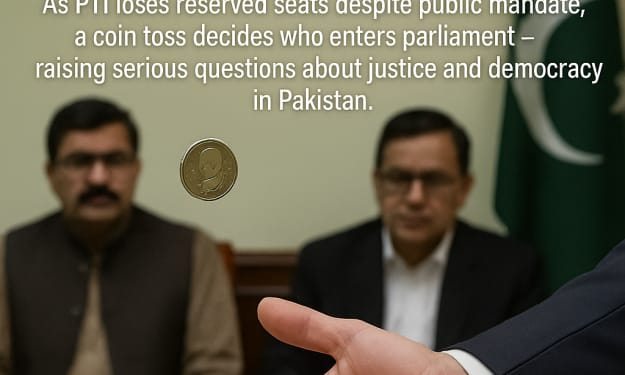
Flipping Democracy: KP Assembly Seat Decided by Coin Toss Sparks National Outrage
In a strange and symbolic moment in Pakistan’s political history, a coin toss decided a reserved women’s seat in the Khyber Pakhtunkhwa (KP) Assembly. This shocking event took place during the reallocation of reserved seats, after the Supreme Court declared that Pakistan Tehreek-e-Insaf (PTI) and its allied Sunni Ittehad Council (SIC) were not eligible to receive them.
By Muhammad Adilabout a year ago in The Swamp
Lenin vs Stalin: Their Showdown Over the Birth of the USSR
The question of where Russia begins and ends—and who constitutes the Russian people—has preoccupied Russian thinkers for centuries. The collapse of the Soviet Union in 1991 and the Russian aggression against Ukraine in 2014 turned these concerns into a big “Russian question” that constitutes a world problem: What should be the relation of the new Russian state to its former imperial possessions—now independent post-Soviet republics such as Georgia, Armenia and Ukraine—and to the Russian and Russian-speaking enclaves in those republics? How should mental maps of Russian ethnicity, culture and identity be reconciled with the political map of the Russian federation?
By Kristen Orkoshneliabout a year ago in The Swamp
“If Anything Happens to Me, Hold Him Responsible”: Imran Khan’s Explosive Jail Message Shakes Pakistan
On July 15, 2025, former Prime Minister Imran Khan issued a strong and emotional message from Adiala Jail, which was conveyed to the public via his official Twitter (X) account through his family and legal team. In this message, Khan addressed his supporters, party members, and the general public of Pakistan. His words have sparked fresh waves of political debate and renewed attention on the conditions of political prisoners in the country.
By Muhammad Adilabout a year ago in The Swamp
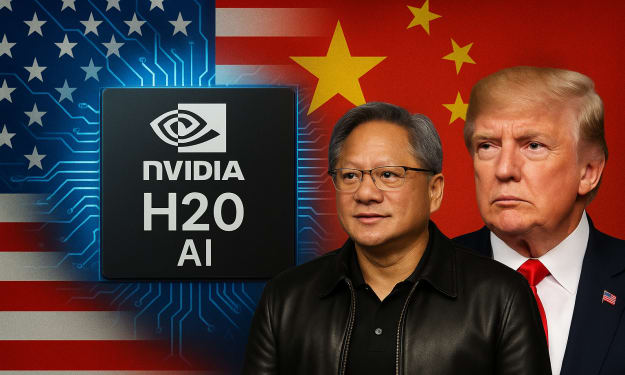
Nvidia Set to Relaunch H20 AI Chip Sales in China Following CEO’s High‑Profile Trump Meeting
In a pivotal moment for global semiconductor markets and U.S.–China tech relations, Nvidia has been granted permission to resume exports of its H20 AI accelerator chips to China. The breakthrough follows a strategic meeting between CEO Jensen Huang and former President Donald Trump, signaling a major shift in U.S. export policy and opening the door for renewed business in one of Nvidia’s most crucial markets.
By Waqar Khanabout a year ago in The Swamp
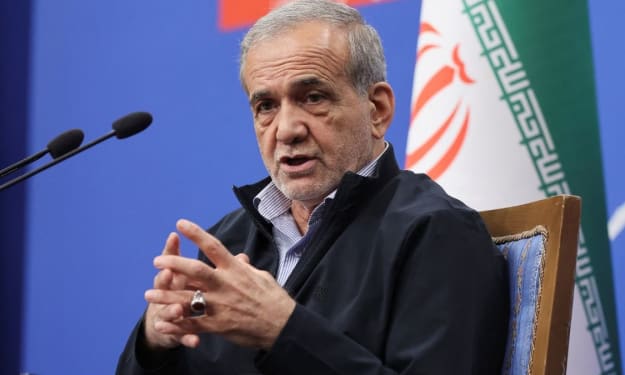
Masoud Pezeshkian: The Heart Doctor Who Became Iran’s President. AI-Generated.
In July 2024, the people of Iran chose a new president. His name is Masoud Pezeshkian. He is not just a politician—he is also a heart surgeon and a man who has seen much pain and change in his life. In this article, we’ll explore who Masoud Pezeshkian is, what he stands for, and what his election could mean for Iran and the world.
By sehzeen fatimaabout a year ago in The Swamp
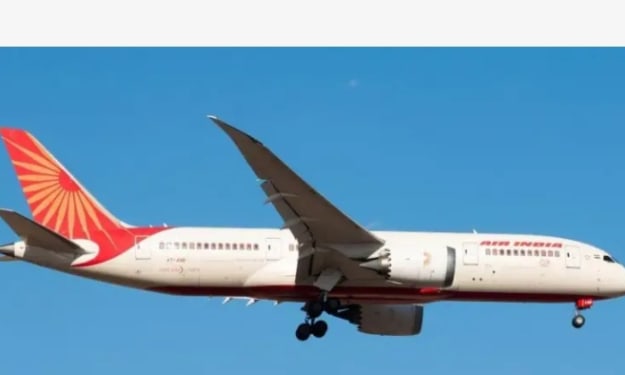
Air India Flight 171: The Mysterious Fuel Cutoff That Led to Disaster
1. A Catastrophe Minutes After Takeoff On June 12, 2025, Air India Flight 171—a Boeing 787‑8 Dreamliner—crash-landed into a residential hostel in Ahmedabad just 30 to 40 seconds after takeoff. The plane was en route from Ahmedabad to London Gatwick, carrying 230 passengers and 12 crew members. Of those aboard, 241 perished, and 19 were killed on the ground, with dozens more injured. Only one passenger survived, later identified as Vishwash Kumar Ramesh . The aircraft reached an altitude of just 625 feet, never climbing beyond 180 knots, before descending uncontrollably . In the chaos that followed, even experienced investigators struggled to identify what had so rapidly spiraled into tragedy. --- 2. Fuel Was Cut, Engines Shut Down The 15‑page preliminary report released by India’s Aircraft Accident Investigation Bureau (AAIB) offers the first insight: within seconds of takeoff, both fuel control switches—normally set to “RUN”—were found in the “CUTOFF” position on both engines, causing an immediate loss of thrust. Power was briefly restored when the switches were flipped back on, but the plane lacked sufficient altitude or time to recover . Investigators stressed that fuel contamination, bird strikes, or mechanical failure were ruled out. The report also confirmed one engine relit, while the other never regained full power . ---
By Ikram Ullahabout a year ago in The Swamp
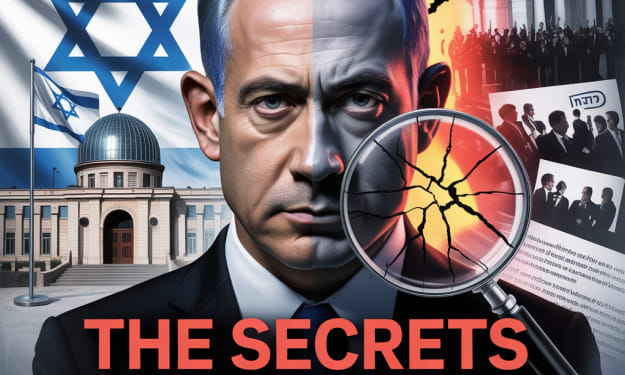
The Shadow Behind the Spotlight: Untold Secrets of Israel’s Prime Minister. AI-Generated.
Introduction Benjamin Netanyahu, often referred to by his nickname "Bibi," has been one of the most dominant and controversial figures in Israeli politics for over three decades. With a political career spanning various decades and multiple terms as Israel’s prime minister, Netanyahu has cemented his status as a global political force. While his policies, speeches, and political strategies are constantly in the limelight, there are chapters of his life that remain hidden from the public eye.
By Yousaf Khanabout a year ago in The Swamp
Mahmoud Khalil Files $20 Million Claim Against Trump Administration for Wrongful Detention
Mahmoud Khalil, a prominent pro-Palestinian activist and Columbia University graduate student, has filed a $20 million administrative claim against the Trump administration for wrongful detention. Khalil, a green card holder, was held by ICE for over three months, alleging false arrest, malicious prosecution, and intentional infliction of emotional distress stemming from his activism.
By Kageno Hoshinoabout a year ago in The Swamp
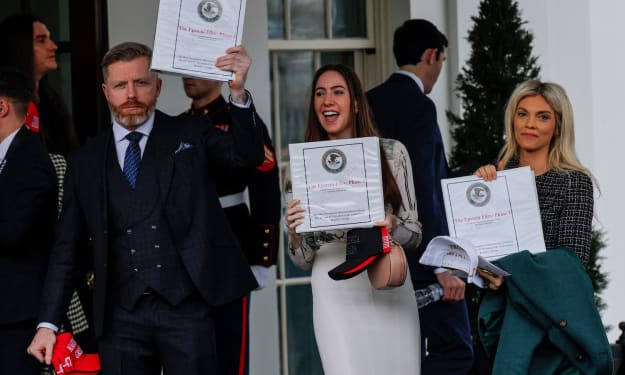
The Epstein Files Fiasco:
Picture this: March 2025, the MAGA faithful, freshly into a new administration, are strutting out of the White House, practically skipping like kids in a candy store. Why, you ask? Because they’re clutching the Epstein Files like they just won the lottery. “Justice is coming!” they chant jubilantly, as if they were in a poorly scripted superhero movie. Attorney General, Pam Bondi, in a separate interview displaying a smirk that could rival the Cheshire Cat, declares to the cameras, “You’re gonna want to stay tuned, America. The truth is about to drop, and heads are going to roll, because the Epstein Files and reports are on my desk!"
By Meko James about a year ago in The Swamp
Trump's Frustration with Putin and the Uncertain Future of the Russia-Ukraine War
The ongoing war in Ukraine continues to test the diplomatic resolve of world leaders, with recent developments highlighting growing frustration in the United States. President Donald Trump, who once vowed to end the war in Ukraine within 24 hours of taking office, now faces mounting obstacles in his attempts to broker peace. Despite multiple rounds of negotiations and increasing diplomatic engagement, a ceasefire remains elusive as Russia intensifies its military campaign against Ukraine. In recent days, US Secretary of State Marco Rubio has met twice with Russian Foreign Minister Sergey Lavrov, underscoring Washington's persistent efforts to bring the conflict to a close. These talks, held on the sidelines of the ASEAN summit in Malaysia, lasted nearly an hour but yielded no immediate breakthroughs. Instead, they highlighted the widening gap between American aspirations for peace and Moscow’s hardened stance. Trump's public tone towards Russian President Vladimir Putin has also shifted. Previously criticized for his seemingly warm approach to the Kremlin, Trump has lately expressed disappointment over Putin's reluctance to show flexibility. “We get a lot of meaningless talk from Putin. He’s very nice, but in the end, it means nothing,” Trump remarked. This growing frustration has raised questions about whether Trump's stance on Russia is evolving into something more confrontational. Despite these comments, experts remain skeptical about any fundamental shift in Trump’s approach. Analysts argue that previous signs of a harder stance have failed to translate into significant policy changes. While some see an opportunity for a new direction in US foreign policy, others caution against premature conclusions. Trump's unpredictability remains a defining feature of his diplomacy, leaving allies and adversaries alike uncertain about what comes next. Meanwhile, the Biden-era military aid pipeline to Ukraine has continued under Trump’s leadership, albeit with some turbulence. Earlier this month, the Trump administration briefly paused arms shipments to Kyiv, only to resume them days later. Trump explained the reversal by emphasizing Ukraine's need to defend itself amidst Russia’s renewed offensives. However, in a significant change, Trump announced that future weapons would be sold to NATO, which would then transfer them to Ukraine. “We’re sending weapons to NATO, and NATO is paying for them, one hundred percent,” Trump clarified, describing the deal as part of an arrangement finalized during the NATO summit in The Hague. Despite these moves, Trump’s decision to continue arming Ukraine has sparked backlash from within his political base. Several prominent figures in the conservative movement expressed disappointment, questioning the wisdom of further entangling the United States in what they perceive as a costly and unwinnable conflict. For many in Trump’s MAGA (Make America Great Again) base, the Ukraine war represents a distraction from America’s domestic priorities. Alongside military support, Washington is weighing new economic measures to pressure Moscow. A bipartisan bill in Congress seeks to expand sanctions against Russia, targeting not only Russian industries but also countries that continue to purchase Russian oil, gas, and uranium. If passed, this would mark a major escalation in the West's efforts to isolate Russia economically. However, Russia's energy trade with China, India, and Turkey remains robust, limiting the global impact of Western sanctions. Despite imposing over 21,000 sanctions since the invasion began, the Russian economy has endured, buoyed by energy exports to Asia and limited European purchases of critical materials like uranium. Ukrainian President Volodymyr Zelenskyy continues to call on the West to tighten sanctions further, arguing that only sustained economic pressure can compel Moscow to negotiate peace in good faith. Trump has flirted with harsher economic measures, even threatening secondary tariffs on nations buying Russian oil. Yet, these threats have so far remained rhetorical. Whether Trump will ultimately back additional sanctions remains uncertain, given his past reluctance to impose meaningful costs on Russia. At the same time, the Trump administration has hinted at the possibility of disengagement. Secretary of State Rubio recently stated that the US could consider stepping back from the Ukraine conflict if diplomatic efforts fail to produce results. “It’s not our war. We have other priorities,” Rubio said, reflecting a sentiment that has gained traction in some corners of the US political landscape. Trump echoed these thoughts, albeit more cautiously, suggesting that the US remains committed to seeking a resolution but does not wish to remain entangled indefinitely. Nevertheless, the latest diplomatic meetings suggest the US is not abandoning peace efforts just yet. Rubio reported that during his discussions with Lavrov, new proposals for peace were exchanged. Although the specifics remain confidential, Rubio described them as a “different approach” that could open the door to renewed negotiations. Russia, for its part, also struck a cautiously optimistic tone, reaffirming its willingness to engage in dialogue and explore peaceful solutions. The path forward for the Russia-Ukraine war remains fraught with uncertainty. On one hand, intensified US-Russia diplomacy and continued arms supplies to Ukraine signal that Washington is not prepared to let Kyiv fall. On the other hand, growing domestic opposition, economic considerations, and diplomatic frustrations could push the US to recalibrate its involvement. For now, all eyes remain on Trump and Putin, whose complex relationship continues to shape the fate of a war that has already spanned more than three years. Whether through diplomacy, deterrence, or disengagement, the next chapter in the Russia-Ukraine conflict will be defined by the decisions made in Washington and Moscow in the weeks ahead.
By Ikram Ullahabout a year ago in The Swamp