politicians
Reviews of the politicians kissing babies and running governments around the world; applaud and criticize the decisions they make and their implications.
WHY ARAB STATES BEING TARGETED?
It is absolutely clear that they will go after every country that threatens Israel or is considered an existential or security threat to it. The agenda of Washington, D.C. is very clear: they will target every country that threatens Israel, and either destroy it through carpet bombing or erase it, just as they did with Atomic bombings of Hiroshima and Nagasaki.
By Ibrahim Shah 8 months ago in The Swamp
Tater Tots and Transgender Penguins:
I have my first cup of coffee for the day in hand, and my laptop on the coffee-table in front of me, opened to my favorite government tracking site: https://www.govtrack.us/. I’m settled into my favorite spot on the couch, with Kai my 2-year old Golden Retriever and trusty research partner next to me, just a couple of political junkies, who are cruising the internet, and looking for a political good-time. Ok... I'm the political-wonk... Kai's just there for the treats and belly-rubs... and then we find what we're looking for.
By Meko James 8 months ago in The Swamp
US and Allies Clash with Russia and China Over Iran’s Nuclear Program. AI-Generated.
A Deepening Global Divide Over Nuclear Security A dramatic diplomatic confrontation has emerged on the global stage as the United States and its Western allies clash with Russia and China over Iran’s nuclear program. The dispute has unfolded at the United Nations and in international diplomacy, highlighting growing divisions among the world’s most powerful nations over how to address Iran’s expanding nuclear activities. The confrontation is not just about Iran itself. It reflects a wider struggle over global influence, security policy, and the future of international cooperation. As tensions rise, the debate surrounding Iran’s nuclear ambitions has become one of the most critical geopolitical issues shaping global politics today. The Security Council Showdown The most recent clash occurred during a heated meeting of the United Nations Security Council. The United States, supported by countries such as Britain and France, pushed for stronger monitoring and enforcement of sanctions against Iran’s nuclear program. Western leaders argue that Tehran’s expanding uranium enrichment activities represent a serious threat to global security. According to reports from international nuclear watchdogs, Iran has enriched uranium to about 60 percent purity—far beyond the level required for civilian nuclear energy. While still short of weapons-grade uranium, experts warn that the gap between 60 percent and weapons-grade material is technically small, raising fears that Iran could potentially develop nuclear weapons if enrichment continues unchecked. The United States and its allies therefore insist that stronger pressure and international oversight are necessary to prevent nuclear proliferation in the Middle East. Russia and China Push Back Russia and China strongly oppose the Western approach, arguing that sanctions and military pressure only escalate the crisis rather than solve it. During diplomatic discussions, representatives from Moscow and Beijing criticized the United States for taking aggressive actions against Iran and undermining diplomatic solutions. Both countries maintain that the dispute should be resolved through negotiation rather than confrontation. Chinese officials have repeatedly emphasized that dialogue remains the best path toward resolving nuclear disagreements and maintaining regional stability. Russia has also called for diplomacy, warning that military actions or excessive sanctions could further destabilize the Middle East and trigger broader conflict. These positions reflect the growing geopolitical alignment between Russia, China, and Iran, particularly as tensions between Western powers and these nations continue to intensify. The Legacy of the Nuclear Deal The roots of the current crisis can be traced back to the collapse of the 2015 nuclear agreement known as the Joint Comprehensive Plan of Action (JCPOA). Under that agreement, Iran agreed to limit its nuclear program in exchange for the lifting of international sanctions. However, the United States withdrew from the deal in 2018 and reintroduced strict economic sanctions against Iran. The move triggered renewed tensions and gradually weakened the framework designed to limit Iran’s nuclear capabilities. In the years since, Iran has expanded uranium enrichment and reduced cooperation with international monitoring agencies, claiming the steps are a response to economic pressure and broken diplomatic promises. Strategic Alliances and Global Power Politics The dispute over Iran’s nuclear program also reflects shifting global alliances. Russia and China have deepened their political and economic ties with Tehran in recent years. Cooperation agreements, energy partnerships, and strategic deals have strengthened their relationship with Iran while creating new geopolitical dynamics in the region. For Russia and China, supporting Iran is not only about nuclear policy. It also represents resistance against what they perceive as Western dominance in global politics. By backing Iran diplomatically, both countries signal their opposition to unilateral sanctions and military intervention. Meanwhile, Western nations view Iran’s nuclear program as a direct threat to international security and regional stability. Countries in Europe and the United States worry that a nuclear-armed Iran could trigger an arms race in the Middle East, encouraging other countries to pursue nuclear weapons as well. Rising Risks of Regional Conflict The growing diplomatic confrontation has coincided with rising military tensions across the Middle East. Military strikes, cyber operations, and economic sanctions have intensified the broader conflict surrounding Iran’s nuclear activities. These developments have raised concerns that the dispute could evolve into a larger regional crisis. Energy markets have already felt the impact. Oil prices have surged amid fears that instability in the region could disrupt global supply chains, particularly through the Strait of Hormuz, a crucial route for international oil shipments. At the same time, international organizations have warned about the humanitarian consequences of continued conflict, including displacement and economic instability affecting millions of people across the region. A Test for Global Diplomacy The clash between the United States and its allies on one side and Russia and China on the other highlights a broader challenge facing international diplomacy. The United Nations Security Council—once designed to resolve global crises—has increasingly become a battleground for competing geopolitical interests. With major powers divided, reaching consensus on how to handle Iran’s nuclear program has become extremely difficult. Sanctions, negotiations, and military deterrence are all being debated, but no clear solution has emerged. The outcome of this dispute will likely shape global security for years to come. If diplomacy fails, the world could face a prolonged period of instability in one of the most strategically important regions on the planet. The Road Ahead Despite the tensions, many experts still believe diplomacy remains possible. Previous nuclear negotiations have demonstrated that compromise can be achieved when all parties are willing to engage constructively. However, rebuilding trust between Iran and Western powers will be a major challenge. The current divide between global superpowers has made negotiations more complicated than ever before. As the debate continues, the world watches closely. The question now is whether international cooperation can overcome political rivalry—or whether the conflict over Iran’s nuclear ambitions will push global tensions to a dangerous new level.
By Jameel Jamali8 months ago in The Swamp
In Defense Of Liars, Thieves, And Scumbags
We live in a world filled with those who are dishonest, untrustworthy, or act unethically. Just because you don't think so doesn't make it any less true. And in that world filled with those types of individuals, there are people who would still defend them to their last breath. It's a strange anomaly we are all witnessing more and more. But what can we do about it?
By Jason Morton8 months ago in The Swamp
China Approves ‘Ethnic Unity’ Law Requiring Minorities to Learn Mandarin. AI-Generated.
China has recently approved a new law aimed at promoting what officials describe as “ethnic unity” across the country. The legislation, which requires ethnic minorities to learn and use Mandarin Chinese more widely, has sparked debate both within China and internationally. Supporters say the law will strengthen national cohesion and improve economic opportunities, while critics argue it may further pressure minority cultures and languages. The new regulation was passed by regional authorities and has been linked to China’s broader strategy of integrating its diverse population under a shared national identity. China officially recognizes 56 ethnic groups, with the Han Chinese making up the majority of the population. The remaining groups, including Tibetans, Uyghurs, Mongolians, and others, have historically maintained their own languages, traditions, and cultural identities. Under the new law, the use of Mandarin—known in China as Putonghua—will be expanded in schools, government offices, public services, and media platforms within regions where ethnic minorities live. Authorities argue that improving Mandarin proficiency will help minority communities gain better access to education, employment opportunities, and communication with the rest of the country. Chinese officials describe the law as a step toward building stronger unity among the country’s many ethnic groups. According to government statements, language barriers have long limited social mobility for some minority populations. By encouraging Mandarin as a common language, policymakers believe individuals from different backgrounds will be able to participate more fully in China’s national development. In many minority regions, local languages are already taught alongside Mandarin in schools. However, the new legislation places greater emphasis on Mandarin as the primary language in public life. Government representatives say this policy is meant to reduce regional disparities and ensure equal opportunities across China’s vast and diverse population. Supporters of the law argue that a common language can strengthen social integration and economic development. Mandarin is the most widely spoken language in China and is essential for higher education, government work, and national business networks. Advocates say that ensuring all citizens have strong Mandarin skills will help minority youth compete in the job market and pursue careers across the country. However, the law has also raised concerns among human rights organizations and cultural advocates. Critics fear that emphasizing Mandarin too heavily could lead to the gradual decline of minority languages. Many communities view their languages as a vital part of their cultural heritage and identity. Language preservation has long been a sensitive issue in regions with large ethnic minority populations. In areas such as Xinjiang, Tibet, and Inner Mongolia, debates about language education have occasionally sparked public concern. Some activists argue that minority languages should remain central to local education systems rather than being replaced by a national language. International observers have also been closely watching developments related to ethnic policies in China. Some organizations believe that policies promoting linguistic assimilation could weaken cultural diversity over time. They stress that protecting minority languages is an important part of safeguarding global cultural heritage. Chinese authorities, however, insist that the law does not ban minority languages. Officials say local languages will still be respected and used in cultural contexts, community life, and regional education. According to government statements, the goal is not to erase ethnic identities but to ensure that all citizens share a common linguistic foundation for communication and cooperation. Experts note that language policies are often deeply tied to questions of identity, governance, and national unity. Around the world, many countries promote an official language while also attempting to protect minority linguistic traditions. Balancing these goals can be challenging, especially in countries with large populations and diverse cultural backgrounds. China’s leadership has increasingly emphasized the idea of national unity in recent years. Policies encouraging cultural integration, economic development, and social stability have been introduced in various regions as part of this approach. The new ethnic unity law appears to align with these broader national strategies. For minority communities, the impact of the law will likely depend on how it is implemented at the local level. In some areas, Mandarin education may bring new opportunities for students who wish to study at universities or work in other parts of China. In other areas, residents may worry about preserving traditional languages that have been spoken for generations. Education will play a key role in shaping the outcome of the policy. Schools in minority regions will likely expand Mandarin-language instruction while continuing to include cultural studies related to local traditions. Teachers and administrators will face the challenge of balancing language learning with cultural preservation. The global discussion surrounding the law reflects broader questions about how nations manage diversity. While some governments promote cultural assimilation to build national identity, others emphasize multiculturalism and the protection of minority traditions. China’s new ethnic unity law is therefore more than just a language policy. It represents a broader effort to shape how identity, communication, and national belonging are defined in one of the world’s most populous countries. As the policy begins to take effect, observers inside and outside China will be watching closely to see how it influences education, cultural preservation, and social integration. The outcome may provide insight into how modern states attempt to balance unity with diversity in an increasingly interconnected world.
By Jameel Jamali8 months ago in The Swamp
Eight Arab and Islamic Countries Condemn Israeli Closure of Al-Aqsa Mosque. AI-Generated.
The recent closure of the Al-Aqsa Mosque compound by Israeli authorities has triggered widespread condemnation across the Arab and Islamic world. Eight prominent Arab and Muslim-majority countries issued strong statements criticizing the move, describing it as a violation of religious freedom and a dangerous escalation in an already tense region. The incident has once again brought global attention to the sensitive status of Jerusalem’s holy sites and the longstanding tensions surrounding them. Al-Aqsa Mosque, located in the Old City of Jerusalem, is one of the holiest sites in Islam. It is the third most sacred mosque after Mecca’s Masjid al-Haram and Medina’s Prophet’s Mosque. For centuries, Muslims from across the world have considered Al-Aqsa a symbol of faith, history, and cultural identity. The compound, known to Muslims as Al-Haram Al-Sharif, has been a focal point of political, religious, and social tensions between Palestinians and Israeli authorities. The closure occurred following heightened security concerns and clashes in the area surrounding the mosque compound. Israeli officials stated that the restrictions were necessary to maintain security and prevent further violence. However, critics argue that shutting down access to such a sacred place of worship collectively punishes Muslim worshippers and restricts their fundamental right to practice their religion. In response to the closure, eight Arab and Islamic countries—among them Jordan, Saudi Arabia, Qatar, Egypt, Turkey, Kuwait, the United Arab Emirates, and Morocco—issued coordinated statements condemning the action. These countries emphasized that Al-Aqsa Mosque holds immense spiritual significance for more than a billion Muslims worldwide and should remain open to worshippers without interference. Jordan, which holds a special custodial role over Islamic holy sites in Jerusalem, expressed particularly strong concern. Jordanian officials warned that actions restricting access to Al-Aqsa could further inflame tensions in the region. The Jordanian government reiterated that the historical and legal status of the mosque must be respected, calling on the international community to intervene and ensure the protection of religious sites. Saudi Arabia also released a statement condemning the closure, describing it as a serious provocation against Muslims. Saudi authorities urged Israel to respect international laws and agreements related to the protection of religious heritage sites. Similarly, Qatar and Kuwait called the move unacceptable, emphasizing that freedom of worship must be protected under international human rights principles. Turkey, which has often taken a vocal stance regarding Jerusalem, also criticized the decision. Turkish officials described the closure as a violation of the status quo arrangements governing religious sites in the city. They urged Israeli authorities to reconsider the measure and avoid steps that could worsen the fragile political environment in the region. Egypt and Morocco also voiced their concerns through diplomatic channels, stressing that Jerusalem’s religious sites must remain accessible to all believers. Both countries highlighted the need to maintain calm and prevent actions that might escalate tensions between communities. The closure of Al-Aqsa Mosque is not just a local issue; it resonates deeply throughout the Muslim world. For many believers, restrictions on access to the mosque are seen as an attack on religious rights and cultural heritage. Each time such incidents occur, they spark protests, diplomatic disputes, and renewed debate about the future of Jerusalem and the broader Israeli-Palestinian conflict. International organizations and human rights groups have also expressed concern about the situation. Many argue that protecting religious freedom and ensuring equal access to holy sites should be a priority for all authorities governing contested areas. Experts note that the city of Jerusalem holds sacred importance for Muslims, Jews, and Christians alike, making it essential that its holy places remain protected and accessible. The controversy surrounding the Al-Aqsa Mosque highlights the fragile balance that exists in Jerusalem. Small developments can quickly escalate into larger diplomatic and political crises because of the city’s deep religious and historical significance. Maintaining calm in such a sensitive environment requires careful dialogue, respect for existing agreements, and commitment to religious tolerance. For Palestinians living in East Jerusalem and the surrounding areas, access to Al-Aqsa Mosque is not only a religious matter but also a symbol of identity and resilience. Many see the mosque as a central part of their cultural heritage and daily life. Restrictions on entry often intensify feelings of frustration and injustice among local communities. Diplomats and analysts warn that actions affecting religious sites must be handled with extreme caution. When religious freedoms are perceived to be threatened, reactions can spread far beyond national borders, influencing public opinion and political relations across the Muslim world. As the situation continues to develop, many countries and international organizations are calling for restraint and dialogue. They stress that preserving the sanctity of religious sites like Al-Aqsa Mosque is essential for maintaining peace and stability in the region. Ultimately, the controversy serves as another reminder of how deeply interconnected religion, politics, and history are in Jerusalem. The responses from the eight Arab and Islamic countries demonstrate the widespread concern that exists across the Muslim world whenever the status of Al-Aqsa Mosque is challenged. Whether through diplomatic negotiations, international mediation, or renewed commitments to existing agreements, many observers believe that protecting access to sacred places will remain a critical step toward reducing tensions and fostering mutual respect in one of the world’s most historically sensitive cities.
By Jameel Jamali8 months ago in The Swamp
President Pezeshkian Demands 3 Things to Stop War.
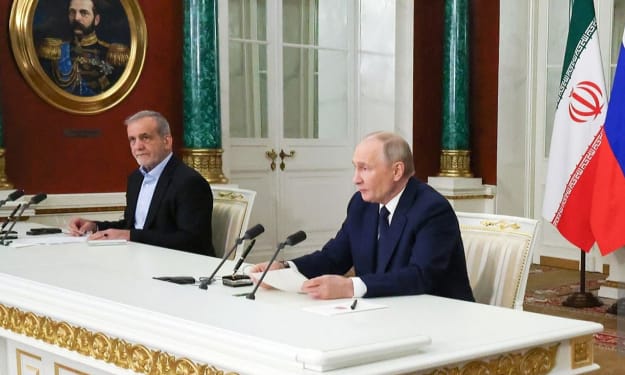
The Iranian President Pezeshkian has been speaking about the three things that the country wants to stop the war. Firstly, Iran's legitimate rights, payment of reparations, and a firm international guarantee that the country won't be attacked in the future. Mr. Pezeshkian said he had been speaking to President Putin and Shabaz Sharif, the Prime Minister of Pakistan. Underlining Iran's commitment to peace. Mr. Pezeshkian personally thanked Russia for standing by his nation in the war. Russia has called for a "de-escalation" of the conflict. Russia has supplied Iran with humanitarian aid as the war has unfolded.
By Nicholas Bishop8 months ago in The Swamp
FBI Alerts California Law Enforcement to Potential Iranian Drone Threat
Federal authorities alerted California law enforcement that Iran may have explored launching drone attacks against the U.S. West Coast from offshore vessels. The warning came through an FBI intelligence bulletin distributed to law enforcement agencies and highlights concerns that escalating tensions in the Middle East could have broader security implications for the United States.
By Jacqueline Bowser8 months ago in The Swamp
Shadow Home Secretary Chris Philp Leads Charge on Starmer's Iran War Stance.
The Iran War has to be one of the most dangerous and unnecessary wars this century so far. Trump has changed the narrative of why he and his partner in crime, Netanyahu, attacked Iran. First, it was to liberate the Iranian people. Then Iran's support for Hezbollah, Hamas, the Houthis, etc. Then it's Iran enriching uranium and its ballistic missile programme. Since the war began, the Ayatollah Khamenei has been assassinated along with top military commanders. His son is now the new Ayatollah. A girl's school has been bombed, with 100 or so schoolgirls sent to Allah. Iran's infrastructure has been hit hard, as has its military and government. If they bombed the Founder of the Islamic Republic's mausoleum, Ayatollah Khomeini, it wouldn't surprise me. It seems the Americans and Israelis are hitting anything and everything across Iran. Similar to the levelling of Gaza by the IDF. Hundreds of Iranians have been killed and injured, civilian and military alike.
By Nicholas Bishop8 months ago in The Swamp
Analysis Of US-ISR- IRAN WAR
The situation is ongoing, and if I were to summarize the details—because data is coming very late—it's totally difficult to confirm the casualties and how much damage has been done so far. Many reporters, particularly those on Al Jazeera, are stating that footage from both Hezbollah and Israel is not being released. Similarly, in the UAE, there is an effort to prevent influencers and various reporters from sharing information. People are afraid because their business capital is at risk. Additionally, two important things that I discussed in my last blog about the "magazine depth problem" are now being acknowledged by Western media. They also agree that this war won't last for many days and will have to rely on limited strikes. Trump, however, has also stated that there is no end game for this operation, Epic Fury.
By Ibrahim Shah 8 months ago in The Swamp
THE FREE PRESS. Content Warning.
The $35 Sentence: How Predatory Hospice Schemes Silence Seniors By Vicki Lawana Trusselli For years, I worked in the film and music industries in LA and Austin—I know a script when I see one. But the script being handed to seniors in Riverside and other cities today is not just fiction; it is federal fraud.
By Vicki Lawana Trusselli 8 months ago in The Swamp