politicians
Reviews of the politicians kissing babies and running governments around the world; applaud and criticize the decisions they make and their implications.
Mamdani Chooses His Words Carefully After Alleged Terror Attack. AI-Generated.
In the tense hours following an alleged terror attack, public figures often find themselves under intense scrutiny. Every word spoken carries weight, and even a small misstatement can fuel controversy or misunderstanding. In the wake of the recent incident, political figure Mamdani has taken a notably cautious approach, choosing his words carefully while addressing the public, the media, and concerned communities. The attack, which authorities are still investigating, has left many people searching for answers. Early reports suggest that the incident may have been motivated by extremist ideology, though officials have urged patience while evidence is gathered. As the situation continues to unfold, leaders across the political spectrum have been responding with messages of sympathy, condemnation of violence, and calls for unity. Mamdani’s response, however, has drawn particular attention because of the careful balance he has attempted to maintain. Rather than immediately adopting strong or emotionally charged rhetoric, he has emphasized the importance of verified information, responsible dialogue, and respect for affected communities. A Deliberate and Measured Response Shortly after news of the alleged terror attack began circulating, Mamdani released a brief statement expressing concern for the victims and their families. The statement avoided speculation about the motive or identity of the perpetrator, focusing instead on solidarity with those impacted by the incident. Observers quickly noted that the language was deliberate and restrained. In a political climate where leaders sometimes rush to judgment, Mamdani’s approach stood out as cautious and controlled. He urged the public to wait for official findings from investigators before drawing conclusions about what happened. This careful messaging reflects a broader strategy often used by public officials during crises. When facts are still emerging, making definitive statements can lead to misinformation or accusations of bias. By emphasizing patience and factual accuracy, Mamdani appears to be attempting to maintain credibility while avoiding unnecessary political escalation. The Challenge of Crisis Communication Responding to an alleged terror attack is never simple. Leaders must balance multiple priorities at once: comforting victims, reassuring the public, supporting law enforcement, and avoiding language that could inflame tensions. For Mamdani, the challenge is even greater because of the highly polarized environment in which political communication now takes place. Social media platforms amplify every statement, and comments can quickly be interpreted in ways that were never intended. In this environment, the choice of words becomes extremely important. Terms like “terrorism,” “extremism,” and “security threat” carry significant political and emotional weight. Using them too early in an investigation can lead to backlash if the facts later prove different. Mamdani’s decision to avoid definitive labels in his initial remarks appears to be an effort to navigate this complex landscape. By focusing on empathy and the rule of law, he has attempted to shift attention away from speculation and toward the investigative process. Public Reaction and Debate Despite the measured tone, Mamdani’s response has not been without criticism. Some commentators argue that leaders should respond to alleged acts of terrorism with immediate and unequivocal condemnation. From their perspective, cautious language may appear hesitant or overly diplomatic during a moment that demands moral clarity. Others, however, see Mamdani’s approach as responsible and thoughtful. They argue that rushing to conclusions can deepen divisions and spread misinformation, especially when the details of an incident remain unclear. This divide reflects a broader debate about how leaders should communicate during crises. Some prefer strong, emotionally resonant statements that signal determination and resolve. Others believe that restraint and accuracy are more important, particularly when investigations are ongoing. In Mamdani’s case, the decision to speak carefully may be influenced by previous experiences in which premature statements led to political controversies. Learning from those moments, he appears to be prioritizing caution and clarity over speed. Waiting for the Facts Authorities investigating the alleged terror attack have repeatedly emphasized that many details remain uncertain. Law enforcement agencies are gathering evidence, interviewing witnesses, and analyzing digital information that could reveal the motivations behind the incident. Until those findings are released, public officials face a delicate task: acknowledging the seriousness of the situation without spreading unverified claims. Mamdani’s response reflects that tension. His statements have consistently included reminders that the investigation must run its course before firm conclusions can be drawn. This emphasis on due process is an important element of democratic governance. In moments of crisis, emotions can run high, and public pressure for quick answers can be intense. Yet careful investigations are necessary to ensure that justice is based on facts rather than assumptions. The Broader Impact of Political Language The way leaders speak after violent incidents can shape public perception for months or even years. Language influences how communities interpret events, how media coverage develops, and how political debates unfold. Because of this, many public figures now approach crisis communication with increasing caution. They consult advisors, review statements carefully, and attempt to anticipate how their words might be interpreted by different audiences. Mamdani’s careful choice of words illustrates this modern reality of political leadership. Rather than delivering dramatic statements, he has opted for a quieter message centered on empathy, patience, and respect for the investigative process. Moving Forward As investigators continue their work, the focus will gradually shift from speculation to confirmed information. When official findings are released, political leaders—including Mamdani—will likely expand on their responses and address the broader implications of the incident. For now, however, the priority remains supporting those affected and ensuring that the investigation proceeds without interference. Mamdani’s cautious approach reflects a belief that responsible leadership sometimes means speaking less, not more. In a time when public discourse often moves faster than the facts, his carefully chosen words highlight the importance of measured communication during moments of uncertainty and crisis.
By Jameel Jamali8 months ago in The Swamp
Reducing Europe’s Nuclear Energy Sector Was a “Strategic Mistake,” EU Chief Says. AI-Generated.
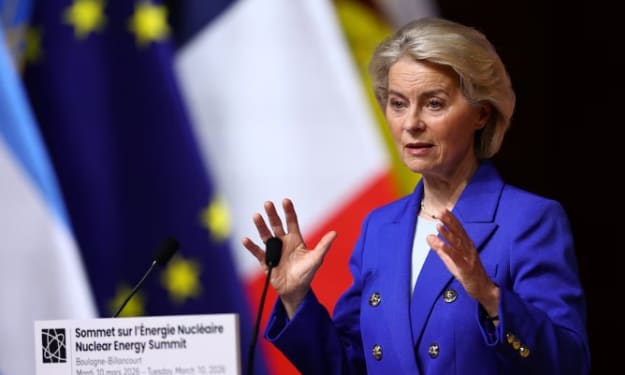
Europe’s energy policy has long been shaped by debates over sustainability, safety, and energy independence. In recent years, those debates have intensified as global energy demands rise and geopolitical tensions disrupt traditional energy supplies. Now, a major voice within the European leadership has publicly acknowledged what many analysts have argued for years: reducing the continent’s nuclear energy sector may have been a strategic mistake. According to comments from the head of the European Commission, Europe’s decision to scale back nuclear power over the past decade left the region more vulnerable to energy shortages and rising costs. The remarks have reignited discussion across Europe about the future of nuclear power and its role in achieving energy security and climate goals. A Turning Point in Europe’s Energy Debate For decades, nuclear energy has been a contentious topic across European nations. Supporters view it as a reliable, low-carbon source of electricity capable of meeting large-scale energy demands. Critics, however, point to concerns about radioactive waste, plant safety, and the long-term environmental consequences of nuclear accidents. Following the Fukushima nuclear disaster in 2011, several European countries began reducing or phasing out their nuclear power programs. Governments shifted their focus toward renewable energy sources such as wind and solar power, believing these technologies would provide a safer and more sustainable future. While the expansion of renewables brought significant environmental benefits, it also exposed weaknesses in Europe’s energy infrastructure. Renewable sources can be intermittent, meaning they do not always produce electricity when demand is highest. Without sufficient backup systems, countries sometimes struggled to maintain stable energy supplies. The Consequences of Nuclear Phase-Out In recent years, Europe has faced rising energy prices and supply disruptions that have highlighted the importance of stable energy production. Some experts argue that maintaining a stronger nuclear energy sector could have helped cushion the region from these shocks. Nuclear power plants provide continuous electricity generation, unlike solar panels or wind turbines that depend on weather conditions. This stability is one of the main reasons energy experts consider nuclear power a valuable component of a balanced energy strategy. The issue became particularly significant after the 2022 Russian invasion of Ukraine triggered a major energy crisis across Europe. Many European countries relied heavily on imported fossil fuels, especially natural gas. When supply chains were disrupted and prices soared, governments were forced to reconsider their long-term energy strategies. For some policymakers, the crisis revealed the risks of reducing nuclear capacity without having fully reliable alternatives in place. The EU’s Changing Perspective The leadership of the European Union is now encouraging member states to adopt a more pragmatic approach to energy planning. Rather than viewing nuclear energy and renewable energy as competing solutions, officials are increasingly discussing how the two can work together. Nuclear power produces extremely low greenhouse gas emissions compared to fossil fuels, making it a potential ally in Europe’s climate goals. As the continent continues its transition toward carbon neutrality, some policymakers believe nuclear power could help bridge the gap between current energy demands and future renewable capacity. At the same time, Europe continues investing heavily in renewable infrastructure. Massive wind farms, solar projects, and energy storage systems are expanding across the continent. The goal is to build an energy network that is both sustainable and resilient. Countries Taking Different Paths Europe’s nuclear policy is far from uniform. Some countries remain firmly committed to nuclear power, while others continue to phase it out. France, for example, has long relied on nuclear power for the majority of its electricity production. The country operates one of the largest nuclear energy fleets in the world and plans to expand it further with next-generation reactors. Meanwhile, Germany made the controversial decision to shut down its remaining nuclear plants as part of its long-term energy transition strategy. That move sparked debate among economists and energy experts who warned that the country might become more dependent on fossil fuels or imported energy. Other nations, including Finland and Poland, are exploring new nuclear projects as part of their future energy plans. These investments reflect a growing recognition that nuclear power may still play an important role in Europe’s energy mix. Balancing Safety and Sustainability Despite the renewed interest in nuclear power, safety concerns remain central to the debate. Historical events such as the Chernobyl disaster continue to shape public perceptions of nuclear energy across Europe. However, nuclear technology has evolved significantly since those earlier incidents. Modern reactors are designed with advanced safety features, and new research is focused on developing smaller, more efficient reactors that can be deployed with lower costs and reduced risks. These innovations are gradually reshaping the conversation about nuclear energy. Instead of being viewed solely as a legacy technology, nuclear power is increasingly seen as part of a diversified energy future. The Role of Nuclear in Climate Goals Europe has set ambitious climate targets, including plans to achieve net-zero carbon emissions by mid-century. Reaching those goals will require massive changes in how energy is produced and consumed. Renewable energy sources will undoubtedly remain the cornerstone of Europe’s climate strategy. However, many analysts argue that nuclear power could help accelerate the transition by providing consistent electricity without producing carbon emissions. By combining nuclear energy with renewable sources, countries may be able to maintain stable power grids while reducing reliance on fossil fuels. A Lesson for Future Energy Policy The recent acknowledgment that reducing nuclear energy may have been a strategic mistake reflects a broader lesson for policymakers: energy transitions must be carefully balanced. Shifting too quickly away from existing energy sources without fully developed alternatives can create economic and security challenges. At the same time, failing to invest in cleaner technologies can slow progress toward environmental goals. Europe now faces the complex task of balancing these priorities while ensuring that energy remains affordable, reliable, and sustainable. Looking Ahead The debate over nuclear energy in Europe is far from over. While some countries continue to prioritize renewable expansion, others are reconsidering nuclear power as a critical component of their energy future. What is clear, however, is that Europe’s energy strategy is entering a new phase—one shaped by lessons from past decisions and the urgent need for energy resilience. As policymakers revisit earlier choices and adapt to changing global conditions, nuclear power may once again become a central pillar in the continent’s energy landscape.
By Jameel Jamali8 months ago in The Swamp
Shots Fired at U.S. Consulate in Toronto, Police Say. AI-Generated.
Early Tuesday morning, authorities in Canada launched an investigation after gunfire was reported at the United States Consulate in downtown Toronto. The incident, which occurred before sunrise, has drawn international attention and prompted heightened security around diplomatic buildings across the country. Fortunately, no injuries were reported, but officials say the event is being treated as a serious national security matter. What Happened in Toronto According to Toronto police, officers responded to reports of shots fired near the U.S. Consulate located in the city’s downtown core around 5:30 a.m. local time. When authorities arrived at the scene, they discovered physical evidence confirming that gunfire had struck the building, including damage to the exterior glass and doors as well as shell casings nearby. Investigators say two suspects were involved in the incident. Reports indicate that the individuals arrived in a white sport utility vehicle, briefly stopped outside the consulate, fired multiple shots at the building, and then fled the area. Police later released information about the suspect vehicle as part of the ongoing search for those responsible. Despite the alarming nature of the attack, officials confirmed that the heavily reinforced consulate building prevented any bullets from penetrating the interior. No staff members or civilians were injured during the incident. Treated as a National Security Incident Canadian authorities have classified the shooting as a potential national security incident due to the diplomatic nature of the target. The Royal Canadian Mounted Police (RCMP) are now working alongside Toronto police and other security agencies to determine whether the act was politically motivated or connected to broader threats. Speaking to reporters, law enforcement officials emphasized that investigators are still gathering evidence and reviewing surveillance footage from the surrounding area. They noted that determining whether the attack qualifies as terrorism will depend on the findings of the investigation. Because the building houses diplomatic personnel and represents the United States government abroad, any attack directed toward it raises concerns about international security and diplomatic relations. Increased Security Measures In response to the shooting, Canadian officials have taken steps to strengthen security at diplomatic sites across the country. Police presence has been increased around U.S. and Israeli diplomatic buildings, including consulates and embassies in major cities such as Ottawa and Toronto. Public Safety Minister Gary Anandasangaree condemned the attack and emphasized that violence against diplomatic institutions is unacceptable. Government leaders reiterated Canada’s commitment to protecting foreign missions and ensuring the safety of diplomatic staff working within the country. The U.S. State Department also acknowledged the incident, stating that it is closely monitoring the situation and coordinating with Canadian law enforcement as the investigation continues. Possible Context Behind the Incident Although authorities have not yet confirmed a motive, the shooting comes during a period of heightened global tension and security concerns. Some officials and analysts have pointed to recent incidents targeting religious institutions and diplomatic sites in Toronto as potential context for the attack. In the previous week, several synagogues in the Toronto area were reportedly targeted by gunfire, incidents that Canadian leaders strongly condemned as antisemitic acts. Investigators are examining whether those events are connected to the shooting at the consulate, although no direct link has been established so far. At the same time, international conflicts and geopolitical tensions have increased security risks for diplomatic missions worldwide. Embassies and consulates often serve as symbolic representations of a nation’s presence abroad, which can make them targets for political demonstrations or acts of intimidation. Community Reaction Local leaders and residents in Toronto expressed concern after learning about the shooting. Mayor Olivia Chow emphasized that acts of violence aimed at diplomatic institutions or communities create fear and instability. She called for unity and cooperation as authorities work to identify those responsible. Community organizations also urged residents to remain calm and allow law enforcement officials to conduct a thorough investigation. Many pointed out that Toronto has long been known as a multicultural and peaceful city, making incidents like this particularly troubling. Fortunately, the lack of injuries helped ease some immediate fears, but the attack still serves as a reminder of the security challenges that cities face in an increasingly interconnected world. The Role of Diplomatic Missions Consulates and embassies play a vital role in maintaining relationships between countries. They assist citizens traveling or living abroad, issue visas, support trade and cultural exchanges, and provide diplomatic communication between governments. Because of their importance, diplomatic buildings are usually heavily protected. The security measures in place at the U.S. Consulate in Toronto likely prevented a potentially more dangerous situation. Incidents targeting diplomatic facilities are taken very seriously by governments because they can affect international relations and global stability. Ongoing Investigation As of now, police continue to search for the suspects involved in the shooting. Investigators are reviewing surveillance footage, collecting forensic evidence from the scene, and asking the public for information that could help identify the perpetrators. Authorities have urged anyone who witnessed suspicious activity in the area during the early morning hours to contact Toronto police. While the investigation remains in its early stages, officials have promised transparency as more details become available. The primary goal is to determine the motive behind the attack and ensure that those responsible are brought to justice. Looking Ahead Although no one was hurt in the Toronto consulate shooting, the event highlights the importance of vigilance and cooperation between law enforcement agencies. Diplomatic buildings represent international partnerships, and protecting them is essential for maintaining global cooperation. As investigators continue their work, the incident serves as a reminder that security threats can emerge unexpectedly—even in cities known for their safety and stability. For now, both Canadian and American officials remain focused on ensuring the protection of diplomatic missions and preventing similar incidents in the future.
By Jameel Jamali8 months ago in The Swamp
Let's Play A Game
Playing Politics The other day, while bored, I started playing around with ChatGPT. It’s fun, and there are things that people can use it to have a little fun with, and to help with projects. I wanted to see what I’d look like sitting at the resolute desk in the Oval Office.
By Jason Morton8 months ago in The Swamp
Former President Obama will welcome former President Bush, not Trump to Obama Presidential Center ceremonies, per report
The shade is real. In what looks like a master troll operation, former president Barack Obama has shunned President Trump from taking part in the unveiling of the Obama Presidential Center in Washington, DC.
By Skyler Saunders9 months ago in The Swamp
Judge Rules Kari Lake Unlawfully Ran U.S. Media Agency, Voiding Layoffs. AI-Generated.
A federal judge has ruled that former Arizona political candidate Kari Lake unlawfully exercised authority over a U.S. government-funded media agency, a decision that has nullified a series of layoffs and triggered renewed debate about leadership and governance in publicly funded international broadcasting. The ruling centers on Lake’s role at the U.S. Agency for Global Media (USAGM), the federal body that oversees several international broadcasting networks, including Voice of America. The agency is responsible for delivering news and information to audiences worldwide, particularly in regions where press freedom is restricted. In the court’s decision, the judge concluded that Lake did not have the legal authority to direct certain actions within the agency, including approving or enforcing layoffs that affected numerous employees. As a result, those layoffs were declared invalid, opening the door for affected workers to seek reinstatement or other remedies. The case has drawn national attention, not only because of the legal implications but also because of the political profile of the individuals involved. Lake, a former television news anchor who rose to prominence in Republican politics, has remained a controversial figure since her campaigns for public office. According to court filings, the dispute began when staff members and agency employees challenged decisions made during Lake’s tenure in a leadership role associated with the media organization. Critics argued that the authority she exercised went beyond the limits allowed under federal law and the agency’s governing structure. The judge’s ruling emphasized the importance of proper appointment procedures and clear legal authority in federal agencies. Public institutions, the decision stated, must follow established laws governing who can direct personnel decisions, particularly when those decisions affect employment and organizational structure. By invalidating the layoffs, the court effectively reversed actions that had already disrupted the careers of many employees. Several journalists, editors, and support staff had lost their positions as part of the restructuring plan. Employee representatives welcomed the ruling, describing it as a victory for both workers and the independence of international journalism. Many staff members argued that the layoffs threatened the mission of U.S.-funded international broadcasting, which aims to provide credible news coverage in countries where independent media outlets face censorship or repression. Supporters of the agency’s workforce stressed that institutions like Voice of America play a critical role in promoting democratic values and transparency. By broadcasting in dozens of languages and reaching audiences across multiple continents, these networks serve as an important source of information in regions with limited press freedom. However, Lake’s supporters have pushed back against the criticism, arguing that the leadership changes and restructuring efforts were intended to improve efficiency within the agency. They claim that reforming government-funded organizations is often necessary to ensure accountability and responsible use of taxpayer resources. The legal ruling does not necessarily end the dispute. Appeals or additional legal proceedings could follow as both sides assess the implications of the court’s decision. Nevertheless, the judgment has already had immediate consequences for the agency’s internal operations. Legal experts say the case underscores a broader issue about governance within federal agencies. The U.S. government operates through a complex framework of appointments, confirmations, and delegated authorities designed to ensure accountability and prevent overreach. When those rules are challenged or interpreted differently by various actors, disputes can quickly move into the courts. In this instance, the judiciary ultimately determined that the authority used to carry out the layoffs was not properly established. The controversy also arrives during a time of heightened scrutiny surrounding media organizations and government involvement in broadcasting. International state-funded media outlets often operate under unique mandates that combine journalistic independence with public funding. Maintaining that balance can be challenging. On one hand, these organizations must remain free from political interference to maintain credibility with global audiences. On the other hand, they are funded and overseen by government institutions that require accountability and oversight. For employees affected by the layoffs, the ruling represents a potential turning point. Some may be eligible to return to their previous roles, while others could receive compensation or other remedies depending on future legal developments. For the agency itself, the decision may prompt internal reviews of leadership structures and decision-making processes. Ensuring that all personnel actions comply with federal law will likely become a priority moving forward. Political reactions to the ruling have been sharply divided. Critics of Lake view the decision as confirmation that the agency’s governance rules were not properly followed. Supporters, meanwhile, argue that the legal dispute reflects broader disagreements about how government media organizations should operate. Regardless of political perspective, the case highlights the complexities involved in managing institutions that sit at the intersection of journalism, government oversight, and international diplomacy. As the situation develops, attention will likely remain focused on how the agency addresses the aftermath of the ruling and how it protects both its workforce and its mission. The outcome also serves as a reminder that even within government-funded organizations dedicated to free expression, adherence to legal procedures remains essential. Without clear authority and transparent decision-making, the stability and credibility of such institutions can quickly come into question.
By Jameel Jamali9 months ago in The Swamp
Trump Assembles a New Coalition to ‘Eradicate’ Cartels. AI-Generated.
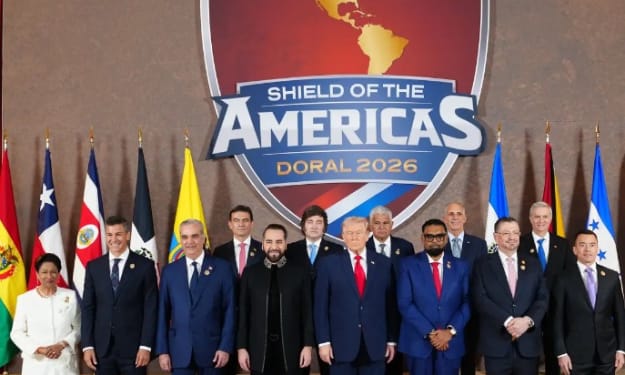
In the evolving landscape of American politics and national security, former U.S. President Donald Trump has once again ignited debate with a bold proposal: forming a new coalition aimed at “eradicating” powerful drug cartels operating across the Americas. The initiative, framed as a comprehensive strategy to combat organized crime and drug trafficking, has stirred support among allies and raised significant questions among critics about its feasibility, legality, and long-term implications. Drug cartels have long posed a complex challenge for the United States and its neighbors. Organizations such as the Sinaloa Cartel and the Jalisco New Generation Cartel have developed sophisticated networks that extend far beyond national borders. These groups control lucrative drug routes, traffic weapons, launder money through international financial systems, and exert influence in multiple countries. Trump’s proposed coalition reportedly focuses on building stronger security partnerships between the United States and several Latin American nations. According to statements from his political allies, the plan would emphasize intelligence sharing, coordinated law enforcement operations, and expanded resources to dismantle cartel leadership structures. The ultimate goal, Trump says, is not merely to disrupt these criminal networks but to eliminate their ability to operate altogether. Supporters of the initiative argue that cartels have grown too powerful for any single nation to confront alone. Cross-border crime, they say, requires cross-border solutions. A multinational coalition could combine intelligence, law enforcement capabilities, and financial tracking systems to attack cartel operations from multiple angles simultaneously. The former president’s rhetoric has also focused heavily on the human cost of cartel activity. Drug trafficking, particularly the spread of synthetic opioids such as fentanyl, has contributed to a severe public health crisis in the United States. Thousands of overdose deaths occur every year, and policymakers across the political spectrum have struggled to find effective strategies to curb the flow of dangerous substances. Trump’s proposal suggests that stronger action against cartel infrastructure—including laboratories, smuggling routes, and financial networks—could significantly reduce the supply of drugs entering the United States. Supporters believe that weakening these organizations at their source could have ripple effects throughout the global narcotics trade. However, critics argue that the concept of “eradicating” cartels may oversimplify a deeply entrenched problem. Organized crime groups have historically adapted quickly when pressured by law enforcement or military operations. When one cartel weakens, others often emerge to fill the void, sometimes creating even more fragmentation and violence. Some analysts also warn that aggressive cross-border operations could strain diplomatic relations with countries such as Mexico, where sovereignty and national security concerns remain highly sensitive. Past cooperation between U.S. and Mexican authorities has relied heavily on joint law enforcement efforts rather than direct foreign military intervention. During his presidency, Trump repeatedly emphasized tough border policies and strong measures against drug trafficking organizations. His administration pushed for stricter border enforcement and expanded pressure on criminal networks involved in drug production and distribution. The new coalition proposal appears to build upon those earlier priorities while framing the issue as a multinational security challenge. Political observers note that the plan also fits into a broader narrative about law and order that has remained central to Trump’s political messaging. By portraying cartels as a direct threat to American communities, the proposal seeks to mobilize public concern about crime, drugs, and border security. At the same time, experts in international relations caution that successful cooperation against transnational crime requires careful diplomacy. Countries affected by cartel violence often face their own internal challenges, including corruption, weak institutions, and economic instability. Addressing these underlying issues may be just as important as targeting cartel leaders. Human rights organizations have also expressed concern that large-scale security operations could risk civilian harm if not conducted carefully. Past anti-cartel campaigns in parts of Latin America have sometimes led to unintended consequences, including displacement of communities and increased violence between rival groups. Nevertheless, the urgency of the drug crisis continues to drive calls for stronger action. In many parts of the United States, local governments and law enforcement agencies report that fentanyl trafficking has transformed the landscape of narcotics enforcement. Synthetic drugs can be produced cheaply, transported easily, and distributed through complex networks that span continents. For Trump and his supporters, these developments reinforce the argument that traditional approaches have failed to keep pace with evolving criminal organizations. A coordinated coalition, they argue, could apply sustained pressure across borders and disrupt cartel operations more effectively than isolated national strategies. Whether the proposed coalition will gain widespread support remains uncertain. International partnerships require agreement among governments with different priorities, legal systems, and political pressures. Even within the United States, policymakers continue to debate the most effective ways to address drug trafficking and organized crime. Still, the announcement has already sparked renewed discussion about the scale of the cartel challenge and the need for innovative solutions. The intersection of crime, public health, and international security makes the issue one of the most complex facing policymakers today. As debates continue, the concept of a multinational coalition against drug cartels highlights a broader reality: transnational crime cannot be easily contained by borders alone. Whether through diplomacy, law enforcement cooperation, or new policy approaches, the search for effective strategies remains ongoing. For now, Trump’s proposal has placed the fight against cartels back at the center of political conversation, raising both hopes for stronger action and concerns about the risks of escalating conflict in an already volatile struggle against organized crime.
By Jameel Jamali9 months ago in The Swamp
The First Casualty Of War Is The Truth
It is often said that in times of war, the first casualty is the truth. When Donald Trump launched Operation Epic Fury, he said that the goal was to stop Iran from developing nuclear weapons. At the same time, when the head of the International Atomic Energy Agency (IAEA), Rafael Grossi, was asked about it, he said that they do not even have access to the sites. Therefore, they have no clear idea about what is happening there, and he appeared somewhat confused.
By Ibrahim Shah 9 months ago in The Swamp
U.S. strategic competition with China.
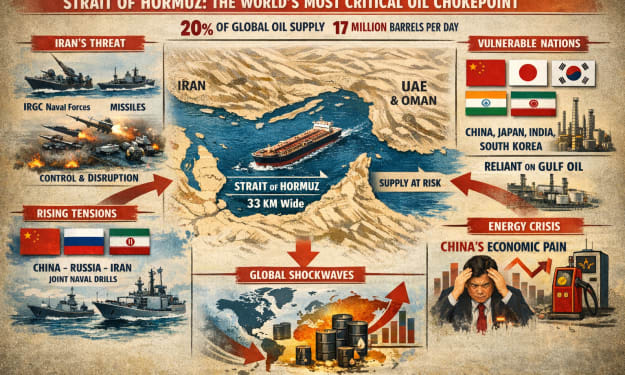
This war Stop being a medley story the moment the first oil tanker changed course in the Persian Gulf. What I mean is, Strait of Hormuz is the most important energy bottleneck on earth. Everybody knows it is the most important energy bottleneck on earth. And if it was the threat from Iran last time, this time Iran has partially done it. It is so narrow, IRGC has a lot of control over it. Just like in the Strait of Malacca, army/navy has control over it. Similarly, here the Iranians have control over it. And recently, China, Russia, and Iran have already conducted war games. So it is this narrow, 33 kilometers wide, you are hearing about it everywhere, everybody is talking about it. It is the width of a large city. So in this narrow passage, which holds 20% of the world's oil, one fifth of the world's oil and gas goes through, it is around 17 million barrels per day. There is no realistic alternative route except the Strait of Hormuz. If we close this passage, its consequences will not stop at any one border. Europe will pay, Japan will pay, India, South Korea, China, everybody pays the price. So a theory is floating around, which backs my argument that China is the target. It is that in Washington circles, there is a discussion going on, let's be honest, if this happens, what do we have to do? The hawkish people there say that this disruption should be allowed because it does not impact them as much as it impacts those countries, which I have just mentioned. So let's take this opportunity that the slowdown of China's energy supply can be slowed down. Trap Beijing in such an expensive moment as long as this congestion remains in the Strait of Hormuz, it remains closed, partially or completely. Iran keeps Beijing hit very badly from an energy security point of view. So the containment policy of China that is already going on is an added bonus. So imagine, on one hand, you are doing everything with technology and trade, imposing tariffs, treating them in the South China Sea, imagine all this. And from the other side, almost 90% of the oil and gas supplies go to China. If it is blocked for a few days, how badly it will hit China. So imagine, while the world is suffering, they are only having strategic designs in their minds.
By Ibrahim Shah 9 months ago in The Swamp
Russia Is Providing Iran Intelligence to Target U.S. Forces, Officials Say. AI-Generated.
Growing military cooperation between Moscow and Tehran raises fears of a wider global confrontation The geopolitical tensions surrounding the Middle East conflict have intensified after reports emerged that Russia may be providing Iran with intelligence that could help target American military forces. According to several U.S. officials familiar with classified assessments, Moscow has allegedly shared sensitive information about the locations of American military assets across the region, including warships, aircraft, and bases. � Reuters +1 If confirmed, the revelation represents a significant escalation in the evolving relationship between Russia and Iran. It also raises concerns that the conflict could expand beyond the Middle East and become entangled in the broader power struggle between major global powers. What the Intelligence Reports Claim According to officials who spoke to journalists on condition of anonymity, Russia has provided Iran with information that could help identify U.S. military positions in the Middle East. This reportedly includes data about American warships and aircraft operating in strategic locations. � Reuters Such intelligence could dramatically improve Iran’s ability to launch targeted missile or drone attacks against American forces. Analysts note that real-time or near-real-time intelligence can significantly increase the accuracy of military operations. Reports suggest that the intelligence sharing began after the latest round of hostilities between the United States and Iran intensified. In recent weeks, U.S. and allied forces have conducted large-scale strikes against Iranian military infrastructure, prompting retaliatory missile and drone attacks from Tehran. � The Economic Times While officials say the full extent of Russia’s involvement remains unclear, the intelligence exchange is seen as a sign of growing strategic alignment between the two countries. Why Russia Might Be Helping Iran Russia and Iran have developed closer military and political ties in recent years. Their partnership expanded significantly during the war in Ukraine, where Iran supplied drones and other military equipment to support Russian forces. In return, analysts believe Russia may now be offering intelligence or technical support to Tehran. Some experts view the alleged cooperation as a form of geopolitical retaliation. The United States and its allies have provided Ukraine with intelligence, weapons, and financial support to counter Russia’s invasion. From Moscow’s perspective, helping Iran challenge U.S. military operations could serve several strategic goals: Distracting Washington with another major conflict Weakening American influence in the Middle East Strengthening Russia’s alliance with Iran Additionally, Russia has long maintained diplomatic and economic ties with Iran despite Western sanctions. The two countries also signed agreements in recent years aimed at expanding defense and economic cooperation. The Potential Impact on the Conflict If Russia is indeed providing targeting intelligence, the implications could be serious. Intelligence sharing can make military strikes more precise and potentially more deadly. According to reports, the data allegedly includes coordinates or positional information about American military assets. � Wall Street Journal For U.S. forces operating in the region, this could increase the risk of attacks on ships, aircraft, and military bases. American troops are stationed in multiple Middle Eastern countries, including Iraq, Syria, and several Gulf states. Military analysts warn that such intelligence support could prolong the conflict and make it more unpredictable. It could also complicate U.S. military planning, as commanders may need to assume that Iran has access to outside intelligence sources. U.S. Response to the Allegations American officials have acknowledged the reports but emphasized that the U.S. military is aware of the situation and adjusting its strategies accordingly. Defense leaders say they are closely monitoring communications and movements involving Russia and Iran. According to U.S. officials, military planners are factoring the possibility of foreign intelligence assistance into operational decisions. At the same time, the White House has attempted to reassure the public that American forces remain capable of defending themselves and maintaining strategic dominance in the region. Still, lawmakers and analysts in Washington have raised concerns that the situation could represent a dangerous expansion of the conflict. Russia’s Position Russia has not publicly confirmed that it is sharing intelligence with Iran. Kremlin officials have largely avoided direct responses to the allegations, though they have acknowledged maintaining dialogue with Iranian leadership. Moscow has also criticized the U.S. military campaign against Iran, describing it as an act that could destabilize the region. Russian leaders have repeatedly argued that Western military interventions in the Middle East often worsen conflicts rather than resolve them. Because intelligence operations are typically classified, it may be difficult to independently verify the extent of Russia’s involvement. A Wider Geopolitical Struggle The reported intelligence sharing highlights a broader trend in global politics: the emergence of increasingly interconnected conflicts. What begins as a regional war can quickly draw in outside powers pursuing their own strategic interests. For years, Russia and the United States have competed for influence across multiple regions, from Eastern Europe to the Middle East. If Moscow is actively assisting Iran against U.S. forces, it would mark one of the most direct confrontations between the two powers in recent decades. Experts warn that the situation could escalate further if additional countries become involved. The Middle East already hosts a complex network of alliances and rivalries, making it particularly vulnerable to wider geopolitical tensions. What Happens Next? For now, many questions remain unanswered. The precise scale of Russia’s intelligence support, the methods used to share information, and the impact on Iranian military operations are still unclear. However, the reports alone have already intensified concerns about the trajectory of the conflict. If major powers continue to intervene—directly or indirectly—the risk of a broader international crisis could grow. As the situation evolves, the world will be watching closely. The decisions made in Washington, Moscow, and Tehran in the coming weeks may determine whether the conflict remains regional—or becomes something far larger.
By Jameel Jamali9 months ago in The Swamp