legislation
The bills that Congress reject are as informative as the ones it does. Reviews of all the legislation that meet their fate in government halls.
Oil price jumps after US strikes Iran
"A Deep Dive into Global Energy Markets": "Oil Price Jumps After US Strikes Iran" In a move that has sent shockwaves through global markets, the price of crude oil spiked following a series of military strikes carried out by the United States against Iranian targets. The escalation of tensions between two of the world's most influential oil-producing nations has led to uncertainty in the energy sector, with far-reaching implications for both oil prices and the broader geopolitical landscape.
By GLOBAL NEWSabout a year ago in The Swamp
The United States' Democratic Backslide
On January 21st, 2025, Donald Trump began his second term as president. It was a day of mixed emotions throughout the nation. Some were elated, believing that problems would finally be fixed. For others, it was somber, their biggest fears a reality.
By caitodoesstuffabout a year ago in The Swamp
Bitcoin vs Open Interest Should traders be worried by THIS divergence
The price action of Bitcoin has recently been scrutinized, but savvy traders are also paying attention to something even more telling: a significant divergence between open interest in Bitcoin and its price. The derivatives market may be sending a cautious signal while the spot market maintains its optimism. Analysts are concerned about this divergence, which raises the question of whether traders should be concerned. Understanding what open interest actually entails is essential before delving into its ramifications. The total number of unresolved derivative contracts in the futures and options markets is referred to as open interest. It shows how much activity and participation there is in the market. An increase in open interest typically suggests that new money is flowing into the market, which can reinforce a trend. A decline could indicate that traders are closing positions, which could indicate indecisiveness or exhaustion of the trend. The price of Bitcoin has been either steady or showing signs of rising, hovering in bullish territory above key support levels in recent weeks. However, open interest in Bitcoin futures has not followed suit. In fact, in several instances, open interest has dropped or stagnated while prices climbed—a classic divergence.
By GLOBAL NEWSabout a year ago in The Swamp
Altcoin season could be near: Why June can see a 2021-style rally
**Altcoin Season Could Be Near: Why June Can See a 2021-Style Rally** Numerous analysts and investors are beginning to speculate that an altcoin season may be just around the corner as the cryptocurrency market continues to show signs of recovery. The month of June, historically a favorable period for crypto rallies, is shaping up to potentially mirror the explosive growth seen in 2021. The stage may be set for altcoins to take the lead as Bitcoin's strength and dominance plateau. ### What Is the Season for Altcoins? Altcoin season, or "alt season," refers to a period when alternative cryptocurrencies—those other than Bitcoin—outperform the leading digital asset. During this phase, investors rotate capital from Bitcoin into smaller market cap assets in pursuit of higher gains. This is a time when tokens like Ethereum, Solana, Cardano, and a number of smaller-cap projects saw huge returns in a short amount of time. Typically, altcoin seasons follow a strong Bitcoin rally as market participants look for the “next big thing.”
By GLOBAL NEWSabout a year ago in The Swamp
Broooos Please Nooooo 🫂 We Meme You Both So Much!!!
Hello again! 👋😁⚡ It's me! I'm __Lightning Bolt⚡. I'm a lost satirist who has wandered far from usual home. I generally publish collections of crackpot memes over in the Humor Community. But all that real action right now belongs in the Swamp.
By Lightning Bolt ⚡about a year ago in The Swamp
Burning Tomorrow to Fund Today
The larger debate over the House-passed HB1 budget has moved to the Senate where another opposing front is complicating the already contentious discussion. While Democratic opposition has remained steady, new resistance is emerging from Republicans over proposed cuts impacting programs designed to assist lower income and seniors that will have a dramatic impact on the constituents of some red state legislators.
By Lanny Newvilleabout a year ago in The Swamp
How can anyone govern when opinion is so diverse
How can anyone govern when opinion is so diverse Are humans suitable for government. Population levels in nearly every nation are at their highest ever level. The colossal numbers involved and the diversity of opinion because we now have universal education and media saturation, has made the doctrine that numbers of apparent supporters is a valid reason for control, into a distortion of democracy.
By Peter Roseabout a year ago in The Swamp
The Great Depression:
Introduction The Great Depression was a significant and harrowing chapter in American history, reshaping the economy, society, and government. It serves as a stark reminder of how interconnected our financial systems are and how the decisions we make today can echo through time. Alarmingly, many of the factors that contributed to the Great Depression are resurfacing in our current climate. This essay will highlight the causes of the Great Depression and draw parallels to contemporary issues, including government deregulation, corruption, the glorification of wealth, and the rise of exclusionary purity movements. With only 4 years away from the 100th anniversary of the beginning of the Great Depression, it behoves us to take a serious sociopolitical look at the parallels of today that have us headed unavoidably to our next one.
By Meko James about a year ago in The Swamp
Fines Without Fault: How Albanian Citizens Are Being Penalized by a Silent System
Fined Without Reason — And No One Tells You Imagine waking up one day to find out you've been fined for speeding on a road you've never driven. Or for illegal parking in a city you've never visited. Now imagine that no one ever told you about it—until it’s too late to challenge it.
By E verteta.alabout a year ago in The Swamp
Autopen Gate: The Constitutional Crisis On The Horizon
Politics is a tricky beast, and whether you love or hate the guy in office, they have rules they’re supposed to follow. One of those rules is that they must abide by their duties. One is that they have a constitutional duty to sign bills into law.
By Jason Mortonabout a year ago in The Swamp
Project 2025 Isn’t the Threat—The Unconstitutional Status Quo Is
If bringing power back under the Constitution feels dangerous, maybe the real danger is what we've accepted as "normal." The outrage over Project 2025 says a lot—not about the project, but about how far we've let our government drift from the Constitution. Because if returning power to elected officials and dismantling unelected bureaucracies feels "authoritarian," maybe the system we've accepted isn't as democratic as we think.
By Robert Lacyabout a year ago in The Swamp
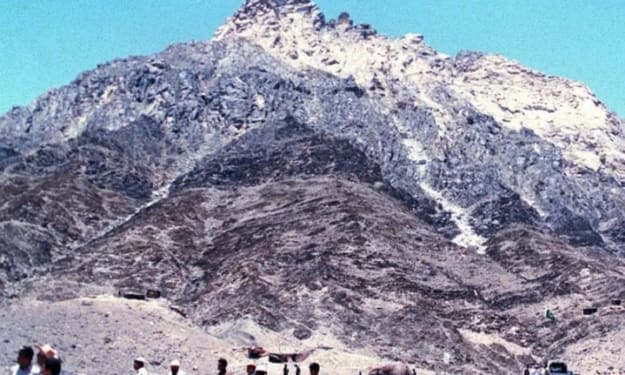
Why Chagai Was Chosen: The Hidden Story Behind Pakistan’s Nuclear Tests
From the Hijacking of the PIA Plane to the Chants of ‘Allahu Akbar’ in Chaghi: When the Black Granite of the Chaghi Mountain Turned White "To India!" the hijacker screamed, pressing a pistol to the pilot’s temple. Pakistan International Airlines (PIA) Flight 544 had taken off from the city of Turbat in Balochistan just ten minutes earlier when this threatening voice reached the pilot’s ears. The Fokker aircraft had departed from Turbat and was en route to Karachi, a city in the Sindh province. According to the pilot, Uzair Khan, the moment the hijacker was distracted by a noise from the rear of the aircraft, he pressed a button that sent a signal to radar indicating that the passenger plane had been hijacked. Later, in the documentary "Flight 544," Uzair Khan explained, “The hijacker had brought maps and such. He told me to keep flying straight. Flying straight would have eventually brought us to the Indian border.” “I told him that the aircraft didn’t have enough fuel. He accepted my request and said we should refuel at Bhuj Airport in Indian Gujarat and then fly to New Delhi.” He adds that after receiving these instructions, “As I neared the border, I used aviation code and said ‘Kilo Delta,’ a term used for the Pakistani city of Hyderabad. Then, while letting the hijacker hear, I asked airport control if this was Bhuj Airport in India. Air traffic control already knew the Pakistani aircraft had been hijacked, so they responded, ‘Yes, this is Bhuj Airport.’” He explains, “Thus, while convincing the hijacker that it was the Indian city of Bhuj, I managed to land at Pakistan’s Hyderabad Airport in the dark of night. That was exactly what I wanted.” This hijacking took place on May 24, 1998. Just days earlier, from May 11 to 13, India had conducted multiple nuclear tests, and it was widely expected that Pakistan would soon respond with its own. After landing at Hyderabad Airport, Pakistani officers there posed as Indian personnel. Following several hours of negotiation, they managed to overpower the three hijackers before dawn. No passengers or crew were harmed. The hijackers were members of the Baloch Students Organization (BSO). According to Pakistani authorities and media reports from that time, the motive behind the hijacking on May 24, 1998, was to prevent Pakistan from responding to India’s nuclear tests. A CNN report from May 1998 indicated that shortly before the hijacking, there were reports of Pakistan preparing a site in Balochistan for nuclear tests. This led to anti-government protests by some political groups in the province. The next day, leading newspapers across Pakistan reported on their front pages that the hijackers had demanded Pakistan not conduct nuclear tests in Balochistan and had also called for increased funding for the province. The three hijackers were later sentenced to death and were executed on May 28, 2015—exactly 17 years after Pakistan’s nuclear tests—at jails in Karachi and Hyderabad. --- How Did Pakistan Manage to Conduct Nuclear Tests on May 28, 1998? Dr. Samar’s Congratulations on India's Tests According to Dr. Samar Mubarakmand, a member of the Pakistan Atomic Energy Commission, he received a call from a friend in the military on the morning of May 11, 1998, informing him about India’s nuclear tests in Pokhran. Speaking at a Khwarizmi Science Society event in Lahore on November 30, 1998, Dr. Samar recounted, “I said, ‘Congratulations!’ I was genuinely happy.” His military friend responded, “You’re congratulating us on India’s nuclear tests?” To which he replied, “Yes, because now we’ll be able to conduct our own.” Dr. Samar explained that back in 1972, when then-Prime Minister Zulfikar Ali Bhutto gathered the country’s scientists in Multan, they had all taken an oath to develop nuclear weapons. After India conducted its first nuclear test in 1974 at Pokhran, Pakistan accelerated its nuclear program. Soon after, Dr. Abdul Qadeer Khan returned from abroad to join the effort. By the late 1980s, the Kahuta plant was complete, and Dr. A.Q. Khan was appointed its head, having previously worked there as a scientist. In this context, after India’s 1998 nuclear tests, it was widely expected that Pakistan would respond. During the same 1998 Lahore event, Dr. Samar said, “As expected, after India’s tests, the Prime Minister became very active. He asked me, ‘Are you ready for this?’ I replied, ‘Absolutely.’ He said, ‘Good! Prepare.’” On the international front, U.S. President Bill Clinton began efforts to prevent Pakistan from conducting nuclear tests, citing concerns of a nuclear conflict in South Asia. In their book “The Man From Pakistan,” Douglas Frantz and Catherine Collins detailed U.S. efforts and Pakistan’s response. They wrote that Clinton called Prime Minister Nawaz Sharif four times, offering incentives to dissuade him from testing. Clinton promised to forgive U.S. loans, remove the Pressler and Solarz amendments (which restricted aid to Pakistan), and secure new military assistance from Congress. In the book “Deception,” Adrian Levy and Catherine Scott-Clark noted that a U.S. delegation led by Deputy Secretary of State Strobe Talbott arrived in Islamabad on May 13, and Pakistan’s Foreign Minister Gohar Ayub reportedly mocked their offer of F-16 jets. In a 2006 interview in London, Nawaz Sharif said Clinton called him five times to urge restraint and avoid testing. “When Talbott came, they thought we would agree. Clinton thought the same. But only we knew what we were going to do.” Frantz and Collins further wrote that three days after India’s tests, CIA Director George Tenet told closed sessions of the U.S. Senate and Congress Intelligence Committees that satellite images showed underground nuclear test preparations in Pakistan’s Chaghi Hills.
By Ikram Ullahabout a year ago in The Swamp