legislation
The bills that Congress reject are as informative as the ones it does. Reviews of all the legislation that meet their fate in government halls.
We Are Not a Democracy: Why the Founders Built a Republic
We say we want to destigmatize mental health to create a space where people can speak openly, seek help without shame, and be heard with compassion. But if you look closer, you'll see a very different trend emerging. Mental health isn't always treated as a concern to be addressed. Increasingly, it's being used as a weapon.
By Robert Lacyabout a year ago in The Swamp
What’s at Risk If Iran-US Nuclear Talks Collapse?
A Tense Balance in the Middle East The Iran–United States nuclear talks have long been a centerpiece of global diplomacy, drawing attention from world powers, economists, and security analysts alike. After years of negotiation, setbacks, and shifting political landscapes, the current stage of the Iran-US nuclear dialogue stands at a critical juncture. With mutual distrust growing, and global tensions rising from Ukraine to the South China Sea, the breakdown of these talks could carry far-reaching consequences for regional peace, global oil markets, and nuclear non-proliferation efforts.
By Keramatullah Wardakabout a year ago in The Swamp
Borshch and Beyond
In the bustling heart of Kyiv, amid the eerie calm between sirens and uncertainty, something unexpected is simmering—not just in kitchens, but in the soul of a nation. Ukrainian cuisine, long overshadowed by Soviet influence and global culinary trends, is experiencing a powerful rebirth. And at the forefront of this cultural revival is Chef Yevhen Klopotenko, a man who is using food as both shield and sword in the battle for Ukrainian identity.
By MAROOF KHANabout a year ago in The Swamp
Can We Make Americans Lives Better
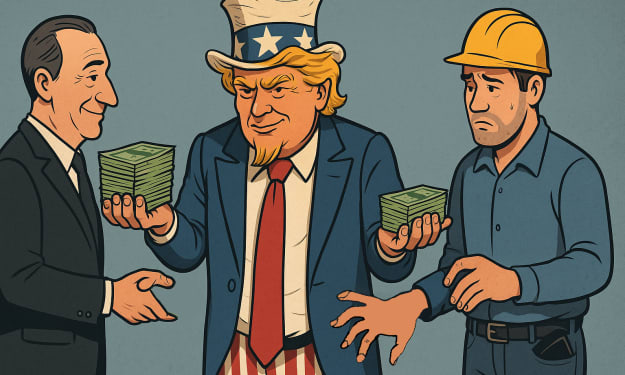
Can We Make American Lives Better When it comes to improving the lives of Americans, Republicans and Democrats have vastly different approaches with their own strengths and weaknesses. Republicans tend to push for tax cuts and fewer government rules. They emphasize goals of helping businesses grow and creating jobs. Some tax cuts, especially those aimed at working families, have shown clear benefits. But tax cuts for corporations and the wealthy rarely lead to higher wages or more jobs for most people. Studies show those cuts often result in stock buybacks or bigger bonuses for executives, and infrequently "trickles down" to improve the lives of low- and middle-income earners.
By Lanny Newvilleabout a year ago in The Swamp
Rigathi Gachagua: Age, Net Worth, Education, Biography, Wife & More
Rigathi Gachagua is a seasoned Kenyan politician and former Deputy President, known for his outspoken nature, grassroots appeal, and firm political alliances. Born in Nyeri County, Gachagua rose from a provincial administrator to one of the most powerful offices in Kenya. His journey has been marked by both influence and controversy — from high-profile corruption allegations to his dramatic impeachment in 2024.
By Marveline Merababout a year ago in The Swamp
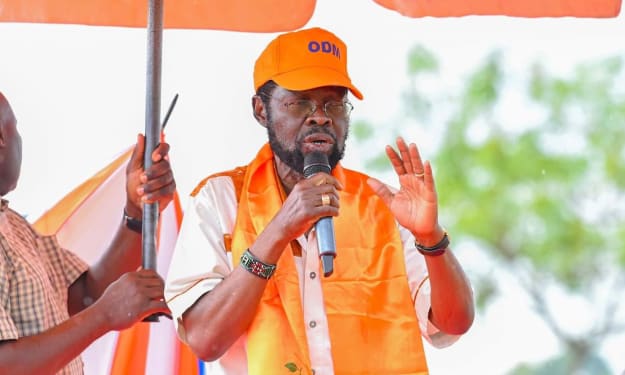
Anyang' Nyong'o: Age, Health, Education, Wife, Net Worth, Biography & More
Anyang’ Nyong’o has lived many lives. To some, he’s the sharp-minded professor who challenged the status quo in dusty university halls. To others, he’s the seasoned politician who’s steered through Kenya’s stormy political waters with quiet defiance.
By Marveline Merababout a year ago in The Swamp
Millie Odhiambo: Husband, Biography, Family, Age, Net Worth, Education & More
Not many politicians speak their minds quite like Millie Odhiambo. Known for her fearless stance on tough issues, she’s become a powerful voice in Kenyan politics. But beyond the public eye, there’s a story of resilience, family, and a deep commitment to justice that shapes who she is today. Let’s dive into her journey and what makes Millie tick.
By Marveline Merababout a year ago in The Swamp
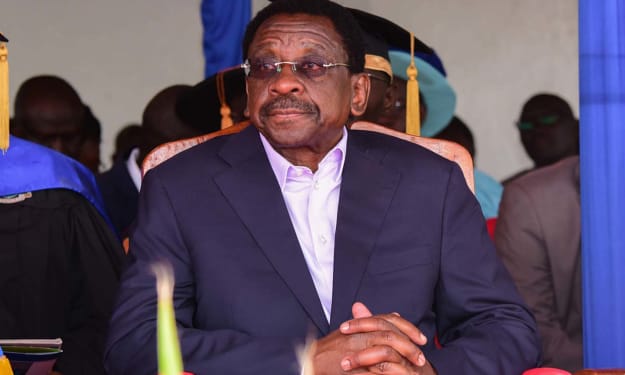
James Orengo: Age, Wife, Biography, Net Worth & More
You’ve probably heard his name in courtrooms, rallies, or late-night political debates. James Orengo has been everywhere — fighting for democracy, challenging power, and rewriting the rules of the game. But beyond the sharp suits and courtroom drama, there's a whole other side to him. Who really is James Orengo when the cameras are off? Let’s pull back the curtain on the man who’s been called Kenya’s legal brain and political enigma.
By Marveline Merababout a year ago in The Swamp
" Trump returns to Riyadh "
Riyadh, Saudi Arabia — May 2025 In a move that has captured international attention, former U.S. President Donald J. Trump made a high-profile visit to Saudi Arabia in May 2025, reigniting discussions about U.S. foreign policy, global diplomacy, and the evolving relationship between Washington and Riyadh. The visit, his first since leaving the White House, was marked by both symbolism and substance, offering insights into Trump's ongoing political influence and his vision for America's role in the Middle East. The visit comes amid shifting global dynamics and internal political momentum in the United States, with Trump maintaining a significant presence in the American political landscape. His arrival in Riyadh—hosted with royal fanfare by Crown Prince Mohammed bin Salman—served as a diplomatic spectacle and a platform for serious discussions on regional security, economic cooperation, and strategic alliances. Echoes of 2017, with a New Agenda Trump’s 2025 visit draws inevitable comparisons to his first overseas trip as president in 2017, which also began in Riyadh. At that time, he emphasized unity in the fight against extremism and unveiled a historic $110 billion arms deal. Eight years later, Trump’s return to Saudi Arabia carried a different tone—less about making first impressions and more about reinforcing long-standing ties. This time, the former president met with Saudi leaders to discuss shared concerns over escalating tensions in the Gulf, the evolving role of Iran, and the lingering effects of regional conflicts in Yemen and Syria. Trump was also briefed on Saudi Arabia’s ongoing Vision 2030 projects—massive reforms aimed at modernizing the Kingdom’s economy, society, and infrastructure. Security and Defense Cooperation High on the agenda were matters of defense and regional security. Trump, known for his emphasis on a strong military partnership during his presidency, reiterated the importance of U.S.-Saudi collaboration in counterterrorism and intelligence sharing. Though no official agreements were signed during the visit, sources within the Saudi Ministry of Defense reported discussions about future joint military exercises and potential procurement deals involving U.S. defense contractors. The former president’s visit included a closed-door session with senior Saudi defense officials and U.S. business executives, suggesting that the trip may lead to renewed security cooperation even outside official government channels. Economic Partnerships and Private Sector Diplomacy Another major component of the visit was economic diplomacy. Trump attended the U.S.-Saudi Business Forum in Riyadh, where he gave a keynote address promoting American enterprise, energy collaboration, and investment in Saudi infrastructure. He praised the Kingdom’s progress on its Vision 2030 goals and encouraged U.S. companies to take part in the transformation of Saudi cities and industries. Key sectors under discussion included renewable energy, artificial intelligence, tourism, and digital infrastructure. Trump's presence helped draw attention to several new partnerships between American firms and Saudi state-backed ventures—deals that, while not yet finalized, represent billions of dollars in potential investment. Political Undertones and Global Optics While the visit was framed as a private diplomatic mission, its political undertones were unmistakable. As Trump continues to play a dominant role in U.S. political discourse—either as a former president or a prospective candidate—his international engagements are scrutinized through a political lens. The 2025 visit to Riyadh, therefore, served not only as a gesture of goodwill toward a longtime ally but also as a platform for Trump to project leadership on the global stage. International media outlets noted the sharp contrast between Trump’s visit and the foreign policy approach of the current U.S. administration, particularly in areas such as arms sales, human rights, and climate cooperation. Analysts suggest that Trump’s return to Saudi Arabia could influence American diplomatic posture in the region, especially if his political aspirations materialize further. Cultural and Symbolic Moments Beyond politics and policy, the visit was rich with symbolism. Trump was received with traditional Saudi hospitality, including a private audience with King Salman, a tour of Diriyah—the birthplace of the Saudi state—and attendance at a gala hosted by the Royal Court. He also visited the King Abdulaziz Center for World Culture and participated in a roundtable with Saudi youth leaders and entrepreneurs. These symbolic gestures were widely covered by regional media, portraying the visit as a reaffirmation of friendship and mutual respect between the two nations. Conclusion: A Strategic and Symbolic Visit Donald Trump's 2025 trip to Saudi Arabia was more than just a return to familiar territory—it was a calculated display of diplomacy, business outreach, and geopolitical messaging. While no major policy breakthroughs were announced, the visit reinforced the enduring relationship between the U.S. and Saudi Arabia and emphasized Trump's continued interest in shaping that partnership. Whether seen as a private citizen wielding influence or a political figure staging a comeback, Trump's presence in Riyadh reminded the world of the complexities of American diplomacy and the personal relationships that often drive it. As the Middle East navigates a new era of challenges and opportunities, the U.S.-Saudi relationship—long shaped by leaders on both sides—remains a central force in the region’s future.
By Kaleem Ullahabout a year ago in The Swamp
Okiya Omtatah: Biography, Education Background, Age, Wife, Tribe, Net Worth & More
You’ve probably seen his name pop up every time someone dares to challenge the government in court—and wins. That’s Okiya Omtatah for you. While most people rant online, he drafts legal petitions. While others give up, he digs in.
By Marveline Merababout a year ago in The Swamp
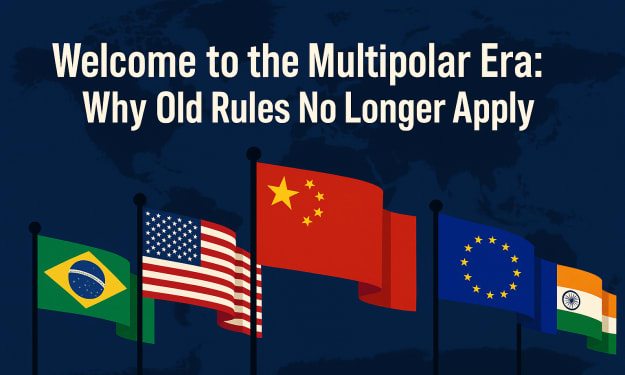
“Welcome to the Multipolar Era: Why Old Rules No Longer Apply”
Welcome to the Multipolar Era: Why Old Rules No Longer Apply Inside the Rise of a World Where No One Power Calls the Shots --- Introduction Not long ago, world politics revolved around a single axis — the United States. Following the Cold War, America’s military might, economic dominance, and cultural influence gave it an unrivaled role in setting global agendas. But that era is fading fast. Today, we live in a world where no single nation can dictate the terms. Power is more distributed, alliances are more fluid, and the rules of engagement are constantly shifting. From Beijing to Brasília, from Ankara to New Delhi, a new set of actors is redefining influence in a chaotic and contested global order. The question is no longer who leads — it's how the world manages without clear leadership. --- The End of Unipolarity The post-Cold War unipolar moment, which placed the U.S. at the apex of global power, is now history. Two decades of military overstretch, internal political divisions, and economic upheaval have eroded America's ability to act as the world's de facto leader. The withdrawal from Afghanistan, inconsistent global policies, and an increasingly inward-looking electorate have signaled a step back from the assertive global policing of the early 2000s. This vacuum hasn't gone unnoticed. Instead of a new hegemon rising to replace the old, what we see is a diffusion of power across multiple regional centers. It’s not a bipolar world of the Cold War era, nor a balanced multipolar structure of the early 20th century. This new landscape is messy, unstable — and permanent. --- China and the Economic Realignment China stands at the forefront of this shift, but even its rise comes with caveats. With the Belt and Road Initiative, Beijing has extended its economic reach into Asia, Africa, and parts of Europe. Its influence over supply chains, infrastructure, and digital technologies challenges the dollar-based global system. However, China's ambitions face resistance. Tensions over Taiwan, territorial disputes in the South China Sea, and pushback from Western nations on tech and trade indicate that its power, while rising, is also contested. China is not replacing the U.S. — it’s carving out its own sphere, one that’s economic rather than ideological, and subject to friction. --- Russia’s Military Gambit and Strategic Isolation Russia, too, has sought to challenge the Western-dominated order, most dramatically through its invasion of Ukraine. While the war has demonstrated Moscow’s willingness to use force to protect perceived national interests, it has also exposed its strategic limits. Sanctions, international condemnation, and battlefield losses have isolated Russia from much of the world economy, while simultaneously deepening its ties with non-Western partners like Iran and China. In trying to redefine regional borders by force, Russia has sparked a renewed unity among NATO members, paradoxically reinforcing the very alliances it sought to divide. --- Middle Powers and Fluid Alliances Perhaps the most defining feature of the multipolar era is the rise of middle powers — nations like India, Brazil, Turkey, and Saudi Arabia that are no longer content to align strictly with the West or East. These countries pursue strategic autonomy, balancing relationships across global fault lines. India, for example, is a member of the Quad (with the U.S., Japan, and Australia) while also maintaining defense ties with Russia and participating in BRICS. Turkey, a NATO member, buys Russian arms and projects influence across Central Asia and the Middle East. These states navigate global politics based not on ideology, but on opportunity and self-interest. --- Global Institutions Under Strain The United Nations, World Trade Organization, and other postwar institutions are increasingly ineffective at managing today’s fragmented world. Vetoes stall progress at the UN Security Council. Trade disputes paralyze the WTO. And new power blocs like BRICS and the Shanghai Cooperation Organization aim to create parallel systems that reflect non-Western values and priorities. The rules-based international order — long championed by the West — now finds itself questioned not only by adversaries, but by allies frustrated with its limitations and hypocrisy. --- Technology, Climate, and the New Arenas of Power While traditional power still matters, influence in today’s world is also determined by less tangible forces. Control over technologies like artificial intelligence, 5G, and semiconductors is becoming as critical as nuclear weapons were in the past. Meanwhile, climate change, pandemics, and migration flows expose the limitations of national solutions to global problems. These issues demand coordination, yet in a fragmented world, cooperation is the first casualty of geopolitical rivalry. --- Conclusion: Embracing Complexity The multipolar era is not just a phase — it is the defining condition of our time. It offers opportunities for a more inclusive, balanced world, but also risks greater instability, miscalculation, and fragmentation. Old rules no longer apply, because the old world no longer exists. The future will depend not on domination, but on how nations adapt, negotiate, and share power in a world where no one — and everyone — leads.
By World politics about a year ago in The Swamp