legislation
The bills that Congress reject are as informative as the ones it does. Reviews of all the legislation that meet their fate in government halls.
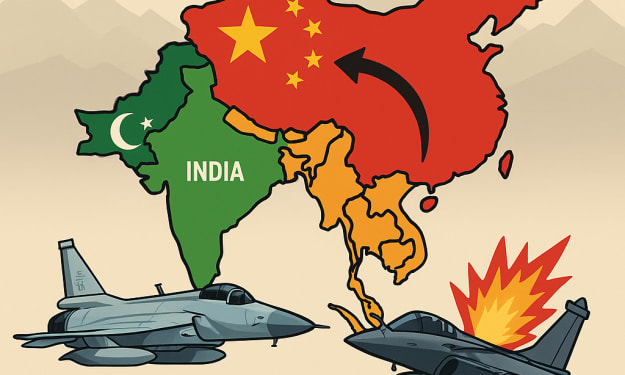
How China Got Benefit from Pakistan and India Conflict
In a dramatic turn of events during a recent India-Pakistan conflict, the Pakistan Air Force (PAF) reportedly downed a French-made Rafale fighter jet using the JF-17 Thunder, a multi-role combat aircraft developed jointly by China and Pakistan. Though official confirmation is still pending, the symbolic value of this event is already resonating across global defense and strategic communities.
By Zakir Ullahabout a year ago in The Swamp
How Pakistan and India Ceased Fire by U.S.?
In one of the most historic moments of South Asian diplomacy, the decades-long tension between India and Pakistan found a sudden pause with a surprising but decisive intervention by the United States. On May 10, 2025, an immediate ceasefire was declared between the two nuclear-armed nations after a night of high-level negotiations. This article explores how the United States orchestrated peace talks between these long-standing rivals and the implications for the region and the world.
By Keramatullah Wardakabout a year ago in The Swamp
Power & Policy
A Deep Dive into Global Strategies: Understanding the Forces Shaping Our World In a rapidly evolving world, global strategies are more important than ever. These strategies are the frameworks through which nations navigate international relations, secure economic interests, assert political power, and foster security. At the heart of global strategy lies the delicate balance of diplomacy, military force, economic policy, and cultural influence, each of which plays a crucial role in shaping the future of the global community. This article will explore the complexities of global strategies, the key players involved, and the methods they use to maintain or expand their influence on the world stage. The Concept of Global Strategy Global strategy is the overarching plan or approach that nations, alliances, and international organizations use to achieve their objectives on the world stage. It is a multi-dimensional concept that involves not only military and economic considerations but also the cultivation of alliances, technological innovation, and soft power. Unlike national strategies, which are primarily focused on domestic issues, global strategies address external challenges and opportunities. A successful global strategy can determine the trajectory of a nation’s influence for decades to come, while a failed one can lead to economic collapse, political isolation, or even military conflict. Global strategies often incorporate elements of hard power (military and economic strength) and soft power (diplomacy, culture, values, and ideas). Nations may also engage in smart power, which is a combination of both hard and soft power, using each in the right proportion based on the situation at hand. Key Players in Global Strategy In any analysis of global strategies, it is essential to understand who the key players are. The most significant players include powerful nations, such as the United States, China, and Russia, as well as regional powers and multinational organizations like the United Nations, the European Union, and the World Trade Organization (WTO). Each of these entities formulates strategies based on a combination of economic capabilities, military power, political influence, and diplomatic ties. 1. The United States: As a superpower, the United States has long been at the center of global strategic discussions. Its global strategy revolves around maintaining its military dominance, ensuring access to key markets, and promoting democratic values. The U.S. also seeks to contain rival powers, notably China and Russia, through both hard and soft power mechanisms, including military alliances like NATO, economic sanctions, and diplomatic engagement. 2. China: Over the past few decades, China has emerged as a key challenger to U.S. dominance on the global stage. Its global strategy is characterized by economic expansion, technological advancements, and a growing military presence. One of China’s most ambitious strategies is the Belt and Road Initiative (BRI), a multi-trillion-dollar infrastructure project designed to connect Asia, Africa, and Europe through a network of trade routes. The BRI allows China to increase its influence in critical regions, securing vital resources, trade routes, and political allegiances. 3. Russia: Russia's global strategy has been shaped by a desire to reclaim its status as a great power following the dissolution of the Soviet Union. Russia’s strategy is characterized by a mix of military aggression, political influence, and energy dominance. For instance, Russia's military interventions in Ukraine and Syria are seen as efforts to protect its sphere of influence and project power into neighboring regions. Additionally, Russia uses its vast energy resources as leverage in geopolitical negotiations, particularly with Europe. 4. The European Union: The European Union (EU) is unique in its approach to global strategy, as it represents a collective effort by member states to assert influence on the world stage. The EU focuses heavily on diplomacy, trade, and human rights, leveraging its economic power as one of the world’s largest trading blocs. The EU also works to expand its sphere of influence through various partnerships and negotiations, particularly with countries in Eastern Europe, Africa, and Asia. 5. Multinational Organizations: Institutions such as the United Nations, the World Trade Organization, and the International Monetary Fund (IMF) play crucial roles in shaping global strategies. These organizations facilitate cooperation, mediate conflicts, and establish norms and regulations that govern international relations. Although not all countries agree with the actions of these institutions, they remain vital in coordinating global efforts in areas such as climate change, international security, and global trade. The Elements of Global Strategy Global strategies are multifaceted and include a variety of elements that work together to influence outcomes on the international stage. Some of the most important components of global strategies include: 1. Economic Power: Economic strategies are central to global influence. Nations use trade agreements, sanctions, and financial assistance to shape the global economy in ways that align with their interests. For example, the United States uses its control over the global financial system, especially through the U.S. dollar and institutions like the IMF, to maintain its economic dominance. On the other hand, China uses its growing economic influence to assert control over key supply chains, especially in the technology sector, and to secure long-term strategic investments through initiatives like the Belt and Road Initiative. 2. Military Power: Military strength remains one of the most significant pillars of global strategy. Nations use their military capabilities to project power, defend national interests, and deter potential threats. This includes not only traditional military forces but also nuclear deterrence, special forces, and cyber warfare capabilities. The U.S. maintains a vast network of military bases worldwide, while China is increasingly focusing on expanding its military presence in the South China Sea and beyond. 3. Diplomacy: Diplomatic efforts are essential in shaping the global environment. Effective diplomacy can result in strategic alliances, trade agreements, and conflict resolution. Countries engage in diplomacy through bilateral talks, multilateral forums, and international organizations. For example, the U.S. and China engage in regular diplomatic talks to manage their economic and political rivalry, while the EU plays a critical role in brokering peace and cooperation in various global hotspots. 4. Technology and Innovation: In today’s world, technological innovation has become an integral part of global strategy. Nations invest in cutting-edge technologies like artificial intelligence, quantum computing, and 5G networks to gain a strategic advantage. China, for instance, has made significant investments in 5G technology through companies like Huawei, which has raised concerns among the U.S. and its allies about cybersecurity and espionage. Additionally, technological leadership in space exploration, biotechnology, and clean energy is increasingly a key factor in global influence. 5. Soft Power: The power of culture, values, and ideas cannot be underestimated. Soft power allows countries to influence others without coercion or force. The United States, for example, has long relied on its entertainment industry, higher education institutions, and the spread of democratic ideals to project its influence globally. Meanwhile, China has sought to boost its soft power through cultural exchanges, educational initiatives, and media influence. Challenges to Global Strategy While global strategies can lead to considerable success, they also face numerous challenges. Geopolitical rivalries, economic disruptions, technological shifts, and domestic political pressures can undermine the effectiveness of any nation’s strategy. Moreover, global challenges like climate change, pandemics, and terrorism require multilateral cooperation, often complicating efforts to pursue individual national interests. In conclusion, global strategy is a dynamic and complex field that requires nations to constantly adapt to shifting circumstances. It is a delicate dance between power, diplomacy, and influence, and success often depends on the ability to blend these elements effectively. As the world continues to evolve, understanding global strategies will be key to predicting the future of international relations and shaping the global order in the years to come.
By World politics about a year ago in The Swamp
What I Would Do If I Became President
Here is a bit of a rant of what I would do if I had the power, which of course I don't. I would add a new constitutional amendment stating clearing we have freedom from religion since a lot of religious folks claim it is not in the constitution when you cannot have freedom of religion without freedom from religion. All religions and lack thereof will be respected. No political office can ask about religious affiliation or lack thereof.
By Ferrari Kingabout a year ago in The Swamp
The Canada Disability Benefit Is Failing the People Who Need It Most
We've been waiting for 2 years to see a poverty reduction program come to life for Canadians struggling with disabilities. The Canada Disability Benefit (CDB) was intended to be the historic step that would help to reduce and eventually end disability poverty from coast to coast. It's taken years of consultations, advocacy, and legislative debate; when the benefit finally passed into law in 2023, and was included in the 2024 federal budget, we thought we had finally seen a victory on the horizon.
By Autumn Stewabout a year ago in The Swamp
"The Shifting Landscape of World Politics in 2025"
China’s Expanding Influence in Asia and Beyond In 2025, China's rise as a global superpower is no longer a prediction — it is a living reality. The once unipolar world order dominated by the United States is now being reshaped by a multipolar dynamic, with China playing a leading role. From economic investments and military advancements to diplomatic strategies and cultural outreach, China's influence is stretching far beyond its borders, fundamentally altering global geopolitics. Economic Expansion Through the Belt and Road Initiative At the heart of China’s global strategy lies the Belt and Road Initiative (BRI), a massive infrastructure and investment project launched in 2013. Now in its second decade, the BRI has connected more than 140 countries through roads, railways, ports, and digital infrastructure. It has allowed China to secure trade routes, gain access to critical resources, and extend its economic presence into regions traditionally dominated by Western powers. In Asia, countries like Pakistan, Sri Lanka, and Laos have become heavily reliant on Chinese investments. For instance, the China-Pakistan Economic Corridor (CPEC) has not only enhanced trade between the two nations but also given China strategic access to the Arabian Sea. Meanwhile, in Africa and Latin America, China continues to fund infrastructure projects and offer loans that come with fewer political strings than Western aid — although critics warn of a potential “debt trap” diplomacy. Military Modernization and Strategic Posturing China's military, particularly the People’s Liberation Army Navy (PLAN), has undergone rapid modernization. The South China Sea remains a central point of tension, as Beijing continues to assert its claims over disputed territories, building artificial islands and militarizing them despite international criticism and rulings from The Hague. Beyond its immediate region, China has increased its presence in the Indian Ocean, with a military base in Djibouti and regular naval deployments in strategic chokepoints. Its expanding blue-water navy is designed not only to protect trade routes but also to project power far from its shores. This has raised concerns in neighboring countries and drawn the attention of the United States and its allies. Diplomacy with “Chinese Characteristics” Beijing’s diplomatic approach combines traditional statecraft with economic leverage and soft power. Through platforms like the Shanghai Cooperation Organization (SCO) and the recently revived BRICS bloc, China seeks to reshape global governance structures to be less Western-centric. It champions “non-interference” in domestic affairs — a stance attractive to many authoritarian regimes — and presents itself as a counterbalance to U.S. influence. China has also stepped up its role as a mediator in international conflicts. In 2023, it brokered a landmark diplomatic thaw between Iran and Saudi Arabia, demonstrating its growing clout in the Middle East. Such actions position Beijing not just as a global power, but as a global peace broker — a role long monopolized by the West. Cultural Soft Power and Global Narratives Beyond economics and military might, China is actively promoting its culture and political ideology. With state-run media like CGTN and Xinhua expanding their global reach, and Confucius Institutes established in dozens of countries, China is investing in shaping public opinion overseas. The narrative emphasizes harmony, mutual development, and respect for sovereignty — subtly contrasting with what Beijing portrays as Western hypocrisy and interventionism. At the same time, digital platforms like TikTok (owned by Chinese company ByteDance) have become part of China’s soft power arsenal. Though primarily entertainment platforms, they subtly contribute to cultural normalization and influence among global youth. Challenges and Pushback Despite its success, China’s rise is not without resistance. Several countries have grown wary of its economic dominance and political motives. In Southeast Asia, nations like Vietnam and the Philippines are strengthening ties with the U.S. and forming regional alliances to counter Chinese assertiveness. In Europe and the U.S., concerns about human rights, intellectual property theft, and cyber-espionage continue to strain relations with Beijing. Moreover, the “China model” — combining authoritarian governance with capitalist economics — is viewed with suspicion in democratic societies, especially as Beijing tightens its grip on Hong Kong and cracks down on dissent at home. Conclusion: A New World Order in the Making As we move deeper into the 21st century, China’s expanding influence is reshaping not only Asia but the global balance of power. Whether one views this transformation with optimism or concern, it is clear that the world must adapt to a future where China is a central actor. How other nations respond — with cooperation, competition, or confrontation — will determine the course of global politics for decades to come.
By World politics about a year ago in The Swamp
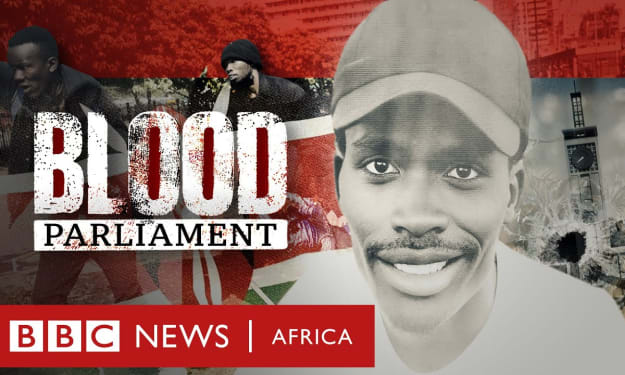
Blood Parliament: BBC Africa Eye Documentary (Kenya Gen Z Protests)
The BBC Africa Eye documentary Blood Parliament investigates the dramatic protests that rocked Kenya in June 2024. It captures the raw energy of a youth-led movement against government policies and highlights the explosive events that unfolded when demonstrators stormed Parliament. The Blood Parliament BBC production offers an unprecedented look into how a generation raised on social media stood up to political authority, reshaping Kenya’s political conversation in the process.
By Marveline Merababout a year ago in The Swamp
An Open Letter to White Americans with Trump Voter Remorse or Protest Voter Persecution Syndrome. Content Warning.
As you can see from my neon glow in the headshot above, I am a white person in all ways that matter. It is, therefore, my responsibility to call attention to some… fallacious efforts to foster camaraderie among those seeking to “join the other side” after voting for Trump or failing to vote against him. There are far too many mayo sapiens expecting a sudden epiphany to the existence of other people to absolve their sins.
By Maia Gadwall the metAlchemistabout a year ago in The Swamp
Trump: Our Bombs Are Bigger & Badder. Khamenei: We'll Invoke the Right to Defend Ourselves!. Content Warning.
In a world increasingly shaped by double standards and global power politics, the recent verbal jousting between Ayatollah Ali Khamenei and U.S. President Donald Trump over Iran’s nuclear program is not merely a diplomatic dispute—it is a stark reminder of how selective morality dominates international relations.
By Victor Trammell2 years ago in The Swamp
The Police Should Go Nuclear!. Content Warning.
NOTE: This article is purely satire. In the news, there is this talk about defunding the police. It would be bad on many counts because criminals can get off Scott Free for their crimes. Should the bureaucrats get their way, the police will be helplessly undermined by severe budget cuts. Now, this would put cities and towns all over America in peril. However, I have to say there is a solution to this defunding of the police.
By Halden Mile2 years ago in The Swamp