
Why Mental Health Care Looks Different Than It Did Five Years Ago
Not long ago, many conversations about depression began and ended with medication. Today, people are asking different questions and I believe that's a positive sign.

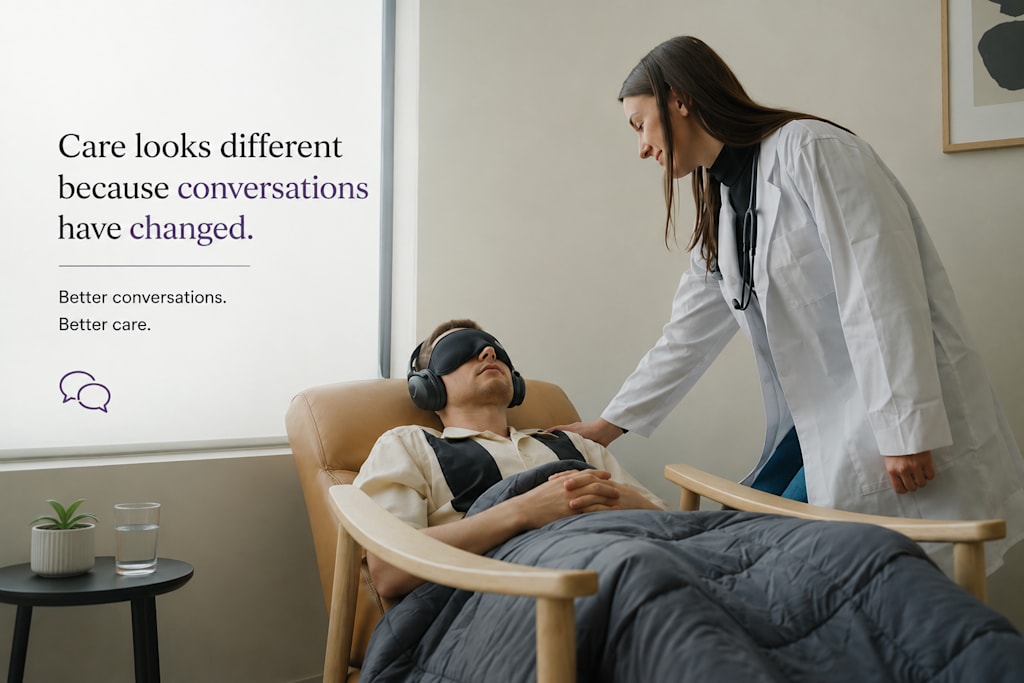
One thing I've noticed over the past few years is that people aren't walking into mental health appointments with the same expectations they once did.
Years ago, conversations often started with a single question:
"What medication should I take?"
Today, they're more likely to begin with questions like,
"What are my options?"
"Why hasn't my current treatment helped enough?"
"How do I know what's right for me?"
That shift tells me something important.
People aren't simply looking for a prescription anymore. They're looking to understand their condition, explore evidence-based treatment options, and take an active role in decisions about their care.
I think that's one of the most encouraging changes we've seen in mental health.
More People Want to Understand Their Options
Depression has never been a one-size-fits-all condition, even though treatment has sometimes been viewed that way.
Two people can receive the same diagnosis while having very different experiences, histories, and responses to treatment.
Over the last several years, more people have begun recognizing that.
Rather than assuming one medication or one therapy approach will work for everyone, patients are asking broader questions about what contributes to their symptoms and what combination of treatments may offer the best opportunity for improvement.
That curiosity has led to more thoughtful conversations between patients and mental health professionals, and I believe those conversations benefit everyone involved.
Mental health care has become more personalized
Another change I've noticed is the growing expectation that treatment should be individualized.
People no longer expect their care to follow exactly the same path as someone else's.
Instead, they want their clinician to understand what they've already tried, what has or hasn't helped, how depression affects their daily life, and what they're hoping to achieve moving forward.
That's an important shift because effective mental health care has always been about treating the individual, not simply treating a diagnosis.
Clinical research continues to reinforce the importance of personalized treatment planning, ongoing assessment, and shared decision-making when managing depression and other mental health conditions.
More treatment options have changed the conversation
Another reason mental health care feels different today is that people are hearing about treatments they may not have known existed a few years ago.
Discussions about Spravato therapy, ketamine-assisted psychotherapy, and other evidence-based approaches have become more common, particularly for adults living with treatment-resistant depression.
That doesn't mean these treatments are appropriate for everyone.
What it does mean is that people have more opportunities to ask informed questions and learn about options that may be considered after a comprehensive psychiatric evaluation.
In many ways, the conversation has expanded.
Instead of wondering whether there's only one path forward, more people are discovering that modern depression care includes a range of evidence-based approaches that can be considered based on an individual's needs, history, and treatment goals.
How These Conversations Shape Our Approach at Marpa Minds
These changes have shaped the way we've built Marpa Minds from the beginning.
As a mental health clinic in White Plains and Suffern, NY, we've never believed that meaningful care starts with choosing a particular treatment.
It starts with understanding the person sitting across from us.
Every individual brings a different history, different experiences with therapy or medication, different concerns, and different goals for recovery.
That's why Medical Director Dr. Benjamin Medrano and our multidisciplinary clinical team begin with comprehensive psychiatric evaluations rather than assumptions.
For some people, traditional psychiatric care remains the most appropriate path.
For others, treatments such as Spravato therapy or ketamine-assisted psychotherapy may become part of the conversation after careful clinical assessment.
The recommendation should always follow the evaluation, not the other way around.
One thing I hope never changes
As mental health care continues to evolve, I hope one thing stays exactly the same.
The importance of listening.
Research will continue to advance.
New treatments will continue to emerge.
Clinical guidelines will continue to evolve.
But none of those developments can replace taking the time to understand someone's story before deciding what comes next.
That's something technology can't do on its own.
And it's something thoughtful mental health care should never lose.
What Gives Me Hope
When I think about how mental health care has changed over the past five years, I don't think first about new treatments or new research.
I think about the conversations.
People are asking better questions.
They're seeking more information.
They're becoming active participants in decisions about their care instead of feeling like they simply have to accept whatever comes next.
To me, that's real progress.
Because while depression treatment will continue to evolve, meaningful mental health care has always been built on the same foundation: listening carefully, understanding each person's experience, and making decisions together with compassion, evidence, and respect.
Those principles continue to guide every conversation we have at Marpa Minds. No matter how mental health care evolves, our goal remains the same: helping each person find the treatment approach that's right for them, supported by thoughtful evaluation, evidence-based care, and a team that takes the time to listen.
About the Creator
Chesky Breuer
Founder of Marpa Minds. Writing about mental health, treatment-resistant depression, ketamine-assisted psychotherapy, and the science behind innovative approaches to emotional wellness.
Enjoyed the story? Support the Creator.
Subscribe for free to receive all their stories in your feed.
Comments
There are no comments for this story
Be the first to respond and start the conversation.