
The Human Side of Cruelty
You don’t need to hit someone to do real damage.

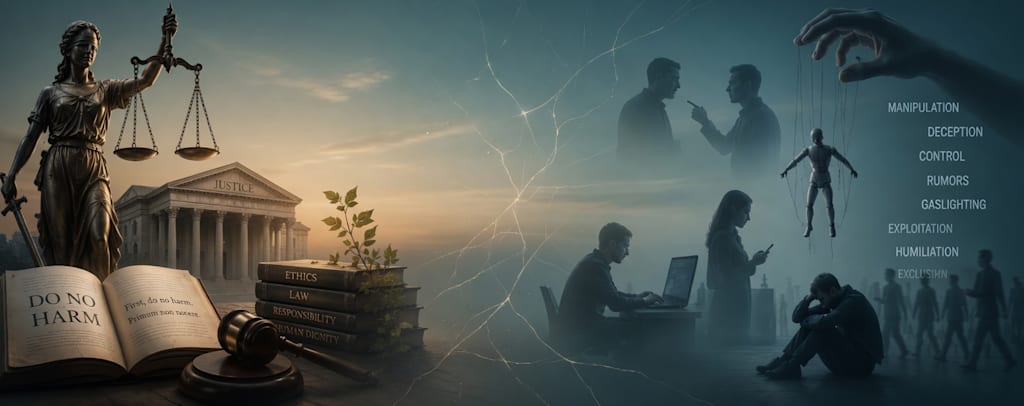
Intentional harm is when you deliberately set out to hurt someone, a person, a group, an animal, or even just something that matters to them. It covers physical injury, emotional damage, psychological cruelty, or wrecking their property, stability, or sense of safety. The key difference from accidental harm is intent. You meant it.
Legally, this is what they call mens rea, a guilty mind with clear purpose. Courts come down much harder on intentional harm because it shows the person saw the damage coming and still went ahead. Assault, battery, murder, harassment campaigns, sabotage, and long-term psychological abuse all get heavier sentences for that reason. Premeditated harm isn’t treated like a mistake. There was a moment when the person understood what would happen and gave themselves permission anyway.
That permission is what changes everything.
The legal system punishes deliberate cruelty more severely because it reveals something ugly: a willingness to turn another human being into a target or an obstacle. An accident might just show carelessness. Intentional harm shows choice.
Ethically, it bothers us even more. Almost every moral tradition, whether utilitarianism, deontology, or virtue ethics, treats deliberate harm as far worse than unintended damage. That’s why “do no harm” became such a big deal. We instinctively know there’s a difference between tragedy and chosen suffering.
Still, people constantly test that line. Self-defense, war, punishment, even the trolley problem. We keep asking when intentional harm might be justified. But a lot of the time it’s not some grand moral dilemma. People do it because it gets them what they want: money, status, revenge, control, or just because it feels good in the moment.
What’s scary is how normal it can look. Someone can be articulate, educated, and socially smooth while slowly moving another person toward humiliation, fear, or destruction. History is full of ordinary people who crossed that line so gradually that it started feeling normal to them.
Psychology explains part of it. There’s instrumental aggression, harm as a tool for a goal, and hostile aggression, harm for the sake of suffering. Both require overriding empathy, guilt, or that basic sense that the other person is fully human. Over time, repetition makes it easier. Language, ideology, resentment, or just seeing the other person as “the enemy” slowly dehumanizes them until cruelty starts feeling logical.
You don’t even need to hit someone to do real damage.
In war, soldiers are trained to push past the instinct not to kill. In politics, people run smear campaigns and leaks while staying detached from the human cost. At work, colleagues destroy each other with gossip, exclusion, or calculated reputation hits. In relationships, it’s often more subtle: gaslighting, strategic silence, public embarrassment, or slowly isolating someone. They learn exactly where your weak spots are and press on them.
The worst part isn’t always the pain itself. It’s realizing another person saw your vulnerability and chose to use it against you.
Intentional self-harm is the same dark capacity turned inward. Some people use physical pain to deal with emotions they can’t otherwise control.
Even in AI and tech, the heavy focus on alignment and preventing harm shows how well humans already understand this pattern. We’re scared of machines doing what we’ve done for centuries: pursuing goals without caring about the collateral damage.
This is why intent is important so much, legally, socially, and morally. Accidental harm can often be fixed with real accountability and remorse.
Intentional harm forces a harder question: what were you willing to become to get what you wanted?
That question goes straight to character.
Of course there are gray areas, blunt honesty, tough discipline, satire, competition, self defense. The line isn’t always crystal clear, and societies argue about it constantly. But when we stop even trying to separate accidental harm from deliberate cruelty, we risk dulling our own empathy.
At the end of the day, intentional harm reveals something deeply unsettling about human nature: our ability to fully understand suffering and still choose to create it. Recognizing that doesn’t mean we’re doomed to it. Just noticing how easily empathy can shut off when anger, fear, control, or self interest takes over.
About the Creator
Annam M Gordon
My books and writing focus on real people. These stories come from lived experience. I collaborate with individuals and mental health professionals. https://muckrack.com/annammgordon https://app.qwoted.com/sources/annam-m-gordon?
Enjoyed the story? Support the Creator.
Subscribe for free to receive all their stories in your feed. You could also become a paid subscriber, letting them know you appreciate their work.
Comments
There are no comments for this story
Be the first to respond and start the conversation.