how to
How to cope with your emotions, maintain mental health, deal with life's stressors and help others do the same.
2025 Is the Year to Take Risks
We’ve all heard it a million times: “Play it safe. Don’t take risks.” But what if this year, 2025, you decide to challenge that advice? The reality is that sticking to what feels comfortable might be the biggest obstacle standing between you and the life you want. Taking risks—smart, purposeful risks—can open doors you didn’t even know existed.
By Kamran Zebabout a year ago in Psyche
Facebook Was My Safe Place—Until It Became a Memory Trap
For most of my twenties, Facebook felt like home. It was where I documented everything that mattered. Birthday dinners, weekend getaways, friend drama (with vague statuses, of course), inside jokes, heartbreaks, and rebounds. It was my personal archive, my social stage, my comfort scroll.
By Kamran Zebabout a year ago in Psyche
How to Maintain Attachment While Living Together
Even though we share a bed, a kitchen, and a routine, there are days when it feels like we are strangers living together. Everything seems like a dream when you move in together for the first time. sharing chores, breakfasts in bed, cuddles on the couch, and the joy of being together all the time. However, life begins to enter almost gradually. The emotional intimacy that was once effortless begins to be eroded as a result of stress at work, bills, daily responsibilities, and the monotony of routine. You are not imagining if you have ever said to yourself, "We live together, but I feel alone." It is not enough to be physically close to someone to sustain an attachment. It must be cared for. Couples, especially those who have been together for a long time, can overcome the difficulties of living together by following these steps. --- 🧠 1. Recognize that closeness equals intimacy Confusion between presence and connection is one of the most common pitfalls that couples fall into. Even though you're in the same house, that doesn't mean you're really talking to each other. > Think about the last time you looked your partner in the eye and inquired about how they were feeling. Couples often behave more like roommates than romantic partners in the UK, where a fast-paced work culture and emotional reserve are common. The treatment? deliberate attention Put the TV off. Put your phone down. Give each other a look. Speak. Listen. --- 💬 2. Make small, intimate moments of emotional closeness Grand gestures are not required. You require frequent, infrequent emotional touchpoints. a 10-second embrace prior to leaving for work Providing them with a cup of tea without asking putting a sticky note on their laptop that says, "I'm proud of you." asking, "What brought you joy today?" These instances convey a significant subconscious message: "I notice you. I care. You are valued. --- 🗓️ 3. Schedule time for connection, not just coexistence. While many UK couples share a home, they operate on distinct emotional timelines. The answer? Make time for bonding, not for chores. a dinner once a week with "no phones allowed" Taking a fifteen-minute walk after dinner together a "relationship check-in" once a month where you both share how you're feeling sexually and emotionally. Treat your relationship like a garden: even the most beautiful bond will wither if it is not given time, care, and pruning. --- 🧱 4. Learn about one another's attachment style. Attachment is influenced by childhood trauma, personality, and love. Are you worried and want to be reassured often? Does your partner avoid you and require more room? These differences can be made worse by living together. The one might feel smothered, and the other might feel left out. Learning about attachment theory can help save relationships. Books like Attached by Amir Levine and resources like the UK's Relate charity are game-changers. --- 🔄 5. Get out of your routine before it breaks you. Cohabitation's comfort and curse are routine. It's safe, but it can get old. To keep your emotions burning: Take turns organizing domestic "surprise dates." Make something new together. Recreate the first time you met. Before going to bed, read aloud to one another. Spend a weekend apart to rekindle longing and mystery. This emotional care becomes even more important in the United Kingdom, where couples may live together before getting married. --- ❤️ 6. Don't say things you think are obvious. "I adore you." "I'm grateful to you." "You are stunning." "I'm happy for you." Too many couples assume their partner knows and stop saying these words once they move in together. However, love flourishes when spoken, not just assumed. Emotional disconnection actually rarely occurs simultaneously. It fades slowly. a few unspoken praises. several missed opportunities to touch You'll still be in love, but you won't be able to hear each other. --- In conclusion: You should become closer by living together. However, it only works if you are emotionally deliberate. Don't just stick around in the same place. Exist in the hearts of one another. Recreate the customs. Make love sounds. Touch as if you are still figuring each other out. And if you're not sure, ask yourself: > "Would they feel loved if today were our last day together?" Because, at the end of the day, a relationship is not defined by sharing a bed or bills— It's how much you care about each other, even in the face of life's temptations to drift apart. Hold their hand as though it were the first time. As if you still have a thousand things to say, look into their eyes. And love them even though you don't live together But because your souls continue to reside in one another.
By Abdu ssamadabout a year ago in Psyche
“He Told Me I Was Too Broken to Be Loved—So I Made It My Mission to Prove Him Wrong”
I remember the exact moment the words left his mouth. We were standing in the living room of the apartment we had shared for nearly two years. It was supposed to be just another fight — one of many that week — but this time, he didn’t hold back. He looked me dead in the eyes, as if what he was about to say would somehow free him of responsibility. “You’re too broken to be loved,” he said. “And honestly, I’m tired of trying to fix you.” Time stopped. My ears rang. My breath caught in my throat. Too broken to be loved. He didn’t yell it. He didn’t even say it with malice. He said it like it was a fact, like telling someone the sky is blue or that winter follows fall. Like he was doing me a favor by finally admitting what he “knew” all along. What he didn’t know is that those words would stay with me—not to haunt me, but to drive me. The Girl Who Survived Long before I met him, life had taught me how to survive. I was raised in a house where silence was louder than screams and love had conditions. My father left when I was eight. My mother battled addiction and depression, often leaving me to parent myself. I learned early how to stay small, unnoticed, and how to fake a smile so adults wouldn't ask too many questions. By the time I turned 18, I’d been through more than most people twice my age. I wore my trauma like invisible armor—never asking for help, always pretending I was fine. But the cracks were there. You just had to look closely. He did. When I met him, he made me believe I could finally take that armor off. He told me I was strong, mysterious, and deep. He said he saw light in me. And I wanted so badly to be seen that I let myself believe he was the one person who could handle my chaos. In the beginning, he was gentle. Patient. Kind. He asked questions no one had ever asked before. He held me during panic attacks and whispered promises of forever. I mistook all of it for unconditional love. But love, I’ve learned, doesn’t vanish when things get hard. His did. The Shift Things changed slowly. Subtly. First came the sighs when I cried. Then the eye rolls. Then the subtle jabs masked as jokes. “You’re always so dramatic.” “Why can’t you just be normal?” “If you didn’t have so many issues, maybe I’d be happier.” Eventually, his warmth turned cold. He stopped holding me. He stopped asking how I was. He grew distant, emotionally unavailable—until one night, when I brought up how lonely I felt, he dropped the sentence that would become a turning point in my life. “You’re too broken to be loved.” And with that, he walked out of my life. Hitting Rock Bottom I won’t lie and say I immediately bounced back. I didn’t. For weeks, I replayed that sentence in my mind like a toxic mantra. I started to believe it. Maybe he was right. Maybe I was too broken. Too complicated. Too much. I isolated myself. Skipped work. Ate almost nothing. I’d wake up and wonder how I could fill the hours until sleep would take me away again. My therapist called it situational depression. I called it drowning. But somewhere in that fog, something inside me stirred. It wasn’t rage. It wasn’t revenge. It was something quieter. It was hope. The Rebuild I decided I was going to do the one thing he never believed I could: I was going to love myself. Not the Instagram version of self-love—the bubble baths and positive affirmations. I mean real, painful, deep work. The kind that requires staring your demons in the face and refusing to let them define you. I went back to therapy, this time not just to survive, but to heal. I unpacked my childhood trauma. I journaled. I cried. I screamed. I forgave my parents—not because they deserved it, but because I did. I built a morning routine that grounded me. I filled my apartment with plants and poetry and anything that made me feel alive. I cut out people who only saw my flaws, and surrounded myself with those who saw my fight. Slowly, I stopped seeing myself as someone who needed fixing. I wasn’t broken. I was rebuilding. Love, Unexpected A year later, I met someone new. He wasn’t flashy or full of grand gestures. He was soft-spoken, with kind eyes and a quiet strength. From the beginning, I was honest about my past. I told him about my trauma, my therapy, my journey. I held nothing back. I expected him to flinch. He didn’t. One night, as we sat on my couch eating takeout, I told him about the man who said I was too broken to be loved. He looked at me, shook his head gently, and said, “That man didn’t know what love was.” It hit me then—true love doesn’t fix you. It holds space for all your pieces. It doesn’t run from your pain; it learns how to hold it with you. The Mission Today, I live not to prove that man wrong, but to prove myself right. I am not broken. I never was. I was bruised. Wounded. Hurt by people who didn’t know how to love what they didn’t understand. But I’ve learned that healing isn’t about becoming perfect—it’s about embracing yourself exactly as you are and finding peace in your own skin. If you’ve ever been told you’re too much, too emotional, too complicated—let me tell you something: You are not too broken to be loved. You are human. You are worthy. You are the story someone else needs to hear. And sometimes, the most beautiful love story is the one you write with yourself. This story is personal, but it isn’t just mine. It’s for every person who’s ever been made to feel unlovable. It’s for the survivors, the fighters, the ones still finding their way. You are not alone. And you are never, ever too broken to be loved.
By Soul Draftsabout a year ago in Psyche
Why Does Anxiety Feel Worse at Night? Causes and How to Calm It
During the day, life is loud. Conversations hum in the background. Notifications ping. Tasks pile up. Your brain stays busy with to-do lists, responsibilities, and distractions. But then the sun sets. The world goes quiet. And for many people, that silence brings something else: anxiety.
By Richard Baileyabout a year ago in Psyche
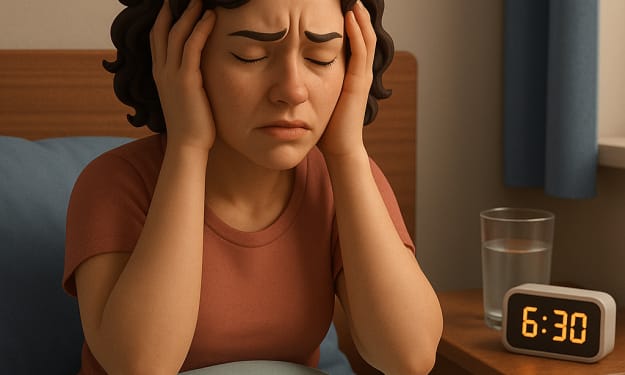
Morning Anxiety: Why It Happens and How to Stop It Before It Starts
What Is Morning Anxiety? Morning anxiety isn’t just waking up in a bad mood or feeling grumpy before coffee. It’s a pattern of waking up with a racing heart, tight chest, spinning thoughts, or an overwhelming sense of dread before the day even begins.
By Richard Baileyabout a year ago in Psyche
Is WWE Fake?
If you've ever seen a WWE match, you've probably asked the question: “Is this real or fake?” With wrestlers flying through the air, crashing into tables, and throwing punches that seem to echo across the arena, it’s easy to get lost in the drama. But once the lights dim and the crowds go home, the question remains — is WWE fake?
By Mehtab Ahmadabout a year ago in Psyche
Self-Love Is Not Selfish
I used to think self-love was indulgent. You know, those social media posts that say, “Put yourself first,” or “You can’t pour from an empty cup”—they felt like empty phrases. I was raised to believe that strength meant sacrifice, that love meant putting others ahead of yourself, even if it hurt. Especially if it hurt.
By Mehtab Ahmadabout a year ago in Psyche
Psychological Fear
Introduction: The Silent Puppeteer of Our Minds Fear is more than just a reaction to danger—it’s an invisible scriptwriter dictating our choices, relationships, and even our potential. Unlike instinctive fear (like jumping away from a snake), psychological fear is subtler, more insidious. It’s the voice that whispers:
By its_ishfaq_ahmadabout a year ago in Psyche
The Illusion of Infinite Funds: Why Credit Cards Make Us Feel Richer Than We Are. AI-Generated.
The Illusion of Infinite Funds: Why Credit Cards Make Us Feel Richer Than We Are You walk into a store “just to look.” A shirt catches your eye. It’s not on sale, but it feels like it should be yours. You hesitate — until you remember your credit card. You tap, the machine beeps, and in two seconds, the item is yours. No pain. No friction. No cash visibly leaving your hands. For a fleeting moment, you feel powerful. Free. Limitless.
By Ahmet Kıvanç Demirkıranabout a year ago in Psyche