depression
It is not just a matter of feeling sad; discover an honest view of the mental, emotional and physical toll of clinical depression.
Empaths vs Overthinkers: Who’s Really Reading the Room?
In a world full of loud voices and fast opinions, there’s a quiet power that often goes unnoticed: the ability to truly read the room. You’ve probably seen someone walk into a tense environment and immediately know something is off — or someone who senses when someone’s sad, even behind a smile.
By DR. Allama iqbalabout a year ago in Psyche
The Sewing Box
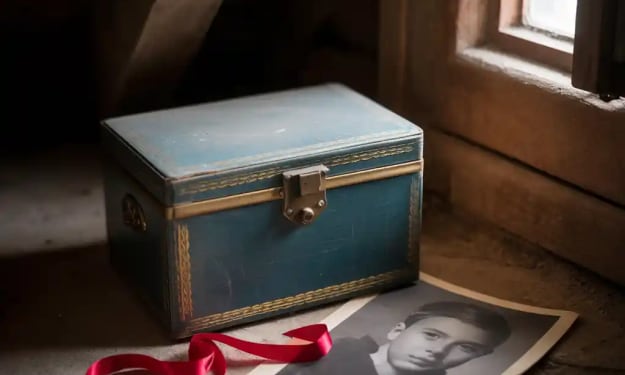
The box had been there for years — untouched, unspoken, and always in the same corner of Nana’s old attic. Covered in lace that had long since yellowed, it waited like a quiet witness. When Nana passed away that winter, I returned home after seven years to settle her affairs — not entirely ready for what I would find. I hadn’t been back since I was sixteen. Back then, I ran away more than I visited. Back then, Nana was already growing forgetful, calling me by my mother’s name, or sometimes by her own sister’s. But she never forgot about the sewing box. She’d always say, “Don’t touch it, Isla. That’s not for you — not yet.” -- The funeral was small. Nana never had many friends left. It was just me, the priest, and the mailwoman who brought her groceries during her final years. The house felt too quiet when I returned — like it had been waiting just for me. I slept in the guest room that night, but I didn’t really sleep. I kept thinking of the sewing box. It wasn’t just nostalgia. Something about it tugged at me — like it had its own heartbeat. -The attic The next morning, I climbed the attic stairs, flashlight in hand. The switch hadn’t worked in years. The air was thick with dust and lavender. Nana always loved lavender. It masked the scent of mothballs and age. I walked past old suitcases, brittle magazines, faded photographs with crinkled edges. And there it was — in the far left corner, exactly where I remembered. The sewing box. It was a faded green, with golden thread-like trim and a broken hinge. A cracked ceramic bird perched on top, its wing chipped. I sat cross-legged in front of it, just like I used to. But this time, I didn’t hesitate. Inside, there were spools of thread, needles, buttons in little paper envelopes. But underneath, tucked beneath a swatch of blue satin, was something else. Letters. Dozens of them, tied with red ribbon, yellowed with age. The top one had my mother’s name — Claire. My heart thumped against my ribs. I opened the first letter. Dear Claire, I know you won’t understand now, but I hope one day you will forgive me. I didn’t have a choice. You were only a baby when he left, and I couldn’t risk it — not again. I had to keep you safe. Nobody believed me back then, but he wasn’t who he said he was. He wasn’t just “James from the library.” He had a darkness I didn’t see — not until it was too late. You have his eyes, you know. I hated them for years, but now… now I wonder if maybe you deserved to know. There’s more in this box than thread, darling. There are truths I never dared speak aloud. — Mother froze. James? My grandfather? I’d never heard anything about him. My mom rarely spoke of her childhood, and when she did, it was always about the happy things — summer at the lake, Sunday cakes, Nana’s lullabies. But not once had she mentioned her father. I read another letter. And then another. Each one was more detailed than the last. Each one filled with fear, and regret, and love twisted in grief. My Nana had been hiding the truth for decades. Not just from my mother — but from the world.
By Arshad khanabout a year ago in Psyche
Scroll to Death: We Lost Our Lives to the Scroll: The Dark Reality Behind Social Media's Illusion of Connection
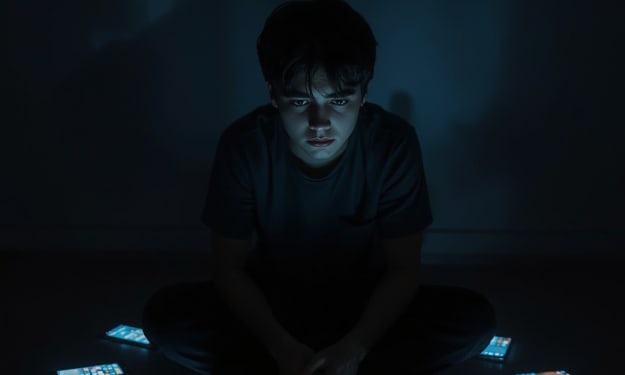
Introduction: The Silent Suicide We All Chose Imagine you're lying in bed, phone in hand, scrolling endlessly. You've seen hundreds of faces, dozens of fake smiles, tragedies, dances, deaths, and desires—all within an hour. Yet you haven't moved. You haven't prayed. You haven't looked into your mother’s eyes. You haven’t breathed.
By DRE Explainsabout a year ago in Psyche
Reputation Burnout: Why Managing Your Image Is Draining Your Soul. AI-Generated.
In the era of personal branding, authenticity is sacrificed at the altar of perfection. It starts with a profile picture. Not just any photo, but one taken from the right angle, under the right lighting, filtered just enough to say, "I woke up like this," without revealing the hours of staging it actually took. Then comes the bio. Short, witty, confident. You want to seem competent but not boastful. Unique, but not weird. Approachable, yet aspirational.
By Ahmet Kıvanç Demirkıranabout a year ago in Psyche
Prisoner of Memories
Dr. Eliza Hart, a renowned psychologist in downtown Boston, had spent years helping others escape the prisons of their pasts. Yet, she herself remained silently shackled by memories she had long buried under the weight of logic and reason. Her office was a soft blend of warm tones, calming lights, and shelves filled with books on trauma, healing, and human behavior. Patients left feeling understood, perhaps even a little lighter. But Eliza — she carried a secret darkness, one she never spoke of. One cold November morning, a new patient walked in. His name was Caleb Moore. Thirty-three, tall, quiet, and distant. His file read: “Recurring nightmares, memory lapses, emotional withdrawal.” But what stood out most was his reason for coming: "I don’t know who I am anymore." From the very first session, something about Caleb unsettled her. The way he looked around the room, the way he hesitated before speaking, and especially the way he described his dreams — always a house on fire, a child screaming, a locked door he couldn't open. His trauma was severe, buried deep. But so was something else. Something familiar. Week after week, they dove deeper. Caleb spoke of feeling disconnected from reality, as if part of him was missing. He would freeze during certain memories — like the sound of a piano or the scent of lavender. Eliza noted the triggers, guided him gently, all while suppressing a strange sense of déjà vu. One session, Caleb brought an old photo. A burned corner, faded colors. It showed a woman holding a little girl — and in the background, a boy who looked eerily like Caleb. The woman’s face was partially visible. Eliza's hands trembled. That was her mother. And the girl — was her. Her heart pounded in disbelief. How could this be? She hadn’t seen that photo in decades. It had vanished the night of the fire. The memories returned like a flood — the flames, the screaming, her baby brother banging on the door, the smoke, the guilt. She was only ten. She’d escaped. He didn’t. Or so she thought. Tears welled up in her eyes, but she composed herself. She couldn’t tell Caleb — not yet. She needed to be sure. In the following sessions, she carefully tested the memories, asking subtle questions. Caleb recalled a fire in a rural home, a sister he could never quite see, a name he always forgot… “Ellie.” Eliza broke down that night. He was Caleb Hart — her brother. Somehow, he had survived. Adopted by another family, his memories fractured by trauma. She now faced the greatest ethical dilemma of her career — should she tell him the truth? Or continue the treatment, slowly guiding him to remember on his own? She chose compassion over control. The next week, she handed him the same photograph — uncut, unburned, the original. On the back, she had written: > “We were never meant to be strangers. Your sister, Eliza.” Caleb stared at it for minutes. Silence filled the room. Then came a whisper: > “Ellie?” He looked at her — really looked — and something in his eyes lit up. A crack in the prison wall. A sliver of recognition. He broke down. So did she. They embraced like siblings reuniting after lifetimes apart — because in many ways, they were. In the weeks that followed, Caleb’s mind began to rebuild. Memory by memory, he pieced together the life that had been taken from him. Eliza helped not just as a therapist, but as family. They grieved, healed, and learned how to live again — not as victims, but survivors. The mind, she now believed, was a fragile yet miraculous thing. It hides what we cannot bear. But sometimes, the very person who needs healing… is the one holding the key to someone else’s cage. --- Moral: Some memories imprison us. But in remembering, there is also the power to break free. Would you
By Movies Channelabout a year ago in Psyche
Social Media is Making Us Lonelier – Here’s the Data
Once upon a time, “friends” were the people we shared coffee with, laughed beside, cried with, and trusted deeply. Today, “friends” are also strangers we follow, double-tap, and occasionally DM with emojis. We’re more connected than ever, yet—paradoxically—we’re also lonelier than ever. And it’s not just a feeling. The numbers back it up.
By Kamran Zebabout a year ago in Psyche
Happiness Is Chemically Impossible to Sustain
Introduction: The Pursuit That Never Ends For centuries, humans have chased happiness like a finish line just out of reach. It’s embedded in our cultures, religions, and even national constitutions. But what if the real problem isn’t that we haven’t found happiness — it’s that our biology makes it impossible to hold onto?
By shoaib khanabout a year ago in Psyche
Flawed, Fierce, and Full of Glitter: A Story of Reclamation
There’s a special kind of audacity required to reclaim your worth when the world has spent years convincing you you shouldn’t. It’s like walking into a party you weren’t invited to, grabbing the mic, and belting out a power ballad while maintaining unbroken eye contact with everyone who ever doubted you. Which, let’s be honest, is exactly the kind of energy we should all be cultivating.
By Beautiful Disasterpieceabout a year ago in Psyche
Aesthetic Exhaustion
Somewhere between choosing the right filter and adjusting the lighting, we began losing sight of ourselves. We are living in an era where the performance of life often overshadows its experience. Each day, millions of people around the world scroll, pose, post, and repeat — carefully arranging moments to fit within the narrow frames of aesthetic appeal. But beneath the beautifully edited breakfasts, sunset selfies, and #softlife reels, a silent fatigue is setting in. We are, perhaps, becoming exhausted — not from living, but from constantly curating.
By Mehtab Ahmadabout a year ago in Psyche