coping
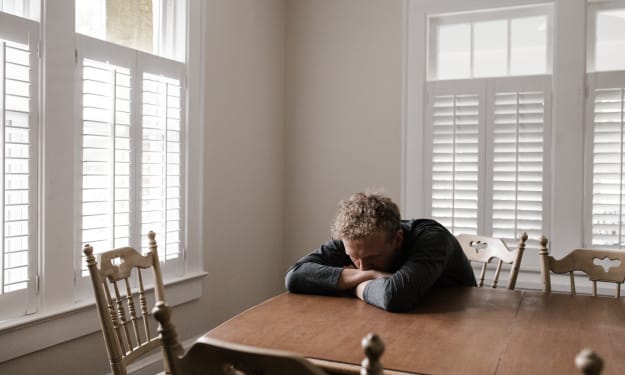
Life presents variables; learning how to cope in order to master, minimize, or tolerate what has come to pass.
Unraveling the Mental Health Puzzle: Understanding the Rise of Mental Health Problems in Modern Times. Content Warning.
Introduction In recent years, the prevalence of mental health problems has been on the rise, leading to growing concerns about the well-being of individuals in modern society. Unlike the older generations, today's population seems to be grappling with a multitude of mental health challenges, ranging from anxiety and depression to stress and burnout. In this article, we explore the factors contributing to the increased incidence of mental health problems in contemporary times and shed light on the unique challenges faced by individuals living in the digital age.
By WanderLUST3 years ago in Psyche
The Psychology of Happiness.
Happiness is a universal human aspiration that transcends cultural boundaries and societal norms. People strive for it, pursue it and cherish it in various forms throughout their lives. But what exactly is happiness and why do some individuals seem to radiate contentment while others struggle to find it? The psychology of happiness delves into the complex interplay of biological, psychological and social factors that contribute to our well being. In this article, we will explore the key components and theories of happiness, the factors that influence it and practical strategies to enhance our overall happiness.
By Naeem Shahzad3 years ago in Psyche
Choice and Emotion
I think it is fair to say that most people believe they have only some to very little control over their emotional states. Things happen in our lives, most of which are out of our direct control, and those things cause us to feel certain emotions. A friend dies and we feel sad, we win a contest and we feel happy, we are stuck in an all day meeting and we feel bored, etc. I also think it is fair to say that most people believe we do have some control over our emotions, or at least the depth of them, or at the very least, how much we let them effect us in our daily lives. The question of how much or how little control we have over our emotional states is difficult and probably unanswerable and likely varies greatly between individuals, societies, cultures, sexes, and many other factors. And, while it is an excellent question, it is not the question I intend to explore in this piece. Instead I will assume that we do have some control over our emotional states and ask a slightly different question. Essentially I want to know if we have more or less control over emotional states we view primarily as "bad" or "negative" compared to those we view as "good" or "positive?"
By Everyday Junglist3 years ago in Psyche
Conduct disorders
Children and teens sometimes feel the need to be disobedient and rebel against their parents. The behavior, however, is regarded as a conduct disorder when it is persistent, offends others' rights, deviates from established social standards, and interferes with the child's or family's normal daily activities.
By Mahpara Mukhtar3 years ago in Psyche