
How Social Media gets us so Hooked and its impact on your brain
10 Things You Didn't Know About Tiktok, Douyin and the Machine That Ate Your Attention

How a Chinese "app factory" learned from Vine's fatal mistake, weaponized dopamine, and built a $200 billion empire in under a decade
In September 2016, a short-video app launched in China. Within twenty months, it had 150 million daily users. Today, under its international name — TikTok , it has 1.7 billion users worldwide. It has survived bans in India, Indonesia, and Pakistan. It has been hauled before the U.S. Congress. It has been called a threat to national security, a destroyer of attention spans, and the most addictive algorithm ever built.
And it started because its founder watched another company die.
TikTok exists because Vine refused to pay its creators
The real pioneer of short-form video was an American app called Vine. Launched in 2012, Vine let users share six-second clips. Twitter acquired it for $30 million, and by 2013 it had over 40 million users.
Then Instagram launched 15-second videos. Snapchat added 10-second clips. Vine needed to evolve fast.
In the autumn of 2015, eighteen of Vine's top creators banded together and made the company an offer: they would guarantee at least three original videos per week if Vine paid each of them $1.2 million annually and committed to developing new features. These weren't random users. On social platforms, roughly 80% of traffic comes from the top 20% of creators. These eighteen were the elite of that elite.
Vine said no. They feared that paying creators would set a precedent.
The creators left. In late 2016, Twitter shut Vine down. That same year, a young Chinese programmer named Zhang Yiming launched Douyin.
He had been watching.
Zhang Yiming built an "app factory" with no editors
ByteDance was founded in March 2012. Zhang Yiming, born in 1983, had a programmer's instinct for market gaps. When he started the company, none of China's internet giants saw value in content platforms. Zhang bet everything on that blind spot.
His philosophy was unusual: "We don't produce content. We perfect the tools, subsidies, and platform infrastructure so creators can focus on their work. Then we use algorithms to make sure each user sees something unique."
There wasn't a single editor on staff. The entire team was engineers. The algorithm was the editor.
ByteDance's first hit, Neihan Duanzi (a humor app), proved the concept. Its recommendation engine was noticeably better than competitors' — if you liked ten jokes today, the jokes you saw tomorrow were sharper. Then came Jinri Toutiao (Today's Headlines), a news aggregator that used AI to personalize every user's feed. Both products were testing grounds for the recommendation engine that would eventually power Douyin.
ByteDance almost didn't make Douyin (TikTok)
In 2014, when ByteDance first discussed entering the short-video market, Zhang Yiming hesitated. Kuaishou already had momentum, Tencent was pushing Weishi, and Weibo had launched Miaopai. He felt they'd missed the window.
In early 2015, after the company's annual meeting in Okinawa, Zhang and his team revisited the idea over drinks at an izakaya. They still didn't pull the trigger.
The turning point came in 2016. A creator named Papi Jiang had turned short comedy videos into a cultural phenomenon, raising 12 million yuan in funding at a 120 million yuan valuation. Short video was no longer a niche. It was a gold rush.
Zhang called another meeting. This time, the conclusion was "all-in." He committed one billion RMB to subsidize short-video creators. He had learned Vine's lesson: if you don't pay the people who make your content, someone else will.
Zhang Yiming committed one billion RMB to creators before Douyin had even proven itself.
The algorithm is designed around six addiction triggers
Adam Alter, a Princeton-trained psychologist, identified six elements of behavioral addiction in his book Irresistible: compelling goals, unpredictable positive feedback, a sense of incremental improvement, increasingly difficult tasks, unresolved tension, and strong social connections.
Douyin hits all six.
You swipe up. You never know what's next. When a video delights you, dopamine fires. Your brain whispers: one more. Even if the next video is boring, you swipe past it in a second — no cost. Over time, the algorithm learns you better, and the hit rate climbs. That's the incremental improvement.
The 15-second format creates what psychologists call the Zeigarnik effect: unfinished tasks linger in the mind longer than completed ones. A video that cuts off mid-story compels you to rewatch it and to keep scrolling for closure that never quite arrives.
The like button sits right below the creator's profile picture. Tap it and a red heart blooms. For creators, the number of likes becomes a slot-machine reward variable, intermittent, and deeply compelling. When you get ten, you want a hundred.
The WSJ built bot accounts to test how quickly TikTok's algorithm locks onto user preferences. The answer: minutes.
The Musical.ly acquisition was the real masterstroke
In August 2017, ByteDance launched TikTok for international markets. But the app that truly cracked the West was one they bought: Musical.ly.
Musical.ly was built by two Chinese entrepreneurs but targeted entirely at overseas users. Its core feature was simple: pick a song, lip-sync for 15 seconds, post it. By July 2015, it had overtaken Facebook and YouTube in U.S. App Store downloads. Sixty-four percent of its users were aged 13 to 24.
Facebook considered buying Musical.ly but backed away over concerns about its Chinese ownership. ByteDance paid nearly $1 billion in cash and merged all Musical.ly accounts into TikTok.
Then they did what they do best: they plugged in the algorithm. Where Musical.ly had shown users batches of content and let them browse, TikTok handed each user exactly one video at a time,the one it predicted they'd like most. The difference was instant and dramatic.
ByteDance spent $300 million on Google ads in one year
TikTok's growth wasn't purely organic. ByteDance ran an aggressive cash-burning strategy, hiring four advertising agencies in the U.S. alone. In 2018, they spent over $300 million on Google advertising.
They also paid celebrities to join the platform — E-girls and Doji Morita in Japan, Jimmy Fallon in the U.S. (who launched the "Tumbleweed Challenge"), Bollywood stars and cricket players in India.
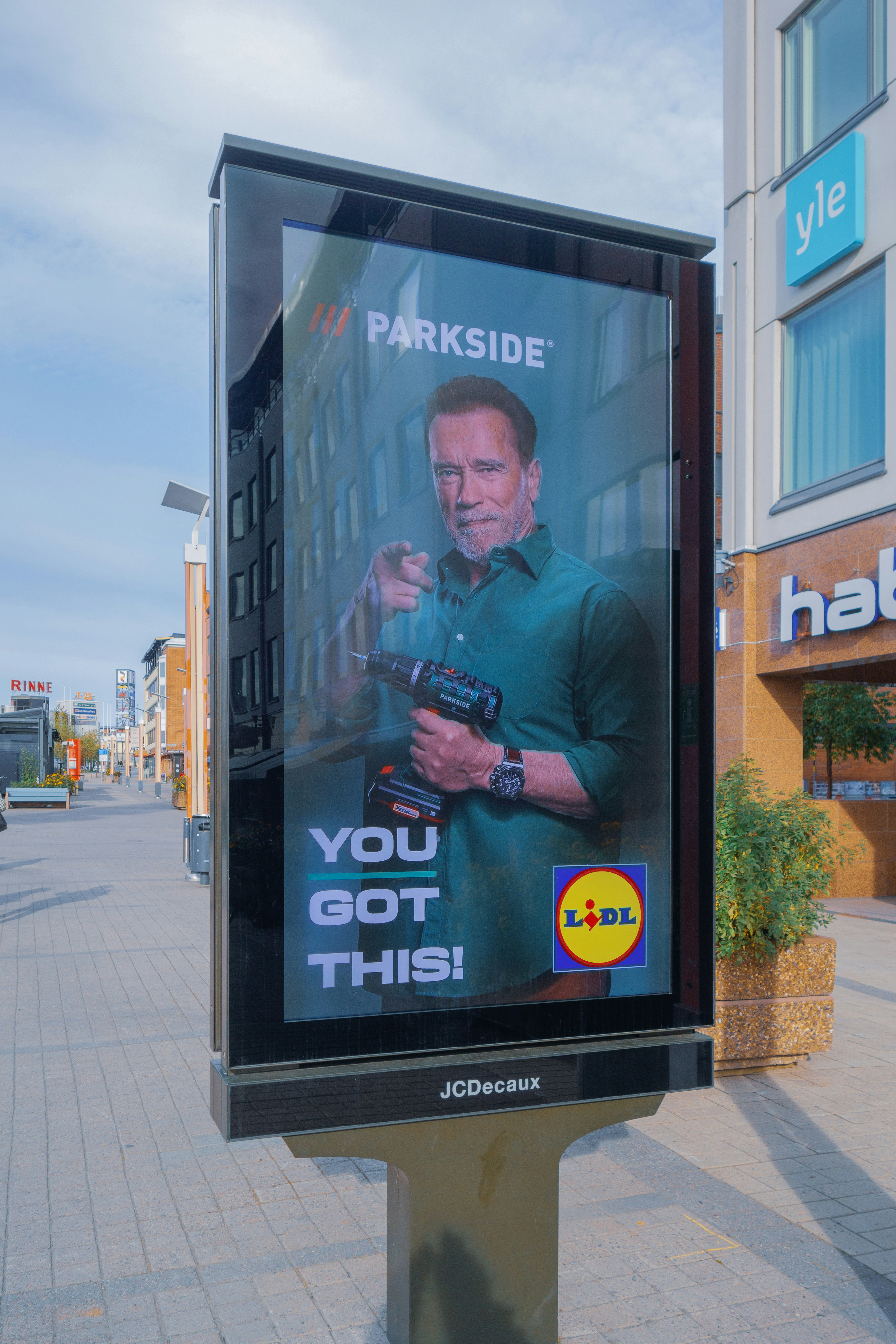
The tipping point came in March 2019, when Arnold Schwarzenegger joined TikTok and posted his first video unpaid. That was the signal: TikTok had gone mainstream in the West.
The app has been banned ( or nearly banned ) in at least six countries
Indonesia was first, in July 2018, citing harmful content for children. The ban lasted one week after TikTok assembled a local moderation team. India banned TikTok permanently in 2020 amid a border conflict with China, wiping out TikTok's largest overseas market - 200 million users, gone overnight. Pakistan imposed several brief bans. Iran banned it outright.
The U.S. saga has been the longest and loudest. It began with ByteDance's failure to report its Musical.ly acquisition to CFIUS, the federal committee that reviews foreign investments. Trump ordered a divestiture in 2020. Biden revoked that order in 2021 and issued his own review. In March 2024, Congress passed a bill requiring ByteDance to sell TikTok within 270 days or face a ban. Biden signed it the next day.
The Congressional hearing was a spectacle
In March 2023, TikTok CEO Shou Zi Chew, a Singaporean with degrees from UCL and Harvard , sat for five hours of questioning before the U.S. Congress. The hearing was supposed to be about data security. It became something stranger.
One lawmaker asked repeatedly whether Chew was a member of the Chinese Communist Party. ("Senator, I am Singaporean.") Another asked whether TikTok "accesses the home Wi-Fi network." A third fired off questions without allowing any answers. ("Can I respond?" "No, we're gonna move on.")
An international commenter wrote: "It seems the senator's attitude is that if no one admits to being Chinese today, nobody gets to go home." Another noted: "This is a hearing where you don't even get to hear the person involved speak."
TikTok's strongest card was "Project Texas" — a $1.5 billion partnership with Oracle to store all U.S. user data on Oracle's servers, with independent oversight and government audits. Congress wasn't satisfied. The hearing devolved into a loop: Chew explained the project, lawmakers objected, repeat.
TikTok's next war is in e-commerce — and it's already winning
Beyond content, ByteDance wants to sell you things. Douyin E-commerce launched in June 2020. It hit one trillion yuan in Gross Merchandise Value within two years. For comparison: Alibaba took 10 years, JD.com took 13, and Pinduoduo took nearly 5 to reach the same milestone.
TikTok Shop followed, launching across Southeast Asia, the UK, and the U.S. Indonesia temporarily shut it down in October 2023 to protect local retailers, but ByteDance partnered with local conglomerate GoTo Group and relaunched within two months.
The formula is straightforward: if you already have a billion people watching videos every day, you just put a shopping cart inside the video. The attention is already captured. The transaction is a side effect.
Recording a beautiful life?
Douyin's original launch slogan was "Recording a Beautiful Life." A decade later, the company has transformed how a generation spends its time, discovers music, buys products, and understands the world.
Whether that transformation is beautiful depends on whom you ask. A 2021 study from Zhejiang University found that personalized short videos activate the brain's reward centers in patterns similar to those seen in gaming addicts. Chinese data shows the average short-video user now watches 168 minutes per day which is nearly three hours. Children aged 4 to 15 spend 80 minutes a day on TikTok, just five minutes less than YouTube.
A Taiwanese elementary school teacher summarized it in one line: "When Douyin plays, parents' efforts go down the drain."
Elon Musk, after trying TikTok, said: "I realized their AI algorithm was probing my brain, so I uninstalled it."
One point seven billion people haven't.
About the Creator
Lucy Guo
Born and raised in Shanghai, used to live in Helsinki, Syracuse, Chicago; now living in Fairfax, VA. Researcher at the intersection of artificial intelligence and education. Loves writing AI reflection stories and travel blogs.
Enjoyed the story? Support the Creator.
Subscribe for free to receive all their stories in your feed.
Comments
There are no comments for this story
Be the first to respond and start the conversation.