
Creating Daily Rituals That Support Emotional Wellbeing
Part2

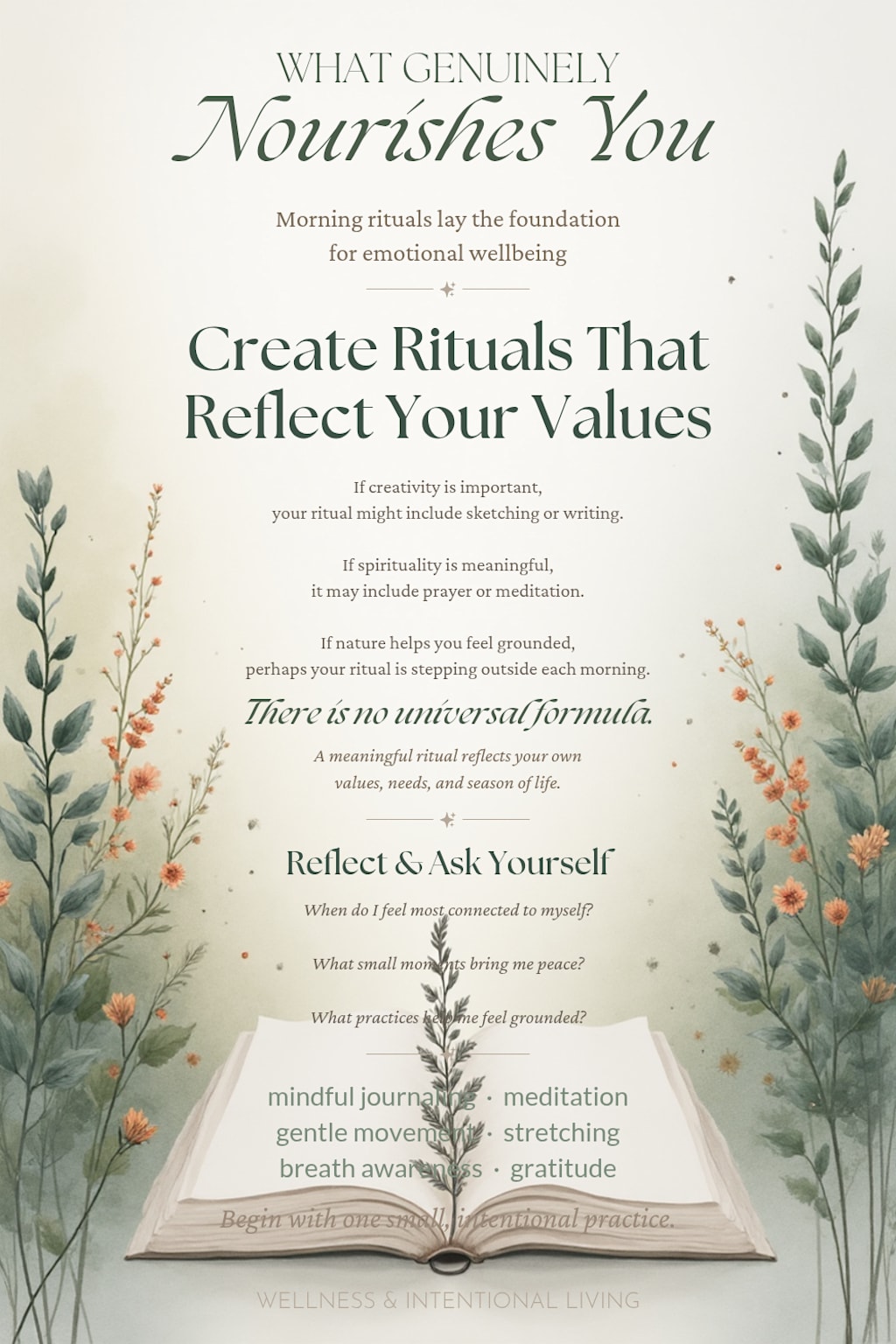
Mindfulness, Journaling, Movement, and Gratitude: Returning to Yourself Throughout the Day
If morning rituals help us begin the day with intention, the practices we return to throughout the day help us stay connected to ourselves when life inevitably becomes busy, stressful, or emotionally demanding.
Emotional wellbeing is not created by never experiencing stress. It grows through our ability to notice when we have become disconnected and gently guide ourselves back toward awareness.
This is where simple, repeatable rituals become powerful. They do not need to take an hour. Often, five or ten minutes of intentional attention can create a meaningful shift in how we experience the rest of the day.
The goal is not to escape difficult emotions but to meet them with curiosity, compassion, and presence.
Journaling: Creating a Conversation With Yourself
Journaling is one of the simplest ways to cultivate self-awareness. It is not about writing beautifully or producing something others will read. Instead, it is an invitation to listen to your own thoughts and emotions without interruption.
Many of us spend our days responding to other people’s needs, messages, and expectations. Journaling creates a space where your own voice becomes the priority.
Over time, a journal becomes a record of your growth. It reveals patterns, celebrates progress, and gently reminds you that change often happens gradually.
Morning Journal Prompts
Begin your day by asking:
How am I feeling physically today?
What emotions are present?
What am I looking forward to?
What feels heavy?
What intention would I like to carry with me today?
How can I care for myself today?
There are no right answers. Honesty matters more than positivity.
Midday Check-In
Take two or three minutes to pause and write:
What am I noticing right now?
How is my body feeling?
Have I been holding my breath?
What emotion is asking for my attention?
What do I need before I continue with my day?
These small pauses help prevent stress from quietly accumulating.
Evening Reflection
Before bed, reflect on:
What brought me joy today?
What challenged me?
What helped me feel connected?
What did I learn about myself?
What am I ready to release before tomorrow?
Rather than judging your day, simply observe it with curiosity.
Meditation: Practicing Presence
Meditation is often misunderstood as the practice of “emptying the mind.”
In reality, meditation is the practice of noticing.
Thoughts will come and go. Emotions will arise. Sensations will shift. Meditation invites us to observe these experiences without immediately reacting to them.
A few minutes of quiet awareness can become a powerful reminder that we are not our thoughts—we are the observer of them.
A Five-Minute Mindfulness Practice
Find a comfortable place to sit.
Allow your shoulders to soften.
Notice your breath as it naturally moves in and out.
You do not need to breathe in a special way.
Simply notice.
When your attention wanders—and it will—gently return your awareness to your breath.
There is no failure in meditation.
Each return is the practice.
Breath Awareness
Our breathing changes throughout the day, often without us realizing it.
Stress may lead us to hold our breath or breathe more quickly. Moments of calm often bring slower, more relaxed breathing.
Several times each day, pause and ask:
Am I breathing comfortably?
Where do I feel my breath?
Can I soften my shoulders?
What changes if I simply notice my breathing for one minute?
Breath awareness is not about forcing relaxation. It is about reconnecting with yourself.
Gentle Movement and Stretching
Our bodies carry the experiences of our days.
Hours at a desk, long commutes, difficult conversations, or emotional stress can all influence how we feel physically.
Gentle movement offers an opportunity to reconnect with the body in a caring and nonjudgmental way.
This might include:
Stretching your shoulders and neck.
Taking a slow walk outside.
Practicing gentle yoga.
Standing up between meetings.
Rolling your shoulders.
Reaching your arms overhead.
Noticing how your feet feel on the floor.
The purpose is not athletic performance.
It is awareness.
Ask yourself:
“What is my body asking for today?”
Sometimes the answer is movement.
Sometimes it is rest.
Learning to listen is the practice.
Creating a Midday Reset Ritual
Many people move through the middle of the day without ever checking in with themselves.
A five-minute reset can change that.
Consider creating a ritual like this:
Put away your phone.
Take three slow breaths.
Drink a glass of water.
Stretch for a minute or two.
Ask yourself:
What do I need right now?
How is my energy?
What would support me for the rest of the day?
This brief pause reminds your mind and body that you matter, too.
Gratitude as a Daily Practice
Gratitude is sometimes mistaken for pretending everything is positive.
Healthy gratitude is different.
It acknowledges that life contains both challenges and moments of beauty.
Practicing gratitude helps us notice experiences that we might otherwise overlook.
Some days gratitude may be expansive:
A meaningful conversation.
Time with loved ones.
Personal growth.
Other days it may be wonderfully simple:
Warm sunlight through a window.
A favorite cup of tea.
A quiet moment before work.
The comfort of a blanket.
A deep breath.
Gratitude doesn’t erase difficulty.
It reminds us that difficulty is not the whole story.
A Simple Gratitude Ritual
At the end of each day, write down three things you appreciate.
Ask yourself:
What made me smile today?
What supported me?
What beauty did I notice?
What act of kindness did I experience or offer?
What am I thankful my body allowed me to do today?
Over time, this practice encourages us to notice moments of connection throughout our day.
Creating Rituals That Fit Your Life
There is no perfect wellbeing routine.
Your rituals should fit your life—not someone else’s.
If you have five minutes, use five minutes.
If you have twenty, wonderful.
If one day all you can manage is taking a conscious breath before answering your next email, that still counts.
Consistency matters far more than complexity.
Small rituals practiced regularly become quiet reminders that your wellbeing deserves attention.
Reflection Questions
Spend a few minutes considering:
Which daily practice feels most appealing to me?
What usually prevents me from slowing down?
Which ritual would feel easiest to begin this week?
How do I know when I need to pause?
What helps me reconnect with myself?
Approach these questions with curiosity rather than self-criticism.
Every answer is simply information.
Looking Ahead
Daily rituals are not about becoming a different person—they are about becoming more present with the person you already are.
In Part 3, we’ll explore evening rituals for emotional restoration, creating a sustainable weekly rhythm of self-care, designing your own personal ritual practice, a 30-day Emotional Wellbeing Ritual Challenge, printable journal exercises, and a collection of reflection prompts to help you continue building a life rooted in mindfulness, self-awareness, and intentional living.
About the Creator
Dreadful.herbalist
Wisdom is only found by those that learn.
Enjoyed the story? Support the Creator.
Subscribe for free to receive all their stories in your feed.
Comments
There are no comments for this story
Be the first to respond and start the conversation.