
The Most Dangerous War of the Future
How Global Rivalries Could Lead Humanity Toward a New World Crisis

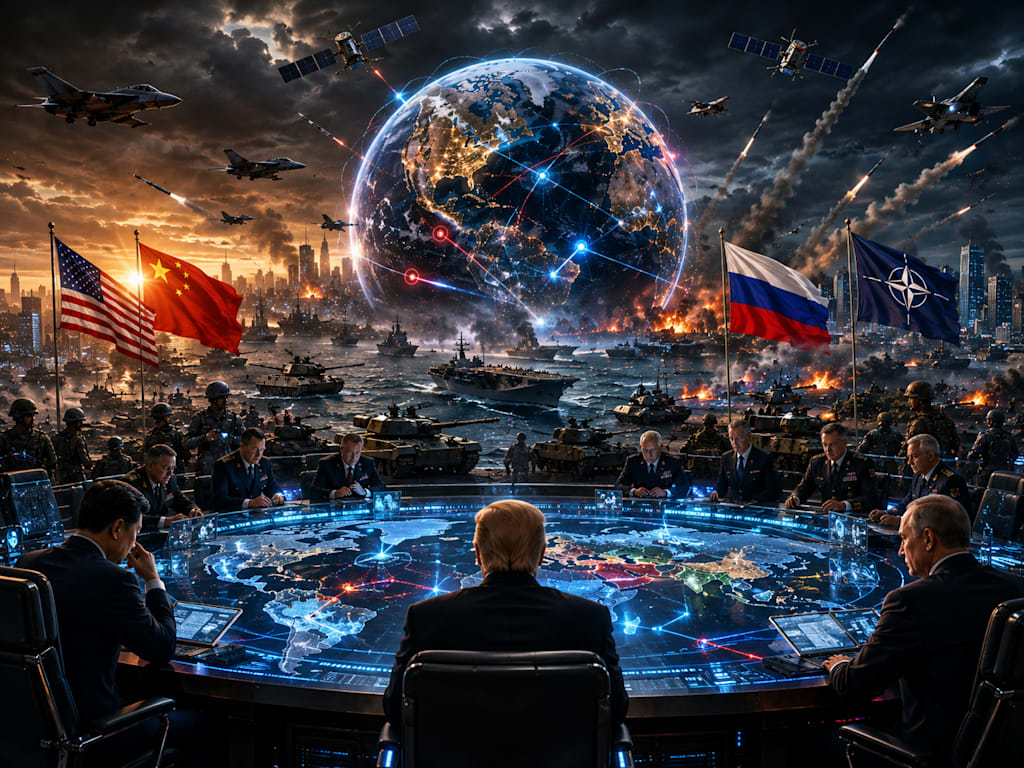
The Most Dangerous War of the Future
The year was 2040. The world had become more advanced than ever before. Artificial intelligence managed cities, self-driving vehicles filled the roads, and powerful computers controlled critical infrastructure. Humanity had achieved remarkable technological progress, yet beneath the surface, dangerous tensions were growing between the world's most powerful nations.
For decades, political leaders had warned about the possibility of a future global conflict. Most people believed that modern countries were too economically connected to fight another major war. However, history had shown that competition for power, resources, and influence could still push nations toward confrontation.
The most dangerous future war was not expected to begin with soldiers crossing borders. Instead, it would likely start with technology, cyberattacks, economic pressure, and strategic rivalry. The center of this growing tension was the competition between major world powers.
In Asia, tensions surrounding Taiwan had become increasingly serious. China viewed Taiwan as part of its territory, while Taiwan maintained its own government and democratic system. The United States and several allies supported Taiwan's security. Military exercises in the region became larger each year, and warships regularly patrolled nearby waters.
At the same time, Europe remained concerned about relations between Russia and NATO countries. Although diplomacy continued, military forces on both sides maintained high levels of readiness. Any misunderstanding, accident, or political crisis could potentially trigger a larger confrontation.
The Middle East was another region of concern. Conflicts involving Iran, Israel, and neighboring countries occasionally threatened global stability. Because the region contained important energy resources and strategic trade routes, any major war there could affect the entire world economy.
Yet the greatest danger was not any single country. The real threat came from alliances. History showed that large wars often expanded because nations supported their partners. A local conflict could quickly involve multiple countries and eventually spread across continents.
By 2040, warfare itself had changed dramatically. Artificial intelligence played a major role in military operations. Autonomous drones could identify targets, cyber systems could disable power grids, and advanced satellites monitored military movements around the globe.
One morning, a mysterious cyberattack struck several major cities. Electricity failed, communication networks collapsed, and financial systems stopped functioning. Governments immediately accused rival nations of conducting the attack. Stock markets crashed, public fear spread rapidly, and military forces moved into defensive positions.
No missiles had been launched, yet the world was already experiencing the first stages of a modern conflict.
Social media made the situation worse. False information spread faster than facts. Millions of people shared unverified reports, increasing panic and mistrust. Governments struggled to control misinformation while attempting to avoid military escalation.
As tensions grew, leaders faced difficult choices. Some demanded stronger military responses. Others urged diplomacy and patience. The future of humanity depended on decisions made in a matter of days.
Scientists warned that a large-scale war between major powers would be unlike anything in history. Modern weapons were far more destructive than those used in previous conflicts. Nuclear arsenals remained capable of devastating entire regions within minutes.
The possibility of nuclear escalation terrified world leaders. Even a limited nuclear exchange could cause environmental damage, economic collapse, and humanitarian disasters affecting billions of people.
Fortunately, diplomats from around the world worked tirelessly to prevent disaster. Emergency negotiations began through international organizations and direct communication channels. Military commanders established contact to reduce misunderstandings and prevent accidental escalation.
After weeks of intense negotiations, evidence finally revealed that the original cyberattack had been conducted by a small extremist group rather than a national government. The discovery prevented a catastrophe that could have changed human history forever.
The crisis became a powerful lesson for the world. Leaders realized that future wars would not always begin with armies crossing borders. Technology, misinformation, cyberattacks, and artificial intelligence could create conflicts capable of threatening global peace.
The experience encouraged countries to improve international cooperation, strengthen cybersecurity, and develop rules for responsible use of artificial intelligence. Although political competition continued, nations recognized that some challenges required collective action.
The most dangerous war of the future is not inevitable. Humanity possesses both the technology to create unprecedented destruction and the wisdom to prevent it. The future will depend on diplomacy, responsible leadership, and the willingness of nations to choose cooperation over confrontation.
The lesson remains clear: the greatest victories are not won on battlefields but through peace, understanding, and the determination to protect future generations from the tragedies of war.
About the Creator
Wings of Time
I'm Wings of Time—a storyteller from Swat, Pakistan. I write immersive, researched tales of war, aviation, and history that bring the past roaring back to life
Enjoyed the story? Support the Creator.
Subscribe for free to receive all their stories in your feed.
Comments
There are no comments for this story
Be the first to respond and start the conversation.