
Don't Confuse Schooling With Education
Elon Musk's Most Thought-Provoking Quote
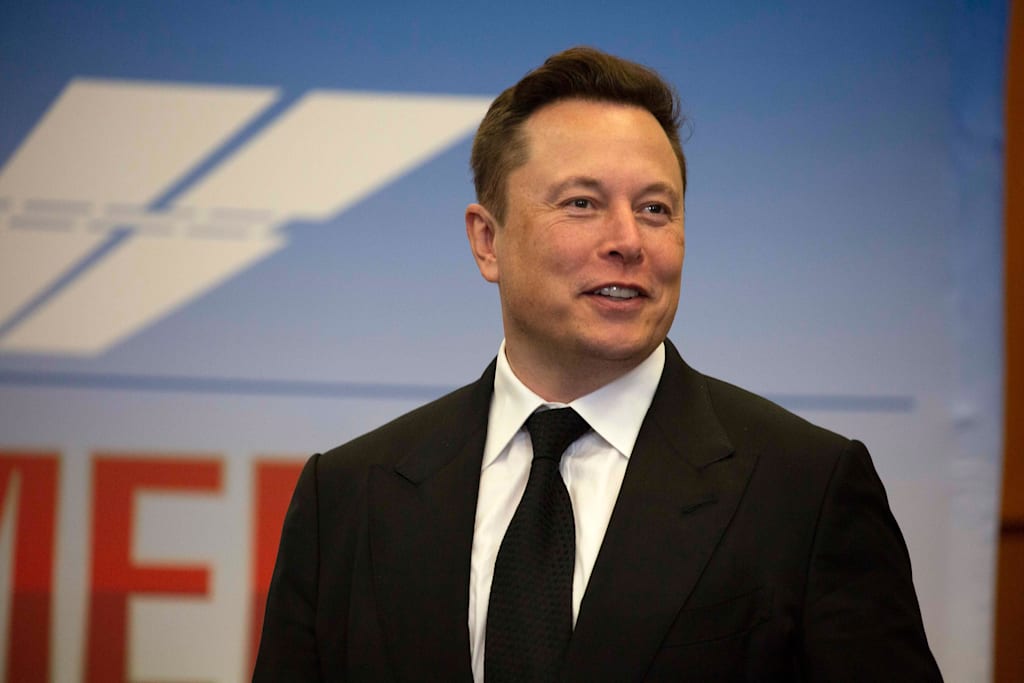
That one line. Twelve words in the first sentence, and yet it carries enough weight to make you stop, sit back, and rethink everything you were told about success growing up. Elon Musk — the man behind Tesla, SpaceX, and arguably one of the most disruptive minds of the 21st century — wasn't bragging when he said this. He was drawing a line. A very important line that most people spend their entire lives never noticing.
So let's talk about it.
From the moment most of us could understand language, we were handed a script. Study hard. Get good grades. Go to a prestigious university. Get a degree. Get a good job. That was the formula. That was the promise. And for a long time, it worked — at least on paper.
But somewhere along the way, the formula started showing its cracks. Brilliant people with first-class degrees found themselves unemployed. College dropouts built billion-dollar companies. Kids who barely survived high school became self-made millionaires through YouTube, coding, trading, and entrepreneurship. And the world started asking a question it had been too afraid to ask before: what exactly is education, and are we doing it right?
Musk's quote doesn't just ask that question. It answers it.
This is the core of what Musk is saying, and it's more radical than it sounds. Schooling is a system. It is structured, institutional, and standardized. You enroll, you follow a curriculum, you sit exams, and if you pass, you receive a certificate that the world is supposed to treat as proof of your intelligence and capability. It has a beginning, a middle, and an end.
Education is something else entirely. Education is the lifelong process of acquiring knowledge, developing judgment, sharpening your thinking, and learning how to solve real problems. It has no certificate, no graduation ceremony, and no end date. It happens in libraries, in garages, in failure, in conversation, in travel, and in the quiet hours someone spends obsessively reading about something they love.
One is a process. The other is an outcome. And Musk is pointing out that we have spent generations confusing the two.
It would be easy to dismiss this sentiment if it came from someone with no academic background. But Musk himself is not anti-education in the traditional sense. He attended the University of Pennsylvania, where he earned two bachelor's degrees — one in economics from the Wharton School and one in physics. He then enrolled in a PhD program in energy physics at Stanford University. He left after just two days.
Not because he couldn't hack it. But because he had decided there were more urgent problems to solve in the real world than in a classroom. He walked away from one of the most prestigious academics programmed on earth to go and build companies. That decision led to PayPal, SpaceX, Tesla, Neuralink, and everything in between.
What shaped Musk's thinking wasn't just university lectures. He has spoken openly about being a voracious reader from a young age — devouring books on physics, philosophy, science fiction, and biography. He reportedly read through the entire Encyclopedia Britannica as a child. He taught himself rocket science by reading textbooks and consulting engineers. That is not schooling. That is education in its rawest and most powerful form.
To be fair, formal education has genuine value, and it would be intellectually dishonest to pretend otherwise. Schools and universities provide structure, mentorship, foundational knowledge, and a social environment that shapes young people in important ways. A medical doctor needs formal training. An engineer needs to understand mathematics at a deep and rigorous level. A lawyer needs to know the law inside and out. There are fields where structured schooling is not optional — it is essential.
But here is where the system falls short. The traditional classroom is extraordinarily good at testing memory and rewarding compliance. It is far less effective at nurturing creativity, critical thinking, resilience, and adaptability — the very skills that determine who thrive in the real world. You are rarely asked in school to sit with an unsolved problem and figure it out yourself. You are rarely rewarded for thinking differently from the textbook. You are almost never graded on your ability to collaborate, lead, or fail and recover.
And yet those are precisely the skills that employers, entrepreneurs, and the modern world demand most.
The 21st century has done something remarkable. It has democratized knowledge in a way that no previous generation could have imagined. The internet has made it possible for a teenager in Kumasi, a farmer in rural India, or a single mother in Lagos to access the same information as a student at Harvard — for free. Platforms like YouTube, Coursera, Khan Academy, and countless others have made world-class learning available to anyone with a phone and a data connection.
This is not a small thing. This is a revolution. And it is forcing the world to fundamentally rethink what credentials mean and what competence actually looks like. Companies like Google, Apple, IBM, and Tesla have publicly stated that they no longer require university degrees for many of their positions. What they want is proof that you can think, build, and solve problems. How you got that ability is increasingly irrelevant.
Musk's quote anticipated this shift. It was a warning, years before the rest of the world caught up.
Perhaps the deepest message in Musk's words is about curiosity. Every extraordinary learner in history — from Leonardo da Vinci to Benjamin Franklin to Marie Curie — was first and foremost defined by an insatiable hunger to understand the world. They asked questions that made people uncomfortable. They refused to accept received wisdom without testing it. They learned across disciplines, connected dots that others missed, and applied knowledge in ways no classroom could have prescribed.
Curiosity cannot be taught in the traditional sense. It can only be sparked and then nurtured. And unfortunately, conventional schooling — with its rigid timetables, standardised tests, and one-size-fits-all curriculum — can sometimes do the opposite. It can quietly teach children that learning is something you do because you have to, not something you do because the world is endlessly fascinating.
The people who win in the long run are the ones who never stopped being curious. The ones who read after the exam is over. The ones who ask "why" when the lesson has moved on. The ones who stayed students long after they stopped being pupils.
Musk's quote is not an attack on universities. It is not a license to drop out of school and declare yourself self-taught. It is something more nuanced and more powerful than either of those things.
It is a reminder that a degree is a starting point, not a destination. That the real education begins the moment the structured one ends — or perhaps runs alongside it the entire time. That the most dangerous thing you can do is mistake the certificate on your wall for the full measure of what you know and what you are capable of becoming.
The people who work for Elon Musk went to Harvard. But the person asking them the questions — the person setting the vision, building the rockets, and rewriting the rules — didn't need to.
Think about what that means. Then go and learn something today that nobody assigned you.
About the Creator
Enjoyed the story? Support the Creator.
Subscribe for free to receive all their stories in your feed.
Comments
There are no comments for this story
Be the first to respond and start the conversation.