
Advice for Preachers and Bible Teachers: "Teach Your Congregation to Fish"
Preachers and Bible teachers should teach believers to launch into the deep and feed themselves on the Word of God.


Every Sunday, millions of believers gather in churches and sit in pews waiting for a free meal. They are ready to receive a neatly prepared to eat a meal they didn't cook. For that day, their spiritual hunger is satisfied. They leave full, but by Wednesday, the nourishment fades. They find themselves starving again, entirely dependent on the next weekly delivery.
Preachers and Bible teachers should ask themselves: Are we running a spiritual soup kitchen, or are we raising an army of deep-sea fishermen?
There is an old, profound proverb that perfectly mirrors the heartbeat of true discipleship:
"Give a man a fish, and you feed him for a day; teach a man to fish, and you feed him for a lifetime."
When applied to the Bible, this is the dividing line between consumer Christianity and a living, breathing faith. If leaders hand out only theological fish, they keep believers dependent on them. But if they teach them how to cast their own nets into the Word, they feed them for eternity.
The Trap of the Ready-Made Meal
It is incredibly easy to fall into the habit of spoon-feeding the saints. Ready-made meals are comfortable. When a teacher handles all the research, untangles the cultural context, and serves up three clean application points, the congregation gets a quick dose of inspiration.
A continual diet of exclusively pre-caught fish is what Hebrews 5:12 addresses and warns those who rely entirely on others for spiritual food:
"For though by this time you ought to be teachers, you need someone to teach you again the first principles of the oracles of God; and you have come to need milk and not solid food."
When believers face a sudden storm—a crisis of faith, a moral dilemma, or a crushing heartbreak—they cannot wait until Sunday morning for a word. If they don't know how to drop an anchor into the Bible for themselves, they will drift. Spoon-fed Christians are highly vulnerable to the shifting currents of culture and false teaching because they have never learned to test the waters themselves.
Testing the Water: Learning the Geography of Scripture
Teaching someone to fish begins by introducing them to the environment. You cannot catch anything if you do not understand where the fish hide. In biblical literacy, this means moving beyond random, isolated proof-texts and learning the grand narrative of the text.
Therefore, it is wise to teach believers how to read the water. This means understanding:
The Topography: Recognizing the difference between deep narrative waters (like Genesis or Acts), the swift-moving streams of poetry (like the Psalms and Proverbs), the Gospels (Matthew, Mark, Luke, and John), and the Pauline Epistles.
The Climate: Looking at the historical and cultural context. Who was writing? What was going on at the time of the writing?
The Current: Tracking the overarching theme of redemption that flows from Genesis to Revelation.
When students of the Word learn the landscape, they no longer wander aimlessly. They know exactly where to cast their line to find substantive truth whenever they need it the most.
The Tackle Box: Equipping with the Right Tools
An expert fisherman does not rely on luck. He relies on what's in his tackle box and his techniques. If leaders want people to feed themselves, they must make sure their own theological tackle box is stocked with practical, accessible tools.
Instead of just telling people what a verse means, take them through the process to arrive at the spiritual conclusion with the tools they have.
Observation (The Hook): Look closely at the text. What does it actually say? What words are repeated? What is the context?
Interpretation (The Reel): Teach them to pull the meaning out of the text like a fisherman pulls in a fish rather than reading their own ideas into it. Bridge the gap between ancient history and modern times.
Life Application (The Catch): What does the verse provoke the reader to do? Students of the Word must do something with what they have read, just as a fisherman must do something with that fish dangling on the end of his line.
Becoming Fishers of Men
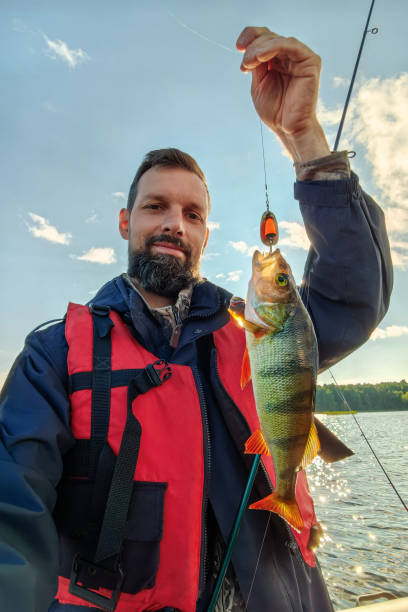
When Jesus called His first disciples along the Sea of Galilee, He didn't promise them a lifetime supply of free fish of various kinds. In Matthew 4:19, He said:
"Follow Me, and I will make you fishers of men."
The ultimate goal of teaching a man to fish is that he eventually runs out of room in his own boat and begins feeding others. Spiritual maturity is reproductive. People who know how to feed themselves from the Word of God naturally become a guide for those still sitting on the bank or sitting in pews, being hungry for food. They share their tools, they teach the techniques, and everyone eats fish wherever they want it, and not just on Sunday mornings and Wednesday nights.
Don't be satisfied with full pews on Sunday that become empty vessels by Tuesday. Pack up the ready-made meals, hand over the rods, and launch out into the deep with your congregation. Surely, it takes more time, more patience, and far more effort to train a fisherman than it does to hand out a free meal, but it is the only way to ensure the next generation is fed for a lifetime.
Use the old, profound proverb every time you teach and preach and go fishing with members of your church
"Give your congregation a fish, and you feed everyone for a day; teach them to fish, and you feed all of them for a lifetime."
About the Creator
Margaret Minnicks
Margaret Minnicks has a bachelor's degree in English. She is an ordained minister with two master's degrees in theology and Christian education. Thanks for reading and sending TIPS her way.
Enjoyed the story? Support the Creator.
Subscribe for free to receive all their stories in your feed. You could also become a paid subscriber, letting them know you appreciate their work.
Comments
There are no comments for this story
Be the first to respond and start the conversation.