
Why I Stopped Telling My Patients They Were "Burnt Out"
The real neurological reason your brain feels completely fried—and why a vacation won't fix it.

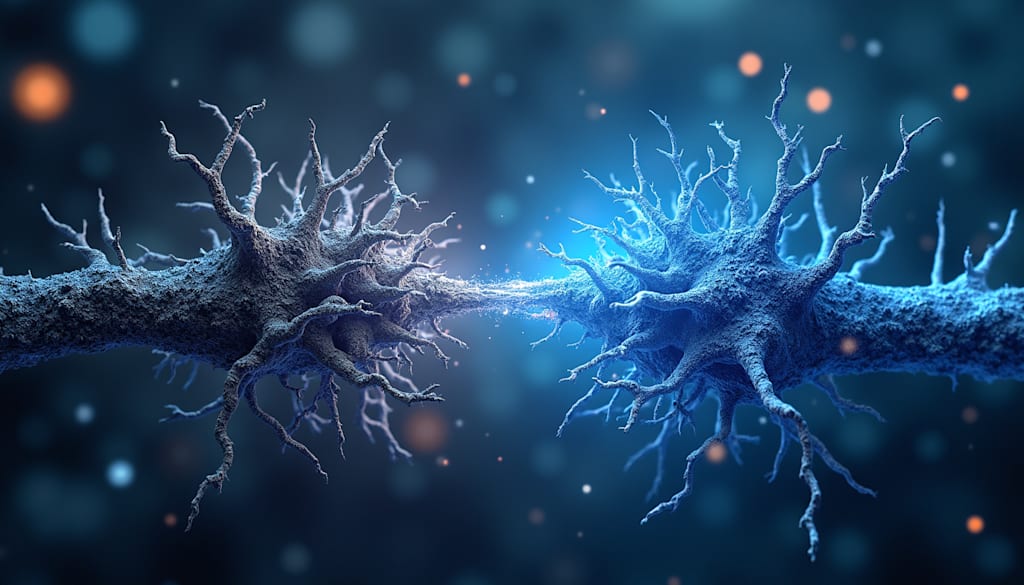
A patient sat in my clinic last month, staring at the floor. She was a high-performing executive, and she told me she was completely burned out. She couldn't focus, she couldn't remember basic details, and she was sleeping ten hours a night without feeling rested.
I told her I wasn't going to treat her for burnout. Because burnout isn't a neurological state—it's just a buzzword we use when we don't understand what's actually happening in the brain.
What she was experiencing was neural saturation. And it's happening to almost all of us.
In my work looking at neuroplasticity and human performance, I see the same devastating pattern over and over. We are the first humans in history to never experience true silence. Before our feet even hit the floor, we’re flooding our brains with a firehose of sensory input.
Our biological hardware was never built for this. When you keep the brain in a state of continuous high alert, you aren't just getting "tired." You are actively draining your neurotransmitter reserves and pushing your nervous system into chronic dysregulation. You cannot sleep off this kind of exhaustion.
To understand why we feel like we're losing our minds, we have to talk about the biggest misconception in pop science today: dopamine.
Dopamine is not the pleasure chemical. It is the molecule of anticipation and craving. Every time you pull down to refresh a feed or tap a notification, your brain gets a micro-hit. It thinks: Hey, pay attention, something important is here.
But the brain is obsessed with balance. When you spike your dopamine 500 times a day with digital stimuli, the brain tries to protect itself by downregulating your receptors. It turns down the volume. It numbs you.
This is why you can scroll for an hour, feel completely hollow, yet physically feel unable to stop. You’ve pushed your baseline so low that your normal life feels painfully dull. You aren't lazy. Your neurochemistry has been muted.
Then there is the hidden trap I see destroying people's focus: attention residue.
You’re working on a project, and you take "two seconds" to check an email. You think you go right back to work, but your brain doesn't. It takes the human mind an average of twenty minutes to regain deep focus after a single interruption. If you interrupt yourself every fifteen minutes, you never actually focus. You just burn through your brain's primary fuel—glucose—by context switching. That 3:00 PM brain fog? That’s the metabolic tax you pay for it.
So, how do we fix a brain that is short-circuiting? Just "taking a break" is physiologically useless. You have to strategically starve the brain of stimulation so the receptors can upregulate.
I walk my patients through a 48-hour sensory fast. The first 24 hours require the total elimination of artificial dopamine triggers—no scrolling, no quick checks. It is intensely uncomfortable. People hit a wall of profound, itchy boredom and want to quit. But that boredom is the exact mechanism of healing. It is the silence the brain needs to recalibrate its baseline.
Once the digital noise subsides, you have to actively signal safety to your nervous system to engage the parasympathetic system. Long walks without audio. Reading physical paper. Slow breathing. This tells the amygdala the threat is gone, allowing the prefrontal cortex—the seat of your executive function—to come back online.
Being "always on" feels like a modern requirement, but it is a physiological choice with a massive price tag. Real high performance isn't about how much stress you can endure; it's about how deeply you can recover. When you reclaim your neural baseline, you don't just survive your day. You actually take control of it.
About the Creator
Josh Ores
Neurologist & researcher. If your brain feels fried from digital overload, discover the clinical protocols to reset your focus. Get my books here: Official Hub: Neuro-Flow Clinical Hub
Enjoyed the story? Support the Creator.
Subscribe for free to receive all their stories in your feed.
Comments
There are no comments for this story
Be the first to respond and start the conversation.