
The Silent Threat: Why Most People Lose a Fight Before It Even Begins — And How to Stop It
How real‑world self‑defense, psychology, and situational awareness can help you end danger fast without becoming violent.
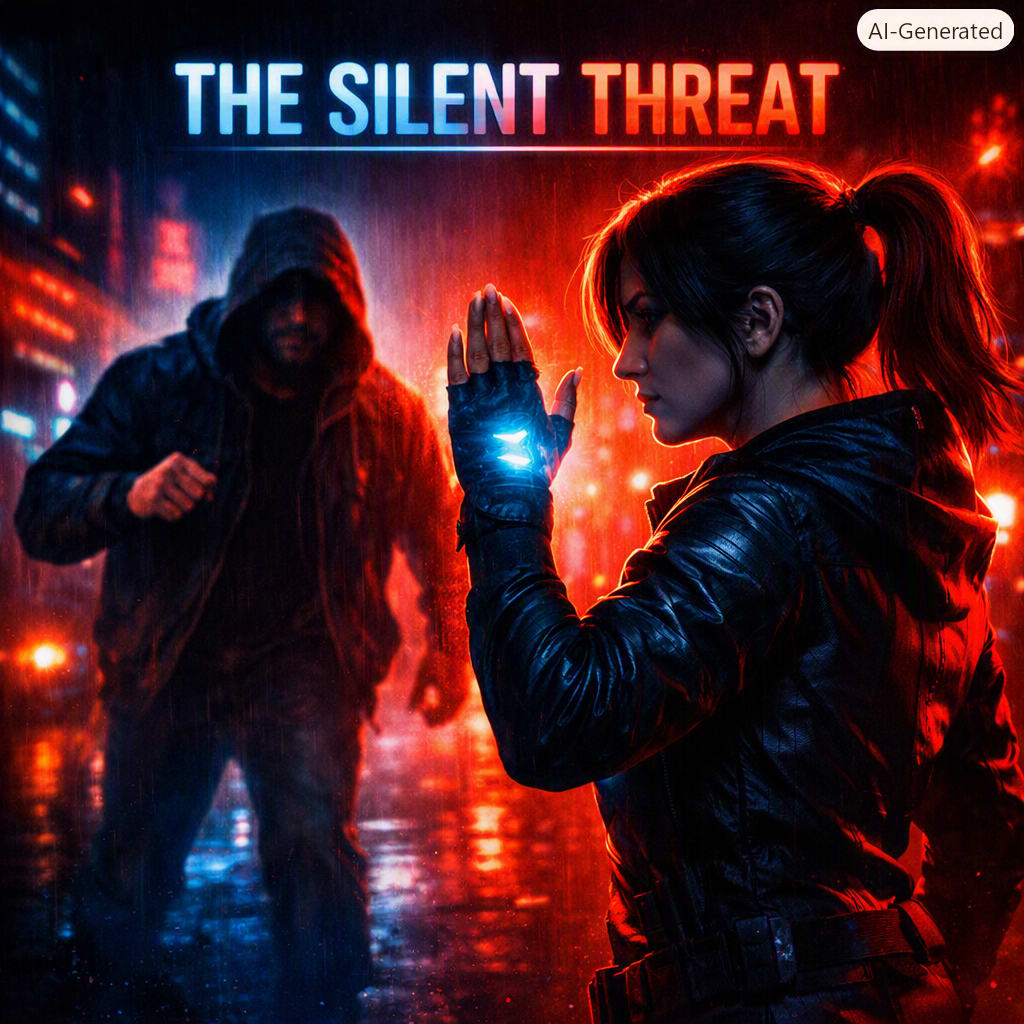
Introduction: The Fight You Never See Coming
Most people imagine self‑defense as a dramatic moment: a punch thrown, a kick delivered, a sudden explosion of movement. But in the real world — in the streets of Marseille, in a parking lot at night, in a crowded train station — danger doesn’t announce itself. It doesn’t give you time to prepare. It doesn’t wait for you to “get ready.”
It simply appears.
And when it does, most people lose before the first strike is thrown.
Not because they’re weak.
Not because they’re slow.
But because they never learned the one truth that defines real‑world protection:
Self‑defense is 90% psychology and 10% technique.
This article is not about martial arts. It’s not about fighting. It’s about ending danger fast, with clarity, decisiveness, and the kind of awareness that keeps you alive when others freeze.
If you’ve ever wondered why some people survive violent encounters while others collapse under pressure, keep reading — this is the part nobody teaches.
1. The Hidden Enemy: Your Own Nervous System
When danger appears, your brain doesn’t think — it reacts.
Your nervous system switches into fight, flight, or freeze, and here’s the uncomfortable truth:
Most people freeze.
Not because they’re cowards, but because their brain is overwhelmed by sensory overload. The threat feels too sudden, too close, too real.
Your vision narrows.
Your hearing distorts.
Your breathing becomes shallow.
Your hands shake.
Your mind goes blank.
This is not weakness.
This is biology.
And unless you train your mind to override this freeze response, no technique — no punch, no kick, no “self‑defense move” — will save you.
This is why real self‑defense begins with situational awareness, not physical action. If you want to go deeper into this mindset, check out my related story: Situational Awareness: The Skill That Saves Lives.
2. The One‑Second Window: Where Survival Happens
Every violent encounter has a moment — a tiny, invisible window — where the outcome is decided.
It lasts one second.
One second where you either:
act,
freeze,
or hesitate.
Hesitation is the most dangerous.
It’s the moment where your brain tries to “understand” what’s happening instead of responding.
But violence doesn’t wait for understanding.
This is why elite protectors, security agents, and trained civilians rely on a simple principle:
React first, analyze later.
Not blindly.
Not emotionally.
But decisively.
Your reaction must be:
simple
direct
fast
and final
This is the foundation of the One‑Shot Fight Ender mindset — not a technique, but a philosophy: end the threat before it escalates.
3. The Psychology of Predators: Why They Choose You
Violent individuals don’t attack randomly.
They choose targets based on behavioral cues.
Here’s what predators look for:
1. Distraction
Phone in hand, head down, unaware of surroundings.
2. Hesitation
Someone who looks unsure, slow, or mentally absent.
3. Compliance energy
People who appear afraid of confrontation.
4. Isolation
Moments where you’re alone, cornered, or separated from others.
5. Predictability
Routine movements, same path, same habits.
Predators don’t want a fight.
They want a victim.
Your job is to make yourself unpredictable, aware, and decisive — the three traits predators avoid.
If you embody these traits, most threats dissolve before they begin.
4. The Myth of Technique: Why Most Self‑Defense Fails
Movies and martial arts schools teach complex movements:
spinning kicks
elaborate locks
fancy takedowns
multi‑step sequences
In real violence, these fail.
Not because they’re bad techniques, but because they require:
space
time
precision
calm
and training
Real violence gives you none of these.
This is why real‑world self‑defense focuses on:
simple movements
gross motor skills
high‑percentage actions
fast execution
maximum disruption
The goal is not to “win a fight.”
The goal is to end the threat instantly.
One decisive action.
One interruption.
One break in the attacker’s momentum.
That’s all.
5. The One‑Shot Fight Ender: The Philosophy
The One‑Shot Fight Ender is not a technique.
It’s a mindset.
It means:
You don’t wait.
You don’t negotiate with danger.
You don’t try to “fight.”
You don’t try to “win.”
You act with one clear objective:
Interrupt the attacker’s ability to continue.
This can be:
a push
a strike
a shove
a break in balance
a sudden movement
a loud command
a rapid escape
The “shot” is not always physical.
Sometimes the fight ender is leaving before the threat escalates.
Sometimes it’s changing direction.
Sometimes it’s creating distance.
Sometimes it’s using your voice.
The philosophy is simple:
End the danger, not the fight.
6. The Art of Pre‑Conflict: Winning Before It Starts
Most self‑defense happens before physical contact.
Here’s how trained individuals avoid danger:
1. Reading micro‑behaviors
Shoulder shifts, hand movements, eye patterns.
2. Positioning
Never letting someone get too close without reason.
3. Boundary setting
Clear verbal and non‑verbal signals.
4. Escape routes
Always knowing where to move.
5. Environmental awareness
Light, exits, obstacles, crowds.
This is the part civilians ignore — and the part professionals master.
If you want to survive danger, you must learn to see the threat before it becomes a threat.
7. The Freeze Breaker: How to Act When Your Mind Shuts Down
When your brain freezes, you need a trigger — a mental switch that forces action.
Here are the most effective freeze breakers:
1. A verbal cue
A word you say to yourself:
“Move.”
“Now.”
“Go.”
2. A physical cue
Touching your chest, clenching your fist, shifting your weight.
3. A visual cue
Focusing on one object: the attacker’s hand, shoulder, or direction.
These cues override panic and activate action.
They turn fear into movement.
8. The Aftermath: What Nobody Talks About
Surviving a violent encounter is not the end.
It’s the beginning.
After danger, your body floods with:
adrenaline
cortisol
tremors
confusion
emotional shock
You may feel:
anger
guilt
fear
numbness
disbelief
This is normal.
Real self‑defense includes post‑event recovery, not just physical action.
You must learn to:
breathe
stabilize
call for help
report
decompress
regain clarity
Survival is not just physical.
It’s psychological.
9. The Truth Nobody Wants to Admit
Most people think they’ll rise to the occasion.
They won’t.
They’ll fall to the level of their preparation.
This is why self‑defense is not about strength.
It’s not about size.
It’s not about fighting.
It’s about:
awareness
decisiveness
simplicity
psychology
clarity
and mindset
If you master these, you don’t need to be strong.
You just need to be ready.
Conclusion: The Fight You Avoid Is the Fight You Win
Real self‑defense is not about violence.
It’s about ending danger before it begins.
If you understand your nervous system, read human behavior, and act decisively, you become someone predators avoid — not because you’re aggressive, but because you’re aware.
And awareness is the ultimate weapon.
If this article helped you see self‑defense differently, share it — someone you know might need it someday.
If you want to go deeper into the mindset behind fast reactions, check out my related story: The One‑Shot Fight Ender — How a Simple Self‑Defense Mindset Can Save Your Life in 2026
About the Creator
abidi
I write about practical preparedness and everyday safety with a human, down‑to‑earth voice. More of my work here: https://linktr.ee/hnajet32
Enjoyed the story? Support the Creator.
Subscribe for free to receive all their stories in your feed.
Comments
There are no comments for this story
Be the first to respond and start the conversation.