
The Importance of Core Strength in Lower Back Pain Relief
Core Strengthening to Treat Lower Back Pain

Lower back pain is a prevalent issue affecting millions of people worldwide. It can be debilitating, significantly impacting one’s quality of life. While there are various treatments and interventions for lower back pain, one often-overlooked yet highly effective approach is strengthening the core muscles. Core strength plays a crucial role in preventing and alleviating lower back pain. In this article, we’ll explore why core strength is essential for lower back pain relief and how strengthening your core can improve posture, stability, and overall spinal health.
Understanding Lower Back Pain
Before delving into the role of core strength, it's essential to understand the nature of lower back pain. The lower back is made up of muscles, bones, ligaments, and discs that support the spine and enable movement. Pain in this area can result from various factors, including muscle strain, poor posture, herniated discs, or degenerative changes in the spine. In many cases, chronic lower back pain arises from weak or imbalanced muscles, especially those surrounding the core.
Core muscles include the muscles in the abdomen, lower back, hips, and pelvis. These muscles are responsible for supporting the spine and providing stability during movement. When these muscles are weak, the spine is left vulnerable to injury, which can lead to ongoing discomfort and pain.
The Role of Core Strength in Lower Back Pain Relief
1. Supporting the Spine and Reducing Pressure
The core muscles serve as a natural support system for the spine. When the muscles of the abdomen, lower back, and pelvis are strong, they work together to support the spine, reduce pressure on the vertebrae and discs, and help maintain proper posture. A strong core prevents excessive strain on the spine, minimizing the risk of injury and pain.
For individuals with lower back pain, strengthening the core can be a game-changer. Pain specialists and pain management specialists often recommend exercises that target these core muscles to help relieve pressure on the lower back. For example, exercises like planks, bridges, and pelvic tilts can help activate the core muscles and alleviate discomfort in the lower back.
2. Improving Posture and Alignment
Poor posture is one of the primary causes of lower back pain. Slouching or sitting for prolonged periods without proper back support can place undue stress on the spine. Core strength plays a critical role in improving posture by helping the muscles maintain spinal alignment. Strong core muscles provide the stability needed to keep the pelvis and spine in their optimal positions, reducing the likelihood of pain.
Regular core strengthening exercises can also enhance overall posture, helping individuals with lower back pain stand, sit, and move more comfortably. This improvement in posture can significantly alleviate the pressure placed on the lower back, leading to better spinal health over time.
3. Enhancing Flexibility and Mobility
A strong core contributes not only to stability but also to flexibility. Tight muscles in the lower back, hips, and abdomen can restrict movement, contributing to pain and stiffness. Core strengthening exercises often incorporate movements that promote flexibility, such as stretching the hamstrings, hip flexors, and lower back muscles.
By improving flexibility through core strength exercises, individuals can experience greater range of motion, reducing the tightness and discomfort associated with lower back pain. Additionally, strengthening the core muscles can prevent muscle imbalances that may lead to further strain on the spine and lower back.
4. Preventing Future Injuries
For individuals with a history of lower back pain, core strengthening is an essential part of injury prevention. Strong core muscles provide better support during everyday activities and movements, reducing the risk of re-injury. Whether lifting objects, bending, or performing athletic activities, having a strong core helps maintain proper posture and alignment, lowering the chances of putting undue stress on the lower back.
Pain specialists often emphasize the importance of core stability in rehabilitation programs for individuals recovering from lower back injuries. A well-designed core strengthening regimen can help prevent the recurrence of pain and reduce the need for more invasive treatments.
5. Reducing the Need for Medication and Invasive Treatments
One of the significant advantages of core strength exercises for lower back pain relief is that they offer a non-invasive, drug-free solution. Many individuals with chronic lower back pain rely on pain medications or injections to manage their symptoms. While these treatments can provide temporary relief, they do not address the underlying causes of pain.
Core strengthening exercises, on the other hand, target the root cause of the pain by improving muscle strength, spinal alignment, and mobility. By incorporating core exercises into a daily routine, individuals can experience lasting relief and potentially reduce their reliance on medications or other treatments. For more severe cases, pain management specialist doctors may suggest additional treatments such as physical therapy, spinal cord stimulators, or surgery, but core strengthening can still play a complementary role in long-term recovery.
Core Strengthening Exercises for Lower Back Pain Relief
Now that we understand the importance of core strength in alleviating lower back pain, let’s explore some exercises that can help target the muscles responsible for stabilizing the spine:
1. Planks
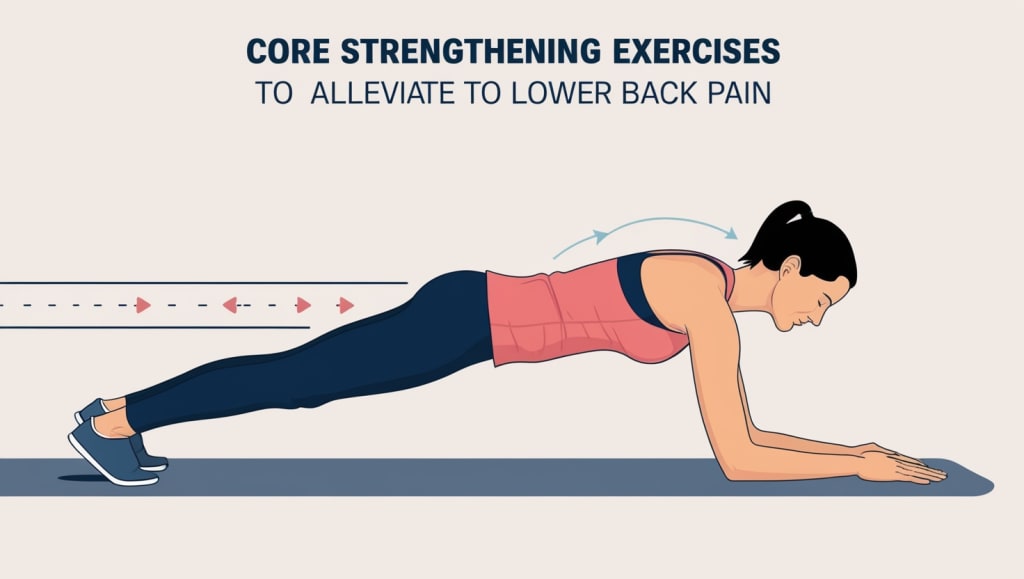
Planks are a simple yet effective exercise for building core strength. To perform a plank, start in a push-up position with your forearms resting on the ground. Keep your body in a straight line from head to heels, engaging your core muscles throughout. Hold the position for 20 to 30 seconds, gradually increasing the duration as your strength improves.
2. Bridges
The bridge exercise targets the lower back, hips, and glutes. To perform a bridge, lie on your back with your knees bent and feet flat on the floor. Lift your hips toward the ceiling, squeezing your glutes and engaging your core muscles. Hold the position for a few seconds, then lower your hips back to the floor. Repeat for 10 to 15 repetitions.
3. Pelvic Tilts
Pelvic tilts are excellent for improving core strength and flexibility. Lie on your back with your knees bent and feet flat on the floor. Gently tilt your pelvis upward, flattening your lower back against the floor. Hold for a few seconds before releasing. Repeat the movement 10 to 15 times.
4. Bird Dog
The bird dog exercise targets both the core and lower back muscles. Begin on all fours, with your hands under your shoulders and knees under your hips. Slowly extend your right arm and left leg, keeping your body straight and your core engaged. Hold for a few seconds, then return to the starting position and repeat on the other side.
Seeking Professional Help for Lower Back Pain
If you’re dealing with persistent or severe lower back pain, it’s essential to seek the help of pain specialists or a pain management specialist doctor. A professional can help diagnose the underlying cause of your pain and recommend a comprehensive treatment plan tailored to your needs.
In some cases, treatments like physical therapy, spinal cord stimulators, or even surgery may be necessary. However, core strengthening exercises should be a part of any treatment plan, as they can improve your recovery and reduce the likelihood of future flare-ups. Your healthcare provider can guide you on which exercises are most suitable for your condition and how to perform them safely.
Conclusion
Core strength plays a pivotal role in preventing and relieving lower back pain. By strengthening the muscles that support the spine, you can improve posture, enhance flexibility, and reduce the pressure on your lower back. Whether you’re dealing with chronic pain or looking to prevent future injuries, incorporating core-strengthening exercises into your routine can provide long-lasting relief and improve your quality of life. Consult with a pain management specialist doctor for a tailored plan that includes core strengthening and other treatments to help you manage and alleviate lower back pain.
About the Creator
Radhika Nair
I am an Administrator at Kentuckiana Pain Specialists & Kentuckiana Pain Specialist Ambulatory Surgery Center.
Enjoyed the story? Support the Creator.
Subscribe for free to receive all their stories in your feed.
Comments
There are no comments for this story
Be the first to respond and start the conversation.