health
Keeping your mind and body in check - popular topics in health and medicine to maintain a long and healthy life.
The Healing Power of Nature: How Green Spaces Improve Wellbeing
It's easy to feel overwhelmed and disconnected from the natural world when one is busy with their busy lives. However, spending time in green spaces can have a profound impact on our overall wellbeing. From reducing stress levels to improving mental clarity, the healing power of nature is a timeless remedy that we should embrace in our daily lives.
By Adrian Valadez3 years ago in Longevity
10 Surprising Ways Coffee Can Improve Your Life
Coffee has long been a beloved beverage worldwide, but did you know that it can also offer a range of benefits for our health? From giving us a boost of energy to potentially reducing the risk of chronic illnesses, coffee can be a helpful addition to our daily routines. Here are the top 10 benefits of coffee for our health:
By Nataliya Ozerova3 years ago in Longevity
Boosting Your Energy Naturally: Say Goodbye to Fatigue
Fatigue seems to be a common companion for many of us. Juggling multiple responsibilities and endless to-do lists can leave us feeling drained and depleted. However, the good news is that there are several natural ways to boost your energy levels and reclaim your vitality. By incorporating simple lifestyle changes and adopting healthy habits, you can wave goodbye to fatigue and embrace a more energetic and vibrant life. Let's explore some of these strategies and embark on a journey towards renewed energy and vitality.
By Adrian Valadez3 years ago in Longevity
Holistic Health: Exploring the Mind-Body Connection
In our fast-paced and modern world, the concept of holistic health has gained significant recognition. This approach emphasizes the interconnectedness of the mind, body, and spirit, recognizing that true well-being cannot be achieved by solely focusing on physical health. Instead, it encourages a comprehensive approach that embraces the integration of mental, emotional, and spiritual aspects of our being. By nurturing the mind-body connection, we embark on a joyful and enlightening journey toward optimal health and happiness.
By Adrian Valadez3 years ago in Longevity
Unlocking the Secrets of Deep Sleep: Tips for Quality Rest
In our fast-paced and hectic lives, getting quality rest has become a precious commodity. The importance of sleep, particularly deep sleep, cannot be overstated. It is during deep sleep that our bodies and minds undergo essential restorative processes, promoting physical and mental well-being. Understanding the secrets behind deep sleep and incorporating effective strategies to enhance its quality can be transformative, leading to improved overall health and vitality. In this article, we will delve into the mysteries of deep sleep and share valuable tips to help you unlock its secrets, allowing you to experience the joy and enlightenment of a well-rested mind and body.
By Adrian Valadez3 years ago in Longevity
Cane Sugar and Panela - A Sweet and Nutritious Culinary Treasure
Sugar is often regarded as the evil culprit in our diets that can lead to obesity and type 2 diabetes. However, not all sugar is created equal. Cane sugar and panela, two traditional sweeteners widely used in Latin America and the Caribbean, offer a range of benefits for our health and culinary repertoire. In this article, we will explore the nutritional properties, culinary uses, and cultural significance of cane sugar and panela, and why they are worth incorporating into our diets.
By Nataliya Ozerova3 years ago in Longevity
Benefits of Walking Backwards: The Untold Walking Movement and its Benefits!
Yes, you heard it right! Here are the benefits of Walking Backwards. Engaging in a monotonous fitness routine daily can become tiresome over time. However, there's no need to abandon your current workouts or start from scratch completely. By making a simple adjustment, like adding 10-15 minutes of reverse walking or jogging a few times per week, you can introduce the desired variety your mind and body long for. Here, we will explore the “Benefits of Walking Backwards.”
By SANTHOSH T3 years ago in Longevity
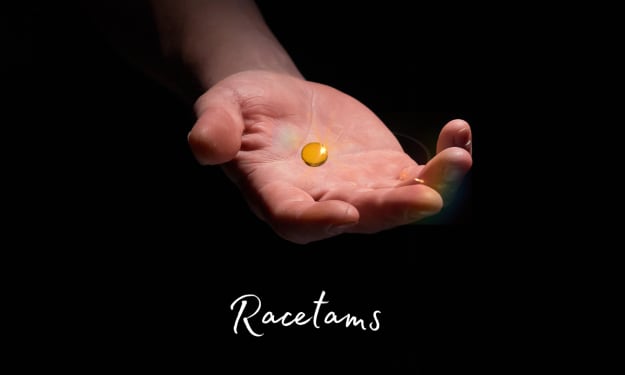
Racetams: A Deep Dive into Unregulated Brain-Boosters
Racetams: A Deep Dive into Unregulated Brain-Boosters Welcome to the uncharted waters of cognitive enhancement, where mind meets mystery and neurochemistry dances with the unregulated. Our compass points us towards racetams, a family of nootropic compounds renowned for their profound effects in boosting brain power. Yet, they remain outside the grasp of FDA regulation, making them an enigma within the wellness sphere. Today, we’re embarking on a deep dive into the world of racetams, exploring the intrigue that surrounds these unregulated brain-boosters. Hold onto your neurons – it’s time to unlock the secrets of the mind’s forbidden frontier.
By Vance Papageorgio 3 years ago in Longevity
Choline: The Most Important Nutrient that No One Knows About
Choline: The Most Important Nutrient that No One Knows About Ever forget where you left your keys or feel tired all the time? Maybe you’ve noticed that your digestion seems off. It could be more than just stress or getting older – it might be that you’re missing a key player in your diet: Choline. This essential nutrient, while often overlooked, plays a vital role in keeping us healthy. But what exactly is Choline, and are we getting enough of it? Let’s pull back the curtain on Choline, an all-important but little-known nutrient.
By Vance Papageorgio 3 years ago in Longevity
SELF-EXAMINE THE BREAST
Most women discover breast lumps by themselves, but you don't need to wait for a lump to develop before you learn how to self-examine your breast at home. Most lumps are benign, and detecting them early would help you better manage them. Self-examination of the breast enables you to monitor your breast health and detect any changes that could prove costly. It is recommended for women above 18 years, and should be done every month, preferably anytime after menses, but not a few days before menses when the breasts might be tender. If you are a postmenopausal woman who has stopped menses, the ideal step is to pick a date of the month for breast self-examination. It is paramount for you to be regular with your examination because you are at a greater risk of developing breast diseases than women who are still menstruating. As a pregnant woman, you are expected to see changes in your breasts such as having full, heavy, and tender breasts as the pregnancy matures. It's okay to see some discharge in the latter part of your pregnancy too; this might be colostrum. But these changes should not exclude you from breast self-examination. If anything, a self-examination offers you a chance to detect any changes that could interfere with your breastfeeding and discuss such findings with your caregivers during antenatal sessions. Women who are breastfeeding can pair their self-examination sessions with breastfeeding. For instance, after emptying your breasts, you can examine them one after the other. Examining yourself after breastfeeding will reduce the possibility of feeling milk pockets and getting anxious that it could be an abnormal lump. Whatever category you belong to, a routine examination of your breast will help you track every change as they appear. First things first... Before you go on to learn how to do breast self-examination, note that although breast self-examination helps you to detect benign lumps, it doesn't hurt to complement it with a clinical breast examination. A more comprehensive examination is best done by your physician, who could recommend further breast imaging (mammography) or ultrasound scanning. The goal of the breast self-exam is to keep you updated with your breast health, and not to replace clinical assessment. Furthermore, breast self-examination is not a shopping exercise for signs of trouble. You are only checking to make sure everything is good. Therefore, you don't need to get anxious about anything and everything you find out from the examination. Now that you know the ground rules, here are three basic steps to a breast self-exam. Step one: inspect your breast You see your breasts whenever you shower, dress or undress every day. But a visual self-examination of the breasts requires a more deliberate view: you need to pause and study the breasts for some minutes. Stand before a mirror with your arms by your sides and your shoulders straight. Observe the appearances of either or both of the breasts. Watch out for the size, shape, colour, and texture of your breasts. Slight differences in the size are okay, but significant differences should raise concern. Follow the edges of your underarm and along the contours of your breasts with your eyes. Note any changes, such as dimpling, bulging, or unusual wrinkling on the breast skin. Then zoom in on your nipples and the dark-coloured area around them (the areola). Compare the level of the two nipples and observe for changes in nipple position (whether it is pulling in or sticking out). Look out for any signs of discharge from one or both nipples. breasts and nipples, raise your arms and repeat the visual inspection of both sites. Raising your arms will expose your underarm and tense your breast ligaments to give a more representative appearance. Next, put your arms on your hips and tighten up your body. Putting your arms on your hips will relax your breasts for another round of inspection. Step two: feel your breasts In this step, you should feel around your breast for pain, hardness, or any unusual texture in your breast tissues. First, lie on your back to rest your breast tissues on your body, then use your right hand to feel around your left breast and your left hand to feel around your right breast. Some women prefer to do the massage in the shower or while sitting; both methods are welcome too. Whatever position you prefer, keep your fingers close, firm and straight. Start with one side. Then use the pad of your three middle fingers (not the tip) to feel around your breasts, starting from the nipples outward in a circular motion or from the edges inwards to the nipples. Follow a regular pattern to cover the whole area. Start with a spiral around your nipples, and move towards your cleavage, down to the base of your breast, sideward towards your armpit, and up towards your collarbone, round and round till you cover your whole breast. You can also move your hands up and down in a column, left to right in a consistent row, or whatever pattern is convenient for you. But, again, the goal is to cover every spot on your breast. Feel the skin and outer layer of your breasts with light pressure. Next, press deeper with medium pressure to feel the middle tissues; press firmly to reach the deep tissues close to your ribcage. At all times, put the arm of the side you are massaging over your head and massage with your other hand. Step three: squeeze your nipples for discharge The final step is to check for unusual discharge from your breasts. Checking for a discharge is especially relevant for women who are not pregnant or breastfeeding. Generally, when you elicit discharge from your nipples, watch out for the colour, consistency, and perhaps the smell of the discharge. These features should indicate the differences between a normal and abnormal discharge. What next? Whatever the outcome of your breast self-examination is, stay calm. It could be that you found a lump or recorded an unusual discharge. Most of these signs are not symptoms of breast cancer: they could be due to hormonal changes. Pregnant or breastfeeding women may notice changes in their breasts, such as engorgement, inflammation due to breast infection (mastitis), lumps due to clumping of breast milk (galactocele), and so on. It is common to interpret these changes in the breast as a sign of a lump or cancer, especially when you feel some pain or discomfort in your breasts before checking. However, a bit of tenderness to touch in puberty, fullness in pregnancy, and engorgement in breastfeeding are regular changes in the breast. Women at higher risk of breast diseases - those with a family history of breast cancer or postmenopausal women - should be more vigilant with the outcome of the breast self-examination and present their findings to their physicians as early as possible.
By Okwudinro Chinecherem3 years ago in Longevity
Intermittent fasting could help protect the brain from age-related diseases like Alzheimer’s.
Alzheimer’s disease is the most prevalent form of dementia. Dementia is a term used to describe a range of symptoms linked to the decline in brain function with age. Symptoms include memory loss, communication difficulties, problem-solving struggles, and personality or behavioural changes.
By Viona Aminda3 years ago in Longevity