health
Keeping your mind and body in check - popular topics in health and medicine to maintain a long and healthy life.
The Aftermath of Quitting Steroids: A Journey Through Recovery
In the world of fitness and bodybuilding, the allure of quick muscle gains has driven an increasing number of people to turn to steroids. However, the dark side of these performance-enhancing substances can have severe consequences on the human body. What happens when you decide to quit steroids after using them? This article delves into the physical and mental effects of quitting steroids, shedding light on the complex recovery process.
By Daniel Fuentes Hermosa3 years ago in Longevity
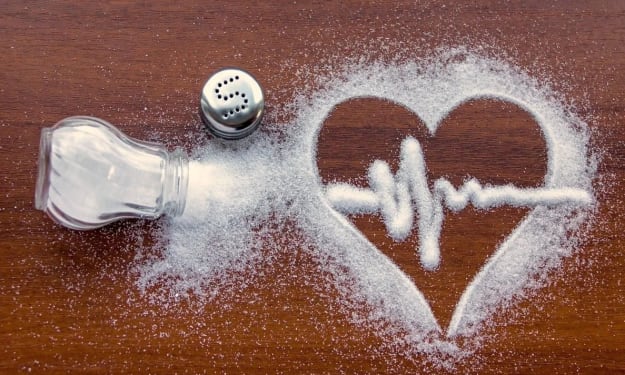
The Impact of Reducing or Eliminating Salt from Your Diet: What Happens to Your Body?
Salt, an essential mineral, has become a staple in modern diets, contributing to the flavors of countless dishes. However, over the past four decades, salt consumption in the US has skyrocketed by 50 percent, with the average American consuming a staggering 3,400 milligrams of salt per day—almost double the recommended amount. This excessive salt intake is closely associated with high blood pressure, kidney disease, stroke, and heart disease, prompting many to question what would happen if they quit salt altogether or reduced their intake significantly. The journey to explore these questions reveals fascinating insights into the human body's response to salt changes.
By Daniel Fuentes Hermosa3 years ago in Longevity
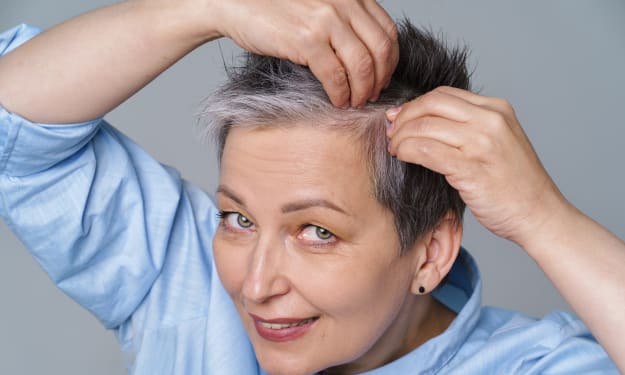
How Masturbation Myths Almost Ruined My Hair and How I Fixed It
I have always had a love-hate relationship with my hair. It was long, straight, and shiny, and I loved to style it in different ways. I used to get compliments from men and women alike. I felt confident and beautiful, and I thought my hair was a big part of my personality.
By Health First3 years ago in Longevity
5 Home Gym Products must haves 2023
In the fast-paced world of 2023, where time is a precious commodity, more individuals are turning to home gyms as a convenient and effective solution to maintain their fitness routines. With the increasing demand for at-home workout options, manufacturers have stepped up their game, introducing a plethora of innovative fitness products that promise to elevate our exercise experience to new heights. In this article, we will explore five must-have home gym products for 2023 that have caught the attention of fitness enthusiasts worldwide.
By Nessie Rukovo3 years ago in Longevity
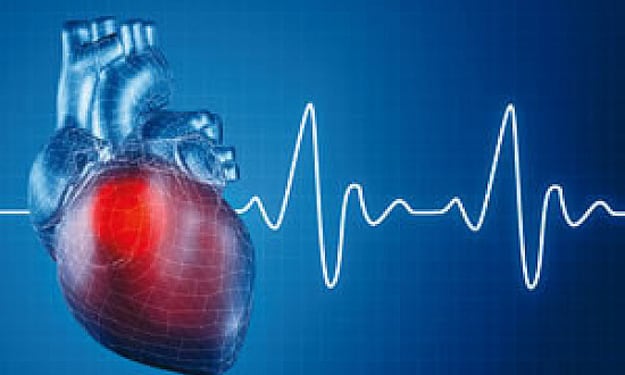
Effective Ways to Naturally Lower Your Blood Pressure
We understand the importance of maintaining a healthy lifestyle, especially when it comes to managing blood pressure. High blood pressure, also known as hypertension, can lead to serious health issues if left uncontrolled. In this comprehensive guide, we will share five proven methods to naturally reduce your blood pressure and improve your overall well-being.
By Tracey te Braake3 years ago in Longevity
Unlocking the Secrets to a Healthier Life: Your Ultimate Guide to Optimal Well-being
Discover the Path to a Fulfilling and Vibrant Lifestyle, Tailored to Your Health Needs and Interests! Welcome to a transformative journey towards a healthier, happier you! In this comprehensive guide, we'll dive deep into cutting-edge research, expert insights, and engaging stories to inspire and empower you to make positive changes in your lifestyle. From valuable health information to entertaining anecdotes, get ready to embark on an enriching reading experience like no other!
By Thiago Assis3 years ago in Longevity
A Holistic Approach to Elevating Your Daily Routine: Embracing Balance and Well-being
Introduction Do you often find yourself feeling exhausted, stressed, and struggling to focus throughout the day? If so, it may be time to reassess your daily routine and embrace the power of a holistic lifestyle. By incorporating three essential components—8 hours of sleep, 30 minutes of exercise, and 10 minutes of meditation—you can significantly enhance your physical, mental, and emotional well-being. In this article, we will explore how these elements synergize to promote balance and elevate your daily routine.
By Manula Tharanga3 years ago in Longevity
Longevity. Content Warning.
“High Blood Pressure: Unveiling the Facts & Myths” Introduction: Greetings, dear reader! As I delve into the fascinating world of high blood pressure, I can't help but be intrigued by the array of facts and myths surrounding this silent yet significant health concern. High blood pressure, also known as hypertension, affects millions of people worldwide and is a leading cause of cardiovascular diseases. Yet, there are many misunderstandings and misconceptions that cloud our understanding of this condition. Fear not, for I am here to be your guiding light through the maze of information. In this informative expedition, we will debunk the myths and unveil the realities of high blood pressure, empowering you with knowledge and understanding. So, fasten your seatbelts, and let's navigate this captivating journey with a sprinkle of humor and a touch of wisdom!
By Khusal Ram Dhital3 years ago in Longevity
SLEEP PHYSIOLOGY
Sleep Physiology Sleep is a brief state of unconsciousness in which the brain responds predominantly to internal rather than external stimuli. It is a self-regulating and easily reversible process. Unlike other states of unconsciousness such as coma or general anesthesia, sleep is a natural, cyclic process that is self-regulated and easily reversible to wakefulness. Electroencephalograms, or EEGs, are used to assess electrical activity in the cerebral cortex's superficial layers. Different types of brain waves correspond to different levels of consciousness. High-frequency low-voltage beta-waves are produced by a fully awake and alert brain. Brain waves become slower in frequency and greater in voltage as consciousness fades. Sleep is divided into two stages: rapid eye movement (REM) sleep and non-rapid eye movement (non-REM) sleep. Non-REM sleep occurs in three stages: N1 through N3 N1 is the condition of transition between awake and sleep. Alpha-waves dominate the EEG. Light stimulation easily wakes the sleeping. N1 is usually only present for a few minutes. N2 is the following stage, a deeper sleep state in which stronger stimuli are required to awaken. Slower and more irregular brain activity with small bursts of "sleep spindles" and "K-complexes." Memory consolidation is thought to happen during this period. N3 is greater in depth than N2. Delta-waves that are slow dominate. Muscles relax, vital signs drop, and rousing the sleeper is tough. Before REM sleep, N3 is often followed by a transition to N2. REM sleep is distinguished by rapid eye movements under the eyelids, as the term implies. It's also known as "paradoxical" sleep since the EEG of the brain is quite similar to that of awake. Most dreams and autonomic reflexes occur during REM sleep. Vital signs are normal, but skeletal muscles are completely inhibited, preventing sleepers from acting out their dreams. This stage sequence occurs 4 to 5 times in a typical night. As the night progresses, the duration of N2 and REM sleep increases, while N3 decreases. Sleep duration and timing are controlled by two key factors: homeostatic drive and circadian rhythm. The body's need for sleep, or the pressure to sleep, is referred to as homeostatic drive. It is at its lowest after a good night's sleep and begins to rise when we awaken. The desire to sleep will continue to grow until sleep is achieved. Adenosine is understood to be a chemical that accumulates throughout awake hours and causes the pressure to sleep. Caffeine appears to increase wakefulness by acting as an antagonist to adenosine. Sleeping requirements rise with illness, as well as cognitively challenging or physically demanding activities. Circadian rhythm is the body's circadian clock for the sleep-wake cycle. It regulates the time of sleep. The master clock is housed in the hypothalamic suprachiasmatic nucleus, or SCN. It gets light input from the retina and resets the clock every day in accordance with the day-night cycle. The SCN is most active during the day and least active at night. The sleep-promoting area is found in the hypothalamic ventrolateral preoptic nucleus, VLPO. The SCN inhibits and adenosine activates the VLPO. GABA is used by the VLPO to inhibit wake-promoting areas of the brain, such as numerous nuclei in the reticular formation and the posterior hypothalamus. The tuberomammillary nucleus, or TMN, and hypocretin neurons are two of these locations. The TMN is mostly made up of histaminergic neurons, but it also generates GABA, which inhibits VLPO. The "switch" between sleep and wake is based on this mutual restraint. The hypocretin neurons stimulate the TMN and are essential for staying awake. Narcolepsy is caused by the loss of these neurons. During the day, the SCN inhibits VLPO and stimulates hypocretin neurons, driving the switch towards waking. By the end of the day, when SCN activity is lowest and pressure to sleep is highest, VLPO is activated, and sleep is "switched" on.
By Davina Ehiaghe Amiator3 years ago in Longevity
The Potential Benefits Of Consuming Apple Cider Vinegar For Weight Loss
The use of apple cider vinegar (ACV) as a natural treatment for obesity and other health problems has been widely publicized. For thousands of years, people have relied on apple cider vinegar as a health tonic due to its many beneficial effects, including a reduction in blood sugar levels.
By Abby blasius3 years ago in Longevity
How I Lost My Hair to Meloxicam and Found It Again with Red Light Therapy
I have always been proud of my hair. It was thick, shiny, and long, and I loved to style it in different ways. I used to get compliments on my hair all the time, and it made me feel confident and beautiful.
By Health First3 years ago in Longevity