
Are You Working Out at the Wrong Time for Your Body?
Your body clock may secretly determine when you feel strongest, burn more energy, and actually enjoy exercise.

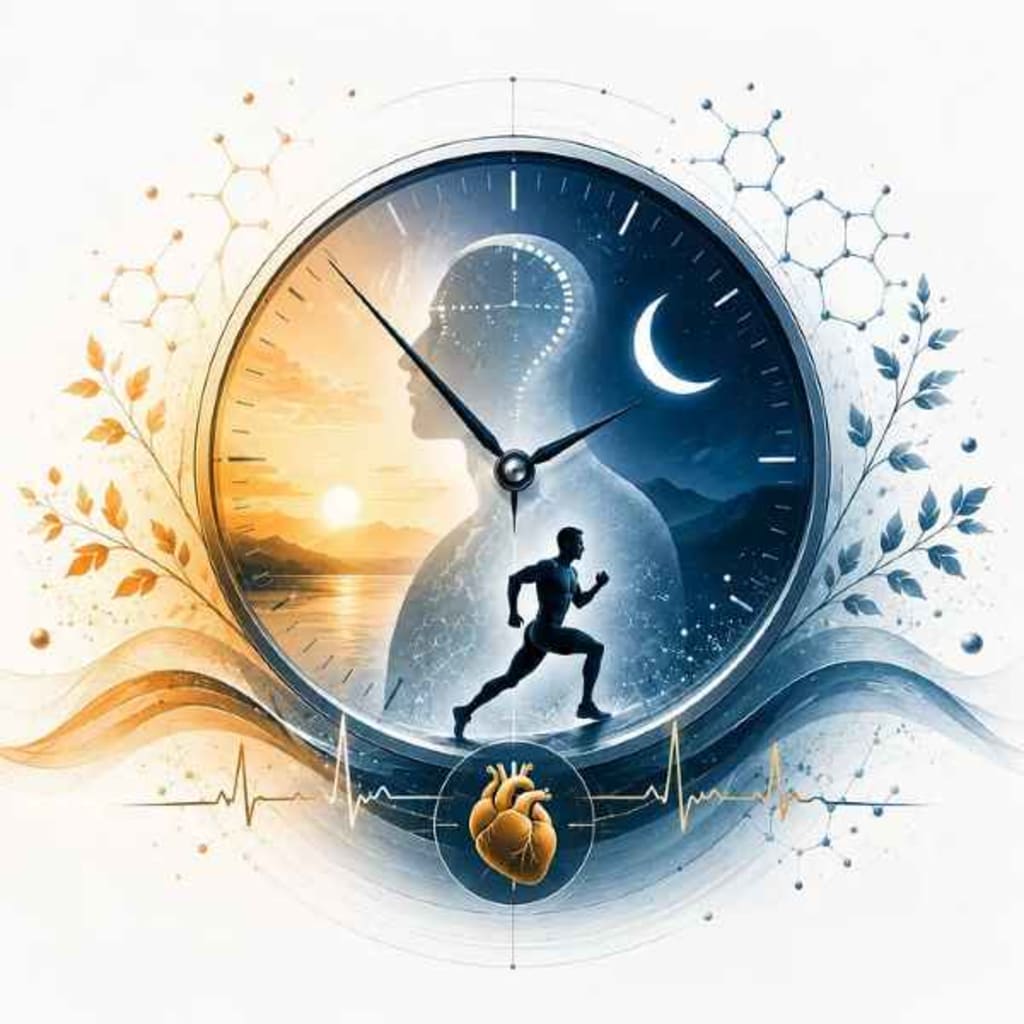
Have you ever forced yourself into an early morning workout because everyone says successful people wake up at 5 a.m.?
You drag yourself out of bed, drink coffee half-awake, push through a workout, and somehow still feel sluggish for the rest of the day.
Meanwhile, someone else thrives training at night, lifting heavier, running faster, and actually enjoying it.
So who’s doing it right?
The answer may surprise you.
For years, we’ve heard the same advice:
“The best time to exercise is the time that works for you.”
At a basic level, that’s true. Moving your body is better than doing nothing. Whether you walk at sunrise or hit the gym after dinner, exercise improves your health.
But what if there’s more to the story?
What if your body actually has a preferred time to perform at its best — one that is biologically programmed into you?
That’s where something called chronotype comes in.
Most people think being a “morning person” or a “night owl” is just personality.
It’s not.
Your body runs on something called a circadian rhythm — a roughly 24-hour internal clock that influences far more than sleep. It helps regulate energy, hormone production, body temperature, alertness, digestion, and even physical performance.
In other words, your body already has a schedule.
The question is: Are you working with it — or against it?
Scientists have discovered that our physical abilities naturally rise and fall throughout the day. Muscle strength, reaction time, flexibility, and aerobic endurance all tend to fluctuate depending on timing.
For many people, performance peaks later in the afternoon or evening.
Why?
Because body temperature tends to be higher later in the day. Muscles become warmer, joints move more efficiently, and coordination often improves. Hormones involved in performance and recovery may also shift throughout the day.
That means the same workout could feel completely different depending on when you do it.
You’ve probably experienced this without realizing it.
Maybe morning workouts leave you exhausted, while evening sessions feel surprisingly strong.
Or maybe it’s the opposite.
That difference may not be laziness, poor discipline, or lack of motivation.
It may simply be biology.
This is where your chronotype matters.
Chronotype refers to your natural biological preference for activity and sleep timing.
Some people are naturally energized in the morning. Others become mentally sharp and physically active later in the day.
Morning types often feel best exercising early because their energy naturally rises sooner. Evening types may struggle with sunrise workouts but perform better later when their bodies fully “wake up.”
And no — this isn’t an excuse.
It’s science.
Think of it like this:
If you ask someone to do their hardest mental work at 2 a.m., they’ll probably struggle.
So why do we assume physical performance works exactly the same for everyone?
The reality is that forcing yourself into the “perfect” workout schedule promoted online may actually backfire.
Social media has convinced many people there is only one successful routine:
Wake up before sunrise.
Workout at dawn.
Grind before everyone else.
But biology doesn’t care about motivational quotes.
If your body naturally performs better later in the day, forcing yourself into an exhausting early workout routine might reduce consistency, motivation, and even workout quality.
And consistency matters more than perfection.
Because here’s the truth most fitness advice ignores:
The best workout is the one you can actually sustain.
If morning exercise makes you miserable and causes you to quit after two weeks, it isn’t helping you.
On the other hand, if evening workouts help you stay consistent, train harder, and enjoy movement, that matters.
A lot.
Still, there’s an important balance here.
You don’t need to obsess over finding the “perfect” hour to exercise.
You also shouldn’t wait endlessly for ideal conditions.
Instead, think of timing as an advantage — not a rule.
If your schedule allows flexibility, experiment.
Try exercising at different times for one or two weeks.
Notice when you feel stronger.
When recovery feels easier.
When motivation comes naturally.
When workouts stop feeling like punishment.
Your body usually gives clues.
We just don’t pay attention.
At the end of the day, the science of chronotypes doesn’t mean there’s one magical hour for fitness success.
It means your body may have a rhythm that deserves more respect than we give it.
The real goal isn’t copying someone else’s routine.
It’s understanding your own.
Because health is not about forcing yourself into someone else’s schedule.
Sometimes, it’s simply about listening to the clock your body has been following all along.
Maybe the problem isn’t your discipline.
Maybe you’ve just been exercising at the wrong time for your body.
About the Creator
Mohib Ullah
I write about crime, justice, and political affairs, focusing on real cases and current events. My goal is to deliver clear, research-based content that informs readers about law, society, and government systems.
Enjoyed the story? Support the Creator.
Subscribe for free to receive all their stories in your feed.
Comments
There are no comments for this story
Be the first to respond and start the conversation.